1300 760 441
 cs@factoryfast.com.au
Shower Panels vs Shower Screens: Which Bathroom Layout Should You Choose?
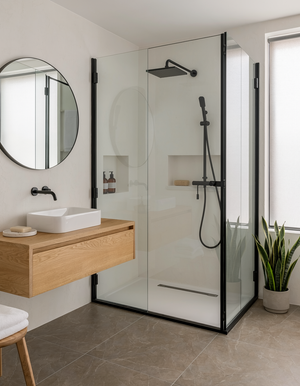

Shower panels and shower screens both use glass to define the shower area, but they solve different layout problems. A shower panel is usually a fixed piece of glass that supports a walk-in style. A shower screen can refer to a wider set of options, including framed, semi-frameless, sliding, curved, corner and wall-to-wall layouts.
If you are renovating, the choice should start with water control, access and room shape. The most stylish option is only the right one if it suits the way the bathroom will be used every day.
What Is a Shower Panel?
A shower panel is a fixed glass section used to separate the shower from the rest of the bathroom. It is often chosen for walk-in showers because it creates a clean opening without a hinged or sliding door.
Factory Fast’s shower panels include glass panel options with different widths, heights, finishes and support hardware. They suit buyers who want a more open bathroom, fewer moving parts and a clean modern line.
Best For Walk-In Showers
Choose a fixed panel when the bathroom has enough length to manage splash and the user wants easy step-in access. This can work well in renovations where the shower area is being planned from scratch.
Best For a Minimal Look
A panel usually has less visual bulk than a full enclosure. Hardware still matters, but the overall look can feel lighter than framed or sliding designs.
What Is a Shower Screen?
A shower screen is the broader category. It can include fixed panels, but it also includes more enclosed options that use doors, frames, channels or multiple glass sections.
The main shower screens range is the better starting point if the buyer is still deciding between bath screens, corner screens, curved layouts, sliding doors or wall-to-wall installations.
Best For Stronger Separation
If the bathroom is shared by children, guests or several adults, a more enclosed shower screen may help contain water and create clearer separation from the dry area.
Best For Awkward Room Shapes
A screen with a door, corner format or wall-to-wall design may suit layouts where a simple fixed panel would leave too much open space.
Shower Panel vs Shower Screen: The Main Decision Points
The choice comes down to five things: available length, splash control, entry comfort, cleaning preference and the look you want.
A fixed panel gives easier access and a clean appearance, but it depends on the shower zone being long enough. A more complete screen can provide stronger enclosure, but it may introduce tracks, hinges or extra framing.
Choose a Shower Panel If You Want Openness
A panel suits bathrooms where the shower can stay partly open without wetting nearby fixtures. The 70x210cm Glass Shower Screen with White Wall Channel and Floor Channel is a compact example: it measures 70 x 210cm, includes matte white aluminium channel components, is designed for 10mm glass and is listed at $279.95 at the time of verification.
Choose a Shower Screen If You Need Containment
A more enclosed screen is often better when the shower sits close to a vanity, toilet, towel rail or doorway. In a smaller room, containment can matter more than the open look.
For recess-style bathrooms, wall to wall shower screens may be worth comparing because they suit spaces where the shower runs between two walls.
Hardware and Finish Choices
Hardware affects how the glass feels in the room. White channels can blend with pale tiles, while darker finishes create a deliberate outline. Gunmetal can be useful when black feels too strong but chrome feels too bright.
The 90x200cm Glass Shower Screen with Gunmetal Wall and Floor Channel is a useful comparison point for buyers considering a medium-width fixed panel with a more defined finish. It measures 90 x 200cm and is listed at $319.95 at the time of verification.
Cleaning and Maintenance
A fixed shower panel has fewer moving parts than a sliding or hinged screen, which can make regular cleaning simpler. The tradeoff is that the open edge needs to be planned properly so water does not travel outside the shower area.
A more enclosed shower screen may require extra attention around tracks, hinges or seals, but it can be easier to live with in a bathroom where splash is otherwise hard to control.
Common Buying Mistakes
The most common mistake is choosing a shower panel because it looks minimal, then discovering the bathroom does not have enough depth for an open shower. The second is choosing a full screen when a fixed panel would have made the room feel larger and easier to enter.
Also check whether the product is a single panel, a full enclosure, or a panel with selected channels or brackets. Similar-looking glass products can include different hardware, and that affects both appearance and installation planning.
Which One Should You Buy?
Choose shower panels when you want an open walk-in feel, fewer moving parts and a clean fixed-glass layout. Choose shower screens when water containment, door control or a more complete enclosure matters more.
Before choosing, stand where the shower opening will be and picture the first ten seconds after turning the water off: where you reach for a towel, where water lands, and what you have to step around. That small daily movement often tells you whether an open panel or a more enclosed screen will be easier to live with.
Frequently Asked Questions
Related Articles
-
 Tags:
Shower Panels
Shower Screens
Tags:
Shower Panels
Shower Screens