1300 760 441
 cs@factoryfast.com.au
Bookshelves Buyer Guide: Choosing the Right Size, Style and Storage Layout
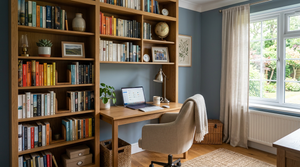

A bookshelf can solve a storage problem, shape the proportions of a room and turn an underused wall or corner into a practical display area. The difficult part is choosing a design that fits both the available space and the items you actually need to store.
A narrow tower, corner unit, rotating design and wide adjustable bookcase may all occupy a similar category, but they suit very different rooms. This bookshelves buyer guide explains how to compare dimensions, configurations, materials, access and placement before exploring the Factory Fast range of bookshelves.
Start With What the Bookshelf Needs to Hold
The most useful starting point is an inventory rather than a furniture style. Group the intended contents into books, folders, toys, baskets, plants, framed pieces and objects that need frequent access. This reveals whether you need closely spaced shelves, taller openings, adjustable levels or a mixture of storage and display space.
A mainly book-based collection
Books create concentrated weight, especially when a shelf is filled from side to side. Check the stated capacity of the exact model rather than assuming that a larger unit automatically carries more. If no shelf-load figure is published, ask for confirmation before using the bookcase for a substantial collection.
Measure the tallest and deepest books as well. Standard novels require less vertical clearance than art books, albums or upright folders. A shelf that is deep enough for the largest item will look more orderly and reduce the chance of books projecting over the front edge.
Mixed storage and decorative displays
Open shelves work well when the unit will hold books alongside plants, photographs and ornaments. The varied shapes create visual breathing room and stop a tall bookcase from appearing like a solid block.
Adjustable shelving is useful when those contents may change. A home office might initially need room for folders and equipment, then later serve as a living room display or children’s book area. Movable levels allow the storage layout to change without replacing the entire unit.
Everyday household storage
If the bookcase will also hold keys, charging accessories, toys or paperwork, decide whether those smaller objects will sit in baskets or containers. Measure the intended containers before choosing the shelf depth and opening height. Open shelving keeps frequently used belongings visible, but it also exposes visual clutter, so each loose category should have a defined home.
Measure the Complete Placement Zone
Product dimensions tell you whether a unit can physically fit, but they do not describe how it will interact with the room. Measure width, depth and height, then inspect everything surrounding that footprint.
Check the wall from floor to ceiling
Record the available wall width at both floor and shoulder height. Skirting boards can stop a frame from sitting flush, while window ledges, switches and power points may reduce the usable area higher up. Note any picture rails, vents or wall-mounted fittings that could interfere with positioning or anchoring.
Depth is particularly important in narrow rooms. A bookcase that extends into a passage can interrupt movement even when its width fits neatly between two walls. Mark the proposed front edge on the floor and walk past it from both directions before ordering.
Allow for access and movement
A rotating bookcase needs clear space around its base so the shelves can turn freely. A corner design must fit the actual corner geometry rather than merely the length of each wall. Wide modular units need enough room for assembly and may be easier to build in their final location.
Also consider cleaning access. A small gap that cannot accommodate a vacuum head or cloth may become a dust trap. If the unit is likely to be moved during cleaning, compare its assembled weight and make sure repositioning will not damage the flooring.
Measure the delivery and assembly route
Check doorways, hallways and stair turns as well as the destination room. Flat-packed furniture may enter easily, but the assembled piece can be difficult to relocate later. Confirm whether construction requires the unit to lie flat and whether the room provides enough working area around it.
Before assembly, identify the intended anchoring position and the wall construction behind it. Tall shelving should not be treated as freestanding simply because its base sits level on the floor.
Compare the Main Bookshelf Configurations
The best bookshelf format depends on which dimension is scarce: wall width, floor depth, corner space or access area.
Tall and narrow bookshelves
A slim vertical unit suits a compact bedroom, study or living area where wall width is limited. It provides several display levels without occupying a broad section of floor, although the narrow shelves may not suit oversized books or wide storage baskets.
The 5-tier tall narrow bookshelf measures 35.5 cm wide, 33 cm deep and 143 cm high. Its five open levels and solid-wood pillars suit books, plants and smaller decorative pieces. The compact width is useful beside a desk or in a narrow wall recess, but buyers should compare the 33 cm depth with nearby furniture and walking space.
Corner bookcases
A corner shelf converts an area that conventional rectangular furniture often leaves empty. It can soften a bare junction between two walls and provide vertical display space without taking over the main furniture wall.
Corner designs are strongest when their shape matches the intended contents. Curved or tapered shelves may offer less usable width than a standard bookcase, so measure larger books, storage boxes and framed items before choosing. The surrounding walls must also leave room for anchoring and should not contain curtains or doors that need to move through the same area.
Rotating bookshelves
A rotating unit provides access from several sides while using a compact base. This format can work beside a reading chair, in a study or within a larger room where a conventional shelf would place some contents against a wall.
Factory Fast’s 360-degree rotating bamboo bookshelf has six storage levels and measures 37 x 37 x 178 cm when assembled. The narrow footprint makes efficient use of vertical room, while the rotating base helps users reach items around the unit. It still requires open circulation space, so the 37 cm footprint should not be treated as its entire operating zone.
Adjustable and multi-unit shelving
Adjustable shelves suit buyers whose collection includes objects of different heights. Multi-unit sets provide another layer of flexibility: they can form one coordinated display, step down beneath a sloping wall or be separated across several rooms.
The three-piece adjustable bamboo shelf set combines bamboo and MDF with a varnished finish. Each bookcase has three adjustable racks, and the maximum combined arrangement measures 120 x 30 x 127 cm. It suits a wider wall where buyers want a graduated display, while the separate pieces can accommodate changing layouts.
Wall-mounted shelves and enclosed storage
Wall-mounted shelving preserves floor area and works well for lighter displays, but installation location becomes a central part of the buying decision. Check the product’s fixing requirements and intended load rather than choosing by shelf length alone.
Enclosed cabinets are better when the goal is to conceal paperwork, cables or irregular household items. An open bookcase provides faster access and a lighter visual profile, while doors reduce dust exposure and visual clutter. Some rooms benefit from both: open levels for books and display pieces, with separate closed storage for objects that are difficult to arrange neatly.
Choose Materials and Finishes for the Room
Bookshelf material affects appearance, maintenance, weight and the type of items the unit can reasonably support. Compare the complete construction rather than relying on a finish name.
Bamboo and engineered panels
Bamboo introduces a warm, natural appearance that pairs easily with neutral furnishings, indoor plants and timber-look surfaces. When combined with MDF, it can create practical open shelving without the visual heaviness of a fully enclosed cabinet.
Check which parts use each material. The frame, shelf panels and decorative surfaces may have different care needs. A varnished finish is generally straightforward to dust and wipe, but excess moisture should still be avoided around panel edges and joins.
Solid-wood structural elements
Solid-wood posts or pillars can give a narrow bookshelf a more substantial frame and create a clean contrast with open shelves. The relevant questions are still dimensional: inspect shelf width, depth, spacing and any published load information. Material alone does not establish how many books a particular level can carry.
Metal-framed and industrial-style shelving
Metal-framed designs create a stronger visual outline and pair naturally with contemporary desks, dark hardware and simple living room furniture. They can feel lighter than closed cabinetry because the wall remains visible through the frame.
Consider the floor contact points, particularly on timber or other easily marked surfaces. Check whether protective feet are included and whether the unit can sit level without rocking. A level base, correctly tightened connections and the required wall anchoring all matter to the final setup.
Match the finish without over-coordinating
A bookshelf does not have to match every surrounding item. A better approach is to repeat one or two existing elements, such as a timber tone, black frame or simple rectangular profile. Browse adjacent living room furniture to compare the shelving finish with coffee tables, lighting and other pieces that share the room.
In a small lounge, a finish close to the wall colour can reduce visual weight. A contrasting dark or timber unit creates a stronger focal point, which is useful on a large blank wall but may dominate a narrow area.
Match the Layout to the User
The same room can require a different bookshelf depending on who uses it and how often they need access.
Family living areas
Place frequently used children’s books and storage baskets on lower shelves. Fragile display pieces should not occupy easy-reach levels. Tall furniture needs to be secured with an appropriate anchor, and climbing or hanging from shelves must be prevented.
A wider, lower arrangement can make everyday items easier to reach, while a tall tower conserves floor width. The right choice depends on whether accessibility or compactness matters more in that location.
Home offices and studies
Measure folders, reference books and storage containers before buying. An attractive display unit may not accommodate upright office files if the openings are too low. Adjustable levels provide greater control over changing paperwork and equipment.
Keep regularly consulted items between waist and shoulder height. Archival material can occupy lower shelves, provided the stated shelf capacity supports the intended load. Decorative pieces are better reserved for upper levels where they do not interrupt the working storage zone.
Bedrooms and compact homes
In a small bedroom, compare a narrow bookcase with corner and wall-mounted formats. A slim vertical model may fit beside a desk, while a corner unit can use floor space that does not accommodate a conventional cabinet. Check bed, wardrobe and door clearances in their fully open positions.
Rotating storage can be effective when the user can approach it from more than one direction. It is less suitable when squeezed tightly between other furniture because the main access benefit is lost.
Open-plan rooms
An open-backed bookshelf can help define a reading, work or dining zone without constructing a solid barrier. For this role, assess the view from both sides, the base depth and the anchoring method. A unit designed to sit against a wall should not automatically be assumed suitable as a freestanding divider.
Consider how the display will appear from each zone. Baskets or books may show unfinished backs, while cables can become more visible than expected. A deliberately two-sided arrangement produces a more convincing room division.
Check Capacity, Construction and Product Evidence
Books are deceptively demanding because their weight is concentrated along each shelf. Look for a clearly published capacity per level or for the whole unit. Do not divide a total capacity evenly unless the product information specifically allows that interpretation.
The current product pages for the examples in this guide do not publish shelf-load capacities. Buyers planning a dense library should therefore confirm the intended loading before purchase rather than estimating from the material, dimensions or number of tiers.
Inspect the connection method as well. Adjustable shelves, fixed levels, cross-bracing and frame joints affect how the unit is assembled and used. Follow the supplied instructions, tighten all connections evenly and recheck them after the bookcase has settled into regular use.
Place heavier books and containers on lower levels. This keeps the most demanding contents close to the base while leaving upper shelves for lighter paperbacks and display pieces. Weight distribution does not replace anchoring, but it creates a more practical arrangement for everyday access.
Compare Cost by Usable Storage, Not Size Alone
During this review, the featured Factory Fast bookshelf examples ranged from $64.95 for a compact five-tier design to $204.95 for a three-piece adjustable set. Prices can change, so check each live product page before making a final comparison.
The lowest purchase price is not always the best fit. A narrow tower may provide the required storage at modest cost, while a flexible set can justify a higher price when it replaces shelving in several rooms or adapts to a wider mix of objects. A rotating unit may be more valuable where access from multiple sides matters.
Compare the number of useful levels, shelf spacing, total footprint, materials and adaptability. Exclude any shelf that is too small or awkward for the intended contents. This produces a more realistic view of value than comparing height or tier count alone.
Maintenance should also influence the decision. Open designs are quick to access but need regular dusting. Decorative cut-outs and closely spaced structures take longer to clean. Smooth, reachable surfaces suit households that want simple upkeep.
Avoid Common Bookshelf Buying Mistakes
One frequent mistake is measuring only the empty wall. The finished arrangement must also account for skirting boards, power points, curtains, nearby doors and the route people use through the room.
Another is choosing shelf spacing from the average book rather than the tallest item. A few oversized books can make an otherwise suitable unit frustrating to use. Measure the outliers first, then organise smaller pieces around them.
Do not treat all open shelves as interchangeable. A corner unit, rotating tower and conventional rectangular bookcase offer different usable widths and access patterns. Choose the configuration from the room constraint it solves.
Finally, avoid filling every level as soon as the unit is assembled. Leave some open display space and observe which belongings are used most often. Adjust the layout after a week of normal use so the most accessible shelves serve real habits rather than an imagined arrangement.
Before ordering, mark the exact bookshelf footprint on the floor with removable tape and leave it in place for an evening. Walk past it, open nearby doors and clean around it; this simple trial will show whether the proposed depth works in daily life before the furniture arrives.
Frequently Asked Questions
How deep should a bookshelf be for novels and larger books?
Measure the deepest books you intend to store and choose a shelf that supports them without excessive overhang. Standard novels need less depth than art books, albums and folders, so the largest item should set the minimum. Also compare the bookcase depth with the walking space in front of it. A deeper unit may improve storage but feel intrusive in a narrow room.
Can a bookshelf be used as a room divider?
An open bookshelf can help define zones in an open-plan room, but only if the exact model and anchoring arrangement suit that placement. Check how the frame looks from both sides, whether the base provides sufficient depth and how cables or unfinished book backs will appear. Do not assume a wall-positioned model can be used freestanding without confirming the intended setup.
Are open bookshelves better than cabinets with doors?
Open bookshelves provide quick access and make books or decorative pieces part of the room, while doors conceal clutter and reduce dust reaching stored items. The better option depends on what you need to keep there. A display-focused living room usually benefits from open levels; paperwork, loose accessories and irregular household supplies are often easier to manage in enclosed storage or baskets.
What should I check before assembling a bookcase?
Confirm that every component and fixing listed in the instructions is present, then assemble the unit on a clean, level surface. Allow enough working room to position larger panels without damaging their edges. Tighten connections evenly, move the bookcase to its final location and install the specified anchor. Recheck joints after the shelves have been loaded and used for a short period.
How should books be arranged on a tall bookshelf?
Place heavier books and full storage containers on lower levels, keeping frequently used titles within comfortable reach. Upper shelves are better for lighter books and decorative pieces. Avoid forcing books into openings that are too short or shallow, as this makes access awkward and can damage covers. If the levels are adjustable, configure them around the tallest books before filling the remaining space.
How do I clean bamboo and MDF bookshelves?
Remove loose dust with a soft, dry cloth, working from the top shelf downward. For marks, use a lightly damp cloth and dry the surface promptly, paying particular attention to panel edges and joins. Avoid soaking MDF or leaving wet plant pots directly on a shelf. Periodically remove books from each level so concealed dust can be cleared and the connections inspected.
-
 Tags:
Bookshelves