1300 760 441
 cs@factoryfast.com.au
Door Levers vs Door Handles: Which Suits Each Door in Your Home?
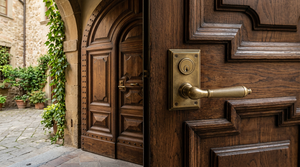

A door lever and a fixed pull handle can look equally suitable in a product image, yet they operate the door in completely different ways. Choosing between them is not simply a question of whether you prefer a horizontal lever or a longer vertical grip. The correct choice depends on the door’s movement, whether it must latch or lock, and whether the hardware fits the existing door preparation.
The terminology can also cause confusion. A lever is technically one type of door handle, while “door handle” is often used more broadly for levers, knobs and fixed pulls. When shoppers compare door levers vs door handles, they are usually deciding between a lever-operated latch set and a non-turning pull handle.
Understanding that distinction prevents a common renovation mistake: buying an attractive fitting that cannot perform the job the door requires. This guide explains the functional differences, compatibility checks and room-by-room choices to make before browsing door hardware.
What Is the Difference Between a Door Lever and a Door Handle?
A door lever is a horizontal grip connected to a spindle and latch mechanism. Pressing the lever down retracts the latch from the strike plate, allowing a hinged door to open. Releasing it lets the mechanism return to its resting position so the door can latch again when closed.
The broader term “door handle” can refer to any fitting used to grip or operate a door. That includes lever sets, turning knobs and fixed pull handles. A fixed pull has no downward or twisting action of its own. You grip it and move the whole door, while any latch or lock is handled by separate hardware.
Door levers operate a latch
Choose a lever when the door must remain closed through a spring latch. This is the typical arrangement for bedrooms, bathrooms, hallways, laundries and many hinged interior doors.
Lever sets can provide different functions even when they appear almost identical. A passage model opens freely, a privacy version can be locked from inside, and a keyed set accepts a key from outside. Function therefore matters more than the lever’s shape or finish.
The Factory Fast door levers collection is the relevant starting point when you need a handle set that retracts a latch rather than a fixed grip alone.
Fixed pulls move the door without retracting a latch
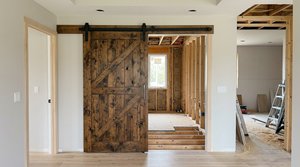
A pull handle is mounted rigidly to the door. It may be installed on one side or as a back-to-back pair, depending on the product and application. It is commonly suited to sliding barn doors, glass doors, gates and other doors that move without a standard tubular latch operated by the grip.
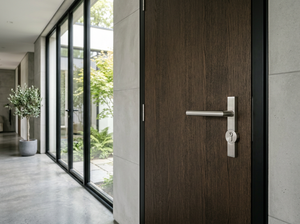
Some hinged entry doors also use a fixed pull, but the opening and locking arrangement must then be provided separately. A pull should never be assumed to include a latch simply because it is listed as a door handle.
This is why the shape alone cannot determine suitability. First establish how the door is meant to open and stay closed; then select the grip style.
Compare How Each Handle Type Works
The simplest comparison begins with the movement required from the user.
A lever creates mechanical movement through a spindle. Pushing down on the grip withdraws the latch, and the door can then swing. This combined action makes the lever both a handhold and an operating control.
A fixed handle creates no latch movement. The user pushes or pulls the door directly. It works best when the door slides, swings freely or uses a separate catch, lock or closing mechanism that is compatible with the proposed setup.
Choose a lever for latch-controlled hinged doors
Most conventional hinged internal doors need a latch so they do not drift open. A lever set packages the grip and latch operation into one coordinated system, often with the latch, strike plate, screws and related installation parts included.
This format is useful when you are replacing an existing lever and can match the new set to the door’s preparation. It can also suit a new door when the installer can create the correct holes, edge recess and strike position.
The deciding question is not “Does this door swing?” but “Must the handle retract a latch before the door can swing?” If the answer is yes, a lever set is usually the relevant format.
Choose a pull for sliding or non-latching movement
A sliding door generally needs a grip that lets you move the panel along its track without protruding hardware colliding with the wall, jamb or adjacent panel. A fixed pull can provide that grip without adding a lever latch that serves no purpose.
Pull handles also vary in projection, length and installation method. A large handle may be comfortable to grasp but unsuitable where the panel slides close to a wall. Check the complete door path and available clearance, not just the handle’s front-facing dimensions.
Browse the wider range of door handles when the project calls for fixed pulls, entrance handles or other configurations beyond a standard latch-operated lever.
Passage, Privacy or Keyed: Choose the Function Before the Finish
Once you know a lever is required, the next decision is the function. Passage, privacy and keyed levers may share the same dimensions and styling, but they are not interchangeable in use.
Passage levers for rooms that do not need locking
A passage lever operates a latch without providing a locking function. It suits locations such as hallways, walk-in wardrobes and laundries where the door should stay closed but does not need to be locked.
The live square black passage lever set is made from zinc alloy and is reversible for left- or right-handed doors. It has a 60 mm or 70 mm adjustable backset and is listed for doors 35–45 mm thick. The package includes the levers, latch, strike plate, screws and instructions.
A passage set is usually the cleanest option where adding a lock would create inconvenience without serving a clear purpose. Check that the room can be entered whenever necessary and does not require privacy.
Privacy levers for bedrooms and bathrooms
A privacy function lets the occupant lock the door from inside. It is intended to discourage casual entry rather than perform the role of an exterior security lock, so it suits private interior spaces.
For example, the round black privacy lever set combines a zinc-alloy lever with a 60 mm or 70 mm adjustable latch. It fits door thicknesses from 35 mm to 45 mm and can be installed on left- or right-handed doors.
Before ordering privacy hardware, check how it is released from outside when the room is unoccupied or assistance is needed. The product instructions should explain its exact operation; do not assume every privacy set releases in the same way.
Keyed levers where controlled access is required
A keyed lever can be locked from inside and unlocked with a key from outside. It may suit an entrance, home office, storage room or another space where access needs to be controlled.
The square black keyed lever set is a zinc-alloy model with reversible handing, a 60 mm or 70 mm backset and compatibility with 35–45 mm door thicknesses. Its latch has a fixed square faceplate, which must suit the planned edge preparation.
Do not choose a keyed function merely because it costs more or appears more substantial. Think about who needs a key, where spare keys will be kept and whether locking that particular room supports the way the household uses it.
Measure the Door Before Comparing Styles
Compatibility is the point at which many otherwise attractive choices fail. A replacement set must match the door’s thickness and latch position, while a new installation needs enough material and clearance for the required fixing method.
Check the door thickness
Measure the door itself rather than relying on a general description such as “standard internal door”. Take the measurement at the installation area and exclude decorative trim or raised panels unless the hardware will actually clamp across them.
The lever examples reviewed for this guide are listed for doors 35–45 mm thick. A door outside that range should not be assumed to fit. Check the exact product page or seek installation advice before ordering.
Pull handles use different compatibility rules. One reviewed 300 mm back-to-back model can work with timber doors up to 60 mm thick, but its supplied screws are specified for a 20 mm panel depth. Those two figures describe different aspects of the product, so confirm which fixings are appropriate for your exact door.
Measure the backset on a lever installation
Backset is the horizontal distance from the door edge to the centre of the spindle or handle bore. It determines where the lever sits in relation to the edge and whether the latch aligns with the existing holes.
The live lever examples in this article offer adjustable 60 mm or 70 mm backsets. If you are replacing an existing set, measure before removing all the hardware so you have clear reference points. A mismatched backset can leave the spindle out of alignment even when the external plate covers the original opening.
For a new door, choose the latch position before drilling. Consider the grip area, any decorative moulding and the distance between the lever and the door frame.
Inspect the latch faceplate and strike
The latch faceplate sits on the narrow edge of the door, while the strike plate is fixed to the frame. Their size and shape affect how much preparation is required.
The square faceplate on the reviewed lever sets is not removable. That detail matters if the existing door has a different recess or was prepared for another latch shape. Reusing unsuitable openings can produce a poor fit, visible gaps or a latch that does not travel cleanly into the strike.
Check whether the strike position still matches after the new latch is installed. Door movement, hinge wear or previous repairs can affect alignment independently of the handle itself.
Confirm left- and right-hand suitability
Some handle sets are handed, meaning separate versions are used on left- and right-opening doors. Others are reversible.
The reviewed Factory Fast lever sets are described as reversible. Even so, look at the product instructions before drilling because the inside locking control, keyed side and lever orientation must still face the correct direction.
For a fixed pull, handing is less likely to be an issue, but mounting position and clearance on both sides remain important. A back-to-back pair requires suitable access and fixing points through the panel.
Compare Grip, Clearance and Daily Use
A handle is touched every time the door is used, so its feel can matter more than its appearance after the novelty of a renovation has passed.
A lever can be operated by pressing down with the hand or forearm. This may be convenient when carrying laundry or moving between rooms frequently. However, a long projecting lever can catch loose sleeves, bags or nearby objects when installed in a tight circulation area.
A pull handle provides a larger fixed grip area and does not spring back. Longer pulls can make a substantial entrance or sliding panel easier to grasp, but their projection must not interfere with the door’s travel.
Round profiles can feel softer in the hand, while square forms create a sharper architectural line. These qualities are subjective, so compare the actual shape as well as the product title. Also consider whether the grip leaves enough room for fingers without placing the hand against the door surface.
Match the Hardware to the Door and Room
Choosing one design for every door can produce a consistent look, but it does not mean every opening should use the same function.
Hallways, laundries and walk-in wardrobes
These rooms usually need a latch but not a lock. A passage lever keeps the door closed and provides straightforward access without adding keys or an internal privacy control.
Consistency is useful across nearby doors. Matching lever shapes and finishes can create a connected visual line even if a bedroom or bathroom uses the privacy version of the same design family.
Bedrooms and bathrooms
Privacy levers are generally the more purposeful choice where occupants need to discourage entry. Check the direction of the lock, the outside release method and whether the door can close without rubbing or requiring excess force.
A poorly aligned latch can make a privacy set frustrating because the user may need to pull or push the door while locking it. Correct the door alignment rather than expecting the new hardware to conceal the problem.
Entrances and controlled rooms
A keyed lever may be appropriate where the handle itself must control access. Before choosing it, distinguish between the lever function and any other lock already fitted to the door.
If the door uses a separate locking system, a fixed entrance pull may be more appropriate than duplicating functions. Review the whole hardware arrangement as one system: grip, latch, lock, hinges, strike position and clearance.
Sliding barn doors and large panels
Sliding panels typically need pull hardware rather than a spring latch lever. The 300 mm polished stainless steel pull-handle pair provides handles for both sides and is listed for compatible timber, glass, fibreglass and metal doors.
Its suitability still depends on the panel material and fixing depth. For a sliding barn door, also check that the rear handle will not strike the wall or prevent the door opening fully. Where clearance is tight, the inside face may need a flush-pull configuration instead of an identical projecting handle.
Material and Finish Affect More Than Appearance
Finish helps connect door hardware with nearby tapware, lighting, cabinetry and furniture, but the underlying format must be chosen first. A perfectly matched finish cannot compensate for an incorrect latch function or incompatible fixing method.
Black hardware creates strong contrast against pale doors and can repeat other dark details across a contemporary interior. Satin nickel is quieter and tends to blend with a wider range of neutral fittings. Polished stainless steel brings a brighter reflective finish that can suit modern pull-handle applications.
Shape also changes the visual result. A square rose and straight lever create a structured look, while a round rose softens the outline. On a narrow or detailed door, check whether the plate overlaps routed edges, moulding or previous hardware marks.
Maintenance should be realistic for the room. Frequently touched handles collect marks, while bathroom and laundry fittings may need more regular wiping. Use the cleaning method stated for the chosen product and avoid assuming the same treatment suits every coating or base material.
Compare Complete Sets, Not Just Individual Handles
The lowest displayed price does not always represent the same quantity of hardware or the same function. Check whether the listing includes one handle, a pair for both sides, a latch, strike plate, screws and instructions.
At the time of verification, the live products referenced in this guide ranged from $19.95 to $44.95. That range includes different functions and formats, so price should be compared only after the required operation and dimensions are settled.
A lever set that includes the latch and strike is not directly equivalent to a fixed pull pair. The lever is an operating assembly, while the pull may require separate hardware to keep or lock the door closed. Budget for the complete working arrangement rather than the most visible component.
For multi-door projects, count each function separately before adding products to the cart. A hallway, bathroom and keyed office may use matching lever styling but require three distinct internal mechanisms.
Door Handle Buying Mistakes to Avoid
Treating every handle as interchangeable
The word “handle” does not confirm whether a product retracts a latch. Read the function description and package list. If there is no spindle-and-latch mechanism, plan how the door will stay closed.
Choosing privacy hardware for exterior access
Privacy and keyed functions solve different problems. An internal privacy control is not the same as key-controlled access. Match the mechanism to the room rather than choosing by appearance.
Ignoring the existing holes
A new plate may not cover the old bore, screw holes or latch recess. Measure these areas before removing the existing set and compare them with the new product’s installation requirements.
Measuring only the door width
Door width says little about handle compatibility. Thickness, backset, latch-face preparation, fixing depth and clearance around the grip are the critical measurements.
Forgetting the full movement path
Check a hinged door at both open and closed positions. For a slider, inspect the route beside the wall, track and adjacent panel. A handle that fits while the door is closed may obstruct its complete opening movement.
How to Make the Final Choice
Start by naming the job performed by each doorway. Use a lever for a hinged door that needs a retracting latch; choose a pull where the door only needs a fixed grip or uses a separate closing arrangement.
Next, assign the required function. Passage suits unlocked circulation areas, privacy belongs on appropriate private rooms, and a keyed lever provides controlled access. Then confirm the door thickness, backset, faceplate preparation, handing and surrounding clearance.
Only after those checks should finish and shape determine the winner. This order keeps the decision practical while still allowing the hardware to support the room’s design.
Before placing a multi-door order, mark each opening on the floor plan as passage, privacy, keyed or pull, then write its thickness and backset beside it. That simple door-by-door hardware schedule prevents matching finishes from disguising mismatched mechanisms.
Frequently Asked Questions
Is a door lever the same as a door handle?
A door lever is one type of door handle. It uses a horizontal grip to turn a spindle and retract a latch, while the broader “door handle” category can also include knobs and fixed pulls. When comparing products, check whether the fitting operates a latch or only provides a grip. That functional difference determines whether it suits a conventional hinged door, sliding panel or separate locking arrangement.
Are lever handles easier to operate than fixed pull handles?
They perform different tasks, so neither is automatically better. A lever retracts a latch with downward pressure and suits most latch-controlled hinged doors. A fixed pull is gripped to move a door that slides, swings freely or uses separate closing hardware. Compare hand clearance, projection and the door’s movement. The more suitable choice is the one that operates the complete door system without awkward reach or obstruction.
Can I replace a fixed pull handle with a lever?
Only if the door is suitable for a latch mechanism and can be prepared for the lever’s spindle, latch and strike plate. A direct swap is uncommon because fixed pulls use different holes and do not normally include an operating latch. Check the panel material, thickness, backset and door-frame alignment before altering it. Sliding doors may also lack the clearance required for a projecting lever on one or both sides.
How do I know whether a door lever will fit my door?
Measure the door thickness and the backset from its edge to the spindle centre, then inspect the existing bore, edge recess and strike plate. The lever examples reviewed here suit doors 35–45 mm thick and offer 60 mm or 70 mm backsets. Also confirm the faceplate shape and handing. Matching only the external rose size can leave the internal latch misaligned or old preparation holes exposed.
What is the difference between passage and privacy door levers?
A passage lever retracts a latch but does not lock, making it suitable for hallways, laundries and wardrobes. A privacy lever adds an internal locking control for rooms such as bedrooms or bathrooms. Privacy hardware is intended to discourage entry rather than replace a keyed access function. Before buying, check how the privacy lock releases from outside and make sure both sides of the set face the correct direction.
Which door handle finish is easiest to coordinate throughout a home?
Choose a finish already repeated in permanent details such as tapware, lighting or cabinetry hardware. Black creates clear contrast, satin nickel has a quieter appearance, and polished stainless steel adds a brighter reflective surface. Coordination does not require every handle to have the same mechanism. Matching lever and pull finishes can maintain visual consistency while allowing passage, privacy, keyed and sliding doors to use the functions they actually need.
Related Articles
-
 Tags:
Door Handles
Door Levers