1300 760 441
 cs@factoryfast.com.au
Door Handles Buyer Guide: How to Choose the Right Function, Fit and Finish
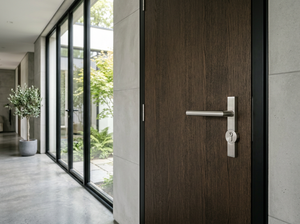

A door handle can look perfect online and still be wrong for the door. The problem is usually not the colour or shape; it is a mismatch between the handle function, latch position, door thickness or way the door is used.
Choosing from a range of door handles becomes much easier when you make those practical decisions before considering finishes. This guide explains how to identify the right function, measure the essential dimensions and create a consistent hardware scheme for an Australian home.
Start With What the Door Needs to Do
The first decision is whether the door needs to latch, lock or simply move with a pull. Handle function should be assigned door by door rather than chosen as one blanket specification for the entire home.
Passage handles for rooms that do not need locking
A passage handle operates a latch but has no locking function. It is commonly suited to hallways, laundries, wardrobes and general living spaces where the door needs to stay closed without restricting access.
A black passage lever set provides a useful example of this format. It has a reversible lever, a zinc-alloy construction and an adjustable latch with a 60 mm or 70 mm backset. It is listed for doors measuring 35 mm to 45 mm thick and comes with its latch, strike plate, installation screws and instructions.
Passage hardware is usually the simplest choice for frequently used internal doors. It avoids unnecessary keys or locking buttons while still giving the door a positive closing action.
Privacy handles for bedrooms and bathrooms
A privacy set adds an internal locking action for spaces where personal privacy matters. It is designed differently from hardware intended to secure an external entrance, so the room’s purpose should determine whether privacy is sufficient.
The square black privacy lever set locks from the inside and is intended for bedrooms or bathrooms. Its reversible configuration accommodates left- and right-handed doors, while the adjustable latch supports 60 mm and 70 mm backsets. The specified door-thickness range is 35 mm to 45 mm.
Check how the lock is released as well as how it is engaged. This is particularly important in shared homes, where buyers may want a straightforward internal control and an accessible release arrangement on the outer side.
Keyed handles for controlled access
A keyed handle is appropriate when access must be controlled from the outside. Entrances, private rooms, storage areas or workspaces may require this function, depending on how the property is organised.
The square satin nickel key-lock lever set can be locked from inside and operated by key from outside. It uses zinc-alloy levers, fits 35 mm to 45 mm doors and includes an adjustable 60 mm or 70 mm latch.
Do not choose a keyed function only because it looks more substantial. On an internal room that never needs controlled access, the key can add inconvenience without improving how the doorway works.
Pull handles for doors without a standard latch operation
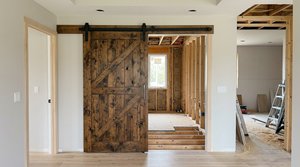
Pull handles do not perform the same job as passage, privacy or keyed lever sets. They provide a gripping point and may be suitable for sliding doors, barn-style doors or compatible entry applications with separate hardware.
The door’s operating system matters here. A sliding door needs enough finger clearance and a pull position that does not collide with the frame. A hinged entrance may require the pull to work with a separate latch or locking arrangement.
Factory Fast’s barn door hardware can help buyers distinguish between a complete sliding system and the handle used to move the door. The track, stops, guides and pull all have separate roles.
Check Door Compatibility Before Choosing a Style
A handle set must match the physical door and its prepared openings. If you are replacing existing hardware, measure the current setup before removing it. If the door is new, check its preparation against the product specifications before drilling.
Measure the door thickness
Measure across the door itself, excluding decorative mouldings. The spindle, fixing screws and handle plates must suit this thickness.
Several current Factory Fast lever sets are specified for 35 mm to 45 mm doors. That range is useful for many internal applications, but it should not be treated as universal. A thicker entrance door or a slim panel may need different fittings.
Pull handles also have their own requirements. The current 300 mm stainless steel pull-handle pair uses a back-to-back configuration, includes screws specified for a 20 mm panel and is listed as compatible with wood doors up to 60 mm thick. Those details must be reconciled with the exact door material and fixing method rather than assumed to suit every application.
Confirm the backset
The backset is the distance from the edge of the door to the centre of the handle or spindle. It determines where the latch sits inside the door.
A replacement handle with the wrong backset may not align with the existing bore. It can also place the lever too close to the door frame, reducing hand clearance. Current adjustable Factory Fast lever examples support 60 mm and 70 mm settings, but the measurement still needs to be checked before ordering.
Measure from the door edge, not from the edge of the architrave or strike plate. When replacing a latch, remove guesswork by confirming the old latch dimension directly.
Inspect the latch plate and door preparation
Look at the plate recessed into the edge of the door. Its shape, dimensions and screw positions affect whether a replacement will fit neatly into the existing recess.
The square latch plates on the referenced Factory Fast lever sets are fixed components rather than removable alternatives. If the existing recess has another shape, some adjustment to the door edge may be required.
Also measure the main face bore and the smaller edge bore. A wide rose or backplate may cover previous marks, while a smaller one can expose unpainted areas or old fixing holes.
Check handing and opening clearance
A reversible handle can be installed on either a left- or right-handed door, but the surrounding space still matters. Stand on the side from which the door is normally approached and note the hinge position, swing direction and nearby wall.
A projecting lever can strike a wall or sit uncomfortably close to cabinetry. On adjacent doors, long handles may also meet each other when both are open. These conflicts are easier to prevent with a quick clearance check than to correct after installation.
Compare Levers, Knobs and Pull Handles
The best shape is determined by how people interact with the door, not simply by the style of the room.
Lever handles favour frequent operation
Lever handles provide a broad surface that can be pressed down with the hand. They are practical for doors used repeatedly throughout the day and can be easier to operate when carrying laundry, bedding or household items.
The door levers collection includes different functions and finishes, so shape should be considered alongside the latch and lock arrangement. Check the lever projection, edge shape and clearance behind the grip. A visually slim design may still feel comfortable if there is adequate room for the fingers.
Long levers create a strong horizontal line and suit contemporary interiors. More rounded forms can soften a room containing curved tapware, lighting or furniture.
Knobs suit a compact visual treatment
A knob can create a traditional or understated appearance and may project less visually into a room. Its grip action differs from a lever, however, so consider who will use it and how often the door is opened.
Knobs can work well on low-traffic rooms, wardrobes or doors where a compact silhouette is preferred. Buyers should still confirm that the knob provides enough clearance from the frame and does not require an uncomfortable wrist movement in its intended position.
Pulls suit a different type of door movement
A pull should be assessed by length, grip clearance, mounting method and the door surface receiving the fixings. Longer pulls can create a deliberate feature on an entrance or tall sliding panel, while shorter designs tend to remain visually quieter.
For a barn-style installation, also consider whether a recessed pull is needed on the side that travels towards the wall. A projecting handle on that face can prevent the door from opening fully.
Choose a Material and Finish That Work Beyond the Showroom
Finish is important, but it should be judged under the lighting and handling conditions of the actual room.
Match the visual weight of the door
Matte black hardware creates a defined outline and can connect with dark tapware, lighting or window frames. Satin nickel has a softer contrast and can sit comfortably with neutral interiors and stainless steel details. Polished metal reflects more light and can make a small fitting more prominent.
A solid door with strong panels can usually carry a larger handle or square backplate. A light, plain door may look more balanced with a slim lever and restrained rose. The aim is proportion rather than exact matching.
Consider fingerprints and everyday cleaning
Polished surfaces tend to show touch marks more readily, while brushed or satin finishes can make everyday handling less visually obvious. Dark finishes create crisp contrast but may show light-coloured dust around the lever and plate.
Clean handles according to the care information supplied for the product. A soft cloth is a sensible starting point; aggressive cleaners or abrasive pads can change the appearance of a coated or polished surface. Avoid assuming that every metallic-looking finish should be maintained in the same way.
Keep connected spaces consistent
Hardware does not need to be identical throughout the property, but visible doors should have a clear relationship. A hallway containing several doors generally looks more resolved when the handles share a finish, plate shape and lever family.
Function can change behind that consistent appearance. Passage, privacy and keyed versions may look alike while serving different rooms. This lets buyers maintain a cohesive interior without assigning unnecessary locks to every doorway.
Plan Door Handles Room by Room
A room schedule prevents purchasing errors when several handles are being replaced at once. Walk through the home in one direction and record the purpose, thickness, backset, handing and desired function for each door.
Hallways, wardrobes and laundries
These areas usually prioritise convenient access. Passage hardware suits a door that must latch, while a non-latching wardrobe may need only a pull or another simple opening solution.
Check whether a laundry door is close to cabinetry, appliances or a narrow passage. The handle’s projection and swing clearance may matter more than its decorative impact in a compact working zone.
Bedrooms and bathrooms
Privacy is normally the central question. Decide whether each door needs an internal lock and confirm how the outside release operates before selecting a set.
In bathrooms, consider how the finish relates to nearby fixtures without assuming every metal surface must match exactly. A consistent colour temperature and shape often creates a more convincing result than trying to reproduce a finish from another product line.
Entry and controlled-access doors
Start with the required access function, then confirm door material, thickness and the complete locking arrangement. A decorative pull, keyed lever and separate lock are not interchangeable choices.
External doors may also differ substantially from the internal doors elsewhere in the home. Treat the entrance as its own specification rather than ordering the same set used for bedrooms or hallways.
Sliding and barn-style doors
These doors need hardware selected around sideways movement. Check the available grip on both faces, the clearance between the moving panel and wall, and whether the handle will reduce the fully open width.
The handle should also make sense beside the track finish and other visible components. This creates an intentional system instead of a collection of unrelated fittings.
Decide Whether the Existing Door Can Be Reused
Replacement projects often involve a choice between finding compatible hardware and modifying the door. Reusing the current bores can reduce the amount of work, but only when the new latch, spindle and plates align correctly.
Start by removing one existing set and measuring the exposed preparation. Photograph the door face, edge recess and strike position, then compare each detail with the proposed product. Do not purchase a whole-house quantity based on measurements taken from a single door unless the other doors have been checked too.
Older properties may contain several handle generations. Bedroom doors can have one backset, additions another and replaced exterior doors a different thickness. A room-by-room check reveals these variations before they become an installation problem.
When the new backplate is smaller, allow for surface repairs around the old fitting. Paint lines, compressed timber and unused screw holes can remain visible even when the mechanical fit is correct.
Avoid Common Door-Handle Buying Mistakes
The most common mistake is choosing by finish before identifying function. A matching black handle is still the wrong purchase if it has a passage latch where the bathroom needs privacy.
Another error is treating backset and door thickness as minor installation details. They are core compatibility measurements. Confirm them before comparing decorative options.
Buyers also sometimes assume that a handle includes every component required for the complete doorway. Review the package contents for the handle set, latch, strike plate, screws and instructions. Hinges, stops, separate locks or sliding components may need to be selected elsewhere in the broader door hardware range.
For multi-door projects, count by function rather than relying on a total door count. Separate the order into passage, privacy, keyed and pull hardware, then record the finish and dimensions beside each item.
Current prices for the three referenced lever sets ranged from $29.71 to $44.95 when checked for this guide. Prices can change, so use the live product pages when budgeting and confirm the required quantity before ordering.
Build a Complete Door Hardware Specification
A useful specification answers six questions for every doorway: what the door does, whether it locks, how thick it is, which backset it uses, which way it opens and what finish suits the surrounding space.
Once those points are confirmed, style becomes a controlled choice rather than a guess. You can compare grip shapes and finishes knowing that the shortlisted products already suit the door’s practical requirements.
Before ordering several matching sets, mark the proposed lever length and backplate outline on one representative door with removable tape. Open that door fully and approach it from both directions. This simple full-size check can reveal awkward hand clearance, visual imbalance or contact with nearby joinery that measurements alone may not make obvious.
Frequently Asked Questions
Can I replace a door handle without replacing the door?
Yes, provided the new hardware matches the door thickness, backset and existing preparation closely enough. Measure the face bore, edge bore and latch-plate recess after removing one old handle. Also compare the new backplate with marks left by the previous fitting. A smaller plate may expose old screw holes or unfinished areas even when the latch itself fits.
What is the difference between a passage handle and a privacy handle?
A passage handle operates a latch without locking, making it suitable for hallways, laundries and other rooms that need unrestricted access. A privacy handle adds an internal locking function for bedrooms or bathrooms. Privacy hardware is intended to give occupants personal privacy rather than perform the same role as a keyed entrance set, so choose according to the room’s access needs.
How do I measure the backset for a door handle?
Measure horizontally from the edge of the door to the centre of the existing spindle or handle bore. Do not start from the architrave or the outer edge of the strike plate. Common adjustable Factory Fast lever examples support 60 mm and 70 mm backsets, but you should still measure the individual door before buying because older or modified doors may use another preparation.
Are lever handles suitable for left- and right-opening doors?
Some lever sets are reversible and can be configured for either orientation, but this must be confirmed on the individual product page. Even with reversible hardware, check the hinge side, swing direction and surrounding clearance. A lever that technically fits may still contact a wall, cabinet or neighbouring handle when the door opens, particularly in a compact hallway or utility area.
Should all the door handles in a home match?
They do not have to be identical, but handles visible from the same area should usually share a deliberate relationship. Keeping a consistent finish, plate shape or lever family across a hallway creates cohesion. The internal functions can still vary between passage, privacy and keyed versions. Feature entrances or sliding doors can use different hardware when their size and operating method justify the change.
What should I check before buying handles for a bathroom door?
Confirm that the set has a genuine privacy function, fits the door thickness and matches the existing backset. Check how the lock operates from inside and how it can be released from outside when necessary. You should also inspect the latch-plate shape, handle projection and clearance near the wall. Choose the finish only after these functional and installation details have been resolved.
Related Articles
-
 Tags:
Door Handles