1300 760 441
 cs@factoryfast.com.au
How to Choose Weight and Workout Benches: Capacity, Positions and Home Gym Fit
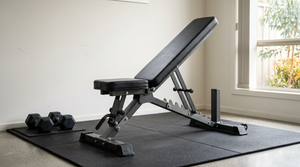

A workout bench can become the centre of a home strength setup, but only when its design matches the exercises, equipment and space around it. A compact folding model may suit dumbbell sessions in a shared room, while a fixed flat platform can provide a simpler base for regular pressing. Other benches add incline, decline, core-training or leg-training functions.
The right choice therefore starts with the movements you plan to perform, not the number of features on the product page. This guide explains how to compare the weight and workout benches available at Factory Fast by bench type, stated capacity, adjustment range, dimensions, construction and compatibility.
Start with the exercises your bench needs to support
Write down the exercises that will form your regular routine before comparing products. This separates essential functions from features that may add size, cost or setup time without improving the way you train.
For dumbbell-based strength sessions
A flat bench can support dumbbell presses, rows, pullovers, seated movements and supported arm exercises. An adjustable model adds upright and angled positions for incline presses, seated shoulder work and other movements that benefit from a raised backrest.
Consider how often you will genuinely change the angle. Someone following a varied upper-body program may use several settings every week. A shopper who mainly wants a stable platform for flat presses and one-arm rows may be better served by a fixed design with fewer moving parts.
For barbell bench pressing
The bench must work as part of a complete setup. Check its height, width and frame placement against the barbell support or rack you intend to use. The bench needs to sit centrally between the uprights without its feet, adjustment mechanism or backrest support interfering with the rack.
A standalone bench does not automatically include a barbell rest, weight plates or bar. Browse compatible home gym weights and strength equipment separately and confirm every component’s dimensions and stated limits before building the combination.
For core or lower-body work
A general-purpose bench is not always the best tool for a specialised routine. Decline sit-ups benefit from suitable leg supports, while leg extensions and curls require a compatible attachment and plates of the specified diameter.
Choose the category of exercise first. This helps prevent a common mismatch: purchasing a versatile-looking bench and later discovering that its padding, supports or adjustment positions do not suit the movement that motivated the purchase.
Choose between flat, adjustable and specialised benches
Each bench type solves a different training problem. The best option is the one that covers your repeated exercises without creating unnecessary compromises in capacity, footprint or ease of use.
Flat benches prioritise simplicity and stability
A fixed flat bench has no backrest angle mechanism to configure. This makes it straightforward for pressing, rows, pullovers and supported dumbbell exercises. Its uncomplicated shape can also make it easier to position inside a compatible rack.
The current 300 kg flat weight lifting bench illustrates this approach. It measures 1105 x 580 x 418 mm and combines a reinforced steel frame with a thick padded top and wide rubber feet. Its fixed surface suits buyers who value a defined pressing platform more than multiple backrest angles.
A flat design is not automatically the smallest choice, so check the complete frame width as well as the pad dimensions. Broad feet can improve floor contact but may also affect how closely the bench can sit beside storage, a wall or rack uprights.
Adjustable benches expand exercise choice
An adjustable workout bench changes the angle of the backrest, and sometimes the seat, to support flat, incline, decline or upright positions. This can make one bench useful across a broader upper-body program.
The six-position folding adjustable weight bench provides flat, incline and decline configurations. It measures 111 x 42 x 112 cm when fully extended, weighs 9.5 kg and folds to 112 x 42 x 20 cm. Rear wheels help with repositioning, making it relevant to a multipurpose room where the training area must be cleared after use.
Its stated maximum capacity is 100 kg. That figure should be considered alongside the intended user and training load rather than compared with another bench on adjustability alone. A compact folding design and a higher-capacity fixed platform answer different priorities.
When assessing an adjustable model, check the available positions, how the backrest locks, whether the seat also changes angle and how easily the mechanism can be reached. A long list of settings offers little benefit if changing between them interrupts every set.
Specialised benches trade generality for defined functions
Some products are shaped around a narrower group of exercises. The adjustable abdominal workout bench, for example, has an adjustable incline, padded leg support and a 99 x 30 cm flat-bench area. Its overall dimensions are approximately 148 x 36 x 65-80 cm.
That configuration supports decline sit-ups, side twists and back-extension setups, but it should not be treated as a direct substitute for every flat or adjustable pressing bench. Its shape, contact points and intended exercises are different.
At the multifunction end of the range, the adjustable bench with leg extension provides flat, incline and decline positions plus leg-extension and curl functions. It measures 200 x 70 x 118 cm, has a stated seat capacity of 150 kg and accepts 50 mm Olympic plates on the leg attachment, which has its own stated 100 kg capacity. This suits a dedicated training area better than a room that must be cleared after every session.
Read workout bench capacity figures carefully
Capacity is one of the most important specifications, but the headline number needs context. A listing may describe a seat capacity, frame rating, user limit, attachment limit or total supported load. These terms should not be treated as interchangeable.
For weighted exercises, consider the user, the weights being handled and any force created as the load is placed onto the bench. Use the definition supplied on the exact product page. If the listing does not explain what is included in the rating, obtain clarification rather than assuming that the full figure is available for added weights.
Attachments can have separate limits. On a bench with a leg developer, the main seat and plate-loaded component may be rated differently. The smaller applicable limit governs that part of the setup.
Capacity should also be assessed against future training. A bench that only just covers the current routine can become unsuitable as resistance increases. Leave a practical margin within the stated product limits, but do not choose by capacity alone. A high rating does not confirm that the pad dimensions, adjustment range or rack fit will suit the user.
Measure the working zone, not only the bench footprint
Product dimensions show how much floor area the equipment occupies, but a usable training zone must also account for the person, weights and surrounding fixtures.
Mark the complete exercise area
Use removable tape to outline the bench at its full operating dimensions. Then allow space for your feet, dumbbells, plate changes and access from both sides. For barbell work, include the width of the bar and the position of the uprights.
An adjustable backrest may extend upward or rearward as its angle changes. A leg attachment can increase the length of the equipment and require additional space in front for the user’s lower legs. Measure in every planned configuration rather than relying on the smallest footprint.
Check ceiling and wall clearance
Upright pressing positions change the user’s seated height and the path of the weights. Low ceilings, shelving, garage-door tracks or wall-mounted storage can interfere even when the bench itself fits comfortably.
Avoid placing the pad so close to a wall that the backrest cannot move through its settings. Leave enough access to reach adjustment pins, handles and locking points without dragging the frame away from the wall each time.
Plan the storage route
A foldable weight bench is only space-efficient when its folded dimensions fit the intended storage location. Measure the opening beneath a bed, behind a door or beside a cabinet, including skirting boards and handles.
Also check how the unit will reach that position. Product weight, wheels and carry points matter when the bench must cross a room after every workout. If it will remain assembled in a garage, focus instead on the operating footprint and the clearance needed around nearby equipment.
Compare pad support, frame shape and floor contact
Two benches with similar dimensions can feel different because of their padding, frame geometry and support points.
Pad dimensions affect positioning
The back pad should provide useful support without preventing the shoulder blades from moving as required by the chosen exercise. Compare its width and length with the user’s build rather than assuming a wider pad is always preferable.
Check for gaps between the seat and backrest on adjustable designs. Some separation is part of the mechanism, but its position may affect comfort in the flat setting. Buyers who expect to spend substantial time in one position should give that configuration extra attention.
Frame geometry affects foot placement
Look beneath the pad as carefully as above it. A central support, crossbar or wide front foot can influence where the user places their feet. This matters during presses, seated movements and exercises performed from the end of the bench.
The frame must also suit the surrounding equipment. A broad rear foot that works well as a standalone base may prevent the bench from moving far enough into a particular rack.
Upholstery needs the right balance
Padding should create a supportive contact surface without feeling excessively soft under load. High-density foam and resistant upholstery can be useful for repeated training, but buyers should still consider seam placement, pad shape and cleaning access.
Smooth, intact upholstery is easier to wipe down after a humid Australian summer session. Deep channels, exposed joins and crowded adjustment hardware can require more attention during routine care.
Confirm compatibility with racks, weights and attachments
A bench rarely operates in isolation. Its dimensions and functions must match the rest of the strength setup.
When pairing a bench with squat or power racks, compare the bench’s total width with the space between the uprights. Check whether the frame can travel far enough into the rack for the user to reach the bar comfortably in the flat position.
The bench height also influences the relationship between the user and the rack’s hook positions. A rack with broad adjustment intervals may not place the bar at the preferred height for every bench and user combination.
For plate-loaded attachments, confirm the required hole diameter. The multifunction example above specifies 50 mm Olympic plates for its leg component; plates with another opening should not be assumed to fit.
Dumbbell users should consider where each weight will be picked up and set down. The bench outline may fit between other equipment while leaving no practical room beside the pad. A nearby rack or defined floor position can help keep the approach clear without placing weights in the movement path.
Readers designing the whole room rather than replacing one item can use the home gym equipment guide to decide how a bench fits with weights, storage and larger stations.
Avoid common weight bench buying mistakes
The most expensive mismatch is often caused by one overlooked measurement or an assumption about what the bench includes.
Choosing by exercise count alone
A product may list many possible exercises, but that does not mean each movement is equally practical for every user. Prioritise the core routine and treat secondary functions as bonuses. A fixed platform used throughout the week offers more value than an attachment that remains unused.
Comparing capacities without reading their definitions
A 100 kg maximum capacity, a 150 kg seat capacity and a 300 kg frame rating describe different products and may be defined differently. Read the wording attached to each number. Do not rank benches by the largest figure until you know what each rating covers.
Forgetting the weights or rack
Many benches are sold without dumbbells, a barbell, plates or uprights. Build a complete shopping list and verify compatibility before checkout. This is particularly important when a specialised attachment requires a particular plate size.
Measuring only the folded dimensions
A compact storage measurement does not reveal the space required during use. Mark out the extended bench, the user’s position and the equipment being lifted. For adjustable models, test the imagined outline with the backrest flat and raised.
Assuming every adjustable bench works the same way
The number of backrest settings does not tell you whether the seat moves, how the mechanism locks or how quickly positions can be changed. Review the exact configuration against the routine rather than using the word “adjustable” as the deciding factor.
Overlooking assembly and access
The reviewed bench options require assembly. Check the assembled dimensions against doorways, stairs and the intended room before deciding where to put the unit together. A larger multifunction design may be easier to assemble near its permanent position than to move through the home afterwards.
Build a shortlist around one dominant priority
Use the following decision path to narrow the range:
- Choose a fixed flat bench when straightforward pressing and dumbbell work matter more than changing angles.
- Choose an adjustable model when incline, flat and decline positions are regular parts of the program.
- Choose a folding design when the room must return to another use after training.
- Choose a specialised core bench when supported abdominal and decline movements are the main purpose.
- Choose an attachment-equipped model when lower-body functions justify the larger footprint and plate-compatibility requirements.
- Choose the capacity only after confirming what the published rating includes.
- Eliminate any option that fails the full operating-space, storage-route or rack-fit check.
Once two products remain, count the separate actions required to move from the first exercise in your routine to the second: releasing locks, changing the backrest, moving the bench and loading an attachment. The model that reduces repeated setup friction may be the one you continue using long after the novelty of extra features has passed.
Frequently Asked Questions
Can an adjustable weight bench be used inside a power rack?
It can be used inside a compatible power rack when the bench fits between the uprights and can reach the required position beneath the bar. Check the bench width, foot placement, pad height and adjustment mechanism against the exact rack. The rack’s hook and support positions must also suit the user when lying on the selected bench.
How do I know whether a workout bench capacity is high enough?
Start by identifying exactly what the published capacity covers. It may refer to the user, seat, frame, attachment or total supported load. Consider the user’s weight and the resistance used during each exercise, then remain within the applicable product limit. Ask for clarification when a listing provides a number without defining whether added weights are included.
Is a flat bench enough for a home dumbbell workout?
A flat bench can support presses, rows, pullovers and several seated or supported dumbbell movements. It may be sufficient when those exercises form the core routine. Choose an adjustable model instead when incline pressing, upright shoulder work or decline positions are regular priorities. The simpler flat design may offer a more direct choice for buyers who rarely change angles.
Are foldable weight benches suitable for regular training?
A foldable bench can suit regular home workouts when its stated capacity, locking mechanism and exercise functions match the user’s routine. Compare the full operating dimensions as well as the compact storage size. A lightweight folding model may be easier to move, while a heavier fixed design may better suit a permanent training area and higher stated capacity requirements.
What equipment is normally included with a weight bench?
Inclusions vary by product. A standalone bench may not include dumbbells, plates, a barbell or supporting uprights, even when its description names exercises that use them. Some models include integrated rests or attachments but still require separately purchased weights. Read the component list and check plate diameter, rack dimensions and attachment limits before completing the setup.
How should a workout bench be cleaned and maintained?
Wipe the pad after training with a suitable lightly dampened cloth, then allow the surface to dry before folding or storing the bench. Regularly inspect the upholstery, frame connections, feet, adjustment pins and locking points for wear or looseness. Keep moving components free from dirt and follow the care and assembly information supplied with the exact product.
 Tags: