1300 760 441
 cs@factoryfast.com.au
Living Room Lighting Buyer Guide: How to Plan Floor, Table and Pendant Lights
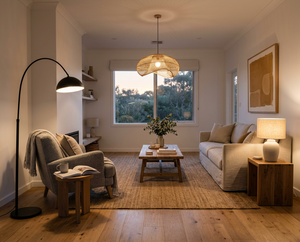

A living room rarely has just one job. It may be a television room after dinner, a reading space on the weekend, a conversation area when visitors arrive and a walkway connecting several parts of the home. One bright ceiling light cannot serve all those uses equally well.
Effective living room lighting comes from assigning a purpose to each light source. The main choices are ambient light for general visibility, task light for focused activities and accent light for atmosphere or visual emphasis. A good plan combines these roles without filling every surface or corner with a lamp.
This guide explains how to plan that combination, compare floor, table and pendant fixtures, assess practical dimensions and choose finishes that belong in the room. You can then explore the broader living room lighting range with a clear idea of what each fixture needs to accomplish.
Start With the Activities That Happen in the Room
Begin with how the living room is actually used rather than choosing a fixture solely because its finish suits the décor. Each regular activity creates a different lighting requirement.
Ambient lighting supports general movement
Ambient light is the room’s broad background illumination. It helps people enter, move around and use the space without relying on a concentrated beam. Ceiling fixtures, pendants and shaded floor lamps can all contribute to this layer.
The goal is comfortable coverage rather than maximum brightness. A single intense source may make the centre of the room bright while leaving the corners visually flat. Several softer sources placed at different heights can produce a more balanced result.
Task lighting supports reading and close work
Task light should illuminate the activity without shining directly into the user’s eyes or reflecting across a television screen. Reading beside an armchair generally calls for a lamp positioned close to the seat, while puzzles, craft work or paperwork may need light directed across a table.
A flexible neck, directional shade or conveniently placed switch can be more useful here than an elaborate decorative form. The best fixture is the one that puts light on the task while remaining easy to operate from the seating position.
Accent lighting shapes the room after dark
Accent light highlights a feature or creates a softer evening mood. It might draw attention to shelving, wall décor, a textured surface or a quiet corner that otherwise disappears at night.
This layer should not compete with the television or make the room harder to navigate. A compact lamp on a shelf or side table can create depth without becoming another dominant focal point.
Map the Lighting Zones Before Choosing Fixtures
A simple room sketch can prevent purchases that are attractive individually but ineffective together. Mark the fixed furniture, power points, doorways and regular walking paths. Then identify where light is missing during the evening.
Seating zones need accessible controls
A lamp beside a sofa or armchair should be operable without moving furniture or crossing the room. Check which side of the seat has a power point, where the cable will run and whether the switch remains reachable.
For a reading chair, consider where the user’s head and shoulders will be in relation to the shade. A lamp placed too far behind the chair may create shadow across the page. One positioned directly in front may cause glare.
Television zones need controlled brightness
A bright lamp reflected in the screen can be distracting even when the fixture is several metres away. Look at the television from every main seat and check whether a proposed lamp position falls within the reflected view.
Side lighting or a shaded source is often easier to manage than an exposed globe facing the screen. Dimming can also help the room retain enough background illumination without overpowering the image.
Walkways need clear floor space
Floor lamps should sit outside the main path between doors, seating and adjacent rooms. Include the full base in your layout rather than judging only by the narrow stem. A stable footprint matters particularly in compact lounge rooms where furniture sits close together.
Cable routing belongs in the same decision. If a cord must cross an open walkway to reach a power point, the location is unsuitable regardless of how well the lamp illuminates the area.
Compare Floor, Table and Pendant Lights by Function
The three main fixture types solve different problems. The strongest plan may include more than one, but each should have a distinct role.
Floor lamps add light without using furniture space
A floor lamp works well beside a sofa, behind an armchair or in an underused corner. It is relatively easy to reposition when the room layout changes, making it useful for renters and households that regularly rearrange furniture.
Browse floor lamps for living areas with the base size, overall height and shade direction in mind. A tall shaded model can provide soft ambient light, while a directional design may be better beside a reading chair.
Storage can also be combined with illumination. The live shelf floor lamp with open-box shelves stands 1.6 m high and includes three 26 cm-wide shelves. It uses an E27 fitting, operates with a pull chain and does not include the globe. This configuration suits a corner that needs both warm light and vertical display space, provided the shelves will not encourage visual clutter.
Table lamps create localised light at seated height
A table lamp can support reading, soften a television area or add atmosphere to a sideboard. Its effect depends on both the lamp and the surface beneath it. Measure the available tabletop after allowing room for drinks, controls and other everyday items.
The shade should not dominate the furniture or sit at an uncomfortable eye level. Compact designs are useful on narrow side tables, while larger decorative lamps are better reserved for consoles and wider cabinets.
The white timber-base table lamp measures 50 cm high with a 16 cm diameter and a 160 cm cord. Its steel shade and flexible neck make it more directional than a conventional fabric-shaded lamp. It uses an E27 globe, which is not included. This makes it a practical choice for a reading corner or small work surface where aimable light matters.
When the best position is not close to a power point, the cordless touch-dimmable LED table lamp offers another approach. It is 28 cm high with a 9 cm base and 13 cm lamp diameter. Its warm white light, touch control and USB-rechargeable design suit small side tables, shelves and flexible evening arrangements.
Pendant lights establish an overhead focal point
A pendant is a more permanent choice than a floor or table lamp. It can anchor a seating arrangement, illuminate an open-plan zone or introduce a sculptural feature above an area that feels visually empty.
Review the pendant light collection only after confirming the ceiling position and furniture plan. The fixture should relate to something below it rather than hanging over an accidental gap. In an open living and dining space, a pendant may work best above the dining zone while portable lamps serve the lounge.
The 35 cm white pendant light uses an aluminium and iron shade with a warm metallic interior and includes an E27 globe. Its 35 cm diameter gives it enough visual presence to act as a defined feature without requiring a cluster of smaller fittings.
Because a ceiling fixture affects wiring, mounting and room layout, confirm the installation requirements before ordering. Do not assume that the position of an existing ceiling light is automatically the best position for a new pendant.
Check Dimensions Against Furniture and Sightlines
Product dimensions become meaningful only when compared with the room. Mark the proposed footprint with removable tape or use a similarly sized household object to test the space.
Measure the entire floor-lamp footprint
Check the base width, shade width and overall height. A lamp may fit beside the sofa at floor level but have a shade that collides with a curtain, shelf or reclining chair. Allow enough room to operate the switch and clean around the base.
For an open shelf design, measure the items likely to sit on it. Oversized objects can make the unit look top-heavy, while crowded shelves may reduce the calm effect expected from a softly diffused light.
Judge table lamps from the seated position
Record the usable width and depth of the side table, not its outer dimensions alone. A 13 cm lamp may technically fit on a compact surface, but the base must leave room for the table’s normal function.
Sit in the adjacent chair and check the likely shade or light-source height. The glow should serve the activity without placing an exposed bright point directly in the line of sight.
Test pendant scale at full drop height
Ceiling height, fixture diameter and suspension length work together. A pendant that looks compact online may feel much larger once lowered into the room. Use string or tape to represent the proposed diameter and drop before committing to the fixture.
Also view the test outline from the entrance, sofa and any connected dining area. A pendant should strengthen the room’s composition from several directions, not only from directly underneath.
Choose Light Control, Globe Fit and Shade Direction
Two lamps with similar styling can behave very differently once switched on. Compare their controls and light distribution as carefully as their colour.
Confirm whether the globe is included
Some fixtures include an E27 globe, while others provide only the fitting. Where a globe is excluded, its cost and characteristics form part of the purchase decision.
Check the listed base type and maximum supported wattage before selecting a globe. Do not rely on the fixture’s appearance to determine compatibility.
Decide whether you need dimming
Dimming is valuable when one light serves more than one purpose. A brighter setting may support reading or social use, while a lower setting can provide background illumination during television viewing.
Verify where the dimming function sits. A touch control on the lamp, an inline switch and a wall control offer different levels of convenience. The control should be accessible from the place where the light will normally be used.
Use shade shape to control the beam
An opaque directional shade concentrates light, which suits tasks but can create a strong bright-to-dark contrast. A fabric or translucent shade diffuses the glow across a wider area. An open pendant can project light outward and make the globe more visually prominent.
Choose the distribution first and the shade material second. A beautiful shade that sends light in the wrong direction will remain frustrating in daily use.
Coordinate Materials Without Matching Everything
Living room lighting should connect with the furniture without looking like a pre-packed set. Repeating one or two materials is usually enough to establish continuity.
A timber lamp base can relate to a coffee table, shelving or flooring. Black metal can connect with furniture legs, window frames or cabinet handles. Chrome and polished finishes suit rooms with cooler metallic accents, while a warm interior finish on a pendant can soften a predominantly white space.
Pay attention to visual weight as well as colour. A narrow steel lamp feels lighter than a solid shelving unit even when both are black. In a small room, one substantial fixture may be enough; the remaining lamps can use finer frames or compact bases.
At the time of research, the verified live examples in this guide ranged from $22.47 for a compact table fixture to $101.21 for the 35 cm ceiling pendant. Compare total project cost rather than the sticker price of one lamp, accounting for any separate globes and installation needed for fixed lighting.
Avoid Common Living Room Lighting Mistakes
Buying every fixture in the same style can produce a coordinated room, but it does not guarantee useful light. Each source still needs its own function, position and control.
Another common mistake is putting all illumination at ceiling height. This can make the lower half of the room feel visually empty and leave seated activities poorly served. Adding light near sofa, table and shelf height gives the space more depth.
Do not overlook daytime conditions. A position that seems ideal after sunset may compete with window glare or block a curtain during the day. Check the proposed location in both conditions before finalising it.
Finally, resist filling every dark corner. Some contrast helps define the room and makes selected features more noticeable. Aim to illuminate the places people use, the routes they follow and the details worth seeing.
Build the Lighting Plan in a Practical Order
Start with the activity that currently lacks adequate light. This is often reading beside a chair, general illumination away from the ceiling fixture or a dark transition between the lounge and an adjoining space. Solve that need first.
Next, add a source at a different height. If the first purchase is a floor lamp, the second might be a compact table light or an overhead pendant. This creates useful layering without duplicating the same effect.
Delay purely decorative accent lighting until the functional sources are in place. Once those lamps are switched on together, any remaining dark areas or excessive brightness will become easier to identify.
Before ordering, photograph the living room at dusk from the main entrance and from each regular seat. Mark the dark task areas, screen reflections and empty upper zones directly on those images. That short visual check reveals whether the next purchase should stand beside the sofa, sit on a surface or hang above the room.
Frequently Asked Questions
How many lights should a living room have?
There is no fixed number that suits every living room. Base the plan on distinct activities and zones rather than room size alone. A compact lounge may need one ambient source and one reading lamp, while an open-plan area may require several sources at different heights. Each fixture should solve a separate problem; adding more lamps without a defined role can create glare and unnecessary clutter.
Is a floor lamp or table lamp better beside a sofa?
A floor lamp is usually better when the side table is small or unavailable, while a table lamp suits a surface with enough usable space. Check shade height, switch access, base dimensions and cable routing before deciding. For reading, either type can work if the light reaches the page without shining into the user’s eyes or reflecting across a nearby television.
Can pendant lights work in a small living room?
Yes, provided the pendant is scaled to the furniture and ceiling rather than the room alone. A single restrained fixture can define a seating zone without occupying floor or table space. Test the proposed diameter and drop with tape or string, then view it from the doorway and sofa. Confirm the mounting position and installation requirements before purchasing a fixed ceiling light.
What type of light is best for watching television?
Soft background light positioned outside the television’s reflection is generally the most comfortable choice. A shaded floor lamp, dimmable table lamp or low-output accent source can keep the room from becoming completely dark without competing with the screen. Test the lamp from every regular seat, as a source that appears unobtrusive from one angle may create glare from another.
Are cordless table lamps practical for living rooms?
Cordless table lamps are useful where a power point is inconvenient or a visible cable would cross furniture or a walkway. They suit occasional evening use, shelves and compact side tables. Check the lamp’s dimensions, charging method, controls and stated light colour before buying. A rechargeable model still needs periodic access to power, so include charging in the room’s practical routine.
Should living room lamps all match?
Living room lamps do not need to match exactly. A more considered result often comes from repeating one finish, colour or material while varying the fixture shapes according to function. For example, timber or black metal can recur across a pendant and floor lamp without making them identical. Keep the visual relationship deliberate, but let each light’s placement, beam direction and controls determine its final form.
 Tags: