1300 760 441
 cs@factoryfast.com.au
Best Bed Frame Material: Metal, Wood or Fabric Compared
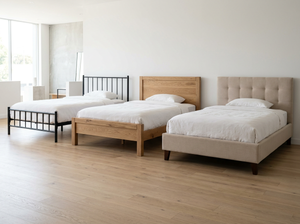

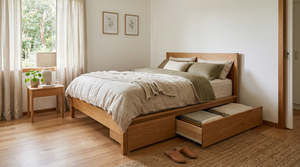
The best bed frame material is the one that suits how you sleep, clean, move and use the bedroom. Metal can provide a strong, streamlined base. Wood brings visual warmth and a more furniture-like presence. Fabric softens the room and can make sitting against a headboard more comfortable, but it also creates extra cleaning work.
Material alone does not determine whether a frame is supportive or suitable. The base design, slats, joints, dimensions, weight capacity and mattress fit matter just as much. Start with the practical requirements, then use material to refine the shortlist.
Factory Fast’s bed frames collection contains metal, timber and upholstered options across several sizes. If size, storage or base style is still undecided, work through the broader bed frame buyer guide before comparing finishes.
What does bed frame material actually describe?
A material label can refer to the visible surface, the structural frame or both. A steel bed may use metal throughout its main structure. A wooden model might combine a timber outer frame with solid slats and metal fasteners. An upholstered design can place linen fabric and padding over a metal or timber support structure.
This distinction matters because the visible finish does not tell you how the mattress is supported. A soft fabric headboard may sit above flexible wooden slats and a metal frame. Two beds that look completely different can therefore share similar structural components.
When assessing any model, separate the decision into three layers:
- The outer material controls much of the appearance, touch and cleaning routine.
- The support structure affects stability, capacity and how the frame carries the mattress.
- The base design determines ventilation, mattress contact and whether another foundation is required.
A useful comparison begins with the construction details rather than relying on “metal”, “wood” or “fabric” as a complete description.
Metal bed frames: strong, simple and easy to coordinate
Metal is a practical choice for buyers who want a visually light frame, straightforward care and clearly defined structural specifications. Slim rails and legs can make the base look less bulky than a padded design, which is helpful in guest rooms, rentals and bedrooms where the bed should not dominate the layout.
Powder-coated steel also suits neutral interiors because it can be paired with different bedding, rugs and bedside furniture without fixing the room to a particular timber tone or textile colour. Buyers can explore the wider metal bed frames collection for simple platforms, decorative shapes and different sizes.
Who should choose metal?
A steel frame is well suited to people who prioritise capacity, low-effort cleaning or a simpler moving process. Open construction may also leave useful access below the mattress, although the actual clearance must be checked on the individual product rather than assumed from its material.
Metal is not automatically silent. Movement noise usually needs to be assessed through the joint design, fasteners and assembly quality. A frame with loose hardware may move or creak regardless of how strong its main rails are. Periodic tightening is therefore part of sensible ownership.
What do the specifications reveal?
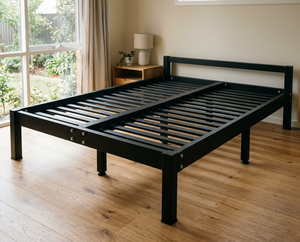
The live double heavy-duty steel bed frame shows why product-level details are more useful than broad material claims. It uses full-steel construction with a black powder-coated finish and has an assembled size of 143 × 193 × 29 cm. Its internal fit is 137 × 187 cm, and the stated capacity is 350 kg.
Those figures answer three separate questions. The internal measurement indicates the intended mattress fit, the external footprint shows how much bedroom floor area is needed, and the capacity helps buyers consider the combined load of the mattress, bedding and occupants. The 29 cm overall height also provides a concrete reference for comparing bed access and potential storage clearance.
The tradeoff is feel. An all-steel base does not provide the padded surface of an upholstered headboard or the visual warmth of timber. Buyers who enjoy reading in bed may need a separate headboard or supportive pillows.
Wooden bed frames: warm, substantial and furniture-led
Wood works well when the bed should feel like a permanent part of the bedroom rather than a neutral mattress platform. Grain, painted finishes and thicker rails can create a stronger furniture presence, making timber appealing in main bedrooms and spaces with matching bedside tables or dressers.
The broad label “wooden bed” still requires closer inspection. Pine, composite panels and other timber constructions can differ in weight, finish and upkeep. Buyers should check the stated frame material, slat construction and external dimensions instead of assuming every wooden option behaves the same way.
Who should choose timber?
A wooden frame suits buyers who value a warm appearance, solid headboard styling and an easy connection to other bedroom furniture. Painted timber can work in light or coastal-style rooms, while natural finishes suit interiors where visible grain is part of the design.
Wood may be less convenient for people who move frequently. Thick components can be more cumbersome through narrow doorways, and painted surfaces require care around hard corners during relocation. Dusting is simple, but moisture should not be left sitting on timber or painted joints.
Where does product detail change the decision?
Factory Fast’s double pine wooden bed frame uses a pine frame, white finish and solid timber slats. Its listed footprint is 195 × 144 cm, and it is designed for a standard Australian double mattress.
That footprint is important because the frame extends beyond the mattress area. A buyer comparing it with a slimmer platform should measure the complete product outline, not simply mark out the mattress dimensions. The extra structure can affect bedside clearance, wardrobe access and the amount of room available when changing sheets.
The reviewed product page does not state a weight capacity. That does not establish whether the frame is suitable or unsuitable for a particular load; it means capacity should be confirmed before it becomes part of the buying decision. Never substitute a general assumption about timber strength for a specification that is absent from the exact product page.
Fabric bed frames: softer comfort with more cleaning responsibility
A fabric bed frame is usually chosen for comfort and visual softness rather than because fabric forms the underlying structure. Upholstery can turn the bed into the main furnishing feature, while a padded headboard provides a more comfortable surface for reading, watching television or using a laptop.
This material is particularly useful when a room feels dominated by hard finishes. Fabric adds texture and can visually connect bedding, curtains and floor coverings. The fabric bed frames collection includes different sizes, colours and headboard treatments for buyers seeking that softer effect.
Who benefits most from upholstery?
Fabric is a strong option for a main bedroom where the headboard is used every day. It also suits buyers who want the room to look finished without purchasing a separate bedhead.
The tradeoff is care. Dust can settle along seams, tufting and the top edge of the headboard. Spills need prompt attention, and vacuuming with a suitable soft attachment should become part of the room’s cleaning routine. Homes with pets, young children or frequent guest turnover should consider whether that maintenance fits normal household habits.
Look beneath the textile surface
The live double grey linen upholstered bed frame demonstrates the layered construction of this category. It combines grey linen fabric, a padded headboard, a metal support frame and flexible wooden slats. The product is designed for a 137 × 187 cm mattress and arrives flat-packed for assembly.
This is not simply a “fabric” structure. Its visible comfort comes from upholstery and padding, while metal and timber components perform the supporting work. That combination may suit someone who wants a softer bedroom without giving up an open slatted base.
The page reviewed for this article does not provide a complete assembled footprint or stated weight capacity. Buyers should confirm both if space or load is a deciding factor. Mattress compatibility alone does not show how far the padded rails and headboard project into the room.
Compare the support system before choosing the finish
A frame’s material affects ownership, but the support system controls its working relationship with the mattress. Check whether the model uses flexible slats, solid timber slats, steel supports or another base arrangement.
Match the base to the mattress
Begin with the mattress label or current product information. Record its width, length and any base requirements before shopping. A frame described as “double” should still be checked against the listed internal fit because small differences can affect how securely the mattress sits within the rails.
Also inspect the way the support is distributed. Centre rails, crossbars, slats and legs determine where loads are transferred to the floor. A decorative headboard or premium-looking upholstery cannot compensate for a base that does not suit the mattress.
Calculate the load properly
A stated capacity needs to cover more than the people using the bed. Consider the mattress, bedding and anything regularly placed on the sleep surface. Heavier mattress constructions can use a meaningful portion of the available allowance before occupants are included.
Only rely on the capacity published for the exact model and size being purchased. Do not apply the rating from a steel queen frame to a timber double, even when the products appear similar. Where the page does not show a limit, seek confirmation rather than estimating from the material.
Measure the whole frame, not just the mattress
The mattress size establishes the sleeping area. The assembled frame determines whether the room remains easy to use.
A metal platform can sit close to the mattress outline, while timber rails, posts or upholstered sides may add width and length. Padded headboards can also project forward from the wall, changing where the mattress begins. These differences matter in compact bedrooms where only a small margin separates the bed from doors, drawers or wardrobes.
Map the bedroom footprint
Measure the intended wall and floor area, then mark the external frame dimensions with removable tape. Check the walking path from the doorway and the clearance needed to open nearby furniture. Include skirting boards, power points and anything that prevents the headboard from sitting flush against the wall.
Do not forget bed-making access. A frame may technically fit while leaving too little room to reach the far corner of the mattress. Wider timber and fabric rails can make this task more awkward than a slim metal edge.
Check delivery and assembly access
Flat-packed construction can make a large frame easier to bring into the room, but the package still needs to pass through entrances, hallways and stair turns. Consider where components can be unpacked and whether there is enough floor space to assemble the base without damaging the finish.
Metal parts need protection from hard floors during setup. Painted timber should be kept away from sharp edges, and upholstery should remain clear of dirty tools or packaging. If the bed may be moved again, review whether its joints can be disassembled without removing fixed or delicate sections.
Choose the material around daily bedroom use
The right choice often becomes clearer when the decision is tied to a specific room and user.
Rentals, guest rooms and frequently moved beds
Metal is often the practical starting point where easy wiping, neutral styling and future relocation matter. A streamlined design can be restyled with different bedding when occupants change. Check the assembled weight, fasteners and disassembly steps if moving is likely.
For a guest room, think about what happens between visits. Open construction can make the surrounding floor easier to inspect and clean, while a heavily padded design may require more attention even when the bed is rarely used.
Main bedrooms and reading in bed
Fabric becomes more compelling when the headboard is an everyday contact surface. Padding supports a more comfortable seated position and gives the room a softer focal point. Its extra upkeep is easier to justify when that comfort is genuinely used.
Wood is a good alternative when the buyer wants a defined headboard and substantial furniture look without textile care. The best result depends on whether tactile softness or a solid, wipeable finish matters more.
Children’s rooms and changing interiors
Painted timber and metal both offer clear benefits in rooms that may change style over time. Their surfaces can be coordinated with new bedding without committing to a particular upholstery texture. Check exposed edges, overall height and the precise product specifications for the intended user.
Fabric can soften the room, but pale upholstery may demand more frequent cleaning. Choose it only when the household is comfortable maintaining seams, headboard edges and areas close to the floor.
Plan for the maintenance each material requires
Material choice determines which signs of wear will need attention.
Metal frames generally need dust removal and occasional wiping with a soft cloth. Check bolts and other connections during routine cleaning, especially after the bed has been moved. Address damage to a coated finish promptly and keep the frame dry.
Wooden designs should be dusted with a soft cloth. Use cleaning methods that suit the exact finish, and avoid leaving moisture around joints or slats. When moving the bed, lift components rather than dragging them across the floor or placing pressure on the headboard.
Upholstery benefits from gentle vacuuming, particularly along seams and upper edges. Treat spills according to the product’s care directions rather than saturating the fabric. Before buying, consider whether the headboard can be reached easily with the cleaning equipment already used in the home.
The easiest bed to maintain is not necessarily the one requiring the fewest tasks. It is the model whose care routine fits what the household will realistically do.
Common material-selection mistakes
Choosing by appearance alone is the first major mistake. A finish can suit the room while the external dimensions, capacity or support layout fail the practical brief.
Another error is treating all products in one material group as interchangeable. Two steel frames can have different heights and support systems. Timber models may use different slats or finishes, while upholstered designs can conceal either metal or wooden structures.
Buyers also overlook the effect of rail thickness. A mattress may fit correctly, yet broad padded sides or substantial posts can consume valuable circulation space. Compare the assembled outline for every shortlisted model.
Finally, do not interpret a missing specification as permission to estimate. If capacity, slat spacing or overall size is essential and the page does not state it, confirm the detail before ordering or choose a model with clearer product information.
Make the final choice with a material-first shortlist
Start with metal when the priorities are a streamlined look, explicit structural specifications and straightforward cleaning. Choose wood when the bed should coordinate as a substantial furniture piece and a warm or painted finish suits the room. Prioritise fabric when a comfortable headboard and soft visual treatment justify the additional upkeep.
Then assess each shortlisted product independently. Confirm mattress fit, overall footprint, support construction, capacity where stated, assembled height, access needs and care requirements. A material category narrows the field, but those product-level checks determine whether the bed will work in the room.
Before ordering, photograph the mattress label and tape the proposed frame’s complete outside corners onto the bedroom floor. Leave the outline in place while opening drawers, using the wardrobe and making the bed from both sides. This short live test reveals whether padded rails, timber posts or a projecting headboard will interfere with the way the room actually functions.
Frequently Asked Questions
Which bed frame material is easiest to clean?
Metal is generally the simplest material to maintain because smooth coated surfaces can be dusted or wiped with a soft cloth. Painted timber is also relatively straightforward, although moisture should not remain around joints or slats. Fabric requires more regular vacuuming and prompt treatment of spills, particularly around seams and headboard edges. Always follow the care directions supplied with the individual frame.
Can an upholstered bed frame support a heavy mattress?
It may, but upholstery does not determine the frame’s capacity. The internal metal or timber structure, base design and stated load rating are the relevant details. Add the mattress, bedding and occupants when considering the total load. If the product page does not publish a capacity, confirm it before purchase rather than assuming that a padded or substantial-looking frame provides greater support.
Does a metal bed frame need a separate bed base?
Not when the model already includes a suitable platform, slats or steel mattress supports. Some frames are only surrounds and require an additional foundation, so check the component list and product description carefully. The supplied support must also suit the mattress being used. A steel outer frame does not automatically confirm that every mattress can be placed directly on it.
How can I reduce noise from a bed frame?
Check that all fasteners are correctly installed and tightened, and make sure every leg sits evenly on the floor. Movement at loose joints can cause noise in both metal and wooden frames. Recheck the connections after relocating the bed or after the first period of use. Do not add unapproved components that could alter the frame’s fit or interfere with its support system.
Can I keep my existing mattress when changing frame material?
Yes, provided the new frame has the correct internal dimensions and a compatible support system. Read the mattress label, measure its width and length, and check any base requirements before ordering. Do not rely on the size name alone. The frame’s external dimensions should also be measured separately because upholstered rails, timber posts and headboards can extend beyond the mattress footprint.
Is metal, wood or fabric better for a rental property?
Metal often suits rentals because its neutral appearance, wipeable finish and flat-packed construction can make furnishing and future moves simpler. Wood offers a warmer, more permanent look but may be heavier or easier to mark during relocation. Fabric creates a softer bedroom but needs more cleaning between occupants. The final choice should also account for capacity, access, assembly and the exact room layout.
Related Articles
-
 Tags:
Bed Frames