1300 760 441
 cs@factoryfast.com.au
Shower Screen Hardware Finishes Explained: Chrome, Black, Gunmetal or Gold?
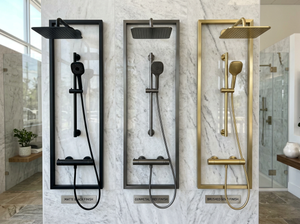

Shower screen hardware can occupy only a small part of the bathroom, yet its colour is repeated across brackets, channels, hinges, handles and rails. On a frameless screen, those details sit directly against clear glass, so an unsuitable finish can feel more obvious than expected.
Chrome, matte black, brushed gunmetal and gold each create a different relationship with tiles, tapware and cabinetry. They also reveal fingerprints, water marks and dust differently. The best choice is not simply the finish that looks most appealing in isolation. It is the one that suits the screen configuration, connects with the room and remains practical under everyday use.
Before comparing colours, narrow down the correct layout within the Factory Fast shower screen range. Door clearance, water containment, panel sizes and mounting requirements should decide the screen type. The finish can then complete that choice without distracting from a poor fit.
Why the screen configuration must come before the finish
Shower hardware is part of a working assembly. A fixed walk-in panel might use only a few wall and floor brackets, while a hinged enclosure adds moving hinges and a handle. A sliding model can include rollers, stoppers, guides, rail connectors, wall fittings and a long overhead rail.
That distinction changes how much colour the eye sees. Matte black may appear as a restrained accent on two small brackets, but the same finish becomes a defining design line when applied to a sliding rail, wall channels and multiple moving components. Gold can look subtle on compact hinges and much stronger across a framed enclosure.
Begin with a practical sequence:
- Identify whether the shower needs a fixed panel, hinged door, corner enclosure, sliding entry or wall-to-wall arrangement.
- Confirm the finished installation dimensions and required door movement.
- Check the glass thickness and the supplied mounting system.
- Review every visible component included with the product.
- Choose the finish only after understanding how much of it will be visible.
The shower screen accessories range is useful when comparing channels, brackets and other fittings. Compatibility still takes priority over colour: a preferred hinge is only suitable when its glass thickness, fixing method and movement match the selected screen.
Chrome, black, gunmetal and gold compared
Chrome: bright, familiar and easy to coordinate
Chrome has a polished, reflective surface that works with many established Australian bathroom schemes. It can connect naturally with chrome tapware, silver-toned cabinet handles and other bright fittings without forcing the shower to dominate the room.
Its reflective quality helps the hardware blend with clear glass and surrounding light. This makes chrome especially useful when the intention is to keep a compact bathroom visually open. It also suits renovations where existing fittings will remain and replacing every metal element would add unnecessary cost.
The 90 x 210 cm fixed panel with chrome F-brackets demonstrates how little metal may be needed in a walk-in layout. The 10 mm toughened glass panel is supported by two solid-brass F-brackets designed for that glass thickness. Because the fittings are compact, the polished finish reads as a highlight rather than a frame.
Chrome can reveal dried droplets, but its reflective surface tends to break up minor variation better than a flat dark colour. It suits buyers who want a versatile finish and do not need the shower hardware to become the room’s strongest feature.
Matte black: graphic contrast and a defined outline
Black hardware creates the clearest contrast against transparent glass and light-coloured tiles. It suits bathrooms with black tapware, dark cabinet pulls, strong grout lines or other deliberate accents. On a frameless panel, it can give individual brackets a crisp architectural presence.
The effect becomes much bolder on sliding or semi-frameless models because more components carry the colour. The verified 120 x 90 cm sliding corner screen with black hardware has an adjustable 1200–1240 mm front, an 897 x 2000 mm side panel and 10 mm glass. Its matte black package includes U-brackets, rollers, guides, stoppers, connectors, a floor guide, handle and rail. Here, black is a major part of the enclosure’s appearance.
This finish works best when the contrast is intentional. A lone dark shower frame in an otherwise warm, low-contrast bathroom can look disconnected. Repeating black once or twice elsewhere, such as at the tapware or vanity handles, usually gives it a clear reason to be in the room.
Dark surfaces may make pale mineral residue, soap film and lint more visible. Buyers who prefer black should be comfortable wiping the hardware regularly and avoiding cleaning tools that could mark the coating.
Brushed gunmetal: depth without the sharpness of black
Gunmetal provides a darker, contemporary look with less visual severity than matte black. Its grey undertone can bridge pale tiles, charcoal surfaces and stainless-toned details. A brushed texture also absorbs light rather than reflecting the room like polished chrome.
This is a useful finish when the bathroom needs definition but a pure black outline would feel too dominant. It can work particularly well with stone-look tiles, concrete-inspired surfaces and mid-grey cabinetry because it sits within the same tonal family.
The 110 cm wall-to-wall screen with brushed gunmetal fittings combines a 650 x 1990 mm door with a 440 x 2000 mm hinge panel. Its hardware includes a 2100 mm anodised aluminium wall channel, stainless steel dual-action hinges and a brass double-pull handle. The hinges are specified for 10 mm glass and a maximum door load of 45 kg.
Gunmetal is not one universal colour. The undertone and surface texture may differ between product ranges, particularly when components use different base materials. Check the exact finish named on every supplied part rather than assuming any grey metal will create a perfect match.
Gold: a warm feature finish
Gold hardware brings warmth to clear glass and can soften bathrooms built around white, cream, green or stone-look surfaces. It suits renovators who want the shower fittings to contribute decorative character rather than disappear.
The main decision is how widely to repeat it. Gold applied to a compact handle and a few brackets can act as a controlled accent. Across channels, rails and several hinges, it becomes a central part of the room’s palette. That stronger treatment works best when the vanity, tapware or lighting already contains related warm-metal details.
The 120 x 70 cm corner screen with brushed gold hardware shows how the finish operates across several junctions. The enclosure includes a 650 x 1990 mm door, a 540 x 2000 mm hinge panel and a 700 x 2000 mm return panel, all in 10 mm glass. Gold F-brackets, hinges and a square double-pull handle give the colour several visible points around the corner layout.
Warm metallic finishes vary from pale champagne tones to deeper yellow shades. The product description and supplied component list should guide the decision. Do not rely on the word “gold” alone when comparing it with existing tapware.
Match the finish to the amount of visible hardware
Fixed panels need restraint, not forced matching
A fixed shower panel commonly has fewer visible parts than an enclosed or sliding design. This gives buyers more freedom because a small set of brackets does not have to match every other metal detail perfectly. A related tone may be enough.
For a quiet result, choose chrome beside cool silver-toned fixtures or gunmetal near grey surfaces. Black can add deliberate punctuation against white tile, while gold turns even a small bracket set into a decorative detail.
Hinged and corner screens repeat the colour
A hinged screen places hardware at the door, fixed panel and handle. Corner layouts add another glass direction and more fixing points, so inconsistencies are easier to notice. Confirm whether the bracket, hinge and handle finishes are coordinated within the package.
Door swing also matters. A striking finish cannot compensate for hinges that send the door towards a vanity, toilet or towel rail. Measure the complete arc and decide whether inward, outward or dual-direction movement works in the available space.
Sliding screens make hardware part of the silhouette
A sliding shower screen uses a longer and more mechanical hardware system. Rails, rollers, wall connections and handles form a visible outline, making the selected colour more influential.
Black produces the boldest silhouette. Chrome keeps that structure brighter, while gunmetal can reduce the contrast without losing definition. Check whether every component is supplied in the stated colour, including small guides and stoppers that may be easy to overlook during comparison.
How to coordinate shower hardware with the bathroom
Matching every metal item exactly is not always necessary. A more useful objective is visual consistency: the room should have one dominant finish and, if needed, one supporting metal that appears intentionally.
Start with the fittings that are expensive or difficult to replace. Existing tapware, a fixed vanity or prominent cabinet handles should carry more weight than a removable towel hook. If the shower screen introduces a second finish, repeat that colour in one nearby detail so it does not appear accidental.
Undertone matters as much as brightness. Chrome and cool gunmetal usually sit comfortably with crisp white, grey and blue-toned surfaces. Gold tends to connect more naturally with warm whites, green tiles, timber-look cabinetry and warmer stone patterns. Black is comparatively neutral, but its strong contrast makes placement important.
Also consider the lines already present. Square handles and straight channels suit rooms with angular tapware and rectangular basins. Rounded knobs and softer fittings can feel more coherent beside curved mirrors, arched details or rounded mixers. Finish and shape should support the same design direction.
Do not choose from a small online colour swatch alone. View the bathroom during daylight and under its installed lighting. Warm lamps can make gold richer and shift gunmetal towards brown, while cool lighting can make chrome appear sharper. Tile samples viewed beside the planned fittings provide a more reliable comparison than memory.
Cleaning and maintenance differences between finishes
No shower hardware finish is maintenance-free. Water droplets, soap residue and cleaning products can sit on hinges, brackets and rails even when the glass receives most of the attention.
Chrome responds well to regular wiping with a soft cloth because the polished surface can regain its brightness quickly. Its main weakness is that fingerprints and dried droplets may catch the light. Matte black hides reflections but creates strong contrast with pale residue, so neglect is often more visible.
Brushed gunmetal tends to disguise light fingerprints through its textured surface, although residue can still collect around moving parts and edges. Gold should be cleaned gently so its decorative surface is not dulled by abrasive tools or harsh products.
The safest routine is simple: remove moisture with a soft cloth, use mild cleaning products suitable for the listed material and avoid aggressive scrubbing. Pay particular attention to the underside of handles, bracket edges, rail junctions and hinge plates. For component-specific guidance, review the shower screen brackets, hinges and seals guide.
Maintenance should influence the buying decision honestly. A busy household that wants minimal visible residue may prefer a lighter or brushed finish. A buyer committed to a high-contrast black enclosure should plan for more frequent touch-ups around rails and lower fittings.
Common mistakes when choosing a hardware colour
The first mistake is selecting a finish before confirming the screen type. This can lead buyers to force a preferred colour onto a layout with unsuitable door movement, panel dimensions or mounting requirements.
Another error is matching only the handle. A shower screen can include several distinct parts, and the finish needs to be checked across brackets, hinges, channels, rails, rollers and guides. Product images may show optional accessories, so the written “included” list is the dependable reference.
Buyers also compare prices across different configurations and assume the finish created the difference. A fixed chrome panel and a black sliding corner enclosure contain very different amounts of glass and hardware. Compare like-for-like dimensions, door styles and accessory packages before judging whether one colour carries a premium.
Trying to achieve an exact match across unrelated product ranges can be equally frustrating. Two items described as brushed gold or gunmetal may differ under bathroom lighting. When exact coordination matters, keep the main visible fittings within the same selectable product family wherever possible.
Finally, do not ignore replacement practicality. Handles may be easier to change later than channels, hinges or brackets tied to glass holes and fixing positions. Treat the structural hardware colour as a long-term decision.
A practical final check before ordering
Create a simple finish map of the bathroom before committing. List the tapware, shower fittings, vanity handles, mirror edge, towel rails and visible drain. Mark each as permanent, replaceable or still undecided. This reveals whether the shower screen should reinforce the dominant metal, introduce a controlled contrast or remain visually quiet.
Then inspect the exact product package. Confirm the glass dimensions, thickness, opening direction, bracket style and every included fitting. Look for consistent colour descriptions across different materials, because a brass handle, stainless steel hinge and aluminium channel can carry the same named finish with subtle variation.
The final check should happen at the shower entrance. Stand where the door or opening will be used and note which hardware parts will face the room. That viewpoint often makes the answer clear: choose the finish that supports the visible lines without drawing attention away from the access and clearance the shower needs.
Frequently Asked Questions
Can I mix black shower hardware with chrome tapware?
Yes, provided the contrast looks deliberate. Let one finish dominate and repeat the second in a nearby detail, such as a mirror edge or cabinet handle. Black shower hardware beside chrome tapware works most convincingly when the room already contains both dark and reflective elements. Avoid scattering several unrelated metals across small fittings, as the bathroom can begin to look assembled in stages.
Does matte black shower hardware show water marks?
Matte black can make pale mineral residue and soap film more noticeable because they contrast with the dark surface. Regular drying with a soft cloth helps preserve the finish. Pay extra attention to horizontal rails, lower brackets and the underside of handles, where droplets tend to remain. Use gentle cleaning products and avoid abrasive pads that could alter the coating’s even appearance.
Will gold shower screen hardware date quickly?
Gold can remain coherent when it connects with the bathroom’s permanent materials rather than being used as an isolated trend accent. Warm stone patterns, timber-look cabinetry and soft tile colours give it an established role. A restrained application on brackets, hinges and a handle is easier to live with than introducing several different gold tones across unrelated fixtures.
Should shower screen hardware match the vanity handles?
It does not need to be identical, but the two should relate clearly. Matching them can create a simple, coordinated result, particularly in a compact bathroom where both are visible at once. If the finishes differ, keep their undertones compatible and repeat each colour elsewhere. Shape matters too: square shower fittings often pair more naturally with angular cabinet pulls than with ornate rounded handles.
Can I change the shower screen finish later?
Some handles and minor accessories may be replaceable, but changing structural hardware can be difficult. Brackets, channels and hinges may depend on specific glass thicknesses, holes and fixing positions. Replacing them purely for colour could require more work than expected. Choose permanent components carefully at the start, and verify compatibility before considering any later hardware substitution.
Which shower hardware finish suits a small bathroom?
Chrome often keeps a compact room feeling light because it reflects surrounding colours, while small frameless brackets minimise visual interruption. Gunmetal can add definition without the stronger outline produced by black. Dark or gold hardware can still work when used selectively. The amount of visible metal matters more than room size alone, so compare the complete accessory package rather than judging a single colour sample.
 Tags:
Tags: