1300 760 441
 cs@factoryfast.com.au
Shower Screen Brackets, Hinges and Seals: What Each Accessory Does Before You Buy
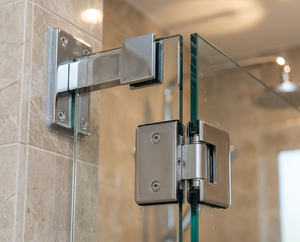

Shower screen accessories are easy to underestimate because the glass gets most of the attention. But the hardware decides how the screen is fixed, how the door moves, how easy it is to clean and how well the enclosure suits the bathroom. When comparing shower screen accessories, think of brackets, hinges, channels, handles and seals as part of the screen’s fit, not decorative extras.
Start with the type of shower screen
Hardware choice depends on the screen format. A wall-to-wall hinged screen needs different support from a fixed walk-in panel. A corner screen has more junctions to manage. A sliding screen uses rails, rollers and guides instead of swing clearance.
Wall-to-wall screens
Wall to wall shower screens suit shower recesses where the glass spans between two sides of the room. The key hardware decisions are hinge quality, bracket type, handle style and whether the fittings suit the glass thickness.
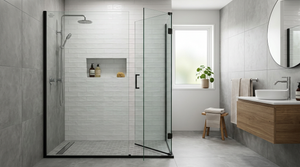
The 100cm wall-to-wall frameless shower screen with chrome F-brackets includes a 650 x 1990mm door panel, a 340 x 2000mm hinge panel, chrome F-brackets, stainless steel hinges and a round knob. It is a good example of how several accessories work together: the hinge controls movement, the brackets fix the panels and the handle completes daily use.
Corner screens
Corner shower screens need hardware that handles more than one glass direction. The accessory choice must support the return side as well as the entry side, so the brackets and hinges become more visible in the final look.
The 120 x 70cm corner frameless shower screen with gold F-brackets uses a 650 x 1990mm door panel, a 540 x 2000mm hinge panel, gold F-brackets, stainless steel hinges and a square double pull handle. That combination suits buyers who want hardware to become part of the bathroom finish rather than disappear.
Sliding screens
Sliding shower screens replace door swing with guided movement. That makes the accessory set more mechanical: rollers, stoppers, wall brackets, rail connectors, floor guides and a rail all matter.
The 120 x 90cm frameless sliding corner shower in black hardware includes an adjustable 1200-1240mm sliding door screen, a 897 x 2000mm side panel, a 1650mm rail, matte black wall channels and hardware for the sliding system. It suits bathrooms where a hinged door would take up too much clearance.
Brackets: small parts with a big role
Brackets hold the glass to the wall or floor. They affect how minimal the screen looks and how much adjustment is available during installation.
F-brackets
F-brackets are commonly used when the hardware needs to grip and offset the glass cleanly. On the 120cm wall-to-wall frameless shower screen with white F-brackets, the bracket set supports a 540 x 2000mm hinged panel and a 650 x 1990mm door panel. The matte white finish also changes the look, making the fittings part of the room’s colour palette.
U-brackets
U-brackets can create a more channel-like grip around the glass edge. The 110cm wall-to-wall frameless shower screen with gunmetal U-brackets includes a 650 x 1990mm door panel, a 440 x 2000mm hinge panel and brushed gunmetal U-brackets. This style can suit buyers who want a more defined hardware detail without moving to a fully framed screen.
If you are comparing shower screen bracket options, check glass thickness compatibility, finish, fixing method and whether the product uses wall, floor or wall-and-floor support.
Hinges: movement, clearance and daily feel
Hinges decide how the door opens and how comfortable the shower is to use. A hinged shower screen needs clear space for the door path, so measure nearby vanities, toilets, towel rails and bath edges before choosing.
Some Factory Fast hinge sets are listed for 10mm glass and include self-centring movement. That matters because the hinge is not just a visible fitting. It changes how the door returns after use and how the entry feels day after day.
Choose hinges by door style first, finish second. A beautiful hinge finish will not help if the swing clashes with the room.
Channels, seals and floor strips
Wall channels hold glass along a longer edge and can suit sliding or fixed-panel formats. They are useful when the installation needs a cleaner vertical line or when the product is designed around channel support.
Seals and floor strips help manage water at the most vulnerable edges. They do not replace correct measurement, level surfaces or good placement, but they can improve day-to-day containment. If a product lists floor strips or a water seal system, treat that as part of the practical value, especially in family bathrooms or compact layouts.
Handles and finishes
Handles affect grip, style and cleaning. Round knobs feel minimal. Square double pull handles create a stronger design line. Recessed handles suit sliding systems because they keep the moving door profile cleaner.
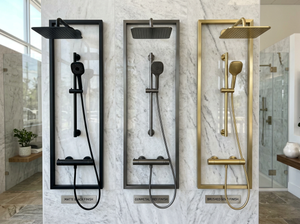
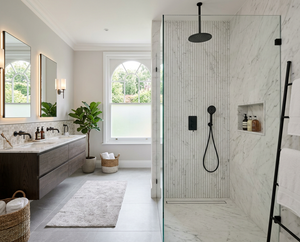
Finish should be chosen after the layout is resolved. Chrome is familiar and easy to coordinate, black creates a stronger contrast, white softens the hardware and gunmetal or gold can help the screen connect with tapware and cabinet fittings.
Take one close look at the accessory list before adding a shower screen to cart. The glass size tells you whether it can fit; the hardware list tells you whether it can work comfortably in the bathroom you actually have.
 Tags:
Tags: