1300 760 441
 cs@factoryfast.com.au
Shower Screen Hardware Finishes Explained: Chrome, Black, Nickel, Gold, Gunmetal and White
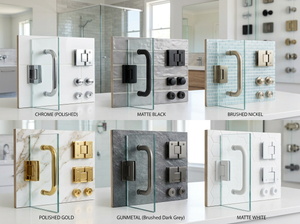

The hardware finish on a shower screen may occupy far less space than the glass, yet it can decide whether the entire bathroom looks coordinated or pieced together. Hinges, wall channels, floor channels, brackets and handles create repeated points of colour around the enclosure. A poor match can remain noticeable even when every component works correctly.
Choosing between chrome, black, brushed nickel, gold, gunmetal and white is not purely a styling exercise. The finish needs to be available across the hardware required by your screen, suit the room’s cleaning demands and work with the materials and dimensions specified for the installation.
The practical order is simple: settle the shower layout, confirm the required hardware, check compatibility and then choose the finish. This guide explains how the main shower screen hardware colours compare and which bathrooms each option suits.
Choose the shower screen configuration before the finish
Start with the physical layout of the shower. A finish cannot make an unsuitable screen work in the room, so establish whether you need a fixed walk-in panel, wall-to-wall enclosure, corner screen, sliding door or bath screen before comparing colours.
A fixed panel may use wall and floor brackets, continuous channels or a stabilising pole. A hinged screen adds moving hardware and a handle, making the chosen colour more prominent. Corner enclosures introduce more joins, while sliding systems rely on rails, rollers, guides and stoppers. The more components a design exposes, the greater the visual effect of the finish.
Browse the relevant shower screens by layout first. Record the smallest finished opening width, screen height, return depth and door clearance. The existing guide on how to measure for a shower screen explains why wall lines, nearby fixtures and door movement need to be checked together.
Once the format is settled, list every visible component included with the product. That list is the real finish palette for the shower, and it is more reliable than choosing from a bathroom inspiration image.
Treat the hardware as one connected system
Shower screen hardware includes more than the handle. Depending on the design, the visible set can include:
- Wall and floor channels
- Wall, floor, F- or U-brackets
- Door hinges
- Glass-to-glass hinges
- Stabilising supports
- Handles or pull knobs
- Rails, rollers and guides
- Edge seals and floor strips
Inspect the exact inclusions before ordering. A screen may show several optional configurations in its product imagery, while the selected variant includes only the colour and bracket type named in its description.
The shower screen accessories range includes channels, hinges, brackets and related fittings in several coordinated colours. However, availability can differ between hardware types. Do not assume that seeing a black wall channel means the correct black hinge, bracket and handle will automatically suit your glass.
Material also sits underneath the visible coating. Factory Fast listings include components made from solid brass, stainless steel and anodised aluminium. Select each part according to its stated role and compatibility rather than treating similarly coloured pieces as interchangeable.
Compare the main shower screen hardware finishes
Each finish creates a different relationship between the glass, tiles, vanity and tapware. The strongest option is usually the one that supports the room’s existing visual language without compromising the hardware specification.
Chrome: versatile, bright and easy to coordinate
Chrome shower screen hardware has a reflective silver appearance that works across contemporary and more traditional bathrooms. It can connect naturally with common tapware, towel rails, cabinet handles and other polished fittings. Its reflective surface also helps the hardware feel visually light against clear glass.
This finish suits buyers who want broad coordination options or are replacing one part in a bathroom that already contains polished silver fittings. It is also useful when the shower should recede into the room rather than become the main contrast feature.
The trade-off is that a polished surface can make droplets, fingerprints and cleaning residue easier to notice under direct light. That does not make chrome difficult to own, but it rewards regular wiping with a soft cloth.
The live 90 cm wall-to-wall frameless screen with chrome hardware shows how this finish can run across a complete assembly. It combines a 610 x 1990 mm door, a 280 x 2000 mm hinge panel, chrome U-brackets, brass hinges and a square handle. Its brackets and hinges are specified for 10 mm glass, showing why colour must be considered alongside the fitting system.
Black: strong contrast with clear glass
Black shower screen fittings create a defined outline around transparent glass. They suit bathrooms using black tapware, dark cabinet pulls or graphic tile details, but they can also work as an intentional contrast in a pale room.
The effect depends on how much hardware is visible. A few black brackets on a fixed panel produce a restrained accent. A sliding enclosure with dark wall channels, rail, rollers and handles creates a much stronger frame. Buyers seeking a minimal result should compare the full component list rather than choosing black solely because the colour appears modern.
Surface marks may be more noticeable when pale mineral residue dries against the dark finish. Gentle, frequent cleaning is preferable to letting residue build up and then relying on aggressive products. Check the care instructions supplied with the selected components before using chemical cleaners.
Black is best for buyers who want the screen structure to become part of the design. It is less suitable when the room contains several unrelated metallic finishes and there is no other dark detail to connect with it.
Brushed nickel: softer than polished silver
Brushed nickel shower hardware has a muted silver tone and a less reflective surface than chrome. It suits bathrooms where polished fittings would feel too bright but a dark finish would create excessive contrast.
The brushed appearance can work particularly well with grey tiles, soft neutral surfaces and satin-finished cabinet hardware. It also provides a useful bridge when the bathroom contains silver-toned fixtures with slightly different levels of shine.
Factory Fast’s live 120 cm brushed nickel floor channel demonstrates the importance of checking construction as well as colour. The anodised aluminium channel measures 1200 mm long, 21.5 mm high and 15 mm wide, with a thickness of 1.5 mm. It is intended for 10 mm glass and is cut to size during installation.
Choose nickel when you want the hardware to look considered without becoming a bold outline. Before buying, compare the actual finish names across the tapware, handle, hinge and channel because “nickel”, “brushed nickel” and other satin silver descriptions do not guarantee an identical appearance.
Gold: a warm feature finish
Gold shower screen hardware brings warmth to a bathroom and works best when it is treated as a deliberate repeated feature. It can connect the shower with warm-toned tapware, vanity handles, mirror details or lighting hardware.
The main decision is how much gold the room needs. Brackets and a small knob can provide a subtle accent, while channels, multiple hinges and a long pull handle create a more prominent result. In a frameless enclosure, the glass leaves these components highly visible, so even small differences in tone can stand out.
Gold suits buyers building the bathroom palette around warm metallic details from the start. It is more difficult to introduce late when the installed tapware and accessories lean towards cool silver, white or dark grey.
Confirm that the selected shower configuration is available with all required gold components. A close colour match matters most where two pieces meet, such as a hinge beside a channel or a handle mounted near a bracket. If the available tones differ, separating them across the room usually looks more intentional than placing them directly together.
Gunmetal: depth without the sharpness of black
Gunmetal shower screen hardware sits between black and silver visually. Its dark grey tone creates definition against clear glass while retaining more metallic character than a flat black finish. It can suit bathrooms with charcoal details, concrete-look surfaces, grey tiles or darker cabinet hardware.
This option is useful when chrome feels too reflective and black feels too stark. Brushed gunmetal also gives a frameless screen a distinct architectural edge without creating the heaviest possible outline.
The live 100 x 70 cm corner frameless screen with gunmetal hardware uses 10 mm glass with a 650 x 1990 mm door, a 340 x 2000 mm hinge panel and a 700 x 2000 mm return panel. Its brushed gunmetal components include anodised aluminium wall channels, brass hinges and a 49 x 25 mm double pull knob. The hinge set is listed for a maximum glass load of 45 kg.
This is an important material lesson: matching colour does not mean every part is made from the same base material. Compatibility, fixing method and load suitability still need to be checked component by component.
White: quiet integration with pale surfaces
White hardware can soften the boundary between a shower screen and light-coloured walls. It suits white tiles, pale shower bases and bathrooms where the fittings should feel recessive rather than decorative.
The result is different from chrome. Chrome reflects its surroundings, while white creates a solid but low-contrast line against similarly coloured surfaces. It can be particularly effective where a visible channel would otherwise interrupt a simple wall treatment.
White is less forgiving when several nearby surfaces are different shades. A cool white channel may look distinct beside a warmer tile or painted wall, even when both are described simply as white. Review the product images and finish description, while allowing for the fact that lighting and screen settings can alter colour appearance.
This finish suits buyers who prefer visual continuity and do not need the shower hardware to match metallic tapware exactly. Repeating white through one or two nearby details can make the choice feel deliberate.
Match finish by undertone, sheen and visual weight
A bathroom does not need every metal component to be identical, but finishes should relate clearly to one another. Compare three characteristics before deciding.
Undertone
Silver finishes can appear cool, neutral or slightly warm. Gold and some nickel tones introduce warmth, while black and gunmetal can read cooler. Check the shower hardware beside the tapware and cabinetry under the bathroom’s actual lighting rather than judging each item separately.
Sheen
Polished chrome reflects more light than brushed nickel or gunmetal. Two pieces can share a similar colour family but still look mismatched when one is mirror-bright and the other is heavily brushed. Where exact matching is unavailable, deliberate contrast generally works better than an almost-match.
Visual weight
Dark channels and long handles carry more visual weight than small polished brackets. Think about the total exposed area of the colour. A black sliding rail will influence the room more than two compact black clamps on a fixed panel.
A useful approach is to select one leading finish and one supporting neutral. For example, gunmetal shower fittings can lead while small stainless or clear details remain secondary. Avoid adding a third prominent metal unless it already has a clear role in the wider room.
Confirm glass and hardware compatibility
Finish is the final filter, not the first technical specification. Before selecting a coloured fitting, confirm:
- The glass thickness accepted by the component
- Whether it attaches glass to a wall, floor or another panel
- Whether it requires holes in the glass
- The hinge’s stated glass load
- The angle and direction of door movement
- The number of brackets, channels or hinges included
- The fixing surface required
- Whether channels need cutting during installation
- Whether protective gaskets and fixings are supplied
The Factory Fast shower screen brackets range includes several bracket formats for different fixing positions and glass thicknesses. F-brackets, U-brackets and continuous channels do not perform the same installation role simply because they are offered in the same colour.
Existing glass also limits replacement options. Hole positions, thickness and edge clearances may already be fixed, so a new handle or hinge must match those conditions. For a complete new enclosure, it is usually simpler to select a coordinated package whose inclusions have already been specified together.
Consider maintenance before choosing a colour
All shower hardware is exposed to water, cleaning products and frequent handling. The best finish for your bathroom is one you are comfortable maintaining.
Use a soft cloth and a mild, pH-neutral cleaner where permitted by the product instructions. Avoid abrasive pads and harsh chemicals that may mark or dull the surface. Wiping droplets from handles, channels and hinge edges before they dry can reduce the need for heavier cleaning later.
Finish colour changes which marks are easiest to see. Pale residue may contrast with black or gunmetal, while fingerprints and streaks can catch the light on polished chrome. Brushed nickel can make minor handling marks less visually dominant, but it still requires appropriate care. White hardware should be cleaned around seams and lower channels where residue can collect.
Cleaning access matters as much as colour. A simple fixed panel with a few brackets presents fewer edges than a corner or sliding system containing several moving parts. When comparing finishes, also compare how comfortably you can reach behind handles, around hinges and along floor channels.
Avoid the most common finish-selection mistakes
The first mistake is ordering by colour before confirming the screen layout. That can leave you trying to force a preferred finish onto a configuration that does not suit the available width, access or door path.
The second is matching only the handle. Channels and hinges often create more visible colour across the enclosure. Review the complete inclusions list and identify any uncoated, clear or differently finished components.
Another common issue is mixing similar metallic colours without comparing sheen. Chrome beside brushed nickel may look intentional when repeated thoughtfully, but a single isolated mismatch can resemble a substitution.
Do not assume components can be swapped later. Hinges, channels and brackets may be tied to the glass thickness, fixing points and drilled holes. A colour change that seems minor can require a different piece of glass or mounting arrangement.
Finally, avoid choosing from imagery alone. Confirm the written variant name, dimensions, component count and material. Images may display optional accessories or multiple finish configurations, so the specification for the exact selection should decide what goes into the order.
Plan the finish before the bathroom reaches its final stage
Make the shower hardware decision while tapware, cabinetry and wall finishes can still be compared together. Ask the installer to confirm the screen configuration, glass thickness, hinge requirements and fixing surfaces before ordering individual pieces.
If a channel is supplied longer than required, establish where it will be cut and which ends will remain visible. The live 120 cm brushed gunmetal floor channel, for example, is listed for 10 mm glass and is intended to be trimmed during installation. That detail affects both fit and the quality of the visible finish at the cut edge.
Before placing the order, put the tapware finish name, shower hardware variant and full inclusions list on the same page. That final cross-check can reveal a missing bracket colour or mismatched handle before the glass is unpacked in the bathroom.
Frequently Asked Questions
Does shower screen hardware have to match the tapware?
No, but the relationship should look deliberate. Matching the colour and sheen creates the most uniform result, while a controlled contrast can work when it is repeated elsewhere in the bathroom. Compare the shower channels, hinges and handle with the tapware under the same lighting. An isolated near-match is often more noticeable than a clearly different but well-repeated finish.
Which shower screen finish is easiest to keep looking clean?
No finish eliminates cleaning, because visibility depends on water residue, lighting and how often the hardware is touched. Brushed finishes can make fingerprints less prominent than highly reflective surfaces, while pale residue may stand out on black or gunmetal. Choose a finish compatible with your cleaning habits, then use a soft cloth and a mild product permitted by the care instructions.
Can I replace chrome shower hardware with black fittings later?
Sometimes, but compatibility must be checked before treating the change as cosmetic. Replacement hinges and brackets need to suit the existing glass thickness, holes, fixing positions and door movement. Channels may also be difficult to change without disturbing seals or surrounding finishes. Confirm the exact component specifications and installation requirements before buying a different-coloured replacement.
Should all shower screen brackets, hinges and handles be the same colour?
A coordinated set usually creates the cleanest result, particularly on frameless screens where every fitting remains visible. Exact uniformity is not essential when a second finish is clearly intentional and repeated elsewhere. Prioritise matching components that sit directly beside one another, then check that every hinge and bracket still meets the glass and fixing requirements.
Is black or gunmetal better for a modern bathroom?
Black creates a sharper, more graphic outline, while gunmetal provides dark contrast with a metallic grey character. Black suits rooms with strong monochrome details; gunmetal can connect more gently with charcoal, grey or concrete-look surfaces. Compare the amount of exposed hardware as well as the colour, because long channels and rails make either finish much more prominent.
What should I check before ordering coloured shower screen hardware?
Confirm the screen layout, finished measurements, glass thickness, fixing surfaces and door clearance first. Then check every included bracket, hinge, channel and handle against the selected colour variant. Read the written specifications rather than relying only on product imagery. For separate components, verify material, mounting type, glass compatibility, quantity and any cutting or drilling requirements before purchase.
 Tags:
Tags: