1300 760 441
 cs@factoryfast.com.au
Freestanding Wardrobe Buyer Guide: Choose the Right Size, Layout and Material
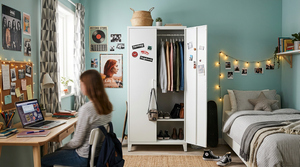

A wardrobe can fit along a bedroom wall and still be wrong for the room. It may block a walkway, provide too little hanging height, leave folded clothes piled into deep shelves or create assembly problems because its panels cannot pass through the doorway.
The best freestanding wardrobe is therefore not simply the largest cabinet that will fit. It is the option that matches the room, the clothes being stored and the way the owner gets dressed each day.
Factory Fast’s range of wardrobes and clothes storage options includes compact steel cabinets, larger multi-door configurations, open storage units and portable covered closets. This guide explains how to compare those options using measurable requirements rather than appearance alone.
Start With the Storage Problem, Not the Number of Doors
Two households can own the same quantity of clothing and need completely different interiors. One may keep workwear, dresses and jackets on hangers, while the other relies on folded activewear, knitwear and accessories.
Before comparing cabinets, divide the intended contents into four groups:
- Full-length garments such as dresses, coats and long formalwear
- Short hanging items such as shirts, trousers folded over hangers and jackets
- Folded clothing, including T-shirts, jumpers and activewear
- Shoes, bags, linen and accessories
This inventory determines whether you need a hanging-led, shelf-led or mixed layout. Door count only becomes useful after that decision.
Hanging-led wardrobes
A hanging-focused interior suits people who own crease-prone garments or prefer to see complete outfits at a glance. Check the usable rail length and the clear vertical distance beneath it. A rail may look generous in a product listing, but a shelf or lower storage zone can reduce the space available for long clothing.
Single hanging zones work well for coats and dresses. Double-height arrangements, where available, make more efficient use of vertical space for shirts and shorter garments.
Shelf-led wardrobes
Shelves suit folded clothes, bags, shoes and storage containers. They can also serve households that use drawers elsewhere in the bedroom and need a dedicated cabinet for overflow items.
The important detail is not simply how many shelves are included. Consider their width, spacing and adjustability. Wide shelves can hold more, but loosely stacked clothing may become difficult to retrieve. Several defined compartments generally make sorting easier than one uninterrupted shelf.
Mixed interiors
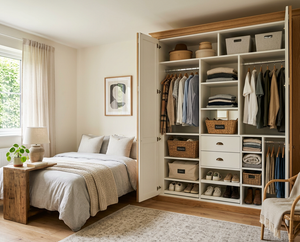
A combination of hanging and shelving is the most versatile choice when one cabinet must hold an everyday wardrobe. It gives structured garments a rail while creating separate areas for folded items and footwear.
The trade-off is that neither zone will be as extensive as it would be in a specialised configuration. Count your garments before assuming an even split is suitable. A person with many dresses may need more vertical clearance, while someone with mostly casual clothes may gain greater value from additional compartments.
Measure the Room in Three Dimensions
Width is only the first wardrobe measurement. Buyers also need to check depth, height, door clearance, nearby furniture and the path used to deliver the unassembled components.
Confirm the usable wall width
Measure the wall at floor level and again higher up. Skirting boards, switches, power points and uneven walls can reduce the usable area. Leave enough room to access handles and prevent an open door from striking a bedside table or adjacent wall.
Do not treat the measurement as a target that must be filled completely. A small allowance around the cabinet makes positioning and assembly more manageable.
Check depth against the walking route
Current Factory Fast steel wardrobe configurations commonly use a depth of 55 cm, while some portable or open options are shallower. Add the depth of the cabinet to the clearance needed for hinged doors and comfortable movement.
This matters most when the unit faces a bed. Mark the proposed footprint on the floor, then test whether drawers, doors and walkways remain usable. A bedroom that looks spacious when empty can become restrictive once a bed, bedside furniture and clothes storage all occupy the same route.
Use height carefully
Tall wardrobes can turn unused vertical room into practical storage. They are especially useful when upper compartments hold luggage, spare linen or seasonal clothing.
However, the ceiling height must allow the cabinet to be assembled and moved into position. Check cornices, ceiling fans and sloping ceilings as well as the nominal room height. An overhead compartment has limited value if its doors cannot open fully or its contents cannot be reached without moving other furniture.
Measure the delivery and assembly path
Record the width and height of the entrance door, hallway turns, stairways and bedroom doorway. Large panels may be difficult to manoeuvre around narrow corners even when the completed cabinet fits comfortably in the room.
Also identify a clear assembly area. Some units need more floor space during construction than their finished footprint suggests. Protect the floor and organise components before beginning so doors, handles and panels do not become mixed between sections.
Match Wardrobe Width to the Room and Household
Freestanding units can range from narrow two-door cabinets to broad six-door storage systems. The right size depends on whether the cabinet is supplementary, individual or shared storage.
Compact two-door wardrobes
An 80 cm-wide cabinet can suit a small bedroom, guest room or a person with a tightly edited clothing collection. It can also fill a specific storage gap beside an existing dresser.
The verified 80 x 240 cm two-door steel wardrobe measures 80 cm wide, 55 cm deep and 240 cm high. It combines a hanging section with upper storage, using height to increase capacity without taking over a long section of wall. At the time of review, it was listed at $479.95.
That format is best for buyers who need hanging space more than numerous folded-clothing compartments. Its 240 cm height also makes ceiling clearance and assembly access essential checks.
Four-door configurations
A 160 cm-wide model provides a useful middle ground for a main bedroom or a couple with moderate storage needs. It can divide the interior into separate hanging and shelf zones without requiring the 240 cm wall width of a larger cabinet.
The in-stock 160 x 200 cm four-door steel wardrobe is 55 cm deep and combines an 80 cm-wide hanging section with an 80 cm-wide shelving section. Its internal compartments can be rearranged, while the powder-coated white steel construction and gold-coloured metal handles give it a defined furniture finish. It was listed at $724.95 when checked.
This balanced arrangement suits buyers who want one enclosed unit for hanging garments, folded clothes, shoes and accessories. It may be less suitable when nearly everything is hung or when two people both need extensive rail space.
Six-door systems
A 240 cm-wide wardrobe can provide distinct zones for two people or accommodate clothing alongside household linen. Factory Fast configurations include different ratios of hanging and shelf sections, with some models extending to 240 cm high for overhead storage.
The greater capacity brings practical constraints. Confirm that the wall is long enough without crowding the doorway, then check whether the panels can reach the bedroom. A large cabinet should solve a genuine volume problem rather than simply occupy available wall space.
Compare Enclosed, Open and Portable Wardrobes
The word “wardrobe” covers several substantially different storage formats. Choosing between them is easier when privacy, mobility, garment protection and permanence are considered separately.
Enclosed steel cabinets
An enclosed steel wardrobe keeps visual clutter behind doors and creates a defined furniture piece. Powder-coated surfaces are straightforward to wipe clean, while configurable sections can adapt the interior to different storage needs.
Steel units suit households seeking durable, freestanding bedroom storage with a more substantial feel than a fabric closet. They also work well where clothing, linen and accessories need to share one cabinet.
Their main considerations are weight, assembly, delivery access and wall fixing. Enclosed cabinets can also make a small room feel fuller than an open rail, so footprint and sightlines matter.
Open wardrobes and garment stations
An open wardrobe keeps frequently worn clothes visible and immediately accessible. Models with drawers, boxes, hooks or shelves can organise more than hanging garments while retaining a relatively light visual profile.
This design is useful for capsule wardrobes, dressing areas and rooms where doors would obstruct movement. It also encourages deliberate organisation because every item remains on display.
The trade-off is exposure. Clothing is not hidden from general room dust, and an overloaded rail can make the space look untidy. Open storage works best when the quantity of visible clothing is controlled rather than used as an unlimited overflow area.
Portable covered wardrobes
A fabric-covered closet is a flexible option for renters, spare rooms or temporary storage. It provides enclosure without the cost or physical scale of a large steel cabinet.
The verified portable clothes closet with eight shelves measures 165 x 128 x 45 cm. It uses non-woven polyester canvas over a reinforced metal-pipe frame and includes two hanging sections. At $19.98 when reviewed, it represented a very different purchase tier from the steel configurations.
Choose this format when flexibility and low initial cost are more important than a furniture-style finish. Check the intended load, use all supplied supports correctly and avoid treating lightweight shelves as substitutes for a heavy-duty cabinet.
Choose the Interior Before the Finish
A handle colour or door finish can help a wardrobe sit naturally beside a bed frame and bedside furniture, but the internal layout has a much greater effect on daily use.
Count what must hang, then measure the longest garment. Group folded items by type and estimate how many shelf sections they require. Finally, assign locations for shoes, bags, belts, hats and seasonal pieces.
Browse dressers and wardrobes together when deciding where folded clothing should live. A shelf-heavy wardrobe may be unnecessary when a dresser already handles T-shirts, sleepwear and smaller items. Conversely, a bedroom without drawers may require more enclosed shelving than first expected.
Decide what needs prime access
Place everyday clothing between comfortable shoulder and knee height. Upper compartments are better for items used less often, while shoes and heavier belongings generally make more sense lower down.
This access hierarchy prevents frequently worn pieces from becoming buried behind seasonal storage. It also reveals whether a cabinet has enough practical capacity, rather than merely enough empty volume.
Avoid shelves that become catch-all spaces
A broad shelf can quickly turn into an unstable stack. Use smaller categories, containers or dividers to keep items retrievable. The closet and wardrobe organisers range can help allocate space for shoes, accessories and folded garments after the main cabinet has been selected.
Buy organisers only after measuring the actual internal compartments. Exterior dimensions do not reveal the usable shelf width, hinge intrusion or clearance around a hanging rail.
Evaluate Material Through the Intended Use
Material affects appearance, maintenance, portability and how substantial the finished unit feels.
Powder-coated steel
Steel plate with a powder-coated finish suits buyers prioritising enclosed storage and a wipe-clean surface. It can provide a clean, consistent appearance across multi-door sections and accommodate hanging or shelf-based interiors.
Look beyond the exterior panels. Check handle material, fixing points and whether the sections can be rearranged. These details influence how well the cabinet can respond when clothing needs change.
Iron and plastic components
Open storage units may combine an iron frame with plastic drawers or storage boxes. This produces a lighter, flexible format with several types of storage in one footprint.
Such a unit can suit a renter or a room that needs accessible clothes, shoes and accessories without a large enclosed cabinet. The buyer should still check dimensions and intended contents carefully; mobility does not mean the unit should be moved while overloaded.
Fabric over a metal-pipe frame
Canvas wardrobes favour portability and straightforward separation of clothing. Their covers conceal contents, while internal rails and shelves create a temporary storage system.
They are most useful when the alternative is leaving garments in moving boxes or spreading them across unrelated furniture. For permanent main-bedroom storage, compare the lighter construction and finish with the greater presence of a steel cabinet before choosing on price alone.
Plan the Purchase Around Real Ownership
The buying decision continues after the dimensions and layout have been selected. Assembly, placement and future organisation determine whether the wardrobe remains useful.
Confirm what is supplied
Review the product listing for the number of cabinet bases, internal sections, handles, fixings and assembly tools. Multi-section wardrobes may arrive as several coordinated packages rather than one item.
Check delivery access before ordering a large or heavy unit. Restricted entrances, narrow roads, stairs and tight internal turns can affect whether an oversized purchase reaches its intended room.
Prepare the final position
The floor should be level and the wall suitable for the supplied fixing method. Factory Fast steel wardrobes reviewed for this guide include pre-drilled rear fixing points and expansion bolts for additional stability. The portable closet listing also directs users to secure the furniture with an anchor device.
Do not assume one fixing suits every wall. Identify the wall construction and obtain appropriate installation advice where the supplied hardware is not suitable for that surface.
Leave room for the wardrobe to work
A cabinet needs more than its listed footprint. Hinged doors require an opening arc, handles need hand clearance, and users need room to stand in front of the storage area.
Test this before assembly by marking the cabinet depth and open-door area on the floor. Open nearby drawers and room doors at the same time. This simple exercise exposes collisions that a wall-width measurement misses.
Wardrobe Buying Mistakes That Create Daily Frustration
The most common error is buying capacity without defining how that capacity must be divided. A shelf-heavy cabinet disappoints someone with many dresses, while a large hanging section wastes space for a mostly folded wardrobe.
Other avoidable mistakes include:
- Measuring the wall but ignoring cabinet depth
- Forgetting the opening arc of hinged doors
- Choosing a tall model without checking ceiling clearance
- Overlooking hallway, stair and doorway access
- Assuming exterior width equals usable internal width
- Selecting handle colour before the storage configuration
- Buying internal organisers before measuring the compartments
- Using upper storage for items needed every morning
- Treating a lightweight portable unit like a heavy cabinet
- Filling every available wall space without preserving comfortable movement
A good bedroom wardrobe should reduce handling. You should be able to open the relevant door, see the required item and return it without moving several unrelated belongings.
Make the Final Choice With a Floor Plan and Clothing Count
Shortlist wardrobes only after completing two small tests. First, mark the full footprint and door clearance in the room. Second, count the long-hanging garments, short-hanging pieces, folded-clothing groups and pairs of shoes the cabinet must hold.
If the room is narrow but has generous ceiling height, a tall two-door configuration may outperform a wider cabinet. If the wardrobe will serve two people, a four- or six-door model can create clearer ownership zones. Renters or households solving a temporary shortage may find that a covered portable unit addresses the problem without committing the room to substantial cabinetry.
Before ordering, photograph the marked footprint with the bedroom door, drawers and nearby furniture open. That single view provides a final check of the movement space that product dimensions cannot show on their own.
Frequently Asked Questions
How deep should a bedroom wardrobe be?
A depth of about 55 cm is used across several current Factory Fast steel wardrobe configurations and provides room for conventional hanging storage. The required depth also includes the space needed to open doors and stand in front of the cabinet. Measure from the wall towards the bed, then test the remaining walkway before selecting a model.
Is an 80 cm-wide wardrobe large enough for one person?
An 80 cm-wide wardrobe can suit one person with a compact clothing collection or a bedroom where other furniture stores folded items. Its internal configuration matters more than width alone. A hanging-led design suits shirts, jackets and longer garments, while a shelf-led option is better when most clothing is folded. Count both types before deciding.
Does a freestanding wardrobe need to be fixed to the wall?
The Factory Fast steel and portable wardrobes reviewed for this guide include or specify wall anchoring. Follow the instructions supplied with the exact product and make sure the fixing method suits the wall construction. Positioning heavy belongings in lower storage areas also helps keep the cabinet’s load concentrated closer to the floor.
What type of wardrobe is best for renters?
Portable covered closets and open freestanding units can suit renters because they provide clothes storage without built-in cabinetry. A compact steel cabinet may also work when the room has suitable space and the required wall fixing is permitted. Consider how easily the unit can be disassembled, carried through the property and used in a future home.
How much does a freestanding wardrobe cost?
Factory Fast options reviewed for this guide ranged from $19.98 for a portable covered closet to $724.95 for a 160 cm-wide steel model with hanging and shelf sections. Larger steel configurations may cost more. Prices and availability can change, so compare current listings after deciding which dimensions, material and internal layout genuinely meet your storage needs.
How can I prevent a new wardrobe from becoming overcrowded?
Allocate each compartment before moving clothing into the cabinet. Give everyday garments the easiest-to-reach positions, reserve upper sections for seasonal items and use measured organisers for small accessories. If one category does not fit without compressing or hiding other pieces, change the internal layout or move that category to a dresser rather than forcing more into the available space.
-
 Tags:
Wardrobe
Tags:
Wardrobe