1300 760 441
 cs@factoryfast.com.au
Drying Racks vs Clothes Airers: What’s the Difference and Which Should You Choose?
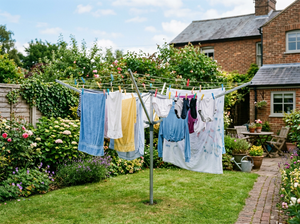

A “drying rack” and a “clothes airer” will often lead you to the same type of product: a non-powered structure that holds wet washing while air moves around it. The names are frequently used interchangeably, including for folding, wall-mounted and pull-out models.
The useful distinction is therefore not the wording on the product page. It is how the unit opens, where it sits, how much washing it accommodates and what must happen when laundry day is over. A freestanding frame may be ideal for a renter who needs portability, while a wall-mounted design can make far better use of a narrow laundry where every centimetre of floor space matters.
This guide compares drying racks and clothes airers by their practical differences, helping Australian households choose an option that fits their washing routine, available space and installation limits. You can also browse Factory Fast’s broader range of clothes racks and stands when you need storage for dry garments as well as somewhere to manage laundry.
Are Drying Racks and Clothes Airers Actually Different?
In everyday shopping language, there is no strict functional boundary between the two terms. Both usually refer to equipment that supports clothing, towels or linen while they dry naturally.
“Drying rack” tends to describe the product’s physical structure. It may have rails, rods, arms or lines arranged across a frame. The term can apply to freestanding units, wall-mounted frames and compact pull-out designs.
“Clothes airer” emphasises the purpose: exposing wet laundry to circulating air. An airer may also be called a laundry drying rack, indoor clothesline or folding clothes dryer, even when it contains no powered drying mechanism.
That overlap means comparing products by name alone can be misleading. Two listings may use different terms while offering almost identical functions. Conversely, two products both described as clothes airers may have completely different footprints, capacities and installation requirements.
The real comparison is product format
The main formats shoppers should compare are:
- Freestanding folding airers that open on the floor and can be moved between rooms
- Wall-mounted racks that remain attached but fold towards the wall
- Pull-out or concertina models that extend only when required
- Multi-arm airers that provide long runs of drying line from a fixed position
- Clothes rails intended mainly for storing dry garments on hangers
A garment rail can hold shirts or jackets while they air, but it may not provide enough separated drying length for a full wash. Before substituting one for a dedicated laundry product, check its material, stated capacity and whether wet use is supported by its product information. Factory Fast’s guide to clothes-rack types and features explains the broader storage category.
Drying Rack or Clothes Airer: Start With Where It Will Live
The best choice begins with the space occupied during use, not the size of the unit after it has been packed away.
Measure the intended drying zone at floor level and at the product’s full operating height. Include doors, cupboards, appliances, walkways and any other item that needs to open or pass beside it. A folding frame that technically fits between a washing machine and doorway may still be impractical if it blocks access every time it is loaded.
Choose a freestanding airer for flexible placement
A freestanding folding clothes airer suits households that need to move the drying setup according to the weather or the room being used. It can be opened near a well-ventilated area, shifted outside when conditions suit and stored elsewhere after the load is dry.
This flexibility is useful for renters because it does not normally require permanent attachment. It can also suit homes where there is no single laundry wall with enough clear space for a fixed unit.
The tradeoff is temporary floor obstruction. Measure the open footprint rather than relying on the folded dimensions, and identify a genuine storage location before buying. If the folded frame has no assigned home, it is likely to remain propped against a wall or occupy the laundry between loads.
Choose a wall-mounted rack to preserve floor space
A wall-fixed design is often the better answer for a compact laundry, bathroom or sheltered outdoor zone. It occupies vertical space and stays in one predictable position, removing the need to carry a separate frame through the home.
The surrounding wall becomes part of the buying decision. Check the product’s mounting guidance, the available wall construction and the clearance needed when the unit is fully extended. Do not assume that a narrow folded profile means a small operating area.
Factory Fast’s collection of wall-mounted storage can help when planning a room around other vertical organisers. Keep shelves, cupboards and hooks outside the airer’s extension path so the different fittings remain usable together.
If you rent, confirm whether drilling or permanent attachment is permitted before selecting a mounted option.
Compare Drying Capacity, Not Just Overall Dimensions
Product width tells you whether a rack may fit, but it does not tell you how much washing it can hold. Drying length, rail spacing and stated load capacity are more useful measures.
A wide frame with only a few bars may provide less usable hanging room than a compact multi-arm system. Closely positioned rails can accommodate small garments efficiently, while sheets, towels and long clothing need enough separation to avoid bunching and excessive overlap.
Drying length suits lighter items and larger loads
Drying length describes the total rail or line space available. It is particularly useful when comparing multi-arm wall units because their folded sizes can hide how much line they provide when extended.
For example, the verified 26 m five-arm wall-mounted airer provides five aluminium arms and PVC-coated line for clothing, towels and bed linen. Its fixed format keeps the floor clear, but installation requires an outdoor brick or timber wall or a suitable interior wall stud.
When comparing line length, think about how you hang a normal wash. Small items can use short sections efficiently, while wide towels and bed linen consume much more line. A household that regularly dries larger pieces may benefit from long uninterrupted runs rather than numerous short rails.
Load capacity matters for wet towels and linen
Wet washing is heavier than it feels when dry, so a product’s stated load limit deserves attention. Do not treat line length and weight capacity as interchangeable. A rack may have plenty of room for lightweight shirts but be unsuitable for the same area covered with wet towels.
The Factory Fast 80 cm collapsible wall-mounted rack supports up to 27 kg and measures 80 × 40.5 × 10 cm. It uses carbon steel construction and includes mounting hardware. That combination suits buyers prioritising load support and a compact folded profile over a long washing-line layout.
Spread heavier items rather than concentrating them on one section, and stay within the capacity stated for the individual product.
Match the Mechanism to Your Laundry Routine
The opening mechanism affects how convenient a clothes airer feels after months of regular use. The best design is one that can be opened, loaded and cleared without reorganising the room.
Folding frames suit changing drying locations
A portable folding frame is useful when placement changes from load to load. It can adapt to wet weather, temporary guests or a laundry shared with another household function.
Check how many actions are required to unfold it and whether the frame locks into its operating position. A model that is awkward to deploy may remain open permanently, cancelling the storage benefit that justified buying it.
Also inspect how garments are arranged. Winged frames can separate longer items from smaller washing, while flat tiers may suit knitwear that should not be hung from a narrow line.
Pull-out racks suit narrow, underused spaces
A pull-out airer extends from a compact stored position, making it valuable where a conventional floor frame would interfere with movement. The Factory Fast 68 cm pull-out drying rack is made from aluminium alloy, measures 80 × 26.5 × 70 cm and is designed for compact laundries, small homes and travel setups.
This format suits everyday clothing, towels and lighter household washing. Its value comes from occupying space only while extended, although that temporary extension zone must remain clear. Measure the full reach and consider whether people can still use nearby doors or appliances while clothes are hanging.
Concertina and multi-arm designs suit regular fixed use
A concertina rack expands outward in a repeated folding pattern, while a multi-arm airer opens several supporting arms from one wall position. Both provide a permanent drying station that becomes less intrusive when folded.
Concertina formats can offer closely spaced rails within a short wall width. Multi-arm systems may provide longer total drying line and easier separation between different laundry items. Compare the capacity, number of arms, material and fully extended projection rather than choosing by mechanism alone.
Materials Change Weight, Rigidity and Placement Suitability
Airers are commonly made from aluminium, steel, coated line or a combination of these materials. Each construction has a different practical emphasis.
Aluminium prioritises lower product weight
Aluminium can make a folding or wall-mounted unit easier to handle. It is useful when a portable rack must be moved regularly or when a fixed design needs several extendable arms without excessive bulk.
Check the entire specification rather than assuming all aluminium models perform alike. Frame thickness, joints, line material and mounting arrangement also influence how the product behaves under a load.
Steel supports rigid rack designs
Steel or carbon steel can provide a firm structure for wall-mounted rails and collapsible frames. This can suit households drying heavier laundry, provided the chosen model’s stated load capacity supports the intended use.
Finish matters when the airer will be exposed to damp clothing or changing conditions. Follow the individual product’s placement and maintenance directions rather than assuming every coated metal unit is intended for unsheltered outdoor use.
Coated line provides flexible hanging length
PVC-coated line appears in multi-arm products because it can provide substantial drying length without turning every line into a solid metal bar. It works well for garments secured with pegs, towels and household linen.
Inspect line spacing as well as total length. Adequate gaps make it easier to distribute washing without several layers resting against one another.
Which Option Suits Different Australian Households?
The words on the product label matter less than the household’s constraints. Use the following decision path to narrow the choice.
For renters
Start with a freestanding folding clothes airer unless existing fittings can be used without altering the property. Portability makes the unit easier to reposition and take to a future home.
Prioritise a manageable folded size and a clear storage location. A large model may provide excellent capacity but become inconvenient if it cannot fit in a cupboard, behind a door or beside an appliance when closed.
For compact laundries and apartments
Consider a pull-out, concertina or wall-mounted drying rack. These formats preserve the floor between loads and turn unused wall area into a functional drying zone.
Measure the projection when extended. A product can be compact in storage yet occupy the full width of a passage once loaded. Also account for the clothes themselves, which may hang below or beyond the frame.
For families and frequent washing
Focus on drying length, stated load capacity and separation between rails. A small portable airer may handle delicate items but create a bottleneck when towels, uniforms and linen need to dry at the same time.
A fixed multi-arm system can provide generous line length, while a high-capacity rack may better support dense or heavy loads. The right choice depends on whether the normal wash is bulky, numerous, heavy or a combination of all three.
For caravans and temporary setups
A detachable or compact pull-out design can provide useful hanging room without dedicating permanent floor area to a large frame. Compare packed dimensions, installation needs and extended reach before assuming a travel-oriented product will fit the available location.
Choose according to the garments you actually need to dry. Everyday clothing and hand towels place different demands on a rack than full-size bed linen.
For mixed indoor and outdoor use
Look for product information that expressly supports both placements. Portability alone does not establish that a material or finish suits outdoor exposure.
If a unit will be used outside, decide where it will go when conditions change. A wall-mounted airer stays fixed, while a freestanding design must be light enough to move when loaded or cleared promptly before relocation.
Common Buying Mistakes to Avoid
The most frequent mistake is shopping by folded size. The open footprint, wall projection and hanging drop determine whether the product works during use.
Another is comparing only the number of rails. Rail length and spacing can matter more than the count. Ten short, tightly arranged bars will not necessarily accommodate the same washing as fewer long lines.
Buyers also confuse a clothes-storage rail with a laundry airer. A garment rack may be excellent for organising dry shirts and jackets but offer no product-supported capacity for wet towels or linen.
Ignoring the mounting surface can make a wall-mounted purchase unusable. Check the product instructions, wall location and permitted installation method before ordering. Renters should resolve permission questions first.
Finally, avoid choosing the largest capacity available without planning storage or access. An airer that blocks the laundry door or cannot be packed away easily may add a different kind of clutter.
Make the Final Choice With a Full-Size Dry Run
Before ordering, mark the product’s open dimensions on the floor or wall with removable tape. Open nearby doors and cupboards, stand where you would load the washing, and hang a towel from the proposed lowest point. This quick test reveals blocked walkways, inadequate hanging clearance and awkward reach that a list of dimensions may not make obvious.
Frequently Asked Questions
Can a drying rack and clothes airer be used for the same purpose?
Yes. The terms commonly describe the same general type of non-powered laundry product, and manufacturers may use both names for one item. Compare the actual format instead: freestanding, folding, pull-out, concertina or wall-mounted. The dimensions, drying length, load capacity and installation method reveal far more about suitability than whether the listing calls the product a rack or an airer.
Is a wall-mounted clothes airer better than a freestanding one?
A wall-mounted airer is better when floor space is limited and you have a suitable permanent installation position. A freestanding model is preferable when you rent, move the laundry between locations or cannot drill into a wall. Measure both products in their open positions: a wall unit may save floor area but still project substantially into the room while loaded.
How much drying space do I need for a household wash?
Base the choice on what normally fills your washing machine rather than household size alone. Shirts and small garments use line efficiently, while towels and bed linen require longer, less interrupted sections. Check total drying length alongside rail spacing and load capacity. If several loads often overlap, choose enough room to keep items separated instead of layering wet fabric across the same bars.
Can I place an indoor clothes airer outside?
Only use a model outdoors when its product information identifies outdoor use as suitable. Materials, coatings, joints and lines can differ between models, even when the products look similar. A portable indoor rack should not automatically be treated as weather-ready. For mixed use, check the stated placement guidance and plan a sheltered storage location for periods when the airer is not required.
What is the best clothes airer for a small laundry?
A pull-out, folding wall-mounted or concertina airer often suits a small laundry because it returns towards the wall between loads. The best option still depends on the extended reach, available mounting surface and normal wash volume. Measure appliance doors, cupboard access and walking space with the rack open. A compact folded profile is only useful if the operating position also fits the room.
Should I choose drying length or weight capacity first?
Start with weight capacity when you regularly dry towels, denim or wet linen, as these loads can be relatively heavy. Prioritise drying length when the wash contains many lighter garments that need individual hanging space. Most households need a balance of both. Compare the product’s stated limit, total line length and rail arrangement rather than using any single measurement as the deciding factor.
-
 Tags:
Storage & Organization