1300 760 441
 cs@factoryfast.com.au
How to Organise a Small Wardrobe: A Practical Space-Saving System
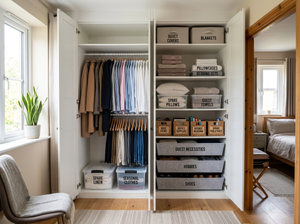

A small wardrobe becomes frustrating when its layout does not match the clothes stored inside it. Shirts are squeezed together, knitwear forms unstable piles, shoes occupy the floor, and accessories disappear behind larger pieces. Adding more boxes rarely fixes the underlying problem. It often turns limited space into a deeper, less accessible form of clutter.
Effective small wardrobe organisation begins by deciding what needs prime access, what can move elsewhere and how each centimetre should function. The goal is not to force the greatest possible number of garments into the space. It is to create a system in which clothes remain visible, reachable and easy to return after use.
Start With the Contents, Not the Organisers
Buying containers before auditing your clothes can leave you with the wrong combination of rails, shelves and compartments. Empty the wardrobe and sort everything according to both storage method and frequency of use.
Useful groups include:
- Long hanging garments, such as dresses and coats
- Short hanging garments, including shirts, skirts and jackets
- Folded tops, knitwear and trousers
- Shoes, separated into low and tall pairs
- Bags, belts, hats and other accessories
- Seasonal or occasional clothing
- Items that belong elsewhere
This reveals the wardrobe’s real workload. Someone who wears mostly shirts and folded trousers needs a different layout from someone storing long dresses, work boots or bulky winter clothing.
Decide what deserves everyday access
Place frequently worn items between comfortable eye and waist height where possible. Less-used clothing can occupy higher shelves, lower compartments or secondary storage.
Do not give sentimental, formal or out-of-season garments the most convenient positions simply because they are already there. Prime wardrobe space should support the clothes used during an ordinary week.
Reduce before you compress
Remove garments that no longer fit, need repair or are not worn. Compression products and extra organisers can recover useful capacity, but they should not preserve items that no longer justify their footprint.
Set aside anything that needs washing or mending before it returns. Otherwise, the newly organised wardrobe begins with unfinished tasks mixed into its everyday zones.
Measure the Wardrobe’s Usable Space
External dimensions do not tell you how much storage you can actually use. Measure the internal width, height and depth, then note hinges, door tracks, handles and other fittings that interrupt the space.
Check the clear distance beneath the hanging rail. Measure separately for long garments and short pieces rather than treating every hanger as equal. Dresses and coats need uninterrupted height, while shirts can often sit above drawers, cubes or a shoe shelf.
Account for doors and access
A storage unit may fit inside the wardrobe yet block a hinged door, drawer or sliding panel. Record the unobstructed opening width and confirm that any basket or drawer can be pulled forward without striking the door.
Depth also affects usability. An organiser that projects beyond the wardrobe frame can prevent the doors from closing. One that sits too far back may turn everyday belongings into hard-to-reach storage.
Measure the gaps that are currently wasted
Look for empty areas above the existing shelf, below short garments and beside narrow stacks. These are often more valuable than a single large open section because they can be converted into clearly defined zones.
When comparing organisers, allow space for your hand to reach an item and for garments to hang without being crushed. A layout that technically fits but cannot be used comfortably will not remain organised.
Build the Wardrobe Around Four Storage Zones
A compact wardrobe works best when hanging clothes, folded garments, footwear and small accessories do not compete for the same area.
Create separate long and short hanging sections
Keep dresses, coats and full-length garments in the tallest section. Group shirts, blouses, skirts and short jackets together so the space beneath them can support another storage layer.
If short clothing dominates, a second rail can make better use of vertical room. Before adding one, measure the longest garment in each section and leave enough clearance to prevent hems resting on the rail or shelf below.
Where the built-in rail is already crowded, explore clothes racks and stands rather than compressing hangers until garments are difficult to remove. An external rack can hold a weekly clothing rotation, workwear or frequently used jackets without requiring permanent cabinetry.
Keep folded stacks short and specific
Deep, mixed stacks are difficult to maintain because retrieving one item disturbs everything above it. Divide folded clothing into narrow groups such as T-shirts, activewear, knitwear and sleepwear.
Shelf height should reflect the stack rather than the wardrobe cavity. If there is a large gap above folded items, add another shelf or a modular compartment instead of building a taller pile. Knitwear is generally better folded than hung because hangers can distort its shape.
A 12-cube wire grid organiser can create separate homes for clothing, shoes and bags when there is suitable floor and wall space. The assembled unit measures 110 x 36 x 148 cm, while each 35 x 35 x 35 cm cube has a listed maximum load of 9.9 kg. Compare those dimensions with the available footprint before choosing a configuration.
Give shoes a defined boundary
Shoes become wardrobe clutter when pairs are stored in front of hanging clothes or spread across the floor. Start by separating everyday footwear from formal, seasonal and activity-specific pairs.
Low shoes can use closely spaced shelves, while boots need more vertical clearance. Store frequently worn pairs where they can be reached without moving clothing. Shoes used occasionally can sit lower or further to the side, provided each pair remains visible.
Avoid placing a shoe unit where it consumes the clear drop beneath dresses or coats. The apparently empty area under long garments is not spare capacity if the clothing needs that height.
Contain small accessories by function
Belts, scarves, hats and jewellery need smaller compartments than folded clothing. Group them according to how they are used rather than placing every accessory into one container.
For example, daily belts can share a shallow drawer or hanging organiser, while formal accessories can occupy an enclosed box. Bags should be stored in their natural shape when possible and given enough clearance that removing one does not collapse the others.
Hooks can use narrow side areas, but check that hanging items will not catch in the door. Overfilling hooks creates another compressed layer rather than accessible storage.
Choose the Right Organiser for the Missing Function
An organiser should solve a specific layout problem. Before buying, name the function that is missing: more hanging length, shorter folded stacks, shoe separation, accessory containment or storage outside the current wardrobe.
The closet and wardrobe organisers collection includes modular shelving, portable closets and smaller containers. Compare products by their usable dimensions, materials, compartment arrangement and load guidance rather than by the number of sections alone.
For a deeper comparison of storage formats, the closet organisers buyer guide explains how to match rails, compartments and shelving to different belongings.
Open storage suits visibility and frequent access
Open cubes, shelves and rails make it easier to see clothing at a glance. They suit everyday garments and people who maintain their storage by returning items immediately after use.
The trade-off is that open arrangements expose their contents. They work best when categories have clear boundaries and stacks remain controlled. If visual calm or separation from room dust matters more, covered or enclosed storage may be preferable.
Covered storage suits mixed or occasional items
A covered unit can conceal several types of clothing within one footprint. It may be useful in a small bedroom without built-in storage, a spare room or a rental where permanent cabinetry is not practical.
The portable clothes closet with eight shelves and two hanging sections measures 165 x 128 x 45 cm. Its layout combines folded and hanging storage in a reinforced metal-pipe frame with a non-woven fabric cover. Check the full width and height against the intended wall area, not merely the floor depth.
Modular storage suits changing needs
Modular compartments are useful when the required balance of shoes, bags and folded clothing may change. A system can be arranged around a low ceiling, narrow wall or existing rail more easily than a fixed cabinet.
However, flexibility does not remove the need to plan. Decide which items will occupy each compartment and confirm the specified load limit. Small modules can still become difficult to use when unrelated categories are mixed together.
Move Seasonal Clothing Out of the Daily Zone
Australian wardrobes often need to accommodate clothing for markedly different conditions. Keeping bulky winter layers beside lightweight everyday garments throughout the year uses valuable rail and shelf space.
Seasonal rotation does not mean hiding clothing so thoroughly that it is forgotten. Clean items before storing them, group them by season or purpose and label enclosed containers clearly. Keep a short transition section for garments that remain useful between seasons.
The vacuum storage bag range can help reduce the volume of suitable bulky clothing or bedding. Follow the product directions and avoid compressing items whose structure or filling may be affected. Store filled bags where they will not obstruct daily wardrobe access.
Review seasonal storage when the weather changes rather than treating it as a permanent archive. This creates a regular point for checking condition, fit and continued usefulness.
Prevent the Most Common Small-Wardrobe Mistakes
A tidy wardrobe can return to disorder quickly if the new layout creates too much effort. Watch for these common problems.
Filling every available gap
Empty space is not necessarily wasted. Garments need room to move along a rail, drawers require clearance and folded clothes need enough space to be lifted out cleanly.
Leave a little working room in each frequently used zone. This makes the wardrobe more forgiving when laundry is returned or a new item is added.
Using identical containers for different belongings
Uniform boxes can look orderly but may not suit their contents. Tall containers waste room around small accessories, while shallow ones may compress bulky knitwear.
Choose the container around the item’s dimensions and retrieval method. The outside appearance should be a secondary consideration.
Storing daily items behind occasional ones
A system fails when the most-used clothes require other items to be moved first. Keep daily garments in open, direct-access positions and reserve stacked or enclosed storage for less frequent use.
If an item cannot be retrieved and replaced in one simple action, reconsider its position.
Expanding storage without checking capacity
A second rail, freestanding rack or modular shelf only helps when it matches the expected load and available measurements. Check product-specific guidance and distribute items as intended.
Do not assume that a larger-looking frame automatically supports heavier clothing or that every shelf can hold the same load. Garment weight can accumulate quickly when coats or dense folded items are grouped together.
Use a Simple Routine to Keep the Wardrobe Organised
Assigning each category a home makes maintenance more important than repeated large clean-outs. Return clothing to its correct zone after washing and avoid creating a temporary pile inside the wardrobe.
Use one designated space for garments that have been worn but are not ready for washing. This prevents them from migrating onto chairs, shelves or the wardrobe floor.
When adding new clothing, check whether it duplicates something already stored. If the rail no longer moves freely or a stack becomes unstable, review that category before buying another container.
A useful final test is to get dressed from the new layout for one normal week before adding more storage. Note every item that requires bending around a door, moving another container or searching behind a stack. Those repeated points of friction, rather than the remaining empty gaps, show exactly where the small wardrobe still needs adjustment.
Frequently Asked Questions
What is the best way to organise a very small wardrobe?
Begin by reserving the easiest-to-reach space for clothing worn every week. Separate long hanging garments, short hanging pieces, folded clothes, shoes and accessories so they do not compete for the same area. Use shorter stacks and recover the space beneath shirts where practical. Move seasonal items elsewhere before adding organisers, because reducing the wardrobe’s daily workload usually creates the most useful improvement.
Is it better to hang or fold clothes in a small wardrobe?
Hang garments that crease easily or need to retain a structured shape, including shirts, jackets, dresses and some trousers. Fold knitwear, T-shirts, activewear and other pieces that store well in compact stacks. The correct balance depends on your clothing rather than a universal rule. Measure hanging lengths first, then use the remaining shelf space for short, category-specific piles that are easy to retrieve.
How can I add wardrobe storage without making permanent changes?
Freestanding rails, portable covered closets and modular cube units can add storage without altering built-in cabinetry. Measure the complete footprint, height and access space before purchasing, including room for doors and nearby furniture. Renters should also check the product instructions and property requirements for any recommended restraint or fixing method. Choose a unit that addresses a defined shortage rather than simply adding another general storage area.
Are vacuum bags suitable for long-term clothes storage?
Vacuum bags can reduce the volume of suitable seasonal clothing and bedding, but the item’s material and construction should guide the decision. Clothing should be clean and dry before packing, and each bag should be checked periodically. Avoid treating compression as a substitute for editing the wardrobe. Clearly labelled bags stored outside the daily access zone are more useful than tightly packed bags that must be moved every morning.
How much space should be left between clothes on a wardrobe rail?
Leave enough room for hangers to slide and for individual garments to be removed without dragging several others forward. There is no single spacing measurement that suits every wardrobe because coats occupy more rail width than shirts. If clothing remains compressed after unused pieces have been removed, divide short and long items, add suitable hanging capacity or relocate the least frequently worn garments.
Why does my wardrobe become messy again so quickly?
The layout may require too many steps to return an item. Deep mixed stacks, inaccessible containers and undefined accessory storage encourage temporary piles. Give each clothing type one clear location and keep everyday pieces in the simplest positions. After organising, observe the wardrobe for a week. Any recurring pile usually identifies a missing category, an inconvenient location or a storage method that does not suit the item.
 Tags: