1300 760 441
 cs@factoryfast.com.au
Metal Wall Art Buyer Guide: How to Choose the Right Size, Style, Finish and Placement

A metal artwork can look perfectly proportioned on a product page and still feel lost, crowded or disconnected once it reaches your wall. The difference usually comes down to scale, visual weight and placement rather than the design alone.
Metal wall decor also behaves differently from a framed print. Open sections reveal the wall behind the design, raised details cast changing shadows, and the finish can connect with lighting, furniture hardware or outdoor features. These qualities make metal artwork versatile, but they also create several choices that are easy to overlook when buying online.
This guide explains how to choose from Factory Fast’s metal wall art collection by working through the decisions in a practical order. You will assess the intended location, measure the usable area, compare single sculptures with multi-piece sets, choose a finish and confirm the mounting plan before ordering.
Start With the Wall and the Job the Artwork Must Do
Begin by deciding what the piece needs to accomplish. Metal wall art can create a focal point, fill an awkward empty section, connect finishes across a room or give an outdoor entertaining area a stronger identity. Those are different jobs, and each calls for a different combination of size, detail and contrast.
A focal point needs clear visual authority
A focal piece should be noticeable from the main entrance or seating position without competing with another dominant feature. Large circular sculptures, strong silhouettes and high-contrast finishes can hold their own on a broad wall. They work particularly well above a low piece of furniture, on an otherwise undecorated wall or at the end of a clear sightline.
Scale alone does not create authority. A detailed design placed against patterned wallpaper may be harder to read than a simpler outline on a plain surface. Before choosing an intricate sculpture, consider whether the wall gives its shape enough contrast.
Supporting decor should reinforce the room
Not every empty wall needs a major statement. A smaller artwork or coordinated set can repeat a colour, curve or natural motif already found elsewhere in the room. This approach suits bedrooms, studies, hallways and dining areas where the wall should feel finished without becoming the first thing people notice.
Look for one existing feature to connect with, such as black furniture legs, warm metallic handles, curved lighting or botanical textiles. One deliberate relationship is usually more convincing than trying to match every object.
Indoor and outdoor placements require different checks
For indoor use, consider wall colour, furniture proportions, nearby lighting and the viewing distance. Kitchens and bathrooms introduce more moisture and cleaning activity, so only choose an item when the listing supports the intended location and its finish suits those conditions.
For an exterior wall, do not assume that metal construction automatically means outdoor suitability. Confirm that the exact product is listed for outdoor use, then assess how exposed the position is to rain, direct sun, irrigation and salty air. A sheltered patio wall presents different conditions from an uncovered fence or garden boundary.
Measure the Usable Area, Not Just the Empty Wall
The visible wall dimensions are only the starting point. Curtains, switches, power points, furniture, doors and nearby decorative items all reduce the space in which an artwork can sit comfortably.
Measure the clear width and height, then record the furniture dimensions below or beside the proposed position. Allow space around the sculpture so the outer shape remains readable. Open metalwork depends on the surrounding wall as part of the composition, so squeezing it tightly between shelves or tall furniture can weaken the effect.
Relate the artwork to nearby furniture
When placing metal wall decor above a console, bed or sideboard, judge the two objects as a single arrangement. The artwork should feel connected to the furniture without appearing to rest on it or drift far above it.
Mark the full artwork dimensions with removable painter’s tape. Stand at the doorway and main viewing position rather than assessing the outline only from close range. If the taped shape looks undersized when viewed from across the room, the actual piece is unlikely to gain enough presence merely because it has an interesting design.
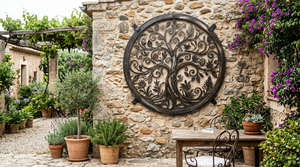
A verified size reference is the 60 cm black Tree of Life metal wall sculpture. It measures 60 × 60 × 1 cm and uses a round, black metallic-iron design. That scale can work as a self-contained feature in an entry, office or living area, but the full 60 cm circle should be mapped before purchase.
Include the shape in your measurements
A 60 cm round artwork and a 60 cm square piece occupy similar maximum width, yet they distribute visual weight differently. A circle leaves more exposed wall around its corners, while a rectangular design fills more of its stated footprint.
Irregular branches, leaves and abstract lines also create a softer outer boundary than a solid frame. This can make an open sculpture feel visually lighter than a print with the same overall dimensions. Compare both the measurements and the amount of metal within that outline.
Check depth and shadow space
Metal wall art may project from the surface or include layered elements. Even a shallow profile can cast visible shadows when side lighting reaches it. This is part of the appeal, but it matters in narrow hallways and beside opening doors.
Review the listed depth where available. If it is not stated, treat that detail as unconfirmed and avoid assuming the sculpture will sit flush. Also check whether curtains, cupboards or room doors could contact it during normal use.
Choose Between a Single Sculpture and a Multi-Piece Set
Configuration affects how easily the artwork can adapt to your wall. A single sculpture creates one defined focal point. A set can spread across a wider area, follow a staircase or accommodate an architectural interruption, but it requires more planning.
Single pieces create a controlled composition
A single round, square or irregular sculpture is the simpler option when the wall has a clear centre. It can be aligned with furniture, a doorway or another architectural feature without calculating gaps between components.
This format suits buyers who want a strong symbolic motif, a contained outline or a straightforward installation plan. It can also be easier to relocate because the relationship between separate parts does not need to be recreated.
Sets provide adjustable width and rhythm
Multi-piece metal artwork offers more control over the finished arrangement. Pieces can be placed close together for a compact display or spread across a longer wall. That flexibility is useful above a bed, dining setting or workspace where the furniture is wider than one modestly sized sculpture.
The three-piece gold abstract floral metal wall art set demonstrates this format. Each metal flower measures 30 × 43 cm and has two rear hanging holes. The open outlines keep the arrangement visually light, while the three components allow the total width to change according to the spacing selected.
Measure a set as a complete composition rather than multiplying the individual widths and stopping there. Add the intended gaps, check whether every component clears nearby obstacles and use a level reference so the pieces feel deliberately related.
Open designs and dense designs have different visual weight
An open wire-style sculpture allows the wall colour to show through and can suit compact rooms where a solid artwork might feel heavy. It also creates shadow detail that changes as daylight or room lighting shifts.
Denser designs provide stronger contrast and can remain legible from farther away. They may be more effective on a large wall or against a visually busy surface. The better option depends on viewing distance and the amount of detail already present in the room.
Select a Colour and Finish That Connects With the Space
Finish influences contrast, warmth and how prominently the artwork reads. It should relate to the room, but it does not need to match every handle, frame or fitting.
Black creates a defined silhouette
Black metal wall art forms a strong outline against white, cream and other light wall colours. It can repeat black furniture frames, lighting details or door hardware without requiring a perfect material match.
On a dark wall, the same finish produces a quieter, more tonal effect. That can be intentional, but detailed branches or abstract lines may become less visible. Test the expected contrast by holding a black object against the proposed surface and viewing it from across the room.
Gold introduces a warmer accent
Gold metal wall decor can bring warmth to neutral interiors and connect with warm-toned lighting or decorative hardware. Open designs help prevent a metallic finish from dominating a smaller room because much of the wall remains visible.
Avoid selecting gold solely because another metallic item is present. Compare the undertones and decide whether the new piece should coordinate closely or operate as a separate accent. Repeating the finish once elsewhere in the room is often enough to make it feel intentional.
Let the wall colour participate in the design
The wall behind an open sculpture becomes part of the finished artwork. A botanical silhouette can feel crisp against a pale surface, softer against a mid-tone colour or dramatic against a contrasting accent wall.
Consider future decorating plans as well. A versatile black outline may move easily between rooms, while a warmer finish may be more closely tied to a particular colour scheme. Buyers who rearrange often should give portability almost as much weight as immediate appearance.
Compare Metal Artwork With Other Wall Treatments
The wider wall art and decor collection includes alternatives that solve different decorating problems. Comparing them helps confirm whether metal is the right medium rather than simply the first attractive option.
Framed prints and photographs create a solid visual field. They are useful when colour, imagery or personal content is the priority. Their frames also provide a predictable rectangular boundary, which can make alignment straightforward.
Wallpaper changes the whole surface rather than adding one removable object. It suits buyers wanting continuous pattern or texture across a feature wall, but it involves a greater commitment to coverage and installation.
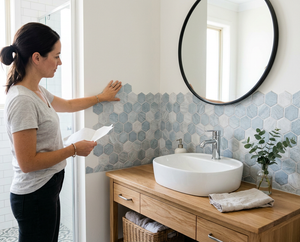
Peel-and-stick wall tiles add repeating surface texture and can suit an area where the wall itself needs transformation. By contrast, a metal sculpture leaves the surrounding paint visible and can usually be repositioned when the room changes.
Wall mirrors combine decoration with reflection. They can influence perceived depth and repeat light, but they also repeat whatever sits opposite them. Metal artwork provides depth and shadow without introducing another reflected view.
Choose metal when the wall needs a dimensional feature, a defined silhouette or an open design that allows the existing colour to remain visible.
Plan the Mounting Method Before Ordering
Mounting should be treated as part of product selection. The correct arrangement depends on the artwork’s dimensions, weight, hanging points and the wall construction at the chosen location.
Review the product page for rear holes, brackets, hooks or other supplied fittings. Included hardware can be a useful starting point, but it does not confirm suitability for every wall. The required fixing method depends on the surface and the load it must support.
Map the hanging points separately from the outline
The outer dimensions tell you how much space the artwork occupies, but they do not reveal where the fixing points sit. A centred hook, two rear holes and several mounting points each require a different layout.
For multi-piece sets, make paper templates matching every component. Mark the hanging-point positions on the templates, tape them to the wall and adjust the spacing before drilling. This makes it easier to maintain consistent gaps and identify any conflict with switches or furniture.
Check the wall before choosing the final position
Determine whether the proposed location is plasterboard, masonry, timber or another surface. Identify an appropriate fixing approach for that construction and the product’s stated weight or mounting requirements. Where those details are unclear, have the wall and item assessed before installation.
Also check for concealed services and consider how the piece will be removed for cleaning. A location that is difficult to reach may become inconvenient even when it looks balanced from the floor.
Allow for normal movement around the artwork
A design in a hallway, entry or dining area should not catch clothing, chairs or opening doors. Check the product depth and any projecting details, then walk through the area as it is normally used.
Outdoor placements need similar practical thinking. Keep the sculpture clear of gates, retractable awnings, climbing plants and regularly moved furniture. A visually appealing position can still be unsuitable if nearby objects repeatedly contact the metalwork.
Match the Artwork to the Room’s Viewing Distance
Detailed metalwork rewards closer viewing, while bold silhouettes remain readable from farther away. This distinction helps determine which design belongs in each room.
A hallway or entry is usually seen at relatively close range, so finer line work can be appreciated. A large living area or outdoor entertaining zone may require a clearer outline because the artwork is often viewed from across the space.
Bedrooms generally benefit from a calmer composition. An open botanical or abstract set can fill a broad area without creating the density of one large solid artwork. In a dining space, a horizontal arrangement can relate to the table length, provided the complete composition remains clear of lighting and nearby furniture.
For a home office, consider the artwork’s position from both the desk and the doorway. A piece that looks balanced behind a chair may appear cramped when viewed from the workstation. Test both sightlines with templates before deciding.
Evaluate Price Through Scale, Configuration and Placement Flexibility
The verified examples used for this guide were listed between $26.96 and $74.95 on 13 October 2026. Prices can change, so check the live product page before ordering.
A lower-priced set may deliver broad wall coverage through adjustable spacing, while a larger single sculpture may provide greater visual authority without requiring a multi-part layout. Compare the complete result rather than price alone.
Check the number of pieces, individual dimensions, material description, finish, mounting details and stated location suitability. A product that fits the wall correctly represents better value than a cheaper design that needs to be replaced because it looks undersized or cannot be used in the intended position.
Also consider relocation. A compact single piece can move between rooms easily, while a coordinated set can be reconfigured for different wall widths. That flexibility may be valuable in rental homes or rooms likely to change purpose.
Keep the Finish Looking Intentional
Follow the care directions supplied with the exact product. For routine indoor cleaning, begin with a soft, dry cloth to remove dust from outlines and recessed details. Support delicate sections rather than pressing them against the wall.
If a slightly damp cloth is permitted, remove remaining moisture promptly and avoid allowing liquid to collect at joins, edges or hanging points. Do not assume that a general household cleaner is appropriate for every painted, coated or metallic finish.
Inspect outdoor artwork more frequently because exposure varies by location. Look for trapped dirt, moisture or changes in the surface, particularly around fixings and overlapping sections. If deterioration appears, address it according to the product information rather than concealing it beneath an unverified coating.
Before discarding the packaging, trace the artwork’s full outline and mark the hanging-point offsets on a sheet of paper. Keep that template with the room measurements. If the wall is repainted or the sculpture is moved later, you can reproduce its position without remeasuring an irregular metal silhouette.
Frequently Asked Questions
How do I know what size metal wall art to buy?
Measure the clear wall area and the furniture beneath it, then mark the artwork’s full dimensions with removable tape. View the outline from the doorway, seating area and normal walking path. Include the empty space around the design rather than filling every available centimetre. For open metalwork, also consider how much wall will remain visible through the pattern, as this affects its apparent scale.
Does metal wall art need a frame?
Metal wall art generally does not require a separate frame because its outer silhouette forms the visual boundary. Round borders, botanical outlines and abstract shapes can all define the composition. A frame may also hide the open character that gives metalwork its depth and shadow. Instead, choose a wall colour that provides enough contrast and leave clear space around the piece so its shape remains legible.
Can metal wall art be displayed outdoors?
It can be displayed outside only when the exact product listing identifies it as suitable for outdoor use. Metal construction by itself does not confirm that the finish suits rain, sun or other exposure. Consider whether the wall is sheltered, how irrigation reaches the area and whether salty air may affect the surface. Follow the stated care directions and inspect both the artwork and its fixings regularly.
How can I stop wall art from looking too small?
Test the complete outline at full size before ordering. If one piece appears lost, consider a larger sculpture or a coordinated set that can extend across more of the wall. Relating the display to nearby furniture also helps: centre it over the main item and judge the arrangement as one composition. Do not rely on close-up product images, because they may not communicate scale in your room.
What should I check before mounting a metal wall sculpture?
Confirm the artwork’s dimensions, depth, weight information, hanging-point layout and supplied hardware. Then identify the wall construction and choose fixings appropriate to both the surface and load. Check for concealed services before drilling, and ensure doors, curtains or furniture cannot strike projecting sections. For multi-piece artwork, use individual paper templates and a level reference to establish the gaps before making permanent holes.
How should metal wall decor be cleaned?
Start with the manufacturer’s care directions and use a soft, dry cloth for routine dusting. Support fine or projecting elements while cleaning so they are not pressed against the wall. Use moisture or cleaning products only when the product information permits them, and dry the surface promptly. Outdoor pieces should be checked more often around joins and mounting points, where dirt and moisture may collect.
 Tags: