1300 760 441
 cs@factoryfast.com.au
Shower Screen Glass Types and Thickness: How to Choose the Right Look, Privacy and Strength
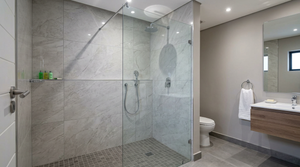

Glass choice does more than change how a shower screen looks. It affects how open the bathroom feels, how much privacy the shower area has, how visible water marks become and which hardware can support the panel properly. If you are comparing shower screens, start with the glass itself before getting caught up in handles, brackets or finishes.
The main shower screen glass choices
Most buyers are really choosing between clear glass, textured glass and the way the glass is framed or supported. Those choices overlap, but they solve different bathroom problems.
Clear glass for openness and light
Clear glass is the most direct choice when you want the bathroom to feel larger. It keeps tilework visible, lets light move through the space and suits modern layouts where the screen should almost disappear. This is why clear glass is common across frameless shower screens and fixed walk-in panels.
Clear glass is also unforgiving in one useful way: it shows whether the room has been measured and finished neatly. If the tiles, wall line or floor fall are rough, a very minimal glass panel will not hide them. That is not a reason to avoid clear glass, but it is a reason to measure carefully and choose the right mounting method.
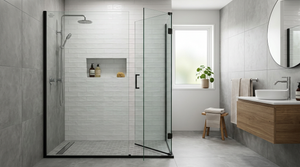
Factory Fast’s 120 x 100cm frameless 10mm glass shower screen is a useful example. It uses 10mm toughened glass, chrome hinges and brackets, a round handle and floor strips, so the glass is doing the visual work while the hardware supports water control and everyday use.
Reeded glass for privacy and texture
Reeded glass gives the bathroom more detail without making the shower feel boxed in. It softens the view through the panel, which can be helpful in shared bathrooms, guest bathrooms or ensuites where the shower is visible from the doorway.
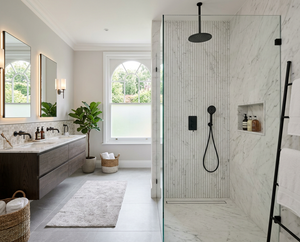
The strongest reason to choose reeded and fluted glass shower screens is not privacy alone. It is texture. A reeded panel can make a plain tiled room feel more finished, especially when paired with black, nickel or chrome hardware.
For example, the 120cm reeded glass shower screen with black wall channel and round pole uses 10mm toughened reeded glass with a black wall channel and a round stabilising pole adjustable from 760mm to 1200mm. That makes it a better fit for buyers who want both privacy and a visible design feature.
Fixed panels for simple walk-in layouts
A single glass panel is often the cleanest answer for walk-in showers. It removes the moving door decision and keeps the bathroom visually open. The tradeoff is splash control. A fixed panel needs enough width, correct placement and a suitable shower layout to work well.
If the shower is open on one side, compare shower panels as a separate decision from hinged enclosures. A panel can look minimal, but it still needs enough height and width to contain everyday shower spray.
The 110 x 210cm frameless 10mm glass shower screen in round black shows how fixed panels use hardware differently. It includes a black wall bracket and a retractable aluminium stabilising pole adjustable from 75cm to 120cm, which helps support a tall single panel without adding a full frame.
What glass thickness changes
Thickness matters because shower screen glass has to feel stable, suit the hardware and match the style of the enclosure. Many Factory Fast frameless and panel examples use 10mm glass, which suits minimal designs where the panel needs enough substance without heavy framing.
Thinner glass can appear in bath screens or more framed formats, where the frame or folding design does more of the supporting work. The important point is to compare thickness within the product type. A 10mm frameless fixed panel and a folding bath screen are not trying to solve the same problem.
Matching glass type to bathroom layout
Small bathrooms
Clear glass can make a compact bathroom feel less crowded, but it only works well if the screen shape suits the floor plan. If a hinged door would hit a vanity or toilet, glass style is not the first issue. Door movement is.
In tight spaces, fixed panels, sliding screens or bath screens may be more practical than a wide hinged door. Choose the operating style first, then narrow the glass finish.
Family bathrooms
A busy bathroom often benefits from glass that is easy to wipe and hardware that is simple to access. Reeded glass can help soften visibility, but textured surfaces may need more careful cleaning than a plain panel. If children use the space, think about splash direction, bath access and how often the panel will be handled.
Ensuite bathrooms
Ensuites often reward a cleaner, more minimal glass choice. Clear frameless panels can make a narrow room feel less divided. Reeded glass works well when the shower is visible from the sleeping area and you want visual separation without closing the room down.
Common mistakes when choosing shower screen glass
The first mistake is choosing glass by appearance alone. A reeded panel may look perfect, but if the bathroom really needs a sliding door, the texture will not fix the movement problem.
The second mistake is ignoring the surrounding hardware. A 10mm panel needs compatible brackets, hinges, channels or stabilising support. Hardware finish also changes the look: black creates contrast, chrome keeps things familiar and brushed metal finishes can soften the overall effect.
The third mistake is forgetting maintenance. Clear glass shows water marks quickly, but it is straightforward to wipe. Reeded glass adds privacy and character, but the textured face needs attention so residue does not settle into the pattern.
Before choosing between clear and textured glass, stand at the bathroom doorway and look at what the screen will reveal. If the shower wall, niche or tiles are the feature, clear glass makes sense. If the screen itself needs to add privacy or visual interest, reeded glass earns its place.
Frequently Asked Questions
Related Articles
-
 Tags:
shower-screens
Tags:
shower-screens