1300 760 441
 cs@factoryfast.com.au
Punching Bags Buyer Guide: How to Choose the Right Bag for Home Training
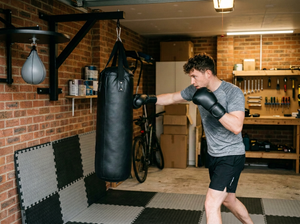

A punching bag can become the most-used piece of equipment in a home training area, or an awkward object that never quite fits the room. The difference usually comes down to choices made before purchase: what you want to practise, how the bag will be supported, how much working space it needs and what sort of striking response suits your sessions.
The best option is not automatically the largest or heaviest model. A compact water-filled target may suit focused hand combinations, while a longer heavy bag gives kicks and body-level strikes more room. A freestanding frame avoids relying on a ceiling support but can occupy considerably more floor area than the bag itself.
Factory Fast’s range of punching bags and balls includes hanging, stand-based and rebound-focused equipment. Use the following decision framework to narrow that range according to your training, room and installation constraints.
Start with the skill you actually want to practise
“Boxing fitness” can describe several very different workouts. Begin by identifying the movement you expect the equipment to support most often.
Power and conditioning
A substantial heavy bag suits repeated combinations, stronger punches and general conditioning. Its mass gives the striker a target that does not immediately fly away after every clean hit. That lets you practise stepping into combinations, moving around the target and maintaining output over a longer round.
Power-focused buyers should look beyond the bag’s weight. Check its length, diameter, fill, suspension system and the amount of movement it develops after impact. A shorter target may work well for punches but provide limited usable area for lower strikes.
Speed, rhythm and accuracy
A speed bag, rebound ball or floor-to-ceiling ball serves a different purpose. These smaller targets respond quickly and encourage controlled timing, hand-eye coordination and repeated contact. They are not replacements for a heavy bag when the aim is full-power work.
A wall-mounted rebound unit can preserve floor area, but the wall and mounting position become part of the purchase decision. A floor-to-ceiling model needs attachment points above and below the target, plus enough tension and clearance for the ball to move without contacting nearby objects.
Punching and kicking combinations
For kickboxing-style sessions, usable target length matters. The striking surface needs to cover the intended height range without forcing the user into an unnatural position. A longer hanging bag or tall freestanding target generally offers more scope for combining hand strikes with body and leg-level kicks.
Do not judge suitability from the total product height alone. On a stand-based design, part of that measurement may belong to the base, frame or suspension gap rather than the padded striking area.
Choose between hanging, water-filled, freestanding and speed-focused designs
Each punching bag format solves a different setup problem. The first useful comparison is not which one looks most professional, but which installation method your room can genuinely support.
Traditional hanging heavy bags
A hanging heavy bag keeps its supporting structure above the training zone. This can leave the floor relatively open, although the bag still needs clearance to swing. The mounting point must suit the suspended load and the repeated movement produced during training.
Check whether chains, swivels, shackles or brackets are included. “Bag included” does not necessarily mean that every part required to attach it to your building is supplied. The product description should also confirm whether the bag arrives filled, because filling a large empty shell becomes a separate purchasing and setup task.
Traditional cylindrical bags suit buyers who want a familiar target for punching combinations, movement drills and, where sufficient length is available, kicking practice. Their main tradeoff is the need for an appropriate overhead support.
Water punching bags
A water-filled design concentrates useful mass into a relatively compact target. The reviewed 30 L water punching bag with chain and shackle measures 55 cm long and 40 cm in diameter, with a listed filled weight of 35 kg. It includes a carabiner, D-shackle and chain, but its ceiling-mount hardware is not included. It was listed at $229.95 when checked.
That combination suits buyers who want a rounded punching target without the full length of a conventional heavy bag. The product page describes it as a low-swing option, which may help in a more contained training zone. Its shorter body makes it better aligned with upper-body striking than broad high-to-low kicking combinations.
Water also changes the setup process. The empty unit is easier to position than a pre-filled bag, but filling should occur only after the final hanging location has been settled. Buyers should also plan how the bag would be drained if it later needs to be moved.
Freestanding frame and bag sets
A frame-based setup creates its own hanging point, avoiding attachment to the building. This is useful where the available ceiling or walls are unsuitable, or where the buyer wants a self-contained station. The tradeoff is footprint.
Factory Fast’s freestanding 37 kg punching bag set uses an all-steel frame measuring 218 cm high, 165 cm deep and 165 cm wide. The included PU bag measures 115 x 38 cm, contains shredded textile filling and hangs from four welded chains. It was listed at $359.95 when researched.
The important measurement is the full 165 x 165 cm frame footprint, not the bag diameter. The user also needs room to approach the target and move without colliding with the frame legs. This makes the set more appropriate for a dedicated garage, gym room or under-cover training area than a corner that must return to another use immediately after each session.
Speed bags and compact rebound targets
Speed-focused products suit buyers prioritising rhythm, reaction and accuracy. Their smaller targets and shorter movement patterns can work in spaces where a full heavy bag is impractical. They may also complement a larger striking station rather than competing with it.
Check the platform or bracket dimensions, how far the assembly projects from the wall and whether its height suits each user. A fixed platform positioned for one adult may not align comfortably for another household member, so adjustability can matter more than target size in a shared setup.
Measure the complete working zone, not only the equipment
A product dimension tells you how large the equipment is while stationary. It does not show the room needed to train around it.
For a hanging bag, account for the target’s diameter, its expected movement and the path your body takes while circling. Doors, shelves, parked vehicles, ceiling lights and storage racks can all interfere even when the bag itself technically fits. A narrow gap may permit straight punches but prevent lateral steps, hooks or kicks.
Stand-based equipment requires another layer of planning. Measure the frame at its widest and deepest points, then add usable space around the striking side. Check ceiling height against the assembled height and consider whether assembly can take place in the intended room.
Also inspect the floor. A level, stable surface helps a stand remain consistent and gives the user predictable footing. If the space is shared with strength equipment, map the striking zone separately from the bar-loading and bench area. The existing squat racks and power racks guide can help when planning those adjacent strength stations.
Match bag mass and movement to training intensity
Bag weight affects resistance, swing and the amount of feedback returned after a strike, but there is no single product weight that suits every buyer. Technique, striking intensity, bag shape, suspension and intended drills all influence the result.
A heavier target generally moves less from light contact and gives stronger users more resistance. That can support planted combinations, although it also creates a more demanding hanging or support requirement. A lighter target responds more readily, encouraging the user to follow its movement rather than treating it as stationary.
The reviewed 35 kg water-filled target and 37 kg textile-filled heavy bag are close in listed mass but substantially different in shape. One is 55 cm long and rounded; the other provides a 115 cm cylindrical striking surface. They should therefore be compared by target coverage and response, not by weight alone.
Beginners do not necessarily need the lightest available option. A better starting point is a model that suits the planned technique, available mounting method and realistic session intensity. Controlled practice matters more than buying excess mass for future ambitions that may not match the room.
Compare the cover, fill and hardware as one system
The exterior is the part you touch, but the internal fill determines much of the striking response. Textile-filled bags provide a conventional padded target and may settle with repeated use. Water-filled designs distribute impact differently and can be drained for relocation.
PU and similar synthetic covers offer a practical surface for indoor home training. Buyers should inspect how seams, hanging loops and top closures are constructed because these areas connect the cover to the suspended load. Product photography may show the finish, but the written specification is the better place to confirm the material and included hardware.
Chains and swivels affect how a suspended model hangs and turns. A swivel lets the target rotate rather than winding the chains tightly during movement. When comparing packages, identify every transition from the mounting point to the bag: building attachment, bracket or hook, connector, chain and bag loops.
The weakest missing component can delay the entire setup. If the product includes chains but excludes the structural mount, allow for that before ordering rather than discovering it during assembly.
Decide whether the room can support the installation method
Renters and buyers using multi-purpose rooms may prefer equipment that avoids permanent attachment. A freestanding station solves that issue, but its large frame may be less convenient than expected. A base-style freestanding target can be more compact, although the filled base may become difficult to reposition.
Homeowners with an appropriate dedicated area may find a hanging design more floor-efficient. The relevant supporting surface still needs to suit both the static bag weight and repeated movement. When that suitability is uncertain, obtain installation advice before choosing the product rather than trying to solve the mounting question after delivery.
Wall-mounted speed equipment preserves central floor space but commits the target to one position. Confirm the mounting height for the intended user and check that the platform or bracket will not obstruct another room function when training ends.
The broader home fitness equipment collection is useful when planning a complete room. Position storage, benches and other stations according to their active working zones, not merely their stored dimensions.
Plan for noise, access and ongoing care
Punching equipment transfers sound and movement into its surroundings. Chains can move, frames can vibrate and footwork can create additional noise on a hard floor. A garage or dedicated workout room may therefore suit regular bag sessions better than a room beside a quiet living or sleeping area.
Access is another ownership consideration. A pre-filled 37 kg bag and its frame arrive as substantial components. Check the delivery path through gates, hallways and doorways, then confirm that the assembly location provides enough room to handle the frame sections.
Wipe the striking surface after training and allow it to dry before covering or storing it. Inspect seams, suspension loops, connectors and fasteners regularly. Water-filled designs also need their valve and plug checked for signs of leakage, while steel stands should be monitored for loose hardware and damage to their finish.
Keep training accessories in a defined position beside the station rather than on the floor inside the movement zone. Gloves, wraps and a timer are more likely to be used consistently when the setup is ready without a lengthy rearrangement.
Avoid the mistakes that turn a good bag into the wrong purchase
The first common mistake is buying from the bag dimensions alone. A 38 cm-wide target may hang inside a frame that occupies 165 x 165 cm, while a swinging suspended model needs more room than its resting diameter suggests.
The second is confusing target types. A speed bag develops rhythm and accuracy; it is not designed to provide the resistance of a heavy bag. A short water-filled target can be useful for punches but may not cover the height range wanted for kicking practice.
The third is assuming all mounting parts are supplied. Read the inclusions line by line and separate bag hardware from the bracket or building attachment. Confirm the installation path before purchase.
The fourth is choosing for several hypothetical users without checking adjustment. Shared equipment must place the target at a workable height for the people who will genuinely train. A fixed mounting position that suits one person can frustrate everyone else.
Before checkout, create a temporary target in the intended location using a soft marker or suspended length of string at the proposed bag height. Walk around it and rehearse slow jabs, hooks and kicks without contact. This simple test can reveal a blocked door, frame-leg conflict or missing approach angle that a tape-measure sketch does not make obvious.
Frequently Asked Questions
-
 Tags:
Punching Bags and Balls
Tags:
Punching Bags and Balls