1300 760 441
 cs@factoryfast.com.au
Lockers Buyer Guide: How to Choose Metal Storage for Work, Gym and School
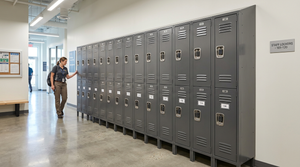

A good locker system does more than give people somewhere to put a bag. In a workplace, gym, school or shared facility, lockers reduce clutter, protect personal belongings and make busy spaces easier to manage. The right choice depends on who is using the lockers, what they need to store, how often the doors will be opened and how much floor space you can spare.
Factory Fast’s lockers collection includes metal storage options for offices, schools, gyms, staff areas and commercial environments, with different door counts, lock types, colours and compartment sizes. Use this guide to compare the real choices before buying.
Start With the User, Not the Locker
The first decision is not colour, price or even the number of doors. It is the storage job the locker needs to perform.
For staff, the priority is usually secure personal storage for bags, phones, uniforms, jackets and work items. For gym users, the locker needs to handle clothing, shoes, towels and damp gear without becoming unpleasant between uses. For students, the key issue is whether the compartment can take books, lunch bags, stationery and sports items without wasting corridor or room space.
Once you know the user group, the layout becomes much easier to choose.
Choose Tall Storage for Clothing and Personal Gear
Tall lockers suit users who need hanging space or more vertical room. A two-door L-shaped design can give two people separate lockable compartments while still keeping a compact footprint. For example, the grey two-door L-shaped multipurpose locker measures 180 x 40 x 45 cm and includes hanging rods, ventilation slots and a recommended total weight capacity of 80 kg.
That kind of layout works well where people need room for coats, uniforms or longer items, but you do not want to dedicate a wide wall to storage.
Choose Multi-Door Lockers for Shared Facilities
If many users need short-term storage, a multi-door unit is often the better choice. A four-compartment locker gives each person a separate section without taking over the room. The 2x2 door grey metal locker with 3-digit combination lock measures 180 x 76 x 45 cm overall, with each inner compartment measuring 378 x 420 x 850 mm. Each compartment has a 30 kg weight capacity.
That makes four-door lockers useful for offices, schools, gyms, warehouses and public spaces where users need enough room for a bag and personal items, but not a full-height compartment.
Choose High-Density Lockers When User Count Matters Most
Where the aim is to serve more users in the same footprint, a 12-door locker can be more efficient. The 12-door locker with padlock-operated doors measures 180 x 90 x 36 cm, with inner compartments of H425 x W298 x D330 mm. Each compartment supports 30 kg, giving the whole unit a 360 kg total capacity.
This layout is best for phones, wallets, small bags, work accessories and compact personal belongings. It is less suitable when users need to store bulky bags, helmets, boots or uniforms.
Compare Lock Types Before You Compare Colours
Locking mechanism is one of the most important practical choices because it affects daily use. A locker can be the right size and still be the wrong purchase if the access method does not suit the environment.
Key Locks Suit Assigned Storage
Standard key locks are simple for assigned lockers, especially when a workplace, school or staff area gives one locker to one user. They are easy to understand, do not require the user to remember a code and can suit lower-turnover settings.
The tradeoff is key management. If many casual users come and go, keys can be misplaced, forgotten or returned late. For a stable staff area, that may be manageable. For a gym or shared visitor area, it can create avoidable admin.
Combination Locks Suit Shared Use
Combination locks are useful when users need access without carrying a separate key. Factory Fast locker products include 3-digit and 4-digit combination lock options across selected models. These are practical in shared spaces where convenience matters and users may not want to manage loose keys during work, training or study.
For offices and schools, combination locks can also reduce reliance on spare keys, but they still require a clear process for forgotten codes.
Padlock-Operated Lockers Suit Flexible Policies
Padlock-operated lockers work well when users bring their own padlock or when an organisation wants a simple, flexible approach. They can suit gyms, workshops, schools and staff rooms where lockers are not permanently assigned to one person.
The main buying check is operational: decide whether the facility will provide padlocks or ask users to bring their own. That small policy decision affects how easy the lockers are to use from day one.
Match Locker Material to the Space
Factory Fast’s metal lockers are built around cold-rolled steel and powder-coated finishes across many models. This matters because shared storage is handled often, bumped by bags and exposed to daily wear.
Powder-coated steel is a practical choice for offices, schools, gyms and warehouses because it offers a clean finish, everyday durability and easy maintenance. In damp-prone spaces, ventilation becomes more important, especially where users store training gear, uniforms or shoes.
Plan the Footprint Before You Order
Before choosing a unit, measure the wall, walkway and door swing area. A locker that technically fits can still make a room awkward if the doors open into a narrow corridor or block access to benches, desks or equipment.
For compact spaces, a vertical two-door locker can provide useful personal storage with only 40 cm of width. For broader walls, a 2x2 unit can create four larger compartments across a 76 cm width. For high-density storage, a 12-door locker uses 90 cm of width but gives many more individual compartments.
Also think about how many units might be needed later. A modular row of lockers is easier to expand neatly when you choose a consistent height, finish and door style from the beginning.
Choose by Environment
Workplaces and Staff Areas
For workplaces, office lockers help keep bags, personal items and work gear away from desks and walkways. Tall compartments suit uniforms and jackets, while four-door units are practical for shared staff rooms or flexible workspaces.
If the locker will sit in a customer-facing or office-adjacent area, colour and finish matter more. Grey and black finishes are easier to blend with other office furniture, while coloured doors can help with user identification in larger storage zones.
Gyms and Change Rooms
For gym lockers, ventilation and easy access are the big buying factors. Users may store shoes, towels, clothing and training gear, so airflow and compartment size should be checked before choosing a high-density model.
A four-door unit can suit users with gym bags. A 12-door layout may be better for valuables, phones and smaller items in a reception-adjacent or open training area.
Schools and Education Spaces
For school lockers, the decision usually comes down to user count, item size and identification. Four-door and six-door layouts give more room for books and bags, while 12-door units can serve more students with smaller compartments.
If lockers are placed in corridors or shared rooms, choose layouts that keep access predictable and avoid crowding at peak times.
Buying Mistakes to Avoid
The most common mistake is choosing the highest number of doors without checking compartment size. More doors can be efficient, but only if each compartment suits what users actually carry.
The second mistake is treating every shared environment the same. A gym, office and school can all use metal lockers, but the storage mix is different. Gym users may need ventilation and shoe space. Office users may need laptop and bag storage. Students may need room for books and daily supplies.
The third mistake is ignoring the lock policy. Decide whether lockers will be assigned, casual-use, key-based, code-based or padlock-based before ordering.
A Practical Way to Choose
If each user needs hanging space, start with tall lockers. If each user needs a medium compartment for bags and personal items, look at four-door or six-door layouts. If you need many compact compartments for valuables or small belongings, compare 12-door options.
The best locker choice is the one that matches the busiest moment in the space. Picture the start of a school day, a gym peak period or a staff shift change, then choose the door count, access method and compartment size that keeps that moment moving smoothly.
 Tags:
Tags: