1300 760 441
 cs@factoryfast.com.au
Curved Shower Screens: When They Work, When They Do Not, and What to Check Before Buying
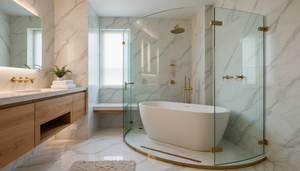

A curved shower screen can solve one of the most common bathroom problems: needing a proper enclosed shower without giving up too much floor space. The rounded front softens the footprint, the sliding entry avoids door swing, and the corner layout can suit compact ensuites where a hinged screen would feel awkward.
The catch is that curved shower screens are more layout-specific than they look. Before choosing one from the broader shower screens collection, check whether your bathroom really suits a rounded enclosure, a square corner screen, a flat walk-in panel or another sliding format.
When a Curved Shower Screen Works Best
A curved shower screen works best when the shower is being placed in a corner and the room needs clear movement around the vanity, toilet or doorway. The rounded front removes the hard outside corner that a square enclosure creates, which can make the bathroom feel easier to move through.
It is especially useful in compact Australian ensuites, secondary bathrooms and renovations where the existing plumbing already favours a corner shower. A curved model can give the room a more complete shower enclosure without needing a wide hinged door path.
Choose Curved When Floor Space Is Tight
The main reason to choose a rounded screen is circulation. If someone needs to step past the shower to reach the vanity or laundry-style storage, a curved front can reduce the sense of blockage.
Factory Fast’s 90x90cm Rounded Sliding 6mm Curved Shower Screen with Black Hardware and Base is a good example of the compact format. It measures 90 x 90cm at the base, stands 1950mm high, uses 6mm toughened glass and is listed at $524.95 at the time of verification.
Choose Sliding When Door Swing Is the Issue
Curved screens commonly use a sliding entry, which matters in small bathrooms. A hinged shower door needs clear swing space, while a sliding curved screen keeps the opening inside the shower footprint.
If door clearance is your main problem, also compare sliding shower screens. A straight sliding screen may suit a wall-to-wall shower better, while a rounded sliding enclosure suits a corner where the shower tray or base is part of the layout.
When a Curved Shower Screen May Not Be the Right Fit
A curved screen is not always the most flexible option. It has to suit the corner, the entry direction, the base footprint and the available wall space. If your renovation plan is based around a long open shower, a flat shower panel may create a cleaner result.
It may also be the wrong choice if you want the shower to feel visually invisible. The curved shape and frame are part of the design, so it reads more like a complete enclosure than a minimal glass divider.
Avoid Curved If You Need a Wide Walk-In Opening
A curved screen can make sense for contained showering, but it is not the same as a generous walk-in opening. If the buyer wants an open, panel-led look, a fixed panel or frameless layout will usually feel lighter.
Avoid Curved If the Corner Is Irregular
Curved enclosures rely on the base and walls lining up neatly. If the bathroom has uneven walls, awkward nib walls or an unusual shower recess, a different layout may be easier to plan around. In that case, compare corner shower screens and flat panel styles before committing.
How to Choose the Right Curved Shower Screen Size
The two key checks are base footprint and usable entry space. A 90 x 90cm curved screen is compact, while a 100 x 100cm version gives more internal room if the bathroom can spare the extra floor area.
Factory Fast’s 100x100cm Rounded Sliding 6mm Curved Shower Screen with Black Hardware and Base measures 100 x 100cm, stands 1950mm high, uses 6mm toughened glass and is listed at $559.95 at the time of verification. That extra 100mm each way can matter if the shower will be used daily by adults who want more elbow room.
Measure the Outside Path, Not Just the Shower Space
A common mistake is measuring only the empty corner. Also check the path around the outside curve, the distance to the vanity, and whether towel rails or cabinet doors will interfere with entry.
Check the Base Details
Some curved shower screens include a base, but the drain or plug may not be included. That matters for renovation planning because plumbing position can affect whether the screen is a straightforward fit or needs extra work before installation.
Curved vs Corner vs Flat Shower Panels
A curved shower screen is best when you want a contained corner shower with a softer outside edge. A square corner screen can provide a more angular look and may suit bathrooms where internal shower space is the priority. A flat panel works best when the goal is a walk-in feel and the bathroom has enough length to manage splash.
The right choice depends less on style and more on how the bathroom is entered, cleaned and shared each day.
Buying Mistakes to Avoid
Do not choose a curved shower screen only because it looks compact. Check the real base size, the height, the door opening, and whether the rounded front improves movement in the room.
Do not assume all curved screens suit the same base or plumbing setup. The shape needs to work with the floor, wall alignment and drainage position.
Before ordering, mark the footprint on the bathroom floor with tape and stand where the vanity, toilet and doorway will be used. If the curve gives your knees, elbows and cabinet doors more breathing room, it is doing the job it was designed to do.
Frequently Asked Questions
-
 Tags:
Curved Shower Screen
Tags:
Curved Shower Screen