1300 760 441
 cs@factoryfast.com.au
King Single Mattress Buyer Guide: Size, Feel, Construction and Frame Fit
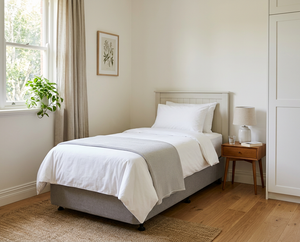

A king single earns its place when one sleeper needs more room without giving a double bed the floor space. It can suit a growing teenager, a taller solo sleeper or a guest room expected to accommodate adults, but the size label alone does not identify the right mattress.
The real choice involves construction, firmness, mattress depth, frame compatibility and how the finished bed will work in the room. Factory Fast’s range of king single mattresses includes foam, hybrid and pocket spring options, giving buyers several genuinely different comfort profiles to compare.
Is a King Single the Right Size for the Sleeper?
A king single is designed for one person. It provides more width and length than a standard single while remaining narrower than a double, which makes it particularly useful when comfort and floor space are competing priorities.
Factory Fast’s category guidance describes this size as approximately 107 x 203 cm. The live products reviewed for this guide list approximately 106 x 203 cm, so shoppers should treat the category measurement as a useful planning figure and confirm the exact dimensions on the chosen product page.
When It Makes Sense for a Child or Teenager
A standard single can work well for a younger child, especially when the bedroom also needs space for play, storage or a study area. A king single becomes more attractive when the purchase is intended to last through the teenage years.
The 203 cm length gives a growing sleeper more usable legroom than a compact single. Its additional width also allows more freedom to change position without taking up as much of the room as a double bed.
Consider the long-term room plan before choosing. A larger mattress may be worthwhile if the bed will remain in the same bedroom for several years, but it should not block wardrobe doors, drawers or the natural walking route.
When It Suits an Adult or Guest Room
A king single can accommodate an adult sleeping alone while using less width than a double. That makes it a practical option for a spare bedroom, study-and-guest-room combination or compact rental bedroom.
For frequent adult use, pay close attention to the support construction and edge design rather than buying solely by size. A substantial comfort system can make the bed feel more suitable for nightly use, while a simpler medium-firm build may be sufficient for occasional guests.
A double remains the better option when the room may regularly host two people or when a solo sleeper strongly prefers extra side-to-side space. A king single is not a compact substitute for a couple’s bed.
Measure the Mattress, Frame and Working Space Separately
The mattress footprint is only one of the measurements that determines whether the bed will fit. The assembled frame can be wider or longer because of side rails, upholstery, posts or a bedhead.
Start by marking approximately 106 x 203 cm on the floor. Then add the frame’s complete external dimensions and check the remaining clearance with the room in normal use.
Open wardrobe doors and drawers fully. Place bedside furniture where it will actually sit. Check whether the sleeper can change the bedding and walk along at least one side without moving other furniture.
The existing mattress size and support guide provides a broader comparison of mattress dimensions, construction and room fit. For a king single purchase, the most important lesson is to compare the exact mattress specifications with the frame’s internal support area, not just match two products carrying the same size name.
Check the Route Into the Bedroom
Measure doorways, stair turns and narrow passages before delivery. A compressed mattress can be easier to move than one at full size, but the package still needs a clear route to the intended room.
Plan where the mattress will expand as well. Once a rolled model has opened, moving it through a tight doorway can be considerably less convenient. Taking the package directly to the bedroom before opening it avoids that problem.
Compare Foam, Hybrid and Pocket Spring Construction
The construction determines how the surface cushions the body, how readily it responds when the sleeper changes position and how substantial the edges feel. Factory Fast’s broader mattress collection provides several constructions and depths, so it is more useful to compare the layers than to rely on a general comfort description.
Foam for Contouring and Reduced Bounce
An all-foam mattress uses comfort foam over a denser support base. The upper layers compress around the sleeper, creating a more contouring sensation with less of the bounce associated with springs.
The verified 25 cm gel memory foam king single mattress combines a 4.3 cm ventilated gel-infused memory foam surface with a 21 cm high-density foam base. Its product page describes the feel as medium-firm and lists dimensions of approximately 106 x 203 cm.
This construction suits a buyer who values close cushioning around the shoulders and hips but still wants a dense supporting layer underneath. It may also appeal to a sleeper who dislikes a highly responsive surface.
The model was listed at $364.46 when checked. That price should be read alongside the layer specification: the value lies in whether the deeper foam construction matches the sleeper, not simply in being the highest-priced option considered here.
Hybrid Construction for Cushioning With Spring Response
A hybrid-style mattress combines foam at the surface with a spring support system beneath it. This creates a different feel from an all-foam design because the upper layers cushion the body while the coils add response.
The live 20 cm memory foam and innerspring king single mattress has quilted memory foam, a further 4 cm comfort foam layer and traditional steel spring coils. It is listed as medium-firm and measures approximately 106 x 203 cm.
At $269.95 when checked, it represented the lowest-priced verified example in this comparison. Its lower 20 cm profile can be useful on a taller frame or where a thick mattress would cover too much of the bedhead.
Choose this type when the sleeper wants foam cushioning without losing the familiar response of a spring bed. It may be less suitable for someone specifically seeking the slower, deeper contour of an all-foam surface.
Pocket Springs and a Taller Euro Top
Pocket springs are individually wrapped so that different parts of the support system can respond separately under the sleeper. A Euro top adds cushioning above that spring unit, producing a taller and more layered mattress.
The verified 33 cm Euro top pocket spring king single mattress includes high-density foam, individually wrapped pocket springs, reinforced side edges and a knitted fabric cover. It was listed at $309.95 when researched.
This option suits buyers who prefer a substantial mattress with responsive support and a cushioned top. Reinforced edges may also be useful when the sleeper frequently sits on the side of the bed or uses more of the available width.
Its 33 cm depth requires careful planning. On a high frame, the completed bed may be harder for a younger child or shorter sleeper to access, and standard fitted sheets may not have sufficient pocket depth.
Choose Firmness by Feel, Not by Age Label
There is no single firmness that automatically suits every teenager, adult or guest. Body position, preferred cushioning and sensitivity to pressure all influence how a mattress feels.
A side sleeper generally needs enough surface give for the shoulder and hip to settle without creating concentrated pressure. A back sleeper may prefer a more even balance between cushioning and support. A stomach sleeper often looks for a surface that does not allow the midsection to sink too deeply.
Firmness labels should be interpreted together with construction. A medium-firm foam mattress may contour gradually, while a hybrid with the same general label can feel more responsive because of its coils. A thick Euro top may feel cushioned at first contact while still drawing its underlying support from pocket springs.
For a guest room used by different people, a balanced medium or medium-firm description can be a practical starting point. The product’s layers, edge construction and height then help distinguish between the available options.
Mattress Depth Changes the Finished Bed
The verified king single examples range from 20 cm to 33 cm in depth. That 13 cm difference affects accessibility, bedding, the amount of bedhead left visible and how the room looks once the bed is assembled.
When a 20 cm Profile Works Well
A 20 cm mattress can suit a taller platform frame, a prominent bedhead or a room where the sleeper benefits from a lower finished surface. It also requires less depth from a fitted sheet than the thicker alternatives.
Do not assume a lower profile means the same thing as reduced support. Construction matters more than height alone. The reviewed 20 cm model combines comfort foam with a spring unit, giving it a different purpose from a thin foam pad.
What a 25 cm Mattress Adds
A 25 cm build occupies the middle ground in the researched range. It offers room for a substantial support base and a defined comfort layer without raising the sleeping surface as much as a 33 cm design.
This depth can work well on a conventional frame, but the buyer should still add the frame height and mattress height together. Check where the sleeper’s feet reach when sitting on the edge rather than judging the mattress in isolation.
Planning Around a 33 cm Mattress
A 33 cm mattress creates a taller, more substantial profile. It may suit an adult or teenager who wants a deeper comfort build, provided the frame does not already sit unusually high.
Check fitted-sheet depth before checkout. Also compare the mattress top with bedside tables, windows and the bedhead. A thicker choice can change the proportions of the entire room even when its width and length fit perfectly.
Match the Mattress to the Bed Frame
Browse compatible king single bed frames when replacing both parts of the bed. Matching size labels are the starting point, but the exact internal support dimensions and complete assembled footprint still need to be checked.
For an existing frame, inspect the support surface before placing a new mattress on it. Slats should be secure and even, with no damaged areas that could create inconsistent support. Confirm any centre support included with the frame is installed correctly.
Do not place a king single mattress on a standard single frame. The extra width and length create an obvious mismatch. A double frame is also unsuitable because the mattress can move inside the larger opening and leave inconvenient gaps.
If the frame has drawers, a gas-lift compartment or a tall bedhead, assess those features with the mattress depth included. A thick mattress may make a lifting section heavier to operate, cover more of the bedhead or raise the drawer-side sleeping edge beyond a comfortable sitting height.
Compare Price Through Construction and Daily Use
The three verified examples used in this guide ranged from $269.95 to $364.46 when researched. Prices can change, so the current product page should always be checked before publishing or purchasing.
The lowest price is not automatically the strongest value, and the most expensive model is not necessarily the best fit. Compare what the extra spend provides: foam depth, pocket spring construction, reinforced edges, mattress height or a particular comfort profile.
For a growing teenager who will use the bed nightly, paying for the right construction may be more sensible than selecting an occasional-use guest mattress. For a spare bedroom used only a few times each year, a balanced hybrid at a lower price may meet the actual need without adding unnecessary height or complexity.
Plan for Delivery, Expansion and Bedding
Some foam and hybrid mattresses are delivered compressed. The reviewed 20 cm model is supplied in a box, while the 30 cm foam option elsewhere in the king single range notes that it may require 48 to 72 hours to reach its full dimensions. Product instructions for the selected model should take priority.
Move the unopened package into the bedroom, clear the frame and allow enough time for expansion before the bed is needed. Cooler conditions may slow the process, so a same-day guest-room setup can create unnecessary pressure.
Check bedding after selecting the mattress, not before. Confirm that fitted sheets match both the king single footprint and the chosen mattress depth. A protector also needs sufficient pocket depth to sit flat without pulling at the corners.
Avoid the Most Common King Single Buying Mistakes
The first mistake is choosing by the words “king single” without comparing exact dimensions. Factory Fast’s category guidance and current product listings differ slightly in how they round the width, making product-level checking important.
The second is ignoring the total bed height. A 33 cm mattress on a tall frame can produce a very different result from a 20 cm option on the same base.
The third is assuming firmness describes the whole feel. Foam, traditional coils and pocket springs respond differently even when their product descriptions use similar comfort language.
The fourth is buying for the current age of the sleeper while overlooking the intended service life. A growing teenager may benefit from the added length and a construction chosen for nightly use, while a compact guest room may be better served by a lower-profile model.
Before ordering, write down three figures on the room plan: the exact mattress dimensions, the assembled frame dimensions and the finished height from floor to mattress top. Those measurements will expose a poor match before it becomes an awkward bed that is expensive to change.
Frequently Asked Questions
-
 Tags:
King Single Mattress
Tags:
King Single Mattress