1300 760 441
 cs@factoryfast.com.au
Home Gymnastics Equipment Buyer Guide: Bars, Beams and Mats
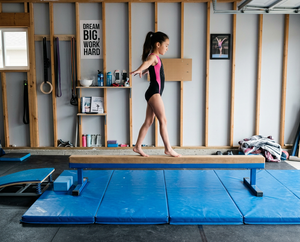

A home gymnastics setup succeeds or fails before the first apparatus arrives. The gymnast’s current skills, the room dimensions, the floor surface and the way each item will be stored all have to work together.
That makes buying gymnastics equipment for home different from choosing a general exercise accessory. A bar needs operating space around its frame. A beam may be compact when folded but more than 2 m long in use. A mat must cover the intended movement area rather than merely fit beneath the equipment.
This guide explains how to plan a practical home training zone, compare bars, beams and mats, interpret product dimensions and load ratings, and build a setup that can develop with the user. Factory Fast’s wider gymnastics equipment range provides a useful starting point once you know which apparatus genuinely fits the space and training purpose.
Define the purpose of the home gymnastics setup
The best equipment is not necessarily the largest or most advanced option. It is the apparatus that supports skills the gymnast is ready to practise regularly within the limits of the available room.
Start by deciding whether the setup is mainly for introductory movement, supplementary practice between coached sessions, tumbling drills, balance development or strength work. This decision determines which equipment should come first.
Introductory movement and active play
Young beginners generally benefit from simple equipment that keeps movements close to the floor. A folding mat, low beam or age-appropriate adjustable bar can provide a repeatable practice area without turning the room into a permanent gym.
At this stage, easy setup matters. Equipment that takes too long to assemble or requires furniture to be rearranged every time may be used less often. Folding designs can be particularly useful in bedrooms, rumpus rooms and shared living areas.
Check the stated age guidance and dynamic load rating before purchase. A product described as suitable for children is not automatically suitable for every child, skill or movement.
Practice between coached sessions
A gymnast who already attends structured training may need equipment for a narrow set of drills rather than a complete collection. Ask which floor, beam, conditioning or bar exercises are appropriate to repeat at home.
Matching the home apparatus to those drills avoids buying equipment that encourages unsuitable progression. A low folding beam may support foot placement and routine memory, while a wedge can assist with specific incline-based movements. Neither needs to imitate the full height or scale of larger training apparatus to be useful.
Strength and conditioning
Older users may be looking for hanging, support and bodyweight exercises rather than complete gymnastics routines. In that case, compare gymnastics bars with the broader range of pull-up bars and stations.
A gymnastics bar is shaped around bar-skill practice and may offer child-focused height adjustment. A wall-mounted or freestanding pull-up station is generally a better match for adult strength work. The pull-up bar and chin-up station buyer guide explains the installation and space differences between those configurations.
Measure the operating zone, not just the product footprint
A product’s listed dimensions tell you how much floor it occupies while stationary. They do not automatically account for movement, access, mat coverage or nearby objects.
Measure the proposed training area in its normal condition. Do not assume furniture will always be moved or a doorway will remain closed during practice.
Floor length and width
Mark the full product dimensions on the floor with removable tape. For a bar, include the complete base rather than only the bar width. For a beam, mark the full extended length. Then check whether a correctly sized mat can sit beneath or beside the apparatus without curling against furniture.
Walk around the marked area. Look for cabinet handles, window coverings, heaters, shelves and sharp furniture edges that could intrude into the active zone.
If equipment will be unfolded in a shared room, identify where each piece goes every time. Consistent placement makes it easier to notice when furniture or another item has moved into the area.
Ceiling height and overhead clearance
Horizontal bar practice involves movement above and around the user, so ceiling height must be assessed separately from the product’s maximum setting. Consider the gymnast’s height, arm reach and intended movement rather than relying on the apparatus height alone.
Ceiling fans, pendant lights and garage-door mechanisms can make an otherwise generous room unsuitable. Measure to the lowest obstruction, not the main ceiling surface.
Storage dimensions
Folding does not always mean small. A 2.4 m beam that folds in half still leaves a 1.2 m-long item to store. A four-panel mat may become shorter when folded but considerably thicker.
Record the proposed cupboard, wall or under-bed storage space before ordering. Check the opening as well as the internal dimensions. An item can fit inside a cupboard yet remain impossible to manoeuvre through its door.
Make matting the foundation of the setup
Mat selection should follow the movement being practised, the apparatus footprint and the available floor area. A thin general exercise mat and a purpose-sized folding gymnastics mat do different jobs.
Compare mat length, width and thickness
The mat needs to cover the likely contact area without creating unstable overlaps. Check whether the gymnast will remain within its boundaries during the intended drill and whether apparatus feet can sit as directed by the product instructions.
The live, in-stock 240 × 122 cm folding exercise mat is 4 cm thick when open and folds to 60 × 32 × 60 cm. Its four-panel construction, carry handles and tear-resistant vinyl cover suit homes where the practice area must be packed away after use.
Those measurements are also useful when comparing it with a bar frame. A mat can be wide enough to coordinate with the apparatus but still require additional open space around the combined setup.
Folding mats versus floor tiles
Folding mats provide a defined cushioned surface that can be carried and stored. Interlocking floor tiles create broader modular coverage and can help protect the underlying room surface, but they should not be treated as interchangeable with thicker gymnastics matting.
Choose according to the intended activity. Stretching and low-impact conditioning place different demands on a surface from bar work, tumbling or apparatus dismounts.
Avoid building a patchwork of unrelated mats with uneven edges. Height changes between surfaces can interfere with foot placement, while gaps can open when separate pieces move.
Surface grip and cleaning
Inspect the underside and confirm that the mat suits the flooring in the room. Smooth tiles, timber, carpet and garage floors can behave differently beneath the same product.
A wipe-clean cover is valuable in a frequently used home setup. Clean the surface according to its care directions, allow it to dry fully and check seams before folding it away. Trapped moisture and hurried storage can make future inspection more difficult.
Choose apparatus according to the skill being practised
Bars, beams and wedges support different movement patterns. Buying one of each is rarely the best starting point. Select the apparatus that matches the gymnast’s present training focus, then add complementary pieces when there is a clear use for them.
Adjustable bars for hangs, holds and early bar skills
A home gymnastics bar needs the correct height range, frame footprint, bar dimensions and dynamic capacity. Dynamic load matters because swinging and other moving exercises place different demands on equipment from a user holding still.
The live, in-stock adjustable-height gymnastics training bar measures 203 × 120 cm at its base and adjusts from 95 to 150 cm across 12 positions. It has a 137 cm-long fibreglass bar, weighs 23 kg and is listed with a 150 kg static capacity and 100 kg dynamic capacity.
Its double-locking adjustment system combines lockdown and spring-loaded knobs. That detail is important for buyers comparing bars that look similar but use different height mechanisms. The 120 cm frame width is also designed to coordinate with mats measuring 122 cm across.
Do not select a bar solely because its maximum rating exceeds the user’s body weight. Confirm the intended skill level, available ceiling clearance, mat arrangement and the instructions for every adjustment point.
Folding beams for low balance practice
A low beam is useful when the goal is foot placement, turns, controlled walks and routine memory close to the floor. The main buying variables are extended length, beam width, surface material, underside grip and folded size.
The live, in-stock 2.4 m folding balance beam measures 240 × 10 × 6.5 cm when open and 120 × 10 × 13 cm when folded. It uses a synthetic suede surface, stainless steel hinge and anti-slip underside.
The 10 cm width creates a defined training surface, while the 6.5 cm height keeps practice close to the floor. Its 1.2 m folded length is more manageable than its operating size, but buyers still need a suitable storage position and enough room to unfold it without striking furniture.
A low folding model is not a substitute for elevated apparatus. Its value lies in providing a consistent line for grounded balance drills within a home-sized zone.
Wedges for incline-based movement drills
A wedge is a supporting training shape rather than a general landing mat. Its slope can be used for selected tumbling progressions, stretching, balance exercises and movement against an incline.
The live, in-stock 120 × 60 × 35 cm folding wedge mat folds to 62 × 62 × 42 cm. It has a polyurethane-backed split-leather exterior and PVC netting-fabric filling.
The 35 cm rise materially affects how it fits into a room and which drills suit it. Check both the floor area and the direction of movement before adding a wedge. It should be purchased for an identified training use, not simply because it appears versatile.
Rings and parallel equipment for conditioning
Rings and parallel equipment can support grip, shoulder, core and support-position training, but they introduce additional installation and clearance questions. Rings require a suitable suspension point and enough space for both the user and the straps. Parallel bars need a stable base and room for the body to move between and around the rails.
For home use, begin with controlled conditioning rather than using these items as shortcuts to advanced skills. Confirm mounting, capacity and spacing requirements against the exact product page before purchase.
Match specifications to the individual user
Age labels provide a starting point, but they do not replace a full specification check. A growing child may move beyond a height setting or dynamic limit before the apparatus shows obvious wear.
Static and dynamic load ratings
Static capacity describes a load applied without substantial movement. Dynamic capacity accounts for the type of moving load identified by the product information. Where both are provided, use the rating relevant to the intended activity.
Do not combine ratings, reinterpret them or assume a static figure applies to swings. User weight is only one part of the decision. Movement type, adjustment position, assembly and the condition of the equipment also matter.
Height adjustment and useful lifespan
An adjustable product can support several stages of growth, but only if its range matches both the current user and likely near-term needs. Compare the lowest setting first. A high minimum position may make a bar unsuitable for a young beginner even when its maximum height looks generous.
Adjustment should also be practical for the adult managing the setup. Identify how many knobs or locks must be checked and whether markings make it easy to set both sides evenly.
Product weight and portability
A heavier frame may feel more substantial, but it can be difficult to move between a storage area and the practice zone. A lightweight beam is easier to carry, yet its underside and placement still need checking before every session.
Consider who will set up the equipment. If one adult cannot move it comfortably or position it consistently, a nominally portable design may function as permanent furniture.
Build the home training area in stages
A staged setup keeps spending aligned with real use. It also reveals which limitations come from the room rather than the equipment.
Stage one: establish the floor zone
Begin with suitable matting and a clearly measured practice area. Use this stage to confirm that the room can be cleared consistently and that the chosen storage method works.
Observe which exercises are actually repeated. If most sessions focus on stretching, shapes and grounded drills, a larger apparatus may not yet improve the setup.
Stage two: add one primary apparatus
Choose either a bar, beam or incline trainer according to the gymnast’s current programme. A beginner working on balance may gain more from a low beam than a bar that dominates the room. Someone practising supervised bar fundamentals will need the correct adjustable frame and mat relationship.
The live examples researched for this guide ranged from $59.46 for a folding beam to $299.96 for a larger adjustable bar at the time of checking. Prices can change, but the spread demonstrates why a training goal should be set before a budget is allocated.
Stage three: add complementary equipment
Only expand once the first apparatus is being used consistently. Complementary equipment should add a different function: matting beneath a bar, a wedge for a defined tumbling drill or conditioning equipment for strength development.
Avoid buying several products that solve the same problem. Two portable balance items may add less training value than one beam paired with suitable floor coverage.
Avoid common home gymnastics equipment mistakes
One frequent mistake is measuring the item without mapping the movement around it. A bar may fit between two walls but remain unusable because its active zone intersects with a fan, shelf or walkway.
Another is choosing by age alone. Children of the same age can differ in height, weight, experience and the skills they are ready to practise. Product dimensions and ratings provide more useful purchase information when combined with current training needs.
Buyers also underestimate folded dimensions. A mat, beam or frame can pack down while still being too large for the intended cupboard, car or under-bed space.
Do not treat a general yoga mat as a replacement for purpose-sized gymnastics matting. The correct surface depends on the apparatus and drill, not simply whether the floor feels softer.
Finally, avoid purchasing advanced apparatus in the expectation that a beginner will grow into it. Equipment that cannot support suitable current practice occupies space and may encourage use outside the gymnast’s planned progression.
Inspect and maintain the equipment between sessions
Create a short pre-use routine for the whole setup. Check bolts, adjustment knobs, locking points, hinges, feet, grips, seams and covers. Stop using an item when a component is loose, damaged or behaving differently from its normal condition.
Keep product instructions with the equipment instead of discarding them after assembly. They provide the reference for adjustments, capacities, care and included components.
Wipe down contact surfaces after use and let them dry before storage. Do not place heavy objects on folded mats or store bars where the frame can be knocked out of alignment.
Recheck the user’s height, weight and intended drills periodically. Home gymnastics equipment can remain physically intact even after it no longer suits the person using it.
Before ordering, mark the open dimensions of the largest item on the floor and carry an object of similar folded length from the proposed storage location to that outline. If the route blocks a doorway, clips furniture or requires the room to be rebuilt each time, revise the setup while the solution is still only tape on the floor.
Frequently Asked Questions
-
 Tags:
Gymnastics Equipment
Tags:
Gymnastics Equipment