1300 760 441
 cs@factoryfast.com.au
Bedroom Lighting Buyer Guide: How to Layer Ambient, Bedside and Task Light
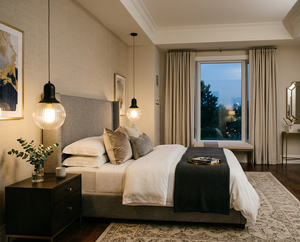

A bedroom needs to support several activities that ask different things of the lighting. Bright, broad illumination helps when getting dressed or finding something in a wardrobe. A controlled bedside beam makes reading more comfortable. Softer light creates a calmer setting when the practical part of the evening is over.
That is why choosing one attractive lamp is rarely the full answer. A better bedroom lighting plan considers the layers of light, where each source will sit, how it will be controlled and whether its dimensions suit the available furniture. The right combination should make the room easier to use without filling every surface or creating unnecessary cable clutter.
Factory Fast’s bedroom lighting collection includes compact table lamps, rechargeable designs and adjustable task lights for different bedroom routines. Use this buyer guide to identify which type belongs in your room and which specifications deserve attention before ordering.
Start With the Jobs Your Bedroom Lighting Must Perform
The most useful decision tree begins with activities rather than styles. List what happens in the room after daylight fades, then assign an appropriate light source to each task.
General movement and getting dressed
General illumination should make the room easy to navigate and allow you to see into drawers, wardrobes and darker corners. This is the role usually handled by an existing ceiling fixture, a floor lamp or another source that spreads light across a wider area.
Check where shadows fall once wardrobes and bedroom doors are open. A centrally placed light may illuminate the floor well but still leave the inside of a tall wardrobe difficult to see. In that situation, the solution may be an additional directional source near the storage area rather than a brighter bedside lamp.
Reading and detailed activities
Reading, grooming, crafts and study require more concentrated light. The beam needs to reach the activity without sending unnecessary glare across the room. An adjustable table lamp is often more useful than a purely decorative shade because the direction can be changed to suit the user.
A shared bedroom may need two independently controlled task sources. This allows one person to read or get ready without relying on the main room light.
Winding down
Evening ambience calls for lower, warmer-looking illumination positioned below eye level where practical. The aim is not to make the room unusably dark. It is to create enough contrast between active daytime lighting and the quieter setting used before sleep.
Dimming controls are valuable when the same lamp must serve both reading and ambient roles. If brightness cannot be adjusted, separate task and mood lights may provide better control.
Build the Bedroom Around Three Lighting Layers
Layered bedroom lighting combines broad illumination with focused and decorative sources. Each layer solves a different problem, so buyers should decide which layers are missing before replacing fixtures that already work.
Ambient light for overall visibility
Ambient light establishes the room’s general brightness. Ceiling fixtures are common, but floor lamps can add broad illumination where the room lacks a useful overhead position. A shade that diffuses light will create a softer spread, while an exposed or highly directional source may produce stronger contrast and more noticeable shadows.
The room’s finishes affect the result. Pale walls and bedding reflect more light around the space. Dark furniture, deep paint colours and heavy curtains absorb more of it, which can make the same lamp feel less effective.
Do not judge ambient lighting only while standing directly underneath it. Check visibility beside the bed, near the wardrobe and along the route to the doorway.
Bedside light for independent control
Bedside lighting places control within reach and provides a lower source for evening use. Browse table lamps for bedside and bedroom surfaces according to the area available, the direction of light and how the switch is operated.
A broad shade can provide gentle local illumination, while an adjustable neck is better for directing a beam towards a book. Touch controls are convenient when switches are difficult to locate in the dark. Cordless models suit rooms where the nearest power point is poorly positioned or where visible cables would cross the furniture.
For two sleepers, matching lamps create symmetry, but identical fixtures are not compulsory. The more important requirement is that each person can reach and control their own light comfortably.
Task light for concentrated work
A task light is needed when the bedroom doubles as a study, craft area, dressing space or detailed reading corner. It should direct illumination towards the work surface rather than trying to brighten the whole room.
Look for adjustable heads, tilt ranges, swivel movement and multiple brightness settings. These features allow the source to follow the task instead of forcing the user to lean towards a fixed beam. A desk lamp can also prevent the bed from becoming the only available place for reading or study.
Compare the Main Bedroom Lamp Types
The right fixture depends on floor area, available surfaces, power access and the activities being supported.
Table lamps
Table lamps are the natural choice for bedside use because they keep the switch close and require no floor space. They can also sit on a dresser, shelf or compact desk.
The trade-off is surface area. A lamp with a wide base may leave little room for a phone, book or glass of water. Measure the footprint rather than relying on product photos, especially when the bedside table has raised edges, a small top or an opening drawer that could catch the cord.
Floor lamps
A floor lamp suits bedrooms with an unused corner or a reading chair but limited table space. It can provide ambient illumination, a downward reading beam or both, depending on the head and shade.
Check the full footprint, not just the pole. The base must fit without narrowing the walkway, and the upper section should not interfere with curtains, wardrobe doors or wall-mounted décor. A tall lamp can add useful visual height, but an oversized shade may make a compact room feel crowded.
Cordless lamps
Rechargeable lamps provide flexible placement and avoid the need for a permanent cable during use. They are particularly practical for renters, small rooms, shelves and bedside furniture positioned away from a convenient outlet.
The ownership trade-off is charging. Buyers must be willing to return the lamp to a charging cable or connect it in place when power runs low. Check the charging method, included cable, control type and whether brightness can be adjusted.
Wall and pendant lighting
Wall-mounted and pendant lights preserve bedside surface space and can create a clean, deliberate look. They make most sense when the position of the bed is unlikely to change.
These fixtures require more advance planning than a portable lamp. Confirm the mounting or power arrangement shown on the chosen product page before purchase. Their location should be based on the final mattress height and bed position, not an empty-room estimate that may place the light too high, low or far from reach.
Measure the Lamp, Furniture and Reach Together
Lamp dimensions only become meaningful when compared with the furniture beneath them. Measure the width and depth of the usable surface, allowing for decorative lips, cable holes and any objects that will remain beside the lamp.
Factory Fast’s bedside tables and nightstands provide different surface and storage configurations, so pair the lamp footprint with the specific table rather than assuming every bedside design offers the same usable top.
Check the base footprint
The base should sit completely on the furniture with space around it. A narrow top may favour a cordless lamp with a 9 cm base, while a larger directional model may need substantially more room.
The live modern white table lamp with a timber base measures 16 cm in diameter and 50 cm high. Its steel-and-wood construction, gooseneck form and 160 cm cord make it suitable for a bedside surface or desk where a taller directional source can be accommodated.
Compare height with the mattress
A lamp that is too low may illuminate the table rather than the page. One that is too tall can expose the bulb or send glare across the room. Evaluate the lamp from the position in which it will be used, including the height added by the mattress, pillows and bed frame.
Mark the proposed height with removable tape or a household object before buying. This simple mock-up reveals whether the switch will be reachable and whether the light source will sit near the user’s natural line of sight.
Plan the cable route
For a corded model, measure from the intended lamp position to the available power point without pulling the cable tight. Keep drawers, walking paths and furniture edges in mind. A cord that reaches in a straight line may still be impractical once routed behind a bedhead or bedside table.
Choose Power, Bulb and Controls for the Routine
The specification list should answer three questions: how the lamp receives power, how the light is adjusted and whether the light source is included.
Corded lamps with replaceable bulbs
A corded lamp is straightforward when a power point is accessible and the furniture arrangement is stable. Models with replaceable bulbs allow the light source to be selected separately, but shoppers need to confirm the base type and whether a bulb is supplied.
The 50 cm timber-base model uses an E27 screw-in bulb and does not include the bulb. That means the bulb purchase should be planned rather than discovered during setup. Select a compatible option according to the atmosphere and task the lamp needs to support.
Rechargeable integrated lighting
A cordless LED touch bedside lamp provides another approach. The verified model is 28 cm high with a 9 cm base and 13 cm lamp diameter. It combines warm white integrated LED lighting, long-press dimming, USB charging and aluminium-and-acrylic construction.
This configuration suits smaller surfaces and rooms where flexible placement matters more than continuous connection to an outlet. Its polished chrome-effect finish also makes it a stronger decorative accent than a plain utility lamp.
Switch and dimming position
A useful control should be easy to find from bed. Inline switches work well when the cord can be positioned within reach. Touch controls reduce searching, while push-button designs provide a clear physical control for task areas.
Dimming is especially useful when one source must cover multiple routines. Check how adjustment works: a long press, stepped levels and a continuous control each create a different user experience.
Match the Light to the Room and User
Different bedrooms need different priorities. Buying by room type helps prevent attractive but poorly suited choices.
Main bedrooms
A main bedroom often benefits from independently controlled bedside sources plus broader ambient light. If the furniture is symmetrical, matched lamps create order. If one person reads and the other does not, choosing fixtures by individual use may be more practical than forcing a matched pair.
Check how the lamps relate to the bedhead. A tall shade can disappear against a high upholstered bedhead, while a directional neck may need clearance to move without touching it.
Small bedrooms and rentals
Compact rooms need lighting that protects floor and surface space. A small-base table lamp, a rechargeable design or a wall-positioned option can reduce congestion. Renters may prefer portable fixtures that can move with the furniture and do not depend on a fixed installation.
Avoid placing a floor lamp where it narrows the only clear route around the bed. In tight layouts, preserving comfortable movement is more valuable than adding a decorative source to every corner.
Guest rooms
Guest-room lighting should be immediately understandable. A visible switch, accessible power arrangement and uncluttered bedside surface matter more than complex features.
Consider how someone unfamiliar with the room will use it after dark. At least one light should be controllable without crossing an unfamiliar space from the bed to the doorway.
Study, craft and dressing spaces
Bedrooms used for close work need more adjustability. The live 10X magnifier with adjustable LED task lighting is a specialist example for detailed activities. It provides warm, natural and white light choices, 10 brightness levels, a 220-degree vertical adjustment and 360-degree swivel.
Its approximately 190 mm base can sit on a work surface, while the included clamp offers another mounting arrangement. This type of product suits close-up hobbies better than general bedside ambience, illustrating why the activity should determine the lamp.
Coordinate Materials and Finishes Without Overmatching
Bedroom lighting should relate to the room rather than match every item exactly. Repeat one or two visual cues, such as timber, black metal, white finishes or polished accents, then allow variation in shape and texture.
Steel and timber work well when the room already includes natural surfaces or dark metal details. Polished chrome can connect with mirror frames or furniture hardware. Acrylic components create a lighter visual profile that can suit compact contemporary spaces.
The wider décor and lighting range can help buyers compare floor lamps, table lights and surrounding decorative elements. When coordinating pieces, consider how finishes look both switched on and off. A reflective surface may become a stronger feature at night, while a dark shade can appear heavier against a pale wall during the day.
Practical maintenance also matters. Smooth metal and acrylic surfaces are generally easier to wipe than deeply textured shades, while exposed bulb designs show dust more readily. Choose a finish that suits the amount of upkeep you are willing to give it.
Avoid Common Bedroom Lighting Buying Mistakes
The most frequent mistakes come from treating a lamp as an isolated decoration rather than part of the room’s working layout.
Buying before measuring the furniture
A product can look compact online while still occupying most of a narrow bedside table. Record the base diameter, total height and cable length, then compare them with the usable surface and power-point position.
Depending on one harsh source
A strong central light may help with cleaning and dressing but feel uncomfortable for reading or winding down. Adding a lower, separately controlled lamp usually provides more flexibility than simply increasing the output of the overhead fixture.
Ignoring the switch
A well-sized lamp becomes frustrating if its switch sits behind furniture or beyond comfortable reach. Test the proposed control position while lying or sitting in bed.
Choosing appearance before beam direction
A decorative shade may create attractive ambience without placing enough light on a page. Conversely, a concentrated task lamp may feel too sharp when used as the only evening source. Decide whether the product is expected to spread, direct or soften light before selecting its style.
Forgetting additional purchase requirements
Check whether the bulb, charging cable, base, clamp or other required components are included. A replaceable-bulb lamp may offer flexibility, but it also requires a compatible bulb before it can be used.
Comparing price without comparing function
The three live product examples checked for this guide were listed between $33.71 and $48.71 before shipping or later price changes. The more useful comparison is what each price buys: replaceable-bulb flexibility, cordless dimming or specialist task adjustment. Choose the function that solves the room’s problem instead of treating every lamp as equivalent.
Make the Final Choice in the Right Order
Start by identifying whether the room lacks ambient, bedside or task light. Next, choose the fixture type that fits the available floor or surface area. Measure the base, height and route to power, then compare controls, bulb requirements, materials and finish.
For a standard bedside setup, prioritise reachable controls and an appropriate beam direction. Choose cordless lighting when placement flexibility and reduced cable clutter matter. Select an adjustable specialist lamp when reading, crafts or detailed work are the main purpose.
Before checkout, visit the bedroom after dark and stand at the doorway with the existing lights switched on. Note the first shadowed route or unusable area you encounter. That exact location, rather than the room’s most decorative empty corner, should guide where the next light source goes.
Frequently Asked Questions
-
 Tags:
Bedroom Lighting
Tags:
Bedroom Lighting