1300 760 441
 cs@factoryfast.com.au
Office Lockers Buyer Guide: Secure Staff Storage for Modern Workplaces
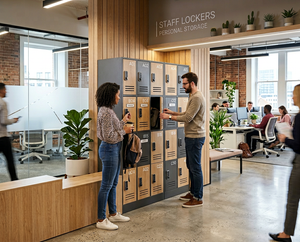

Office lockers are most useful when they solve a real workplace problem: bags under desks, shared workstations with nowhere to leave personal items, staff rooms with cluttered corners, or visitors needing short-term storage. The best choice is not simply the biggest cabinet. It is the locker layout that fits how people move through the workplace.
Factory Fast’s office lockers include metal locker cabinets in different door counts, lock options and finishes, giving Australian workplaces practical ways to create secure personal storage without overcomplicating the floor plan.
Plan the Office Storage Workflow First
Before choosing a locker, map how it will be used during the day. A workplace with assigned desks has different needs from a flexible office, warehouse office, staff room or shared reception area.
Ask four practical questions:
- Who needs storage: permanent staff, casual staff, visitors, contractors or a mix?
- What will they store: bags, laptops, phones, uniforms, jackets, documents or personal items?
- How long will items stay inside: a few hours, a full shift or permanently?
- Where will the locker sit: office floor, entry area, staff room, warehouse-adjacent zone or back-of-house area?
These answers decide the right door count, lock style and compartment size.
Choose the Right Locker Layout for Staff Use
Tall Lockers for Uniforms, Jackets and Shift Gear
Tall lockers suit workplaces where employees need room for clothing, work gear or personal bags. A compact vertical locker can be particularly useful when a small staff room needs separate storage for two users without taking up a wide wall.
The two-door L-shaped multipurpose locker with 4-digit combination lock uses a split-door design so two people can access separate compartments in a 180 x 40 x 45 cm footprint. Each compartment includes hanging space and ventilation, which makes it practical for jackets or uniforms.
This style suits offices where staff need more than a small cubby but the available wall space is limited.
Four-Door Lockers for Everyday Office Belongings
A four-compartment locker is often a strong middle ground for office use. It gives each user a personal space without creating oversized compartments for simple day-to-day items.
The 2x2 door grey metal locker with standard key locks measures 180 x 76 x 45 cm overall. Each compartment measures 378 x 420 x 850 mm and supports 30 kg. That makes it suitable for bags, folders, small work tools and personal items in staff rooms, shared workspaces or office-adjacent storage zones.
Six-Door Lockers for Growing Teams
A six-door vertical locker can suit teams that need more compartments while still keeping a narrow footprint. The 6-door grey metal locker with 4-digit combination lock measures 1800 x 380 x 450 mm, with a total weight capacity of 80 kg and individual compartment sizing listed as 291 x 380 x 450 mm.
This layout is useful when each user needs a compact personal compartment rather than a larger bag-sized space. It can work well for staff phones, wallets, small accessories and personal items.
Match the Lock Type to the Office Policy
Lock type should be chosen around the workplace policy, not treated as a minor product detail.
Key Locks for Assigned Staff Storage
Key locks work well when lockers are assigned to individual staff members. They are straightforward and familiar, especially in stable teams where each person keeps the same compartment.
The tradeoff is key handling. If staff change frequently or lockers are shared by shift, the workplace needs a process for spare keys and handover.
Combination Locks for Flexible Workplaces
Combination locks suit workplaces where staff may use different lockers on different days. They remove the need to carry a key and can be practical for flexible offices, shared desks and team areas where personal storage is temporary.
A 3-digit or 4-digit combination lock can also suit staff areas where access convenience matters, but managers still want each compartment to be individually secured.
Padlock-Operated Lockers for Simple Shared Use
Padlock-operated doors can work when the business wants users to bring their own padlocks or when lockers are used by different people across different shifts. They can be especially useful in mixed workplace settings where not every compartment is assigned permanently.
Before buying, decide whether padlocks will be supplied by the workplace or managed by users. That decision affects rollout and day-to-day convenience.
Where Office Lockers Should Go
The right location depends on when people need access.
Near the entrance, lockers can help staff and visitors store bags before entering a main work area. In a staff room, they keep personal items away from lunch tables, benches and chairs. In warehouse-adjacent offices, lockers can separate office belongings from operational equipment and reduce clutter around workstations.
For staff-only storage, Factory Fast’s staff lockers are worth comparing alongside the broader lockers range, especially if the workplace includes shift teams, back-of-house areas or shared facilities.
Office Lockers Versus Storage Cabinets
Office lockers and storage cabinets do different jobs. Lockers are best for individual personal storage, especially when different users need separate access. Cabinets are better for shared supplies, files, equipment or items that belong to a team rather than one person.
If the workplace needs both, keep the roles clear. Use lockers for personal belongings and compare storage cabinet options for shared office equipment or supplies. Mixing the two can lead to cluttered compartments and unclear ownership.
Finish, Colour and Workplace Appearance
For offices, finish matters because lockers may sit in visible areas. Grey and black powder-coated steel finishes are versatile and easy to place near desks, staff rooms or utility spaces. Coloured doors can help with identification in larger teams, but they should still make sense with the surrounding workspace.
A powder-coated finish also helps with everyday maintenance. In office environments, lockers are touched often, moved around during fitouts and used by different people, so a durable surface is more practical than a purely decorative finish.
Mistakes to Avoid When Buying Office Lockers
The first mistake is buying too few compartments. If lockers are meant to support flexible work or shared desks, allow for peak staff use, not just average daily use.
The second mistake is choosing compartments that are too small for bags. A compact unit may look efficient, but if users cannot fit their normal work bag, items will still end up under desks.
The third mistake is forgetting visitor or casual staff needs. Even a small number of spare compartments can make the storage system more useful across meetings, temporary staffing and changing workplace routines.
A Simple Office Locker Decision Path
Choose tall lockers when staff need to store jackets, uniforms or larger personal items. Choose four-door lockers when each user needs a practical bag-sized compartment. Choose six-door or higher-density layouts when users mainly need small personal storage and the workplace has more people than wall space.
The smartest office locker setup is one that removes friction at the start and end of the day. Place lockers where people naturally pass through, choose a lock type that matches your staff policy and leave enough room around the doors so storage does not create a new bottleneck.
Frequently Asked Questions
-
 Tags:
Office Lockers
Staff Lockers
Tags:
Office Lockers
Staff Lockers