1300 760 441
 cs@factoryfast.com.au
How to Choose Door Hardware That Matches Your Home Style
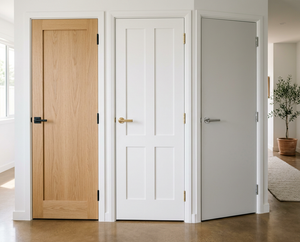

Door hardware is one of the few design details you touch every time you enter a room. A handle that feels unrelated to the door, tapware, cabinetry or lighting can make a renovated space appear unfinished, even when the larger choices work well together.
The solution is not necessarily to install an identical handle on every door. Effective matching starts with function and physical compatibility, then uses profile, finish and visual weight to connect the hardware with the home. This guide explains how to make those decisions in the right order.
Choose the Hardware Function Before the Style
The starting point is the way the door moves and the level of access the room requires. The broader door hardware range includes components for different operating methods, so appearance should only be compared after the correct type has been identified.
Passage hardware for unrestricted rooms
A passage handle retracts a latch without locking. It suits hallways, laundries, walk-in wardrobes and other internal spaces where the door needs to stay closed but unrestricted access is preferred.
This function gives you considerable styling freedom because there is no key cylinder or privacy control to integrate. It is often the easiest handle family to repeat across the main circulation areas of a home.
Privacy hardware for bedrooms and bathrooms
Privacy hardware adds an internal locking control. It is intended for occupied bedrooms and bathrooms rather than locations requiring key-controlled entry.
Check how the lock is operated from both sides before choosing. Two handles may look almost identical from a hallway, yet provide different room functions. This allows a consistent visual family to continue from passage doors into private rooms without compromising how each doorway works.
Keyed hardware where access must be controlled
A keyed set suits a doorway where entry from the outside needs to be controlled. The entrance, a private home office or a storage room may need this function, depending on how the property is used.
Do not add keyed hardware simply because it appears more substantial. An unnecessary lock can complicate an internal doorway, while a passage or privacy set may perform the required job more conveniently.
Pull handles for sliding and non-latching doors
A fixed pull provides a gripping point but does not usually retract a latch. It is more relevant to sliding doors, compatible entrance arrangements and doors with a separate closing mechanism.
This distinction matters when comparing door handles. A pull may deliver the right visual impact, but it cannot be treated as a direct replacement for an operating lever without checking how the door will remain closed.
Confirm the Door Measurements Before Choosing a Finish
The best-looking handle is still the wrong choice if its latch, spindle or fixings do not suit the door. Compatibility checks are especially important during a door handle replacement because existing holes and recesses can limit which designs will fit neatly.
Measure the door thickness
Measure across the door panel itself, excluding raised mouldings or decorative trim. The handle spindle and fixing screws must span this dimension while allowing the plates or roses to sit correctly against both faces.
The live square black passage lever is specified for doors from 35 mm to 45 mm thick. It includes a latch, strike plate, installation screws and instructions, but that stated range should not be assumed to apply to every lever or pull.
Check the backset
Backset is the distance from the edge of a hinged door to the centre of the spindle or handle bore. A replacement latch must place the new handle at the same position unless the door is being re-prepared.
The same passage set offers adjustable 60 mm and 70 mm backset positions. Measure the existing latch directly rather than estimating from the external handle plate. An incorrect backset can prevent the spindle from aligning or leave too little space between the lever and the door frame.
Inspect the existing holes and edge recess
Remove or loosen the current hardware far enough to inspect the main bore, fixing holes and recessed latch plate. A smaller new plate may expose old marks, while a differently shaped latch plate may require changes to the door edge.
The square latch plate supplied with the referenced lever is fixed rather than interchangeable. This is a practical detail that matters more than finish when the goal is a clean replacement.
Confirm handing and clearance
Some levers can be reversed for left- or right-handed doors, but this should be verified on the individual product page. Also check how far the handle projects and whether it can contact a wall, cabinet or neighbouring door.
Sliding doors require a different clearance check. A projecting pull must remain reachable when the panel is open without striking the frame or preventing the door from travelling far enough along the wall.
Match the Handle Profile to the Home’s Design Language
Shape often communicates style more strongly than colour. Look at the repeated lines already present in the room before deciding whether the hardware should be angular, rounded, slim or visually substantial.
Contemporary and minimalist interiors
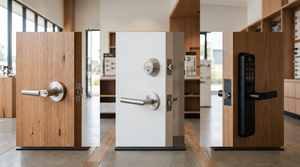
Contemporary rooms often use straight edges, simple joinery and limited ornament. Square or streamlined levers can continue that geometry, while black hardware creates a defined outline against pale or timber doors.
The square black passage model uses a rectilinear lever and plate, making it a logical example for hallways or laundries with similarly crisp cabinetry and light fittings. Black is most effective when it repeats an existing detail rather than appearing as the only dark element in the room.
Transitional interiors
A transitional home combines traditional proportions with cleaner contemporary detailing. Hardware with a restrained profile and softer metallic finish can bridge those influences without making the door look overly decorative or stark.
Satin nickel can work well in this setting because its subdued surface relates to both warm and cool surroundings. It can sit alongside detailed doors while keeping the overall treatment current.
Industrial and rustic spaces
Visible tracks, substantial pulls and black metal details can reinforce the practical character of industrial or rustic interiors. The scale of the hardware should suit the visual weight of the door; a heavy timber sliding panel can overwhelm a small, delicate pull.
Browse barn door hardware separately from standard latch sets. Tracks, rollers, stops, floor guides and handles form one operating system, and the finish needs to coordinate across those visible components.
Warm, relaxed and natural interiors
Rooms built around light timber, soft colours and simple textures often benefit from hardware that does not dominate the door. Rounded levers, restrained plate shapes and satin finishes can provide definition without creating a hard visual break.
The important relationship is not a label attached to the interior style. Compare the handle with the actual door profile, cabinet handles and nearby fittings. A home may combine several influences, but those repeated shapes create a usable design direction.
Coordinate Door Handle Finishes Across Sightlines
Matching hardware does not mean every metal surface must be identical. A more useful rule is to coordinate the pieces visible together from the same position.
Start with halls and open-plan areas
Stand at the entrance to a hallway and note how many handles can be seen at once. These doors should usually share a finish, plate shape or lever family because the eye reads them as one group.
A bedroom handle beyond that sightline can use a different function without appearing inconsistent. The visible side can retain the same design language even when the internal locking mechanism changes.
Use permanent fittings as reference points
Compare possible door handle finishes with nearby tapware, cabinet pulls, light fittings and window hardware. These fixed elements provide a more reliable reference than movable furniture or seasonal décor.
You do not need to copy every fitting. Choose one relationship to repeat: the same finish family, a similar level of sheen or a shared angular or rounded profile. This creates connection without making the room feel mechanically matched.
Give feature doors deliberate emphasis
An entrance or sliding door can use larger or more distinctive hardware than the internal doors. The difference should appear intentional, with at least one shared attribute connecting it to the rest of the home.
For example, a substantial pull can differ in scale while repeating the black finish used on internal levers. Alternatively, polished hardware on a feature door can relate to other brighter metal details in the adjoining space.
Select a Finish for Contrast, Light and Daily Use
Finish changes how large and prominent a handle appears. Dark hardware produces a clear outline, satin metal tends to sit more quietly, and polished surfaces reflect more of the surrounding colour and light.
Black for strong definition
Black levers can create useful contrast on white, pale grey or natural timber doors. They work particularly well when black already appears in window frames, cabinetry details or lighting.
High contrast also makes mismatched shapes more noticeable. If black hardware is repeated along a hallway, keep the main plate and lever language consistent even when the internal functions differ.
Satin nickel for a softer transition
The square satin nickel privacy lever provides an example of a quieter metallic treatment. It is made from zinc alloy, fits 35 mm to 45 mm doors and uses an adjustable 60 mm or 70 mm latch.
Its privacy function suits bedrooms and bathrooms, while the reversible lever accommodates left- or right-handed doors. The restrained finish can be easier to integrate where black would introduce more contrast than the room needs.
Polished metal for brightness
Polished metal can reflect nearby colours and add a brighter accent to an entrance, bathroom or sliding door. Because reflective finishes attract attention, handle scale and placement become more visible.
Assess the product in the room’s normal daylight and evening lighting. A finish that appears subtle on a product page may read much brighter against a dark door or beneath direct lighting.
Plan Each Room Without Losing Whole-Home Consistency
A coherent hardware scheme uses a limited visual vocabulary while allowing every doorway to perform its proper role. The easiest method is to assign functions room by room and then apply a finish and profile family.
Entrances and circulation areas
Resolve the entrance function first because it may have different locking, scale and installation requirements from the internal doors. Hallway, laundry and wardrobe doors can then use passage levers from the chosen family.
For a deeper breakdown of operating types and compatibility, the door handles buyer guide explains passage, privacy, keyed and pull configurations.
Bedrooms and bathrooms
Choose privacy sets where occupants need to control entry from inside. Keep the visible shape and finish related to the passage handles used in adjoining hallways.
The door lever collection is useful when comparing functions within a consistent handle format. Confirm the exact lock operation rather than relying only on a similar appearance.
Sliding and feature doors
Treat sliding doors as part of the same scheme, but account for their different movement and hardware scale. Coordinate the pull, track and visible fittings with the broader finish palette while checking door thickness, wall clearance and the full sliding path.
This is one area where exact matching may look less convincing than deliberate variation. A large sliding panel needs hardware with enough visual and physical presence to suit the door.
Avoid Common Door Hardware Styling Mistakes
Choosing finish before function is the most common ordering error. It can lead to an attractive handle that does not lock appropriately, operate the existing latch or work with the door type.
Another mistake is forcing the same product onto every doorway. Passage, privacy, keyed and sliding doors have different requirements. Consistency should come from related profiles and finishes, not from ignoring those differences.
Do not assume that a wide handle plate guarantees an easy replacement. It may cover old face marks while leaving the internal latch, backset or edge recess misaligned. Measure the hidden preparation as carefully as the visible plate.
Finally, avoid choosing each room in isolation. Several individually appealing finishes can become distracting when their doors share one hallway. Review the full sightline before ordering multiple sets.
Create a Door Hardware Schedule Before Ordering
List every door and record its movement, function, thickness, backset, handing, current hole preparation and nearby fittings. Then assign the chosen profile and finish. This reveals whether the selected family includes the passage, privacy and keyed variations the home actually needs.
Mark the same information on a simple floor plan using short labels such as passage, privacy, keyed and pull. Add the measured thickness and backset beside each hinged door. That one-page schedule gives the installer or renovator an exact doorway-by-doorway reference and prevents a visually matching handle from being fitted to the wrong room.
Frequently Asked Questions
Should all door handles in a home be the same?
Door handles do not need to be identical, but those visible within the same sightline should have a deliberate relationship. Keep a consistent finish, plate shape or lever profile through hallways and open areas. Passage, privacy and keyed functions can still vary between rooms. A feature entrance or sliding door may use larger hardware when its finish or shape connects with the broader scheme.
Is black or satin nickel door hardware better for a modern home?
Neither finish is universally better. Black creates strong contrast and suits interiors that already use dark window frames, cabinetry details or lighting, while satin nickel has a quieter appearance that blends with a wider range of door colours. Consider the room’s light, surrounding fittings and desired visual emphasis. Check the actual product finish because sheen and undertone can differ between ranges.
Can I replace a round door knob with a lever handle?
A lever may replace a knob when the door thickness, backset, bore, latch preparation and strike position are compatible. Compare the new plate dimensions with marks or holes left by the old hardware. A different latch-plate shape may require changes to the door edge. Also confirm lever clearance near the frame, wall or cabinetry before altering the door or ordering multiple sets.
How do I measure a door for replacement hardware?
Measure the door thickness and the backset from the door edge to the centre of the spindle bore. Inspect the main face hole, latch bore, recessed edge plate and strike position. Record the hinge side and swing direction as well. These details determine whether the new hardware will align, cover the previous preparation and operate without contacting nearby walls or fittings.
What door hardware should I use for bedrooms, bathrooms and hallways?
Bedrooms and bathrooms generally need privacy hardware when occupants require an internal locking control. Hallways, laundries and wardrobes usually suit passage handles because they need a latch but no lock. Exterior access or controlled rooms may require keyed hardware. Choose the function first, then coordinate the visible finish and profile so adjoining doors still read as part of one interior scheme.
Can barn door hardware match standard internal door handles?
Barn door fittings can coordinate with standard handles by sharing a finish, shape or level of visual weight. Exact matching is unnecessary because tracks, rollers and pulls perform different jobs from internal levers. Check the sliding door’s thickness, weight, clear wall run and pull clearance independently. Then use a repeated black, satin or polished detail to connect the feature door with nearby hinged doors.
Related Articles
-
 Tags:
Door Hardware