1300 760 441
 cs@factoryfast.com.au
Home Gym Equipment for Small Spaces: How to Build a Compact Setup
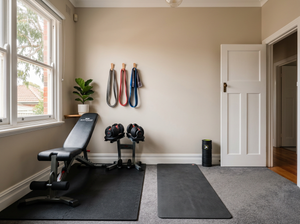

In a small home, exercise equipment has to justify both its training time and the hours it spends idle. In a bedroom, apartment, garage bay or multipurpose room, that means choosing each piece by what it lets you do, how much clearance it needs in use and where it goes when the session ends.
The aim is not to fit a miniature commercial gym into the available area. It is to build a repeatable setup that covers your preferred movements without blocking doors, crowding furniture or turning setup into a chore. Factory Fast’s range of home fitness equipment gives you options across compact weights, benches, bodyweight stations and accessories, but the right mix starts with your room and routine.
Match the setup to how the room is used
The same floor area can support very different equipment depending on whether it is permanently dedicated to training. Start by deciding which of these use cases most closely describes your home.
A shared bedroom or living area
In a room used for sleeping, working or relaxing, storage speed matters almost as much as equipment size. Portable weights, a mat and equipment that folds flat can be moved out, used and returned to a defined storage position. Avoid planning around several items that each require assembly, adjustment or separate storage, because those small tasks can make short sessions inconvenient.
Furniture also changes the usable footprint. A clear rectangle beside a bed may look adequate until a door swings into it or a chair must be moved. Measure the training area with the room in its normal state, then identify the one or two items you are genuinely willing to move each time.
An apartment or rental
Portable and freestanding choices usually give renters more flexibility than permanently mounted equipment. Consider the route from storage to the workout zone, not just the size of the final area. A compact item that is awkward to lift around a corner or through a narrow doorway can be harder to live with than a slightly larger item on wheels.
Floor contact, vibration and sound also deserve attention in shared buildings. Controlled resistance training with equipment that can be placed down deliberately may suit the setting better than activities involving repeated impact. Check the product weight as well as the working load, because both affect how easily the room can be reset.
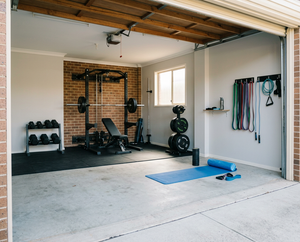
A garage corner
A garage can accommodate more permanent pieces, but the usable zone may still compete with a vehicle, shelves, tools and access to stored items. Mark the maximum boundary the gym can occupy without interrupting those functions. Allow for hot Australian conditions, dust and moisture exposure when deciding where upholstered equipment, coated plates and small accessories will be stored.
Wall space may be valuable in a garage, yet it is not automatically available for exercise equipment. Confirm the mounting surface and the clearance needed around doors, shelving and the vehicle before choosing a fixed station.
A dedicated compact room
A small spare room can support a more complete setup because equipment does not need to disappear after every workout. Even then, resist filling every edge. An open central zone allows floor exercises, split stances, carries and transitions between movements. A room with fewer versatile pieces often supports a better routine than one crowded with single-purpose stations.
Measure the working footprint, not only the product
Product dimensions tell you how much space an item occupies, but exercises create a larger working envelope. A bench needs room for the user to approach, lie back and handle weights. Dumbbell exercises may require arm clearance on both sides. Pull-ups need vertical space for the user as well as separation from nearby walls or objects.
Record three sets of dimensions
Measure the room length, width and ceiling height first. Then record the open floor rectangle available after doors, cupboards and furniture are accounted for. Finally, note the storage dimensions available under a bed, against a wall, inside a cupboard or on a shelf.
Use removable tape to mark the proposed equipment boundary on the floor. Move through the exercises you expect to perform without holding any load. This simple rehearsal reveals whether a bench blocks circulation, a press reaches too close to a light fitting or a lunge crosses into a doorway.
Include setup and access clearances
Clearance is movement-specific. A 45 cm dumbbell can fit neatly on a shelf yet still require much more lateral room during a chest fly or shoulder exercise. Similarly, a folded bench may store against a wall but need enough floor length to extend fully before use.
Also check how equipment will enter the home. Stairs, tight halls and narrow doors can affect delivery and placement of larger items. For a small home gym setup, the best measurement plan follows the item from the delivery point to its stored position and then to its active training position.
Prioritise exercise coverage per item
When floor area is limited, each purchase should earn its place by supporting movements you will perform regularly. Build around movement categories rather than a long equipment wish list: squat or lunge, hinge, push, pull, core work and mobility. You do not need a separate machine for every category.
Adjustable resistance for compact strength work
Free weights are useful because one set can serve upper-body and lower-body exercises. The adjustable dumbbell set currently listed by Factory Fast has a total set weight of 30 kg, 12 plastic-coated cement plates and a 45 cm steel bar with a 14 cm grip. The plate diameters are 18 cm and 22 cm, details that matter when planning shelf depth or floor storage.
This format suits buyers who want to change resistance between curls, presses, squats and lunges without storing a rack of fixed pairs. The trade-off is changeover time: plate-loaded handles take longer to adjust than a fixed dumbbell, and loose components need a consistent storage spot. Browse the broader gym weights range if you need to compare adjustable formats with kettlebells, plates or fixed options.
A bench when floor-based training is too limiting
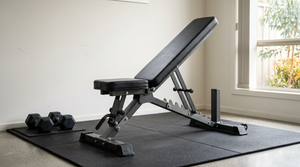
A bench adds supported pressing, rowing and seated exercise options, but it should be chosen by both its active and stored dimensions. A six-position folding weight bench in the current range measures 111 x 42 x 112 cm when fully extended and 112 x 42 x 20 cm when folded. It weighs 9.5 kg, has rear wheels and carries a stated maximum capacity of 100 kg.
Those figures create a clear fit test. There must be room for the 111 cm bench length plus the user’s movement and weights during training, while the 20 cm folded depth must match the intended storage position. The listed capacity should also be checked against every load that the product page says it covers. Buyers comparing other flat, incline or compact designs can use the weight and workout benches collection to assess different configurations.
Vertical equipment for a permanent training point
Using a wall can preserve open floor area, although fixed equipment introduces installation and clearance requirements. The current wall-mounted pull-up bar projects 68.6 cm from the mounting surface and spans 106 cm end to end when configured for concrete installation. It is built from 11-gauge, 3 x 6 cm steel, includes M10 x 95 expansion bolts for suitable concrete and can also be attached to suitable timber studs.
This option suits a garage or dedicated room where the mounting surface has been confirmed and the floor below must remain open. It is a poor fit when you cannot modify the property, when the ceiling is restrictive or when nearby storage enters the exercise zone. Its listed total capacity is 90 kg as supplied, so compare that figure with the intended user and training method before purchase.
Portable accessories for mixed sessions
Mats, resistance accessories and small recovery tools can expand a compact routine without becoming the centre of the room. They work best when assigned to specific gaps in the program. A mat supports floor work; a resistance accessory may add pulling or mobility options; a foam roller serves recovery. Buying several accessories without a planned use can create clutter while leaving the main movement needs unresolved.
Choose the right equipment mix for your training goal
There is no universal list of the best home gym equipment for small spaces. The right mix depends on the exercises that matter most and the type of progression you expect.
For general strength training
Start with adjustable resistance and an open floor zone. That combination can support squats, lunges, hinges, rows, presses and loaded core work. Add a folding bench only when supported or angled movements are a meaningful part of the routine. This order keeps the first setup simple and lets actual training habits determine the next purchase.
For bodyweight-focused training
Preserve floor space for push-ups, split squats, mobility and core exercises. A fixed pulling point can add valuable upper-body variety when the property and clearances are suitable. Renters or people who frequently rearrange the room should compare portable or freestanding alternatives, recognising that these usually occupy floor area even if no wall modification is required.
For mobility, yoga and low-equipment sessions
The open zone is the main asset. Measure for full-body extension on the mat, side-to-side movement and any standing reaches. Storage should keep small items together so the room can change function quickly. In this use case, adding a large strength station simply because it fits may reduce the space that makes the routine work.
For mixed household use
When more than one person trains, adjustability becomes more important. Compare resistance increments, bench positions, grip dimensions and changeover steps. The largest or strongest user may determine the necessary load rating, while the shortest user may reveal whether a bench, bar height or handle position is genuinely usable. Equipment that technically accommodates everyone but takes too long to reset can still be a poor household choice.
Plan the room as three practical zones
A compact gym is easier to use when every activity has a place. Think of the room as a training zone, an equipment zone and a transition zone rather than arranging items wherever they fit.
Training zone
Keep this area open enough for the widest and longest movement in the routine. If dumbbell lunges require more length than floor presses, use the lunge path as the planning constraint. Do not let temporary storage creep into this rectangle, because moving several objects before every session adds friction.
Equipment and storage zone
Place frequently used items between knee and shoulder height when practical, while heavier pieces belong in a stable position that does not require awkward handling. Keep matching plates, collars and handles together. A defined tray, low shelf or cupboard section is more useful than several improvised hiding places because it makes missing components obvious before training begins.
Transition zone
Leave a clear path between the door, storage point and workout area. This is especially important when a folding bench must be wheeled into position or weights are carried across the room. The transition zone can overlap the training area during a workout, but it should not require stepping over equipment to enter or leave.
Compare materials, capacities and ownership details
Compact does not mean every product is interchangeable. Materials, adjustment systems and load information influence how a piece feels to use and how it should be stored.
Steel frames and bars provide a solid basis for strength equipment, while plate coatings can affect handling and how the weights contact floors or shelving. Upholstered benches need a storage position that protects the padding from abrasion and damp conditions. Adjustment points should be easy to reach in the intended room, not trapped against a wall.
Capacity figures need context. For a bench, check whether the stated value applies to the user alone or to the combined user and training load, according to the exact listing. For mounted equipment, assess the product rating together with the suitability of the fixing surface and installation method. If a page does not provide the detail needed for your intended use, confirm it before ordering rather than assuming from the product’s appearance.
Ongoing ownership also includes cleaning and inspection. Wipe down contact surfaces, keep adjustment mechanisms clear of dust and check fasteners or collars in line with the product instructions. In a garage, store smaller metal components away from moisture and keep upholstered items clear of dirty work areas.
Avoid the common small-space buying mistakes
The first mistake is measuring only the product footprint. Equipment that fits while idle can still be unusable if a door, wall or piece of furniture blocks the exercise path.
The second is buying for imagined variety rather than a real routine. A multipurpose item has value only when its functions match movements you plan to perform. Count useful exercises, not attachments or adjustment points.
The third is treating “foldable” as the same as “easy to store”. Check folded dimensions, total weight, wheels or handles and the exact storage location. A folded product can remain awkward if it is too deep for the cupboard or too heavy to move often.
The fourth is overlooking progression. Compact resistance must still offer a useful starting level and enough room to advance. Compare the available increments and maximum load with your current plan rather than buying solely on overall set weight.
The fifth is choosing wall-mounted equipment before confirming the room. Mounting surface, bracket width, projection and user clearance all affect suitability. A fixed station should be planned as part of the room, not added after every other item has found a place.
Build the setup in stages
Begin with the smallest combination that supports a complete week of planned sessions. For many strength-focused users, that may be adjustable resistance plus an open floor zone. Train with it long enough to identify a genuine limitation: perhaps floor pressing is restricting exercise selection, or the routine lacks a vertical pull.
Add the next item only when it solves that observed problem. A folding bench can expand angles and supported movements; a suitable mounted bar can establish a permanent pulling station; a mobility accessory can support a specific warm-up or recovery need. This staged approach protects space as carefully as budget because every addition must justify its active footprint, storage demand and setup time.
Before ordering, perform one final reset test. Mark the proposed positions, walk the item’s route from storage, act out the adjustment steps and return the room to its everyday use. A compact gym earns its place when setup and pack-away are simple enough that the room never becomes an excuse to skip the session.
Frequently Asked Questions
Can I put a home gym in a bedroom?
Yes, a bedroom can support a compact home gym when the training area, storage position and movement clearance are planned together. Choose portable weights, a mat or a bench with verified folded dimensions. Check that exercises do not block the doorway, wardrobe or bed access, and favour controlled movements that suit the floor and household. The room should return to normal without leaving loose equipment in circulation paths.
Are adjustable dumbbells worth it in a small home gym?
Adjustable dumbbells can be a strong choice when you want several resistance levels without storing multiple fixed pairs. Compare the total range, plate increments, handle length and changeover method with your routine. Plate-loaded models save storage space but require a place for loose plates and collars. They suit users who value exercise variety and do not mind pausing briefly to change the load between movements.
How much room do I need around compact gym equipment?
Allow enough room for the entire exercise, not just the equipment itself. Lie down, reach, press, lunge or rehearse the movement inside a taped floor boundary before buying. Include space to approach the item, adjust it and handle weights without contacting walls or furniture. Ceiling clearance and door swings can be just as limiting as floor dimensions, especially for overhead work or pull-up equipment.
Is wall-mounted or freestanding gym equipment better for limited space?
Wall-mounted equipment can keep the floor open, while freestanding gear offers more flexibility and avoids permanent installation. The better choice depends on the property, mounting surface, ceiling height and whether the room changes function. A fixed bar may suit a garage with suitable concrete or timber studs; portable equipment may suit renters or shared rooms. Compare working clearance as well as the space occupied between sessions.
What home gym equipment should I buy first?
Buy the item that covers the most important movements in your actual program. For compact strength training, adjustable resistance often provides a practical starting point because it can support upper- and lower-body exercises. Add a bench, pulling station or accessory only when it solves a limitation you have experienced. This order helps prevent single-purpose purchases from consuming space before the core routine is established.
How do I store gym weights in an apartment or rental?
Give weights a low, stable storage position close to the workout area, with plates, collars and handles kept together. Check the shelf or storage unit dimensions and capacity before loading it, and avoid locations that obstruct doors or daily circulation. A tray or mat can define the zone and protect the surface beneath. Select a position that lets you lift components without twisting around furniture.
Related Articles
-
 Tags:
Gym Stations
Gym Weights