1300 760 441
 cs@factoryfast.com.au
Door Locks Buyer Guide: How to Choose the Right Access, Fit and Function
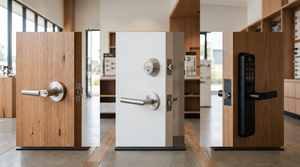

The wrong door lock often reveals itself after installation: the latch misses the strike plate, the hardware does not suit the door thickness, or the access method becomes inconvenient in daily use. Avoiding those problems starts with treating a lock as part of the complete doorway rather than choosing it by appearance alone.
The right option depends on where the door leads, who needs access, how frequently it is used and whether the existing cut-outs can accept the new hardware. This guide explains how to compare door locks by access method, door compatibility, power requirements, exposure and everyday operation.
Start With the Job the Door Lock Needs to Do
Every doorway has a different access requirement. A front entrance, home office, bedroom and storage area should not automatically use the same locking arrangement.
Main entrances need convenient controlled access
An exterior entrance usually combines frequent use with a greater need to control who can enter. Key-operated locks remain familiar and straightforward, while keypad models can reduce the need to carry, copy or distribute physical keys.
Think about the people who use the entrance. A household with several regular users may value a shared code, while a single occupant may prefer the simplicity of a conventional key. Also consider what happens when access arrangements change. Replacing a lost key and changing a programmable code are different ownership tasks.
Interior rooms may need privacy rather than entry control
Bedrooms, bathrooms and home offices often need a lock that provides privacy without adding unnecessary complexity. A lockable lever or knob can combine the operating handle and locking function in one fitting.
Check how the door should be opened from each side. A room that is only locked from inside has a different functional requirement from an office or storeroom that needs controlled entry from the hallway.
Utility and storage doors may suit simpler hardware
A shed, cupboard, side access point or infrequently used utility space may call for a straightforward keyed, bolt or latch arrangement. The correct choice still depends on the door material, frame and available fixing surface.
Auxiliary hardware should be treated as an additional layer with a defined purpose. A chain or surface-mounted latch, for example, does not necessarily perform the same job as the primary lock that holds the door closed.
Compare Keyed, Mechanical Keypad and Electronic Door Locks
The access method determines how users unlock the door and what ongoing management the hardware requires.
Keyed locks keep operation familiar
A keyed lock is usually the simplest choice when users are comfortable managing physical keys. It can suit entrances, private rooms and storage spaces, depending on the exact lock function.
The practical questions concern key control. Decide how many people need a copy, where a spare will be kept and how access will be changed if a key goes missing. For a multi-door project, also establish whether each door should have separate access or whether users need a more coordinated arrangement.
Mechanical keypad locks remove battery management
A mechanical keypad uses a physical code mechanism rather than electronic power. It can be useful where key-free entry is desirable but the owner does not want batteries, apps or electronic settings.
Factory Fast’s mechanical keyless entry door lock has a nine-button keypad, spring-loaded latch and hold-open slide control. It fits left- or right-opening doors from 35 to 60 mm thick. Its code is changed by removing the lock from the door, so it best suits locations where access codes will not require constant revision.
A hold-open function can be helpful during busy periods because the latch can remain disengaged while repeated entry is required. The owner must remember to return the lock to its normal operating state afterwards.
Electronic keypad locks offer easier code changes
Electronic models suit households that want programmable entry and expect codes to change as access needs evolve. Useful features can include an illuminated keypad, master-password control and exterior-suitable construction.
The electronic keypad door lock uses a changeable code and master password. Its backlit, waterproof keypad is intended for outdoor use, and the unit fits into the opening left after the existing handle is removed. It requires four AA batteries, which are not included.
Battery power makes the programmable features possible, but it also creates a maintenance task. The person responsible for the property should know how the unit indicates low power, how the battery compartment is accessed and what the documented entry process is when power is unavailable.
Measure the Door Before Comparing Lock Features
A lock can have the right access method and still be incompatible with the door. Measure the existing installation before choosing a replacement.
Confirm the door thickness
Measure the door itself, excluding decorative mouldings or projecting trim. Product specifications normally provide a supported thickness range because the spindle, fixing bolts and lock body must pass through the door correctly.
Do not assume that every internal or exterior door uses the same measurement. The mechanical keypad example supports doors between 35 and 60 mm thick, but another lock may have a narrower range.
Measure the backset
The backset is the distance from the door edge to the centre of the handle, spindle or lock opening. It determines where the operating hardware sits across the face of the door.
If the new latch uses a different backset from the existing preparation, the lock may not align with the current opening. An adjustable latch can provide flexibility, but only within the positions stated for that product.
Check the existing bore and edge preparation
Remove or inspect the current hardware to identify the main opening through the door and the recess along its edge. A replacement described as fitting an existing handle hole may reduce cutting, but the actual bore position and dimensions still need to be checked.
Also note whether the latch faceplate is square or rounded and whether it sits flush with the door edge. A mismatch can prevent the hardware from seating neatly.
Record the door handing and opening direction
Stand on one consistent side of the doorway and note which edge carries the hinges, which way the door swings and whether it opens inward or outward. Some locks are reversible or non-handed, while others require a particular orientation.
A reversible product can simplify selection, but it does not remove the need to check handle clearance, keypad orientation and the space available around the frame.
Check the Frame, Strike and Closing Action
The lock and door frame work together. Even correctly sized hardware may operate poorly if the door does not close squarely or the strike plate is misaligned.
Close the door slowly before removing the existing fitting. Look for rubbing, sagging or resistance and check whether the latch enters the strike without needing the door to be lifted, pushed or pulled. Replacing the lock will not automatically correct an underlying alignment problem.
The new strike plate needs a suitable fixing area on the frame. Compare its shape and screw positions with the existing recess, especially when changing between hardware styles. The latch should engage fully without excessive movement after the door closes.
Door seals can also affect operation. A thick or newly installed seal may push the door away from the frame, while a compressed seal can alter how firmly the latch meets the strike. Test the closing action under normal use rather than holding the door into position by hand.
Match the Lock to Exposure and Power Conditions
Exterior-facing hardware needs to suit its stated installation environment. Do not infer outdoor suitability from colour, material or a solid-looking housing alone.
For a covered entrance, consider whether wind-driven rain can still reach the keypad or lock body. An uncovered side door may experience more direct weather than a front door beneath a deep porch. Properties near the coast should also make finish care and exposed-fixing inspection part of routine maintenance.
Electronic models require an accessible power source, usually replaceable batteries. Check the battery type, whether batteries are supplied and how easily they can be replaced after installation. A lock that is simple to operate but awkward to service may become frustrating over time.
Mechanical code locks avoid that power requirement, although they can involve more work when the code needs to change. That trade-off is central to the decision: electronic access favours programming flexibility, while a mechanical keypad favours independence from batteries.
Decide Whether the Handle and Lock Should Be Combined
Some products combine the handle, latch and locking function. Others provide only the lock or work alongside separate pull handles, levers or knobs.
A combined unit can give a doorway a consistent operating action and reduce the number of visible components. It may also require more careful matching to the existing bore, backset and latch preparation.
Separate components provide greater flexibility when the current handle will remain in place or when a distinct locking point is needed. However, the pieces must be positioned so that they do not interfere with one another.
When coordinating a larger renovation, review the wider range of door hardware before settling on the finish. Matching every component exactly is not compulsory, but handles, hinges and visible lock plates should look intentional together. Matte black can provide a strong contrast, while metallic finishes may blend more quietly with existing fittings.
Evaluate Everyday Access Before Choosing Keyless Entry
Keyless entry is most useful when it solves a recurring access problem. It should not be selected only because it appears more advanced.
Count the regular users
List everyone who needs entry and how often they arrive without another occupant present. A keypad can reduce the need for multiple key copies, particularly when several household members share the same door.
Also decide whether all users can comfortably remember and enter the code. Button size, lighting, placement and the number of steps required to unlock the door can affect daily usability.
Plan how access changes will be handled
A programmable code can be updated when access arrangements change. This can be more practical than recovering every distributed key, provided the authorised person understands the programming process.
Mechanical keypads may be better where code changes are rare. If the unit must be removed whenever the combination is updated, frequent access revisions will add installation work.
Consider the lockout process before purchase
Read the product instructions for battery replacement, password management and alternative entry procedures. Do not assume that every electronic lock provides the same backup method.
Record essential operating information somewhere other than immediately beside the door. Anyone responsible for the property should understand the recovery process before the first lockout occurs.
Avoid Common Door Lock Buying Mistakes
The most expensive mistake is choosing by access method before checking physical compatibility. A keypad cannot compensate for an unsupported door thickness, incorrect backset or unsuitable opening.
Another common error is assuming “keyless” means maintenance-free. Electronic models need battery monitoring, while mechanical code units may require removal to change their combination. Choose the maintenance task that suits the household rather than overlooking it.
Do not treat finish as proof of exterior suitability. Product specifications should clearly state the intended environment and any relevant operating conditions.
Avoid replacing hardware without checking the door’s closing action. If the slab has dropped or the frame is out of alignment, fitting a new lock around that problem can lead to unreliable latching.
Finally, do not overlook the package contents. Confirm whether the latch, strike, screws, spindle, seals, fixing bolts, instructions and batteries are supplied. Missing installation pieces can stop an otherwise compatible project.
Use a Final Compatibility Checklist Before Ordering
Work through the decision in this order:
- Define whether the door needs entry control, interior privacy or an auxiliary latch.
- Choose keyed, mechanical keypad or electronic code access.
- Measure the door thickness, backset and existing bore.
- Confirm the opening direction and hardware orientation.
- Inspect the frame, strike position and door alignment.
- Check exterior suitability and power requirements.
- Verify every included component needed for installation.
- Coordinate the finish with the remaining visible fittings.
Before checkout, photograph both faces of the door, its edge and the strike plate beside a metric tape measure. Keep those images with your recorded thickness and backset so the product specifications can be checked one final time without dismantling the doorway again.
Frequently Asked Questions
Can I replace a keyed door lock with a keypad lock?
Yes, provided the keypad model matches the door thickness, opening preparation, latch position and operating direction. Measure the current bore and backset before ordering. A product that uses the existing handle opening may reduce modification, but that wording does not guarantee compatibility with every doorway. Check the supplied spindle, latch, strike and fixing hardware against the current installation.
Are mechanical or electronic keypad locks better for a home?
Mechanical keypads suit owners who want code entry without batteries, while electronic locks are generally better when access codes need to change regularly. The trade-off is maintenance. A mechanical unit may need to be removed to alter its combination; an electronic model requires battery monitoring and password management. Choose according to how often access changes and who will maintain the lock.
How do I know whether a door lock will fit my door?
Check the supported door thickness, backset, bore size, latch preparation and handing stated on the product page. You should also compare the strike plate with the existing frame recess. Do not rely on a lock looking similar to the old hardware. Small differences in spindle length or latch position can prevent correct operation even when the faceplates appear alike.
Can I install a new door lock myself?
Some replacement locks are suitable for a straightforward installation when the existing openings already match and the door closes squarely. New cut-outs, altered backsets or frame repairs make the job more involved. Read the supplied instructions before removing the current lock, keep the door open during initial testing and seek experienced installation help when the required modifications exceed your tools or confidence.
How should I maintain an electronic keypad door lock?
Inspect the keypad, housing, fixings and door alignment regularly, and replace batteries according to the product instructions or low-power indication. Keep the battery compartment accessible and avoid allowing loose hinges or a misaligned strike to place extra resistance on the latch. Retain the programming instructions in a secure location so codes and access settings can be managed when required.
What is the most common regret when buying a keyless entry lock?
The usual practical regret is choosing the access features before confirming the physical fit and maintenance requirements. Buyers may discover that the door is outside the supported thickness range, the existing bore does not align or battery changes are inconvenient. Measure first, then compare code management, power needs, weather exposure and supplied components. That sequence prevents most avoidable compatibility problems.
-
 Tags:
Door Hardware
Door Locks