1300 760 441
 cs@factoryfast.com.au
Frameless vs Semi Frameless Shower Screens: Full Comparison, Pros & Cons

Key Takeaways
When choosing between frameless and semi frameless shower screens for your Australian bathroom renovation, understanding the core differences will save you time and money.
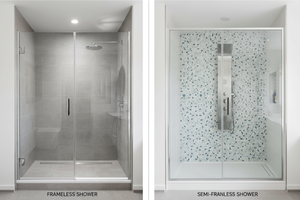
Frameless shower screens—also referred to as fully frameless—use 10mm toughened safety glass with no perimeter frame, creating an ultra-minimalist, seamless look with minimal hardware. In contrast, semi frameless screens feature 6mm glass supported by slim aluminium framing for enhanced stability and water retention, offering a balance between sleek design and subtle structural support.
-
Cost difference: Frameless screens cost roughly 20–40% more on average ($900–$1,800 installed) compared to semi frameless options ($650–$1,300 installed) for similar Australian installations.
-
Design impact: Fully frameless offers the most open, modern aesthetic and seamless appearance, while semi frameless provides better water retention, tolerance for uneven walls, and often more DIY-friendly installation.
-
Installation complexity: Due to their heavier weight and need for precise alignment, frameless shower screens usually require professional installation.
-
Semi frameless shower screens can be easier to install and are often suitable for DIY projects thanks to their lighter glass and framed edges.
-
Cleaning effort: Frameless shower screens are well-known for their low maintenance thanks to their minimalist design and limited hardware, which simplifies cleaning.
-
Semi frameless screens may require a bit more attention around the aluminium supports.
-
Best applications: Frameless suits design-led, higher-budget renovations focusing on luxury appeal; semi frameless works perfectly for budget-conscious projects wanting modern style with practical benefits.
Frameless vs Semi Frameless: How to Choose
There’s no universal winner in the frameless versus semi frameless shower screen debate—the right choice depends entirely on your budget, bathroom size, wall accuracy, and desired aesthetic outcome. Each option excels in different renovation scenarios, making the decision highly personal to your specific circumstances. Each type of shower screen also has unique features that may appeal to different renovation needs.
Budget Considerations
-
Semi frameless wins for cost-conscious renovations.
-
Frameless suits premium projects with higher budgets.
Design Priorities
-
Frameless dominates for ultra-modern, minimalist looks and can be customised to fit any bathroom, allowing homeowners freedom in design.
-
Frameless shower screens also excel in hardware customisation, offering a variety of finishes for shower door hinges and hardware fittings.
-
Semi frameless offers clean style with practical framing.
Cleaning and Maintenance
-
Frameless requires less maintenance time.
-
Semi frameless needs attention to frame edges and tracks.
Water Tightness
-
Semi frameless provides superior splash control.
-
Frameless relies on precise installation and falls.
Installation Complexity
-
Semi frameless tolerates wall imperfections better.
-
Frameless demands millimetre-perfect conditions.
Typical Australian renovation scenarios illustrate these differences clearly. An inner-city apartment ensuite might choose frameless shower screens to maximise perceived space and showcase expensive tiles, while a rental property or busy family home main bathroom often benefits from semi frameless screens for their durability, value, and superior water management.
Fast recommendations:
-
Tight budget and uneven walls → semi frameless screens
-
Chasing luxury, hotel-style aesthetics → frameless screens
-
Family bathroom with heavy use → semi frameless for practicality
-
Master ensuite renovation over $15k → frameless for premium appeal
Frameless vs Semi Frameless: Quick Comparison Table
|
Feature |
Frameless Shower Screens |
Semi Frameless Shower Screens |
|---|---|---|
|
Glass Thickness |
10mm toughened |
6mm toughened |
|
Frame |
No perimeter frame |
Slim aluminium frame on edges |
|
Cost (Installed) |
$900–$1,800 |
$650–$1,300 |
|
Aesthetic |
Ultra-minimal, seamless |
Modern, with subtle framing |
|
Water Retention |
Relies on precise install |
Superior splash control |
|
Installation |
Professional required |
DIY possible, more forgiving |
|
Cleaning |
Minimal effort |
More attention to frames/tracks |
|
Best For |
Luxury, design-led renovations |
Budget, family, rental properties |
What Is a Frameless Shower Screen?
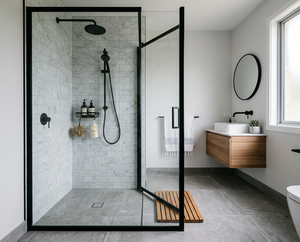
A frameless shower screen consists of 10mm (sometimes 8–12mm) thick tempered safety glass panels with no full perimeter aluminium frame, held securely by discrete hinges, clips, or channels.
Frameless ones are known for their seamless, modern look with minimal hardware. This construction method eliminates visible metal framing around glass edges, creating an almost uninterrupted transparent barrier that maximises visual space and light flow.
Common configurations include single fixed panels for walk-in showers, hinged doors with inline panels, corner enclosures, and custom niches. These frameless shower enclosures became increasingly popular in Australian renovations from about 2010 onwards, particularly in metropolitan areas where space optimization and contemporary aesthetics drive renovation decisions.
Frameless shower screens typically provide a more limited selection of styles, concentrating on delivering a minimalist and contemporary aesthetic.
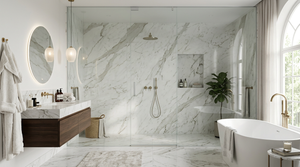
The visual effect of frameless glass creates an almost uninterrupted view through the shower area, with minimal hardware and a strong sense of openness that’s ideal for showcasing feature tiles, natural stone, or architectural details. Fully frameless screens are a popular choice for those seeking a sleek, modern design with minimal metal framing. This seamless appearance works particularly well in modern bathroom designs where clean lines and uncluttered spaces take priority.
Safety features remain paramount despite the minimal framework. All frameless screens feature polished edges, proper hinge hardware rated for the glass weight, and required clearances for safe operation. Frameless shower screens typically use thicker glass, which contributes to their premium appearance. Many Australian suppliers offer nano-coated glass as an upgrade, providing easier cleaning and reduced water spotting for busy households.
Frameless systems require custom measurement to the millimetre, making them well-suited to non-standard spaces and high-end projects where bespoke solutions justify the premium investment.
What Is a Semi Frameless Shower Screen?
Semi frameless shower screens combine 6mm toughened safety glass with slimline aluminium framing around the perimeter or fixed panels, leaving the door edge or certain sides visually “frameless” for a cleaner appearance than fully framed alternatives.
This hybrid approach balances modern aesthetics with practical structural support and water management. Semi frameless designs are known for their structural and aesthetic versatility, offering a blend of durability and style that can be customized to suit a wide range of bathroom interiors.
Typical layouts include sliding doors over baths, pivot doors in alcove spaces, corner entry systems, and combination bath-shower screens commonly used in Australian homes built from the 1990s through 2020s. These options reflect the variety of shower enclosure styles available for semi frameless screens, allowing homeowners to choose configurations that best enhance both the functionality and look of their bathroom.
The appearance delivers a cleaner, lighter look than fully framed screens but retains visible metal lines that can be colour-matched to tapware finishes such as chrome, matte black, or brushed nickel. This coordination helps integrate the shower screen with the overall bathroom design rather than treating it as a purely functional afterthought.
Structurally, the aluminium frame serves multiple important functions: improving overall rigidity, helping square up slightly out-of-plumb walls during installation, and protecting vulnerable glass edges from impacts—particularly important in family bathrooms with children or high-traffic use patterns. Semi-frameless designs feature up to 100mm of adjustment to ensure a perfect fit within your bathroom space.
Many semi frameless products utilise partially modular or standard-sized components, helping control costs compared to fully bespoke frameless systems while still delivering a contemporary appearance that suits modern Australian homes. Some semi frameless screens also use low iron glass, which offers enhanced clarity, further improving both the visual appeal and safety of the installation.
Frameless vs Semi Frameless: Core Differences
Understanding the fundamental technical and practical differences between frameless and semi frameless screens helps clarify why each option suits different renovation scenarios and budgets.
Construction Methods
Fully frameless designs rely entirely on thick toughened glass and minimal hardware for structural integrity, with no visible framing. Semi frameless systems use thinner glass supported by aluminium framing that distributes loads and provides edge protection. This difference affects everything from installation requirements to long-term durability patterns.
Sight Lines and Space
Frameless screens maximise continuous views of tilework and create an uninterrupted visual flow, making bathrooms appear larger and more open. Semi frameless screens introduce thin metal borders that slightly break up the space but provide defined boundaries that some users prefer.
Water Control
Frameless installations often use minimal seals and eliminate bottom tracks, relying on precise design and floor falls to manage splash effectively. Additionally, frameless shower screens feature an advanced nano coating that repels water and soap residue, making the glass easy to wipe clean.
Semi frameless screens typically incorporate more defined channels, seals, and collection points that improve splash containment but require more cleaning attention.
Installation Flexibility
Semi frameless systems can often accommodate 10–15mm of wall variation through adjustable channels and frame components, while frameless installations depend more heavily on walls being square, plumb, and accurately positioned to function properly.
Design & Bathroom Aesthetics
Modern shower screens have evolved from purely functional barriers to become major visual features in contemporary bathrooms, rivalling tapware and tiles for design impact. Both frameless and semi frameless options are popular for their modern design, which enhances the visual appeal of contemporary bathrooms.
The choice between frameless and semi frameless significantly influences the overall aesthetic direction and perceived quality of the finished space.
Frameless Aesthetics
Frameless aesthetics deliver ultra-minimal, “floating” glass panels that suit contemporary, Scandinavian, or hotel-inspired bathroom designs perfectly. Frameless shower screens create a sense of openness in a bathroom, making it appear larger and more luxurious, and lend an elegant, uncluttered aesthetic that showcases other bathroom features without distraction.
The absence of visible framing creates an almost invisible barrier that showcases expensive tilework while making compact spaces like a 1.8m x 2.2m ensuite feel significantly less cramped than traditional alternatives.
Semi Frameless Aesthetics
Semi frameless aesthetics provide a cleaner, more modern appearance than fully framed options while maintaining a defined outline that suits transitional or traditional bathroom styles. The slim metal framing can echo window and door lines in heritage properties or provide visual consistency in homes where some architectural definition is desired.
Coordinating Finishes
Coordinating finishes becomes crucial with both options. Match hinge and bracket colours with mixers, handles, and towel rails for a cohesive look. Choose frame colours strategically—matte black for dramatic contrast, brushed brass for warmth, or chrome for timeless appeal—to either blend with tiles or create intentional focal points.
Durability & Build Quality
Both frameless and semi frameless shower screens can deliver exceptional durability when constructed with compliant Australian safety glass and quality hardware components. Long-term performance depends more on installation precision and component quality than on the specific framing approach chosen.
Impact resistance varies between the systems. Frameless 10mm glass provides robust strength but requires edge protection from point impacts since edges remain exposed. Semi frameless 6mm glass relies on frame support to distribute loads while the aluminium frame protects vulnerable edges from contact damage.
Hardware quality largely determines long-term durability and operational smoothness. Premium hinges, brackets, and rollers resist sagging and maintain proper alignment over decades of daily use, while inferior components may require adjustment or replacement within just a few years of installation.
Warranty comparisons reveal confidence levels from reputable Australian manufacturers. Quality suppliers typically offer 7–15 year structural warranties on both frameless and semi frameless systems when professionally installed, indicating expected service life under normal residential use.
Frameless Durability & Safety
Frameless systems typically specify 10mm toughened safety glass for self-supporting strength, occasionally using 8mm for smaller panels where structural loads allow. This thickness provides exceptional rigidity and minimizes flex during daily use, contributing to the premium feel and long-term reliability.
Toughened glass strength impresses most users, but if failure occurs, the safety design causes shattering into small pellets to reduce injury risk. This failure mode is intentional, providing reassurance for family use while maintaining structural integrity under normal conditions.
Proper hinge alignment and adequate support become critical for doors wider than 800mm or taller than 2100mm, where leverage forces increase significantly. Professional installation ensures these components are correctly positioned and securely fastened to handle the substantial weight and operational stresses.
Periodic maintenance involves straightforward checks: tightening hinge screws annually, inspecting for chips on exposed edges after impacts, and monitoring silicone joints in high-use family bathrooms. These simple steps help maintain performance and appearance over the long term.
With appropriate care and quality installation, frameless screens easily last 15+ years in typical residential applications, often outlasting multiple bathroom refresh cycles while maintaining their premium appearance and smooth operation.
Semi Frameless Durability & Safety
The perimeter frame in semi frameless systems distributes loads effectively, reducing stress concentrations on the 6mm glass and making the overall structure more forgiving in busy family environments. This support network helps prevent damage from typical household impacts and daily wear.
Aluminium frames provide valuable edge protection for the glass, shielding vulnerable corners from contact with shampoo bottles, shower heads, or children’s toys. This protection significantly reduces the risk of chips or cracks that could compromise safety or appearance over time.
Frame benefits extend to concealing minor edge damage if it occurs, though any visible glass damage should still receive professional assessment. The metal edges also provide a forgiving grip surface for users who need stability support while bathing.
Sliding systems in semi frameless configurations rely on rollers and tracks that require periodic maintenance but generally provide reliable service. Cleaning and occasional roller replacement over a 10–15 year service life maintains smooth operation and prevents premature wear.
Safety considerations often favour semi frameless for older users or those with mobility concerns, as the visible frame provides a clear, sturdy boundary that can offer confidence and physical support when entering or leaving the shower area.
Cost & Value for Money
Direct cost comparison reveals frameless as consistently the more expensive option, while semi frameless screens deliver substantial savings while maintaining modern appeal and functionality. Understanding these cost drivers helps inform realistic budget planning for Australian bathroom renovations.
Indicative Australian pricing for a standard 900 x 900mm corner shower installation varies significantly between options.
-
Frameless systems: $900–$1,800+ including supply and professional installation.
-
Semi frameless alternatives: $650–$1,300+ depending on location, complexity, and finish specifications.
Premium pricing for frameless reflects several cost factors: thicker glass materials, custom measuring and precision cutting requirements, specialized hardware components, and more demanding installation labour. Each element adds to the final investment but contributes to the distinctive quality and performance.
Value considerations extend beyond initial purchase price. Frameless screens can enhance perceived property value in mid to high-end markets and feature prominently in real estate marketing for renovated homes. Semi frameless provides excellent cost-benefit ratios for rental properties and family homes where practicality takes precedence.
Lifetime cost analysis should include maintenance requirements, potential hardware replacement needs, and likelihood of full replacement during the next renovation cycle. Most Australian homeowners renovate bathrooms every 10–20 years, making long-term durability an important consideration alongside upfront investment.
Cost Drivers for Frameless Screens
Key price factors for frameless installations include:
-
Glass thickness and total area
-
Number of panels and custom cut-outs
-
Special shapes for angled or raked ceilings
-
Premium hardware finishes like brushed brass or matte black
Custom fabrication timelines typically require site measurement after tiling completion, followed by 7–15 working days for glass cutting and hardware preparation before installation can proceed. This precision approach ensures perfect fit but extends project timelines compared to standard-sized alternatives.
Complex layouts multiply costs significantly. Three-sided enclosures, nib wall returns, and multiple panel configurations require additional labour time and specialized hardware, often pushing total investment well above simple inline panel and door combinations.
Professional consultation benefits prove valuable when obtaining quotes. Compare at least two estimates from experienced glaziers, ensuring quotations include all necessary elements: nano coating options, soft-close hinges, comprehensive warranties, and detailed installation procedures.
Resale value considerations apply primarily in higher-end suburbs where buyers expect premium finishes in renovated bathrooms. The investment in frameless glass can contribute to faster sales and higher final prices in competitive markets where quality details make significant differences.
Cost Drivers for Semi Frameless Screens
Semi frameless systems achieve cost efficiency through standardized glass panels and adjustable frame components that reduce custom fabrication requirements. This modular approach allows suppliers to maintain inventory and streamline production while still delivering contemporary appearance.
Sliding configurations often cost less than frameless alternatives because they utilize lighter glass and simpler structural requirements. The distributed load from frames allows thinner glass specifications while maintaining safety and durability standards required for daily family use.
Colour upgrades for frames represent modest additional investments compared to standard chrome or white finishes. Matte black, brushed nickel, and other contemporary options typically add 10–20% to base pricing while significantly enhancing design coordination possibilities.
Project home builders and townhouse developments frequently choose semi frameless for its value positioning, making it widely available through trade channels. This popularity helps maintain competitive pricing and reliable supply chains across Australian markets.
Package pricing opportunities often exist for multiple bathroom installations. Renovating main bathroom, ensuite, and powder room simultaneously with semi frameless screens may qualify for volume discounts that reduce per-unit costs while maintaining design consistency throughout the home.
Installation: Difficulty, Time & Site Conditions
Correct installation critically affects safety, longevity, and leak prevention performance, with meaningful differences between frameless and semi frameless requirements. Understanding these differences helps set appropriate expectations and budget planning for professional installation services.
Site preparation basics apply to both systems:
-
Walls must be fully tiled and waterproofed.
-
Floor falls to waste outlets should meet plumbing code requirements.
-
Hob or floor surfaces need appropriate slopes before final measuring can occur.
Proper preparation prevents costly delays and ensures optimal performance.
Average installation times vary between systems based on complexity and precision requirements.
-
Frameless installations: Typically require 2–4 hours for simple configurations.
-
Semi frameless sliders or pivot doors: Usually complete within 1.5–3 hours depending on site conditions and component counts.
Professional installation proves particularly important for frameless systems due to heavy glass handling requirements and precise alignment needs for doors and sealing systems. Experienced glaziers possess specialized tools and techniques essential for safe, accurate installation that meets manufacturer warranty conditions.
Older Australian homes built pre-1990s often present challenges with out-of-plumb walls and uneven floors that can complicate frameless installations. Semi frameless systems with adjustable frames typically accommodate these irregularities more easily, making them practical choices for heritage renovation projects.
Frameless Installation Considerations
Installation processes for frameless screens follow a precise sequence:
-
Final measurement after tiling completion.
-
Custom glass manufacturing to exact specifications.
-
Careful delivery and installation, typically requiring a two-person team with specialized handling equipment for safety and accuracy.
Drilling accuracy becomes critical since frameless installations rely on precise anchor points in tiles for hinges and brackets. Poor drilling techniques can crack expensive tiles or create misalignment issues that compromise door operation and appearance throughout the screen’s service life.
Adjustment limitations characterize frameless systems—minimal tolerance exists once glass panels are manufactured, making accurate initial measurement and level/plumb verification essential. Unlike framed systems, corrections after installation often require complete glass replacement rather than simple adjustments.
DIY installation risks increase significantly with heavy 10mm glass panels exceeding 2m in height. Without proper equipment, experience, and assistant help, handling these panels safely becomes challenging and potentially dangerous for inexperienced installers attempting to save on labour costs.
Silicone curing requirements affect shower availability after installation. Structural seals around frameless panels typically need 24 hours to fully cure before the shower can be safely used, requiring planning for alternative bathing arrangements during this period.
Semi Frameless Installation Considerations
Semi frameless systems typically arrive as complete kits with pre-framed sections that can be cut or adjusted slightly to accommodate site variations. This flexibility simplifies installation and reduces the precision requirements compared to custom-cut frameless alternatives.
Frame adjustability allows tolerance for walls that measure a few millimeters out of plumb, making installation more forgiving during renovation projects. This adaptability proves particularly valuable in older homes where perfectly square openings are rare and costly to achieve.
DIY installation remains possible for competent home renovators who follow manufacturer instructions carefully, though compliance with local building codes remains essential. Some homeowners successfully install semi frameless units while saving on professional labour costs.
Sliding door systems require careful attention to bottom track levelling and roller adjustment to ensure smooth movement and prevent premature component wear. These adjustments are typically straightforward but benefit from methodical approach during initial installation.
Insurance and warranty considerations may apply to DIY installations depending on individual policies. Check whether home insurance or builder’s warranties include any conditions around professional versus DIY installation for wet area glazing before proceeding with self-installation plans.
Cleaning & Maintenance
Daily maintenance realities significantly impact long-term satisfaction with either frameless or semi frameless shower screens. Shower screens can accumulate soap scum and water spots over time, making cleaning an important consideration. Understanding cleaning requirements helps set realistic expectations and choose systems that match household maintenance capabilities and preferences.
Design elements directly affect cleaning difficulty:
-
Frameless screens with fewer joints and frames accumulate less soap scum and grime and are easier to clean due to fewer seals and less silicone.
-
Semi frameless shower screens require slightly more effort to clean because additional components like aluminium frames and seals can trap soap residue and moisture, creating extra surfaces requiring attention.
Both approaches offer practical advantages when maintained properly.
Easy-clean coatings have become increasingly popular additions from Australian suppliers, reducing water spotting and soap scum adhesion on glass surfaces. These factory-applied treatments don’t eliminate cleaning requirements but significantly reduce the time and effort needed for regular maintenance.
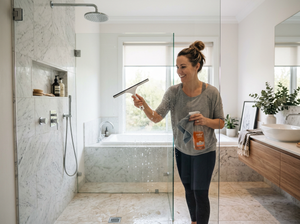
Practical maintenance routines work best when integrated into daily shower habits rather than left for intensive weekend cleaning sessions. Simple daily habits like squeegeeing glass and weekly wipe-downs with appropriate non-abrasive cleaners maintain appearance and prevent buildup that requires harsh chemical intervention.
Realistic time expectations help households plan effectively: approximately 5 minutes per day for light maintenance versus 30–45 minutes for infrequent intensive cleaning sessions. Consistent light maintenance proves more effective and less disruptive than sporadic deep cleaning approaches.
Frameless Cleaning & Upkeep
Minimal framing in frameless designs eliminates most horizontal surfaces where soap scum typically accumulates, making it easier to wipe glass and adjacent tiles in continuous motions. The absence of bottom tracks particularly simplifies floor cleaning around shower areas.
Best practice cleaning routines emphasize gentle techniques:
-
Soft squeegees after each shower use.
-
Microfibre cloths with mild cleaning solutions.
-
Avoidance of harsh abrasives or razor blades that can damage protective coatings or scratch glass surfaces permanently.
Seal inspection and maintenance focuses on fewer but critical points: door edges and bottom joints require annual inspection and replacement if rubber seals harden, crack, or develop mold growth. Quality replacement seals typically cost $20–50 and extend service life significantly.
Silicone joint maintenance proves simpler with minimal visible joints in frameless systems, but any discoloration or mold should receive prompt attention to maintain the premium appearance that justifies the initial investment. Professional resealing costs $150–300 if required.
Easy-care routines that work well in busy households include:
-
Daily glass squeegee use.
-
Weekly cleaning with microfibre cloth and mild vinegar-based spray.
-
Monthly inspection of hardware and seals.
These simple habits maintain frameless screens in excellent condition with minimal time investment.
Semi Frameless Cleaning & Upkeep
Additional cleaning points in semi frameless systems include:
-
Horizontal frame ledges.
-
Bottom tracks on sliding configurations.
-
Extra seals that can trap moisture and soap scum.
Understanding these areas helps develop effective cleaning routines that prevent buildup problems.
Track maintenance on sliding doors benefits from periodic removal of door panels (following manufacturer instructions) to clean accumulated hair, soap residue, and mineral deposits from guide channels. This deeper cleaning every 3–6 months maintains smooth operation and prevents damage.
Frame material characteristics affect cleaning requirements. Powder-coated aluminium frames resist corrosion and staining under normal use but can suffer damage from harsh chemicals or abrasive cleaning tools like steel wool. Stick to mild cleaners and soft cleaning cloths for best results.
Seal replacement schedules typically involve checking door seals and bumpers annually, replacing worn components to maintain water tightness and prevent drips onto bathroom floors. Replacement seals cost $15–40 per door and represent normal maintenance rather than premature failure.
Despite additional components requiring attention, many homeowners find semi frameless cleaning manageable with regular schedules and appropriate products. The key lies in consistent attention rather than allowing buildup to occur and requiring intensive correction efforts.
Pros & Cons of Frameless Shower Screens
Frameless shower screens represent the premium choice in contemporary bathroom design, delivering unmatched visual appeal and cleaning convenience while demanding higher investment and more exacting installation requirements. Understanding these trade-offs helps determine whether the benefits justify the additional costs for specific renovation projects.
Pros:
-
Superior aesthetics: Unobstructed views showcase expensive tilework and create genuine luxury spa-like atmosphere that enhances property value.
-
Easier cleaning: Fewer joints and surfaces mean less soap scum accumulation and faster daily maintenance routines.
-
Space maximization: Visual openness makes compact bathrooms feel significantly larger and brighter.
-
Design flexibility: Custom sizing accommodates unusual spaces and architectural features other systems cannot match.
-
Future-proof styling: Timeless minimalist appeal remains current across changing design trends.
Cons:
-
Higher investment: 20–40% premium over semi frameless options strains renovation budgets.
-
Installation precision: Requires perfectly level floors and plumb walls, potentially adding costs for site preparation.
-
Limited water retention: Depends on precise floor falls and minimal sealing for splash control.
-
Professional installation: Heavy glass and tight tolerances make DIY installation dangerous and warranty-voiding.
Frameless screens excel in master ensuites, luxury renovations, and design-focused projects where premium aesthetics justify additional investment. They work particularly well for couples without children who prioritize style and can maintain regular cleaning routines. However, busy family bathrooms with constant use and maintenance challenges might benefit more from practical semi frameless alternatives that offer better water control and durability.
Pros & Cons of Semi Frameless Shower Screens
Semi frameless shower screens occupy the practical middle ground between basic framed enclosures and premium frameless systems, delivering modern aesthetics with enhanced functionality and value that suits most Australian renovation budgets and household requirements.
Pros:
-
Cost effectiveness: Substantial savings compared to frameless while maintaining contemporary appearance and quality construction.
-
Superior water control: Defined frames and seals provide better splash containment for family bathrooms and compact spaces.
-
Installation flexibility: Adjustable frames accommodate wall irregularities common in renovation projects without extensive site preparation.
-
DIY potential: Many homeowners can successfully install semi frameless units following manufacturer instructions.
-
Enhanced durability: Frame protection for glass edges and distributed structural loads improve longevity in busy households.
Cons:
-
Visual complexity: Metal framing creates sight lines that interrupt the seamless appearance preferred in high-end designs.
-
Additional cleaning: Frame edges, tracks, and extra seals require more attention during regular maintenance routines.
-
Style limitations: Cannot achieve the ultra-minimal aesthetic that defines contemporary luxury bathroom design.
-
Future upgrade paths: May require complete replacement rather than enhancement during subsequent renovations.
Semi frameless options excel in family bathrooms, investment properties, secondary bathrooms, and renovation projects where practical performance and value take priority over ultimate design impact. They work particularly well for households with children, rental properties, and homes where maintenance simplicity and water containment prove more important than achieving magazine-worthy aesthetics.
Which Option Is Right for Your Bathroom?
Selecting the perfect shower screen requires honest assessment of your renovation priorities, household needs, and long-term plans. Neither frameless nor semi frameless represents a universally superior choice—success depends on matching system characteristics to your specific circumstances.
Choose frameless screens when:
-
Renovation budget exceeds $15,000 and design impact takes priority.
-
Bathroom walls are square, plumb, and level within 2-3mm tolerance.
-
Household includes adults who maintain regular cleaning routines.
-
Property value in your area responds to premium fixture upgrades.
-
Master ensuite or luxury guest bathroom renovation focusing on spa-like ambiance.
Choose semi frameless screens when:
-
Budget constraints require balancing style with value (under $1,500 for screen).
-
Walls show typical renovation irregularities requiring accommodation.
-
Family bathroom serves children or high-traffic daily use.
-
Rental property or investment home requiring durable, practical solutions.
-
Secondary bathrooms where functionality outweighs ultimate design impact.
Practical decision framework:
-
Measure your bathroom space and note any existing issues like uneven walls, drainage problems, or structural limitations.
-
Take photos and measurements before consulting suppliers to ensure accurate quotations and appropriate system recommendations.
-
Consider your household’s long-term plans. Homeowners planning to remain in properties for 10+ years can justify frameless investments more easily than those expecting to move within 3–5 years. Similarly, growing families might prioritize practical semi frameless features over aesthetic perfection.
Example scenarios:
-
A 1980s brick veneer home in suburban Melbourne with slightly out-of-square walls and a family bathroom serving teenagers benefits from semi frameless screens that accommodate irregularities while providing superior water control.
-
Conversely, a contemporary apartment renovation in inner Sydney with precision-built walls and sophisticated design goals justifies frameless investment for maximum visual impact.
Consult experienced local glaziers or bathroom designers to confirm structural suitability before finalizing decisions, especially when planning involves wall alterations or plumbing modifications that affect installation requirements.
FAQ: Frameless vs Semi Frameless Shower Screens
Does choosing frameless over semi frameless really affect my home’s resale value?
In competitive Australian property markets, frameless screens can improve perceived quality and contribute to faster sales, particularly in higher-value suburbs where buyers expect premium finishes. However, they represent just one element among many renovation factors including kitchen quality, overall bathroom design, and property location. Semi frameless screens in excellent condition rarely deter buyers when part of well-executed renovations.
Which type is better for ageing in place or mobility needs?
Frameless walk-in designs with no hob offer easiest access for mobility considerations, but must be paired with appropriate floor falls, grab rails, and non-slip surfaces. Semi frameless systems can provide helpful visual boundaries and frame support for steadying, though sliding doors may create threshold barriers. Consult occupational therapy professionals for accessibility assessments specific to individual mobility requirements.
At what stage of a renovation should I order my shower screen?
Final measuring occurs after complete tiling and waterproofing, typically 1–3 weeks before practical completion. However, initial consultations and design selection should happen during planning stages to ensure adequate budget allocation and timeline coordination. Early planning prevents delays and allows proper integration with tile layouts and fixture positioning.
Can I use frameless or semi frameless screens over a bath?
Both options work over baths, with different advantages: semi frameless sliders provide practical family solutions with good water containment, while frameless fixed panels suit design-focused installations in master ensuites. Bath applications require careful consideration of splash patterns, user safety, and cleaning access when selecting appropriate configurations.
Are there any ongoing costs I should budget for with either option?
Both systems require periodic seal replacement ($20–50 every 5–10 years), professional cleaning annually in hard water areas ($100–200), and potential hinge adjustment or replacement ($50–150) over 10–15 year lifespans. Semi frameless systems may need roller replacement in sliding configurations ($80–120), while frameless units might require silicone renewal more frequently ($150–300) due to minimal sealing systems.
Materials and Construction
When selecting the right shower screen for your bathroom, understanding the materials and construction methods behind semi frameless and frameless shower screens is essential. These factors not only influence the visual appeal and durability of your shower area but also play a key role in long-term functionality and maintenance.
Semi frameless shower screens are designed with minimal framing—typically a slim aluminium or stainless steel frame that runs along the perimeter of the glass panels, providing extra support and stability. The glass used in semi frameless screens is usually 6mm toughened safety glass. The partial framing helps semi frameless screens offer a modern look while maintaining a cost effective solution for various bathroom styles.
The metal frame, often available in finishes like chrome, matte black, or brushed nickel, can be matched to your tapware and other bathroom features for a cohesive design.
Frameless shower screens, by contrast, are all about minimalist design and maximum transparency. These screens feature no visible frame around the glass panels, relying instead on discreet brackets, hinges, or channels to secure the glass. Frameless screens use thicker glass—typically 10mm toughened or tempered glass—to ensure structural integrity and safety without the need for additional support.
This thicker toughened glass not only enhances the premium feel but also allows frameless shower screens to create a seamless, open look that’s perfect for modern bathroom designs and smaller showers where you want to maximise natural light and visual space.
While framed shower screens—with a full metal frame surrounding each glass panel—are still available, they are less popular in contemporary bathrooms due to their bulkier appearance. However, they remain a durable and practical choice for high-traffic or budget-focused renovations.
Both semi frameless and frameless options require professional installation to ensure a water tight fit. Frameless shower screens, in particular, demand precise measurement and expert handling due to the weight and fragility of thick tempered glass. Semi frameless screens, with their adjustable frames, can be more forgiving of minor wall irregularities and may be suitable for confident DIY installation, though professional installation is always recommended for the best results.
For Perth homeowners and renovators across Australia, the choice of materials and construction comes down to personal preference, bathroom style, and budget. Semi frameless screens offer a balance of modern style, durability, and affordability, making them a popular choice for family bathrooms and investment properties. Frameless screens, on the other hand, deliver a luxurious, high-end finish that elevates the overall bathroom aesthetics—ideal for master ensuites or design-led renovations.
No matter which option you choose, always ensure your shower screen is made from toughened safety glass. This not only guarantees safety but also helps prevent issues like water leaks and the accumulation of soap scum, keeping your shower area looking its best for years to come.
In summary, the materials and construction of your shower screen will shape the look, feel, and longevity of your bathroom. Whether you prefer the sleek minimalism of frameless glass or the practical benefits of semi frameless screens, investing in quality materials and professional installation will ensure your new shower enclosure enhances both the style and value of your home.
 Tags:
Tags: