1300 760 441
 cs@factoryfast.com.au
Weight Plates Buyer Guide: Types, Bar Compatibility and Smarter Progression
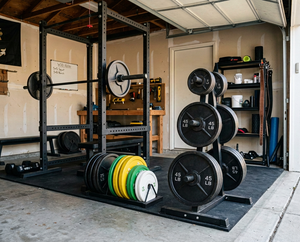

A weight plate is only useful when it fits your bar, suits the way you lift and lets you change resistance in practical steps. Plate purchases often start with total kilograms and end with incompatible holes, oversized load jumps or equipment that has nowhere sensible to live. A better approach is to design the system before choosing the pieces.
This weight plates buyer guide works through compatibility, construction, load increments, training style and storage. It is intended for Australian shoppers comparing gym weights for home training, whether the aim is a first barbell setup or a deliberate upgrade to an existing collection.
Start With Compatibility, Not Plate Colour or Price
The first decision is mechanical. The centre opening of the plate must match the loading sleeve on the bar or machine. A plate can have the ideal mass and finish but still be unusable if those dimensions do not agree.
Measure the equipment you already own
Do not identify a bar by appearance alone. Measure the loading sleeve diameter in millimetres and compare that figure with the product specification. Olympic-format equipment commonly uses a 50 mm sleeve, while other home-gym bars may use a smaller format. These systems should not be treated as interchangeable.
Also check the usable sleeve length. Thick plates occupy more space than thin steel plates, so a bar can reach its physical loading limit before reaching the expected total mass. Collars need enough room to secure the stack.
When comparing Olympic and home gym weight plates, look at the hole diameter, plate thickness and whether the listing supplies one plate, a pair or a full set.
Treat machines and adjustable handles as separate systems
A cable machine, plate-loaded station or adjustable dumbbell handle may accept plates, but that does not mean every plate in the room belongs on it. Confirm the peg or sleeve diameter, available length and stated equipment capacity for each item.
If you are building a mixed setup, create a short compatibility list before ordering. One consistent format is usually easier to expand and store than several unrelated plate families.
The broader gym weights buyer guide can help you decide whether a barbell-and-plate system should form the foundation of your setup.
Choose Plate Construction Around the Lifts You Perform
Plate materials affect thickness, noise, grip, floor contact and handling. There is no universally best material. The useful question is what happens to the plate during a normal session in your space.
Rubber bumper plates suit lifts that begin from the floor
Bumper plates use a rubber-dominant outer construction and a consistent full-size profile across different masses. That shape can make them easier to use for floor-starting barbell movements because the bar begins at a predictable height.
Factory Fast’s live 20 kg Olympic rubber bumper plate is specified with high-density rubber, an iron interior and a 20 kg mass. It is positioned for Olympic and power lifting.
Because the listing is for one plate, a balanced barbell purchase requires deliberate quantity checking rather than assuming a pair is included.
Bumper plates are comparatively thick. That can suit floor-based training but restrict how much weight fits on a short sleeve. Measure first if the planned loads are high or the bar is compact.
Steel plates keep the stack compact
Steel plates can place more mass into less sleeve space. They suit controlled barbell training where compact loading, smaller increments and a crisp plate profile matter more than a rubber exterior.
Hard surfaces can be noisier when handled carelessly, so the room and storage method should be considered before purchase.
Chromed steel fractional plates serve a specialised purpose: they add very small amounts to the bar. They do not replace the main working plates. Instead, they fill gaps between standard loading jumps.
Coated and cement-filled plates suit different priorities
Some adjustable sets use plates with a plastic or rubber coating; others use cement filling inside an outer shell. Coatings can make plates more pleasant to grip and reduce direct metal contact with nearby surfaces.
Cement-filled designs can offer an accessible way to assemble a broad home-training kit, but they are often bulkier for the same mass. Check the construction, diameter and thickness rather than assuming every coated plate behaves like a bumper plate.
Build a Load Range That Supports Real Progression
Total mass attracts attention, but the size of each possible jump determines how usable the set feels from week to week.
A collection with plenty of kilograms can still be frustrating if the smallest balanced increase is too large for the exercises you perform.
Plan balanced jumps on both sides of the bar
Barbells are loaded symmetrically. Adding one plate to each side means the total change is twice the individual plate mass.
If the smallest plates are 2.5 kg each, the minimum paired increase is 5 kg. That may be manageable for a lower-body movement but too coarse for a press, technique drill or lift approaching a sticking point.
Write down the smallest useful increase for each main exercise. Then check whether the proposed plate mix can create those increments without removing and rebuilding most of the bar.
A practical setup usually combines main working plates with smaller change plates rather than relying on one repeated size.
Use fractional plates to bridge difficult gaps
The live 5 kg fractional Olympic plate set contains pairs of 0.25 kg, 0.5 kg, 0.75 kg and 1 kg chromed steel plates.
Each plate has a 50 mm inner diameter, so the set is intended for Olympic sleeves. The combination allows several small, balanced additions without replacing the main plates already on the bar.
Fractional loading is most valuable when a large jump changes technique, repetition quality or confidence. It is less important for exercises where resistance can comfortably rise in bigger steps.
Count the bar and collars in the working total
The resistance on a loaded bar includes the bar itself, the plates and any meaningful accessory mass. Record the actual bar specification rather than assuming every bar weighs the same.
This matters when transferring a programme between a full-length bar, a compact bar and adjustable dumbbell handles. A repeatable log is more useful than a nominal plate total that ignores the equipment carrying it.
Match the Plate Mix to Your Training Style
The right set for slow, controlled lifts can differ from the right set for dynamic floor work. Start with movements, then choose sizes and materials.
General home strength training
For squats, presses, rows and controlled deadlifts, prioritise compatibility and a useful range of paired increments.
A mix of larger plates for the base load and smaller plates for adjustment usually provides more exercise coverage than spending the whole budget on the heaviest option.
Handles or grip cut-outs can help when plates are frequently carried or used without a bar, but only where the individual product offers them.
Floor-starting barbell work
If most sessions involve the bar starting from the floor, consistent plate diameter and the condition of the training surface become more important.
Bumper construction may suit that use, while thin change plates can refine the final load. Floor protection and product suitability should be considered together; a rubber exterior does not make every room or plate suitable for uncontrolled impact.
Compact multi-user setups
A shared home gym benefits from smaller increments because users can adapt the same bar to different movements and strength levels.
Clear weight markings, accessible storage and a consistent sleeve format reduce setup time. If space is limited, calculate the footprint of the plates when stored as well as the clear area required to load the bar.
Design Storage Before the Collection Gets Heavy
Plates become inconvenient long before they become visually impressive. Leaning them against a wall makes selection slower and can allow the stack to spread into the lifting area.
Floor piles also hide smaller plates beneath larger ones, encouraging rushed handling between sets.
Match the rack to the plate format and total load
Storage pegs must match the plate opening, and the rack must support the combined mass you intend to place on it.
The 250 kg Olympic plate storage rack is specified for 50 mm-hole Olympic plates, with seven 18 cm storage spokes and a 250 kg capacity.
Those figures make it possible to compare the rack with the exact plate mix rather than judging from a product image.
Sort plates so commonly used pairs are reachable without moving the whole collection. Keep enough clearance to remove a plate without twisting around a bench, wall or barbell.
Account for the room, not just the rack
Measure the rack footprint, plate overhang and standing space needed to load and unload it.
In a garage or spare-room gym, door paths, parked equipment and bench movement can reduce the usable area. The best storage location lets you move a plate from peg to sleeve using a short, clear path.
Avoid Weight Plate Buying Mistakes
Buying before checking sleeve diameter
A familiar product name is not a measurement. Confirm the diameter in millimetres on both the bar and the product listing.
Choosing only large plates
Heavy pairs build the base load quickly but may leave no sensible way to progress. Include the smaller increments needed by the least powerful lift in the programme, not only the strongest one.
Ignoring quantity wording
Some listings describe one plate, while others describe a pair or complete kit. Read the package contents and calculate the balanced total that will arrive.
Mixing formats without a reason
Several plate systems create duplicated storage and make bars or machines harder to share. If you deliberately keep more than one format, assign each to a clear piece of equipment.
Treating every rubber plate as a bumper plate
A rubber coating and bumper construction are not the same design. Look for product language about intended use, material, profile and compatibility.
A Practical Weight Plate Decision Framework
- Measure the bar or machine sleeve diameter and usable loading length.
- List the main lifts and whether the plates will be placed, lowered or used dynamically near the floor.
- Set the largest working load needed now and the likely near-term ceiling.
- Define the smallest balanced jump needed for the most sensitive exercise.
- Choose the main plate construction, then add change plates where they improve the loading plan.
- Confirm package quantity, individual plate mass, dimensions and material.
- Allocate storage with enough stated capacity and clear handling space.
Before checkout, write the next four load increases you expect to make on your two most important lifts. If the proposed plate mix cannot create those steps cleanly, adjust the sizes now. That check turns a pile of kilograms into a training system you can actually progress with.
Frequently Asked Questions
-
 Tags:
Weight Plates
Tags:
Weight Plates