1300 760 441
 cs@factoryfast.com.au
Murphy Beds in Australia: What You Should Expect

Quick Overview: What to Expect from Murphy Beds in Australia
Murphy beds, also called wall beds, are fold-away beds designed to help Australian homes reclaim valuable floor space without sacrificing comfort. Whether you live in a compact studio or a suburban house with a spare room that needs to do double duty, these space saving beds offer a practical solution for modern living.
When comparing murphy beds available in Australia, you can expect price ranges from around $1,200 for basic manual frames through to $4,000 or more for integrated wall bed units with storage and desk combinations. Murphy beds in Australia typically range in price from $719 to $2,799 AUD depending on the model and features. Budget-friendly Murphy bed options start at around $700 AUD, while premium models can cost up to $2,800 AUD. The total investment for a complete Murphy bed setup, including installation and mattress, can range from $1,500 to $4,000 AUD. The best murphy beds suit studio apartments, guest rooms, home office setups, and children’s rooms where sleeping space needs to vanish during the day. For children's rooms, Murphy beds offer space efficiency and can be equipped with safety features such as locking mechanisms and soft-close systems to ensure child safety and comfort as they grow. In home office setups, Murphy beds can be seamlessly integrated to create a multifunctional space, allowing you to maximize both your workspace and sleeping area without compromising on style or practicality. After selecting integrated wall bed units with storage and desk combinations, the integrated wall bed start is the initial design and installation phase, requiring precise planning, professional craftsmanship, and accurate CAD-based design to ensure the bed fits smoothly into your cabinetry and room structure.
This guide focuses on real-world use in Australian houses and apartments, with concrete measurements in centimetres and metres. You will learn about the different types available, how bed mechanics work, room planning essentials, typical costs and what maintenance looks like over the years.
What Is a Murphy Bed and How Does It Work?
A murphy bed is essentially a bed frame fixed into a cabinet that folds up against the wall to free floor space when not in use. The design dates back to the early 1900s when William Lawrence Murphy developed iterative pivot and counterbalanced systems that allowed beds to stow vertically. In Australia, the terms murphy bed and wall beds are used interchangeably for the same style of fold away wall bed.
The basic operation involves pulling down a front panel that reveals the mattress platform. Inside the cabinet sits a sturdy metal frame with mattress restraints that keep bedding secure when the bed folds upright. A counterbalanced lifting system, often using gas-assisted pistons or springs, ensures the movement feels controlled rather than heavy or sudden.
Most murphy beds in Australia are designed so one adult can open and close the bed smoothly without excessive effort. When the bed folds back into its cabinet, sheets and doonas typically stay in place, meaning you only need to remove or replace pillows to have a fully made up bed ready each night.
Compared to sofa beds, wall beds fold away completely to free up floor space.
Popular Types of Murphy Beds in Australian Homes
Different layouts suit different room shapes across Australian units, townhouses and family homes. Understanding the options helps you choose space saving wall beds that match your living space and daily routine.
Vertical Murphy Beds
Standard vertical murphy beds fold down from the upper edge, making them the most common choice for taller rooms. Cabinet dimensions typically run 110 to 140 centimetres wide and 200 to 220 centimetres high for single sizes. When closed, these units project approximately 40 centimetres from the wall, similar to a standard cupboard or cabinetry wall.
Vertical designs work particularly well in guest bedrooms, narrow room layouts, and anywhere ceiling height exceeds 220 centimetres. The entire wall becomes a functional storage unit by day and sleeping quarters by night.
Horizontal Wall Bed Options
A horizontal wall bed pivots sideways rather than folding down from the top. Cabinets measure around 200 to 210 centimetres wide and 120 to 140 centimetres high, making them ideal for rooms with lower ceilings or wider wall space. These suit granny flats with sloped ceilings or entertainment room conversions where vertical installation is not practical.
Storage-Integrated Designs
Storage-integrated models incorporate shelves and cupboards flanking the main cabinet. These remain accessible even when the bed is deployed, perfect for linen, books or décor in small apartments under 60 square metres. Rather than filling under utilised storage areas elsewhere, everything stays organised in one location.
Desk-Combo Wall Beds
Modern murphy beds with desk integration stow to reveal a full work surface, typically 120 to 160 centimetres wide. These transform teenage bedrooms, home office spaces or study nooks into productive daytime zones. When family visits or overnight guests arrive, the desk simply folds away and the bed drops down.
Sofa-Combo Models
Sofa beds have long offered dual functionality, but modern wall beds take this further. Sofa-combo murphy beds disguise as lounges during the day and unfold to full bed dimensions at night. They prove particularly practical in townhouses where frequently a room must serve more than one job throughout the week.
If you want a permanent sleeping solution, a double wall bed is often more comfortable.
Choosing the Right Size Murphy Bed for Your Room
Australian murphy beds typically follow local sizing conventions, with single and queen being the most popular options. Single Murphy beds are ideal for children's rooms and narrow spaces, offering a compact solution that maximizes floor area, while queen Murphy beds are the most popular choice for couples, providing a balance between comfort and space efficiency. Understanding room dimensions before you shop prevents costly mistakes.
Single Murphy Beds
Single murphy beds measure approximately 92 centimetres wide by 188 centimetres long. They suit kids bedrooms, narrow studies, hallway nooks or any space where bed space must remain minimal. Single Murphy beds are ideal for children's rooms due to their compact size, integrated safety features, and ability to maximize play space during the day. When installing Murphy beds in children's rooms, consider safety measures and age-appropriate features to ensure child safety and comfort as they grow. You will need about 100 to 110 centimetres of wall width for the cabinet, with roughly two metres of clear floor area when the bed is open.
Singles work well in children’s rooms where the floor area transforms into play space during the day. Unlike trundle beds that still occupy some footprint, a vertical single folds out of sight completely.
Queen Murphy Beds
Queen sizes measure 153 centimetres wide by 203 centimetres long, making them popular for couples and guest rooms. These require 170 to 190 centimetres of wall width and around 2.2 metres of clear floor projection ahead when deployed. Allow at least 60 centimetres clearance on each side for comfortable movement and linen changes.
Measuring Your Room
Before purchasing, measure your space carefully:
-
Check wall width where the cabinet will mount
-
Confirm ceiling height (minimum 220 centimetres for vertical queens)
-
Note door swing paths that might interfere when the bed opens
-
Mark window placements and skirting board positions
-
Account for existing furniture that will remain in the room
Sketch the room layout on paper with rough centimetre measurements. This simple step reveals whether bedside tables, chairs or other pieces will fit alongside your new wall bed. Comparing murphy beds against your actual floor plan prevents choosing a unit too large for the space.
Mechanisms and Everyday Use: What You’ll Notice Day to Day
The lifting mechanism is the main difference between budget and premium murphy beds in Australia. What feels smooth and effortless on one model might feel heavy or jerky on another.
Simple 3-Part Folding Frames
Basic 3-part folding frames rely on manual leverage and lighter foldable mattresses, typically up to 200 millimetres thick. These suit occasional guest use where the bed opens via straightforward pulls without piston assistance. They cost less upfront but require more physical effort, making them less practical for nightly sleeping or for users with mobility concerns.
Gas-Assisted Lift Systems
Gas-assisted piston systems provide fingertip control for heavier traditional mattresses up to 300 millimetres thick. A well balanced murphy bed with quality pistons allows steady descent without drops, grinding or jerks. Children can manage single sizes while seniors handle queens without strain.
Daily-use models should feature gas lifts for silent, vibration-free motion. The operation feels controlled across age groups, and the bed mechanics remain consistent year after year when properly maintained.
What Good Operation Feels Like
A properly installed murphy bed should:
-
Lower smoothly without sudden drops
-
Stay at any position when released mid-motion
-
Close with minimal effort using both hands
-
Make no grinding or squeaking sounds
-
Have hidden feet that fold down automatically without tripping hazards
Consider how many times per week the bed will be used. A poorly functioning murphy bed frustrates everyone, so prioritise mechanism quality for nightly sleeping rather than saving money on a frame meant only for occasional visitors.
You can also compare with traditional options like bed frames.
Mattresses for Murphy Beds: Comfort and Compatibility
Mattress compatibility affects both sleeping comfort and how easily the murphy bed folds into its cabinet. Choosing poorly means struggling with stiff operation or compromised sleep quality.
Thickness Guidelines
Optimal mattress thickness ranges from 150 to 250 millimetres for most Australian wall beds. Thinner foldable foam suits 3-part mechanisms where compact stowage matters most. Medium-firm innerspring mattress options or hybrids up to 300 millimetres pair well with gas lifts, though always verify your frame’s specifications first.
Cabinet depth determines maximum mattress thickness. Exceeding recommendations strains the lifting mechanism and may prevent the bed from closing properly.
Foam vs Innerspring
Foldable foam mattresses work on simpler frames and compress easily when stored. Standard mattresses with pocket sprung mattress construction or traditional bed frames designs offer better support but require robust gas-lift mechanisms to handle the weight.
For everyday sleeping, medium-firm profiles support spinal alignment comparable to a traditional bed. Guest beds tolerate firmer options since visitors use them less frequently.
Securing Bedding
Retainers or straps hold the mattress and bedding secure when vertical. Without these, sheets slide down each time the bed folds, creating mess and inconvenience. Quality murphy beds include these restraints as standard, ensuring your bed stays made up and ready to deploy instantly.
Unlike sofa beds, wall beds use a proper mattress, such as a double mattress or larger.
Planning Your Room Around a Murphy Bed
A murphy bed can turn one room into two functional spaces, making it the perfect solution for Australian homes where every square metre counts. Thoughtful planning maximises this benefit.
Layout Fundamentals
Position the cabinet along the longest wall to optimise flow. Leave at least 60 to 80 centimetres walking space on each side when the bed is open. If the opposite wall sits too close, you will feel cramped when moving around the deployed bed.
Consider how the bed integrates with existing furniture. Lightweight chairs, slimline storage units and movable items facilitate quick deployment. Heavy pieces blocking the fold-down area create daily friction.
Multi-Purpose Room Ideas
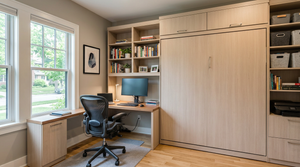
Combining the bed with built-in shelves, wardrobes or a desk creates a multi-purpose guest room, home office or hobby space. Integrating a Murphy bed into your home office setup allows the room to function as both a productive workspace and a comfortable sleeping area, maximizing functionality and aesthetics. The installed complete set ups allow you to:
-
Maintain a professional work environment during the day
-
Convert to comfortable sleeping quarters within minutes
-
Keep the entire room organised with flanking storage
-
Hide the sleeping space when hosting video calls
For small apartments under 60 square metres, granny flats and spare rooms in detached houses, this flexibility transforms how you use valuable living space. Even an entertainment room with incorporated surround sound systems can double as guest accommodation when designed thoughtfully.
Visualising the Transformation
Imagine a flatter room with nothing but a cabinet along one wall. By day, shelves display books and the fold-down desk supports a laptop. The living space feels open and uncluttered. At night, the bed folds down, and suddenly the same space becomes a private bedroom. This versatility explains why space saving ideas like murphy beds remain popular across Australian apartments.
Installation Expectations in Australian Homes
Murphy beds require secure mounting to function properly. Understanding what installation involves helps you prepare and budget appropriately.
The Typical Process
Installation follows a predictable sequence:
-
Delivery of pre-assembled cabinet components
-
Unpacking and positioning against the wall
-
Locating wall studs or suitable structural elements
-
Drilling and securing the frame to the wall
-
Attaching the mechanism and mattress platform
-
Testing operation and making adjustments
-
Final levelling and cleanup
The bed must attach to strong structural elements like timber studs, steel frames or solid masonry. Plasterboard alone cannot support the weight.
Professional Installation
Many buyers opt for experienced trades to handle drilling, stud location and cabinet alignment. Professional installation takes approximately 4 to 8 hours including unpacking, assembly, mounting and testing. Brick, concrete, timber and metal-framed walls each require different techniques and fixings.
Preparing Your Room
Before installation day:
-
Clear at least 3 square metres of floor space
-
Protect skirting boards and floor surfaces
-
Position the installation near power outlets if integrated lighting is included
-
Remove fragile items from surrounding walls
-
Confirm the wall structure with the installer beforehand
Some murphy beds can be disassembled and relocated to another room or property. Take care to protect hardware during moves, and expect some refitting work at the new location.
Typical Costs of Murphy Beds in Australia
Realistic budget expectations help you compare options without surprises. Prices vary significantly based on mechanism sophistication and features.
Price Bands
Common Australian murphy bed price ranges include:
-
Basic manual single frames: Around $1,200
-
Mid-range gas-lift queen beds: $2,500 to $3,500
-
Storage-integrated or desk-combo units: $4,000 or more
What Changes as Prices Rise
Higher-priced models typically offer:
-
Superior piston quality for smoother operation
-
Thicker cabinet materials with better finishes
-
More integrated storage shelves and cupboards
-
Soft-close mechanisms and premium hardware
Additional Costs
Factor in these extras when budgeting:
-
Mattress purchase: $500 to $1,500 depending on type
-
Installation labour: $300 to $600
-
Minor wall patching if the bed is ever moved
-
Power installation for integrated lighting
A simple guest bed project typically runs $2,000 to $3,000 total. A fully fitted home office with queen murphy bed and storage might reach $5,000 to $7,000.
Living with a Murphy Bed: Maintenance, Noise and Longevity
A well-made murphy bed in Australia can provide years of reliable service with only occasional attention.
Basic Care Routines
Maintenance involves:
-
Wiping cabinet surfaces regularly
-
Checking and tightening visible screws annually
-
Inspecting pistons and hinges for wear
-
Lubricating moving joints to prevent squeaks
Handling Minor Issues
If the bed develops stiffness or noise, check alignment first. Pistons may need adjustment, or hinges might require light lubricant. Avoid heavy oils that attract dust; silicone-based products work better for bed mechanics.
Keeping Mechanisms Active
Even in guest rooms used infrequently, open and close the bed fully once a month. This keeps pistons active and prevents seals from stiffening. Regular cycling maintains smooth operation over time.
Expected Lifespan
Quality murphy beds last 10 to 20 years depending on usage. Daily-use models with robust steel components endure heavier wear but remain functional for over a decade. Guest beds used monthly may last even longer with minimal intervention.
The Murphy Bed Market in Australia: Trends and Local Insights
The Murphy bed market in Australia is booming as more people embrace compact living and seek out clever ways to reclaim valuable floor space. With urban apartments and smaller homes on the rise, Australians are turning to space saving beds that do more than just provide a place to sleep. Modern Murphy beds, also known as wall beds, have become a staple in homes where every square metre counts, offering a perfect solution for those who want their living space to serve more than one job.
Today’s best Murphy beds in Australia are designed with both style and practicality in mind. They’re not just about folding away at night—they’re about transforming a studio apartment into a living room by day, or turning a guest room into a home office when needed. This versatility is driving demand, especially in small apartments and studio apartments where traditional beds would dominate the floor area.
The market now offers a wide range of options, from basic fold-down frames to sophisticated space saving beds with integrated storage and sleek cabinetry. Prices typically range from $719 to $2,799 AUD, depending on features and finishes, making Murphy beds accessible for a variety of budgets. As Australians continue to prioritise flexible, multi-functional living spaces, it’s clear that Murphy beds are more than a trend—they’re becoming an essential part of modern home design, helping people make the most of their valuable living space.
Are Murphy Beds Right for Your Australian Home?
Murphy beds suit specific situations exceptionally well. Understanding when they shine helps you decide if one fits your needs.
Who Benefits Most
Modern murphy beds work best for:
-
Apartment dwellers maximising studio spaces
-
Families wanting flexible guest accommodation
-
Remote workers combining sleeping and working in one room
-
Anyone needing queen sleeping space without a dedicated bedroom
Signs a Murphy Bed Suits You
Consider a murphy bed if you:
-
Want a guest bedroom that serves as a home office most days
-
Live in a space under 60 square metres
-
Need the entire room available during daytime hours
-
Prefer not to sacrifice comfort for space
When Traditional Beds Make Sense
A traditional bed might remain simpler in very large homes with plenty of spare rooms or where the bed will literally never fold up. If you have expansive space and no need for room conversion, the added complexity of a wall bed offers little benefit.
Making Your Decision
Start by measuring your space accurately. Think honestly about how often the bed will be used and whether you will actually fold it away. Prioritise mechanism quality for daily sleeping and choose mattress thickness within your frame’s specifications. With the right planning, a murphy bed delivers saving space benefits while maintaining genuine sleeping comfort for years to come.
Wrapping Up: The Future of Murphy Beds in Australia
Looking ahead, the future of Murphy beds in Australia is brighter than ever. As the need for space saving solutions grows, modern Murphy beds are evolving to meet the demands of contemporary living. New designs feature advanced hydraulic lift systems, integrated storage, and finishes that blend seamlessly with existing furniture, making them a stylish and practical addition to any home.
Whether you’re planning a guest bedroom that doubles as a home office or simply want to maximise your living space, Murphy beds offer a perfect solution. Their ability to fold away into a wall or cabinet means you can reclaim valuable floor space without sacrificing comfort or style. The vision of William Lawrence Murphy—to make the bed a piece of furniture rather than the focus of an entire room—has truly come to life in today’s homes and apartments across Australia.
Investing in a Murphy bed is more than just a space saving idea; it’s a way to future-proof your living space, ensuring every room can adapt to your changing needs. As design and technology continue to advance, Murphy beds will remain a smart, flexible choice for anyone looking to make the most of their home. If you’re considering a Murphy bed, you can be confident you’re choosing a solution that brings both function and style to your living space—now and for years to come.
Frequently Asked Questions
Related Articles
-
 Tags:
Wall Beds
Tags:
Wall Beds