1300 760 441
 cs@factoryfast.com.au
Bathroom Accessories Buyer Guide: How to Choose the Right Accessories for a Practical, Coordinated Bathroom
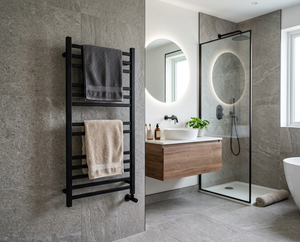

Bathroom accessories are often chosen at the end of a renovation, but their position, size and installation can affect how well the room works every day. A towel rail in the wrong location, a toilet roll holder that conflicts with a door, or a shelf that crowds the shower can turn a finished bathroom into a collection of small frustrations.
The better approach is to treat accessories as part of the bathroom plan rather than decoration added after everything else.
The Factory Fast bathroom accessories range can be used to compare practical fittings for different bathroom zones and design schemes. Before choosing individual pieces, work through what needs to be stored, hung or kept within reach, then match each accessory to the available wall space and the fixtures already selected.
What Bathroom Accessories Do You Actually Need?
Not every bathroom needs the same accessory list. An ensuite used by one or two people has different storage and towel requirements from a family bathroom, while a guest powder room may need only a small number of well-positioned essentials.
Start with function rather than trying to fill every available wall.
Typical bathroom accessories may include:
- Towel rails
- Towel rings
- Robe or towel hooks
- Toilet roll holders
- Bathroom shelves
- Shower shelves or storage
- Soap holders
- Toothbrush or tumbler holders
- Other wall-mounted storage fittings
The useful question is not “Which accessories come in the set?” but “What does someone need to reach from this position?”
That approach prevents unnecessary purchases and helps each accessory earn its place in the room.
Separate Essentials From Optional Accessories
Divide the accessory list into essential and optional items.
A toilet roll holder beside the toilet has an obvious daily purpose. Towel storage close to the shower or bath is similarly important. Additional shelves, hooks and holders depend more heavily on the household and the storage already provided by the vanity.
If the vanity has generous drawers, you may need fewer exposed storage accessories. If the bathroom is compact and cabinetry is limited, wall-mounted storage can become more valuable.
This distinction matters because too many accessories can make a small bathroom feel crowded. Fewer, correctly positioned pieces often produce a more functional result than installing every available fitting.
Plan Bathroom Accessories by Zone
One of the easiest ways to choose bathroom accessories is to divide the room into zones.
Think separately about the vanity, shower, bath, toilet and entry areas. Each zone creates its own practical requirements.
Vanity Zone
The vanity is usually where grooming products, hand towels and frequently used items accumulate.
Before adding wall-mounted holders or shelves, consider what the vanity itself already provides. Drawers and cupboards can keep visual clutter under control, while one or two accessible accessories can handle items that need to remain within reach.
A hand towel should be reachable from the basin without requiring the user to walk across the room with wet hands. Depending on the layout, that might mean a towel ring, short rail or hook beside the vanity.
Also check the relationship between the accessory and the mirror. A large accessory mounted too close to the mirror can make the vanity wall feel compressed.
The bathroom mirrors buyer guide provides additional guidance on mirror proportions and positioning when planning the vanity wall as a complete composition.
Shower Zone
The shower requires a balance between access and clearance.
Shampoo, conditioner, soap and other products need somewhere to go, but storage should not unnecessarily reduce standing space or interfere with the shower outlet.
Consider who uses the shower and how many products are normally stored there. A small guest shower may need minimal storage, while a family bathroom may require more capacity.
Position shelves so products can be reached comfortably without the user having to stand directly under the water or bend awkwardly.
The location should also be considered alongside the shower mixer and outlet. If you are still choosing those fixtures, compare the bath and shower mixers range before fixing accessory positions.
The mixer, shower head, screen and storage should work as one layout rather than being positioned independently.
Bath Zone
Bath accessories depend heavily on the type of bath and the available ledges.
Some baths provide enough rim or surrounding surface for frequently used products. Others benefit from nearby wall storage or hooks.
Towel access is especially important. A person getting out of the bath should ideally be able to reach a towel without crossing the bathroom floor.
If the bath uses a wall-mounted mixer and spout, coordinate accessories with those fittings rather than crowding the same section of wall. The bath spouts range can help you assess the shapes and finishes that will already be present around the bath.
Toilet Zone
The toilet roll holder should be easy to reach from the seated position without forcing the user to twist awkwardly.
This sounds obvious, but it is one of the easiest accessory positions to get wrong when fittings are installed according to empty wall space rather than actual use.
Check for conflicts with doors, vanity drawers, shower screens and other fittings.
If spare toilet paper needs to be stored nearby, decide whether it will live in cabinetry, on a shelf or in a separate holder. Avoid adding wall-mounted storage simply because there is an unused section of wall.
Entry and Dry Zone
Hooks near the bathroom entry can be useful for clothing, robes or additional towels, particularly in family bathrooms.
The dry zone may also provide better positions for towel rails because towels can hang away from direct shower spray.
Check whether the door will cover or strike an accessory when fully opened. Door swings should be marked before drilling begins.
Towel Rail, Towel Ring or Hook?
These accessories perform similar jobs but suit different spaces.
Towel Rails
A towel rail gives a bath towel more room to spread out. This can be useful where wall length allows the towel to hang without bunching.
Before choosing a rail, measure the available horizontal wall space rather than estimating from photographs.
Remember that the towel itself extends beyond and below the fitting. Check nearby switches, cabinetry, doors and other accessories.
A double rail may increase hanging capacity without requiring twice the wall width, but it also projects further into the room. That projection can matter in narrow bathrooms and walkways.
Towel Rings
Towel rings are particularly useful near basins where a hand towel needs to be kept within easy reach.
Their compact footprint can make them easier to place beside a vanity than a full rail.
Shape is also a styling consideration. A rounded ring reinforces curved mirrors, rounded mixers and circular shower fittings, while more angular accessories can complement square fixtures.
Bathroom Hooks
Hooks are among the most space-efficient bathroom accessories.
They can hold towels, robes or clothing and work well behind doors or on narrow sections of wall where a rail would not fit.
The trade-off is that a towel hangs in a more gathered form. If drying and spreading the towel is the priority, a rail may be preferable.
Many bathrooms benefit from using both: rails for primary towels and hooks for robes, clothing or additional towels.
Choose Bathroom Shelves by What They Need to Hold
A bathroom shelf should be selected around the items that will actually sit on it.
Start by looking at the tallest and widest products used in the relevant area. A shelf that looks appropriately proportioned in an empty product image may feel cramped once bottles are placed on it.
Depth matters too. A deeper shelf provides more storage but projects further into the room.
In a shower, excessive projection can reduce usable space. Near a vanity or toilet, it can create an obstacle at shoulder or head height.
Do not estimate dimensions solely from product photography. Check the listed measurements and compare them with the physical space.
Where dimensions or installation requirements are unclear, confirm them before ordering rather than making assumptions based on scale.
Match Accessories to Your Bathroom Fixtures
Accessories are visually smaller than major fixtures, but there may be many of them throughout the room. That repetition means they can strongly influence whether the bathroom looks coordinated.
Use the main fixtures to establish the design language first.
The bathroom fixtures and fittings range provides a useful starting point for considering mixers, spouts and other fittings alongside the accessory selection.
Coordinate Shape
If the bathroom uses a round shower head, rounded mixer controls, curved basin and arched mirror, rounded accessories will usually continue that visual language naturally.
If the room is dominated by rectangular cabinetry, square mixer plates and straight screen lines, angular accessories can create a more consistent result.
You do not need every item to be identical. The aim is repetition rather than exact duplication.
Choose one dominant geometry and let most visible fittings support it.
Coordinate Finish
Chrome and black are common bathroom accessory directions because they can be repeated across several fixture categories.
Chrome has a reflective appearance that often integrates easily with existing bathroom fittings. Black creates stronger contrast and can turn small accessories into more visible design elements.
If choosing black accessories, repeat the finish across enough of the room to make it look deliberate. A black towel rail, mixer, shower fitting and mirror detail can establish a coherent theme more effectively than a single isolated black accessory.
For chrome, compare the surrounding fixtures for differences in surface appearance. Products described with the same broad finish can still vary slightly in reflectivity and tone.
When close matching matters, selecting related product styles can reduce the risk of obvious variation.
Think About Cleaning Before Choosing the Design
Bathroom accessories are handled frequently and sit in an environment exposed to moisture, splashes and bathroom products.
Simple shapes are generally easier to wipe around than highly detailed fittings. Consider how easily you can reach the wall and accessory surfaces during routine cleaning.
Shelves deserve particular attention because product residue can accumulate around bottles and containers.
Avoid overloading bathroom storage. Even a well-designed shelf becomes difficult to clean when every centimetre is occupied.
Finish choice can also affect how visible water marks, dust and residue appear. The best option depends partly on the level of routine maintenance you are comfortable with.
Whatever finish you choose, follow the product's care guidance and avoid assuming that aggressive cleaners are appropriate for every surface.
Measure Before You Buy Bathroom Accessories
Accessories are forgiving compared with large fixtures, but incorrect measurements still cause problems.
Measure wall width, usable height and projection into the room.
Then check what happens around the accessory rather than looking only at the fitting itself.
For a towel rail, allow for the towel.
For a shelf, allow for the objects stored on it.
For a toilet roll holder, consider the roll and the user's reach.
For a hook, consider the length and bulk of the item hanging from it.
Also identify what is behind the finished wall before drilling. Bathrooms can contain concealed plumbing, electrical services and waterproofed surfaces.
Wall construction and fixing requirements should be considered before installation, particularly where an accessory is expected to carry weight.
Decide Accessory Positions Before the Bathroom Is Finished
The best time to plan bathroom accessories is earlier than many renovators expect.
If the bathroom is being rebuilt, identify likely accessory positions while the wall structure is accessible. This allows the builder or installer to consider fixing support where required and helps prevent later conflicts with concealed services.
Take photographs before the walls are closed.
Those photographs can become a useful record of pipework, wiring and structural positions when accessories are installed later.
Final mounting heights can still be adjusted during fit-off, but having a planned zone is much better than searching for spare wall space after every other fixture has been installed.
Avoid Overcrowding a Small Bathroom
Small bathrooms do not necessarily need smaller versions of every accessory. They often need fewer accessories selected more carefully.
Use vertical space where appropriate, and prioritise fittings that solve a genuine storage or access problem.
Hooks can replace long rails where wall width is limited. Vanity storage can reduce the number of wall-mounted holders. A strategically placed shelf can provide useful storage without adding several separate fittings.
Keep circulation paths clear.
An accessory that projects only a short distance from the wall may still be annoying if it sits at hip or shoulder height in a narrow passage.
The same principle applies visually. Leaving some wall area empty can make a compact bathroom feel calmer and allow the main fixtures to stand out.
Plan Accessories Around the People Using the Bathroom
The best accessory arrangement depends on the household.
A family bathroom may need several towel positions and more shower storage. An ensuite may prioritise two dedicated towel spaces and uncluttered surfaces. A guest bathroom should make essentials obvious without requiring visitors to search through cabinetry.
Consider height as well as position.
Accessories intended for children may need to be accessible at a lower level, while a household with different mobility needs may require particularly careful placement.
Do not rely solely on generic mounting heights when individual requirements matter. Test the proposed position physically where possible.
Stand at the basin. Sit at the toilet. Step into the shower area. Reach towards the proposed towel location.
These simple checks can reveal problems that are difficult to notice on a floor plan.
Build a Bathroom Accessory Schedule Before Ordering
Instead of buying accessories individually as the renovation progresses, create a simple room schedule.
Record:
- Accessory type
- Quantity
- Intended location
- Required dimensions
- Finish
- Shape
- Installation method
- Product link
- Any clearance concern
Then compare the complete list with the main bathroom fixtures.
If you have already chosen the mixer, use the Bath and Shower Mixers Buyer Guide from this Week 11 series alongside the bath and shower mixers collection to keep control shape and finish consistent with the accessory schedule.
This process is particularly helpful when several similar bathrooms are being fitted because it reduces forgotten pieces and inconsistent finishes.
Choose Bathroom Accessories in the Right Order
A practical selection sequence makes bathroom accessories much easier to buy.
Start with the people using the room and identify what needs to be stored, hung or kept within reach.
Next, divide the bathroom into functional zones and assign essential accessories to each one.
Measure the available wall areas and check doors, screens, cabinetry and fixture clearances.
Then choose the dominant finish and shape from the major fixtures already selected.
Only after those decisions should you compare individual accessory designs.
Browse the Factory Fast bathroom accessories range with those requirements beside you. Instead of asking whether an accessory looks good on its own, ask whether its dimensions, position, finish and function make sense in the finished bathroom.
The result should be a room where the accessories almost disappear into the routine. Towels are where you expect them, toilet paper is within reach, shower products have a logical home and the fittings look as though they were selected together.
That is what successful bathroom accessory planning achieves.
Frequently Asked Questions
-
 Tags:
Bathroom Accessories
Tags:
Bathroom Accessories