1300 760 441
 cs@factoryfast.com.au
Bathroom Mirrors Buyer Guide: How to Choose the Right Shape, Size and Features


Bathroom mirrors do more than complete a vanity wall. The right mirror can make a compact ensuite feel brighter, help a family bathroom work harder during busy mornings, and give a renovation a more finished look without changing every fixture in the room.
Factory Fast’s range of bathroom mirrors includes frameless designs, LED mirrors, round mirrors, arched mirrors and practical vanity styles, so the best choice depends on your vanity width, wall space, lighting needs and the way the bathroom is used every day.
Start With the Bathroom Decision Tree
Before choosing a mirror by looks alone, work through the practical decisions first.
Vanity width and wall space
A mirror should feel balanced with the vanity below it. For a single vanity, a mirror that sits slightly narrower than the benchtop usually looks neat and intentional. For a wider vanity, a large rectangular mirror can stretch the visual width of the room, while two smaller mirrors can create a more structured double-vanity look.
Measure the available wall height as well as width. Tall arched and rectangular mirrors need enough clearance above the tapware, splashback and power points. If the room has overhead cabinets, wall lights or shelves, allow room around the mirror so the wall does not look crowded.
Daily routine
A bathroom used mainly for quick handwashing does not need the same mirror as a main bathroom used for shaving, skincare and makeup. If clear facial lighting matters, consider an LED bathroom mirror or pair a standard mirror with task lighting from the bathroom lighting range.
For grooming outside the bathroom, the vanity mirrors collection can also support dressing table and makeup areas where storage, close-up visibility and flexible placement may matter more than moisture exposure.
Shape and style
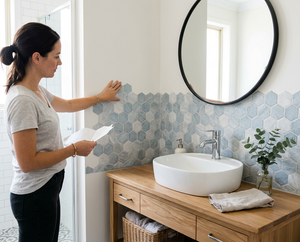
Shape changes how the bathroom feels. Rectangular mirrors suit crisp, practical layouts and sit naturally above most vanities. Round mirrors soften square tiles, angular tapware and boxy cabinetry. Arched mirrors add height and suit bathrooms where the mirror needs to be a feature rather than a quiet background piece.
Compare the Main Bathroom Mirror Shapes
Rectangular mirrors for width and everyday practicality
Rectangular bathroom mirrors are the easiest choice when you want broad visibility across the vanity. They work well over single and double vanities, especially where the wall is wider than it is tall.
A rectangular LED mirror is especially useful in bathrooms with limited natural light. The Smart LED Bathroom Mirror 1000mm x 700mm has edge lighting behind frosted glass, touch control, brightness adjustment and anti-fog technology. It is designed for horizontal installation and must be hardwired, so it suits planned bathroom upgrades where electrical work can be included from the start.
Round mirrors for softer bathrooms
Round mirrors suit bathrooms that need visual relief from straight grout lines, square basins and rectangular cabinets. A round shape can also help a small vanity feel more styled without taking over the wall.
The 70cm Round LED Bathroom Vanity Mirror is a useful example because it combines a 70cm diameter with touch controls, anti-fog clarity and three light temperatures: 3000K warm yellow, 4000K cool white and 6000K daylight. That makes it practical for bathrooms where the same mirror needs to support relaxed evening use and sharper morning grooming.
Arched mirrors for height and feature walls
An arched mirror gives a bathroom a more architectural feel. It draws the eye upward, which can make the vanity wall feel taller and more considered.
The Arched LED Wall Mirror 600mm x 1000mm is a strong fit when vertical wall space is available. Its 600mm x 1000mm format works well where a round mirror would feel too small, while the 43mm depth keeps it relatively slim against the wall. The adjustable 3000K, 4000K and 6000K lighting gives more control over the mood and task visibility.
Decide Whether You Need LED Lighting
An LED bathroom mirror can reduce reliance on ceiling lighting, especially around the face. This is helpful because overhead-only lighting can create shadows under the eyes, nose and chin.
Choose LED if grooming clarity matters
If the bathroom is used for shaving, makeup, skincare or contact lenses, lighting around the mirror is more useful than a single ceiling light behind the user. LED mirror lighting can create a more even reflection, provided the mirror is the right size and the surrounding room light is not too dim.
Check colour temperature flexibility
Different colour temperatures suit different routines. Warm 3000K light feels softer for evenings. Around 4000K is practical for daily bathroom use. Cooler 6000K light sharpens detail, which can help with grooming but may feel too bright as the only light source.
A mirror with selectable light temperatures is more flexible for shared bathrooms because users can adjust the lighting to suit the task.
Understand installation before buying
Some LED mirrors plug in, while others must be hardwired. A hardwired mirror can look cleaner because there is no visible cord, but it needs planning before wall finishes are completed. Always check the product page carefully and factor installation into the renovation timeline.
Anti-Fog, Touch Controls and Other Features
Anti-fog clarity
Anti-fog technology is useful in bathrooms where hot showers quickly cloud the mirror. It is especially valuable in ensuites and family bathrooms where the mirror is needed immediately after showering.
Touch controls
Touch controls keep the mirror face cleaner than switches positioned nearby and make it easier to turn lighting on or adjust brightness. This feature is most useful when the mirror is part of the daily grooming routine rather than purely decorative.
Materials and finish
Factory Fast’s bathroom mirror range includes mirror-grade glass, LED strips, silver and frosted finishes, and a mix of framed or frameless looks depending on the product. Match the mirror finish to nearby tapware, towel rails and handles so the bathroom feels planned rather than pieced together.
Common Bathroom Mirror Buying Mistakes
Choosing style before size
A beautiful mirror can still look wrong if it is too small for the vanity or too tall for the wall. Measure first, then choose the shape.
Forgetting how the bathroom is lit
A mirror reflects the light available in the room. If the bathroom is dim, a plain mirror may not solve the problem. Pair it with better task lighting or choose an LED design.
Ignoring installation requirements
Hardwired mirrors and large wall-mounted mirrors need more planning than a simple hanging mirror. Check weight, cable length, mounting hardware and wall structure before ordering.
Picking a feature mirror for a cluttered wall
Arched, round and LED mirrors work best when there is breathing room around them. If your vanity wall already has shelving, wall lights or a tall cabinet, a simple rectangular mirror may be the cleaner choice.
How to Choose the Best Bathroom Mirror for Your Home
For a compact ensuite, choose a mirror that adds light without overwhelming the vanity. Round and oval mirrors can soften the space, while a slim LED mirror can improve task visibility.
For a main bathroom, prioritise width, anti-fog performance and lighting flexibility. A rectangular or arched LED design can support multiple users and make the room feel more finished.
For a renovation, plan the mirror at the same time as the tapware, lighting and storage. This helps you decide whether to choose a simple wall mirror, an illuminated model or a larger feature piece from Factory Fast’s bathroom mirror range.
A good bathroom mirror should make the room easier to use every day. When the shape fits the vanity, the lighting suits the routine and the installation is planned properly, the mirror becomes one of the most useful fixtures in the bathroom.
Frequently Asked Questions
Related Articles
-
 Tags:
Bathroom Mirrors
Tags:
Bathroom Mirrors