1300 760 441
 cs@factoryfast.com.au
Rain vs Handheld vs Combination Shower Heads: Which Type Fits Your Bathroom?


Rain, handheld and combination shower heads do not simply create three different looks. They change where the water lands, how easily the user can direct it, how the shower is cleaned and how well one setup serves people with different routines. The best option is the one whose water footprint and controls fit the enclosure, not necessarily the largest or most feature-rich model.
The Factory Fast shower heads collection includes fixed rainfall heads and dual sets that pair an overhead head with a handheld spray. This comparison focuses on the decision the product image cannot make for you: whether broad coverage, targeted control or a combination of both will be most useful in your bathroom.
The Quick Difference Between the Three Types
A rain shower head is fixed above or in front of the user and spreads water across a broad face. It suits people who want even coverage and a visually simple shower. Head size, mounting arm and angle determine where that coverage falls.
A handheld shower head connects to a flexible hose and lifts from a bracket or rail. It directs water precisely, which is useful for rinsing hair, washing the enclosure and serving users of different heights. Its daily value depends on hose reach and bracket position.
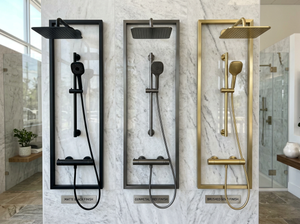
A combination shower head set includes both an overhead and handheld outlet. It offers the widest range of use, but also brings more components into the layout: hose, diverter, rail or bracket and an additional head. Combination does not automatically mean both outlets operate at once; check the product description for how the controls direct water.
Compare Coverage, Control and Cleaning Reach
The main choice can be reduced to three questions: how do you want the water to feel, how often do you need to direct it, and who cleans the shower?
Rain Shower Heads: Broad and Visually Quiet
A rain head distributes water across a wide surface. The result can feel even and enveloping, but a larger face spreads the available flow over more nozzles. People who prefer a concentrated spray should not assume that the biggest head will feel strongest.
The 20 cm round stainless steel rain shower head is a compact fixed option with a polished chrome finish and a standard shower connection listed on the product page. Its 20 cm diameter can suit a shower where a 30 cm head would dominate the space or place the outer spray too close to the entry.
A fixed head has fewer visible components than a dual set. That simplicity suits a guest bathroom, an adult ensuite or a renovation where the existing shower arm is well positioned. Its limitation is reach: the user and the enclosure must come to the spray because the spray cannot be carried to them.
Handheld Shower Heads: Targeted and Adaptable
A handheld head places control in the user’s hand. It is useful for rinsing long hair, directing water away from the face, cleaning screen edges and washing areas below the fixed spray line. It can also serve a wider range of user heights when the bracket or rail position is planned well.
The hose is a working dimension. It needs to reach the parts of the enclosure you expect to rinse without dragging across a sharp edge or pooling awkwardly on the floor. A handheld mounted too high may be difficult to remove; one mounted too low can feel inconvenient as the default shower position. Test the bracket height for the shortest and tallest regular users.
A handheld-only arrangement can make sense where targeted spray is valued more than overhead coverage. Many shoppers, however, encounter the handheld as the second outlet in a combination system, which preserves a fixed shower experience while adding reach.
Combination Shower Heads: Flexible but More Complex
A combination set suits households whose routines conflict. One user can prefer an overhead shower while another relies on a detachable spray. The handheld also turns cleaning from a bucket-and-cloth task into a direct rinse, provided the hose reaches every important corner.
The black square combination shower set pairs a 25 x 25 cm stainless steel overhead head with a three-function handheld head and a 1.5 m stainless steel hose. Its brass main body and black finish make it a visually prominent system rather than a quiet replacement.
That flexibility comes with planning. The diverter must be easy to understand, the hose needs a clear hanging path, and the handheld should return to its bracket without colliding with a shelf or screen. A dual set earns the extra visual and installation complexity when both outlets solve real needs.
Match the Water Footprint to the Shower Layout
Shower head size should be judged against the usable wet area, not the overall bathroom. Mark the centre of the outlet and consider the spread relative to the drain, screen and entry.
Compact Enclosed Showers
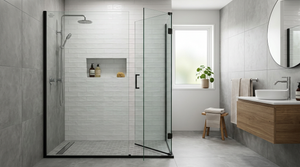
In a narrow enclosure, a compact rain head or handheld can keep the spray away from the door gap and nearby dry floor. A large overhead head may physically fit but distribute water too close to the screen edges. Check how far the arm projects and whether its angle can place the water over the standing zone.
A combination set can still work if its rail and hose fit on a wall that does not interfere with the door. The handheld is especially useful for cleaning tight corners, but only when the hose can move freely.
Walk-In Showers
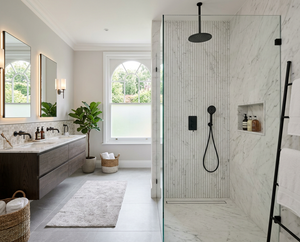
A walk-in layout needs the head and screen to work as a pair. Broad rainfall coverage feels appropriate in a generous wet zone, yet poor positioning can send splash towards the open entry. Compare the proposed head location with the shower panels range and the panel depth you intend to use.
Place the overhead spray well inside the protected area. If the entry remains close to the water footprint, a more focused head or adjustable angle may be a better practical choice than maximum diameter.
Shower-Over-Bath Layouts
A handheld head adds useful reach for rinsing the bath and directing water while seated or standing. Hose management is critical because the hose should not rest in an awkward loop across the bath edge.
A combination system can provide overhead coverage for showers and targeted use for bathing, but its mounting positions must respect any folding or swinging bath screen.
Understand Head Size, Spray Feel and Existing Flow
Words such as rainfall and high pressure describe an intended experience, but head geometry and the home’s existing supply shape what the user actually feels. A large plate distributes water through many nozzles. A smaller or more focused outlet concentrates the spray into a narrower area.
The 30 cm round brass rain shower head offers wide coverage, a brass ball joint for angle adjustment and individual rubber nozzles intended to make buildup easier to manage. Its size suits a roomier enclosure where the full 30 cm footprint remains inside the wet zone.
Do not purchase a larger head as a cure for disappointing flow. Review the existing shower performance, product flow information and plumbing condition before choosing. If several outlets are involved, ask how the system directs water between them. A diverter that sends flow to one head at a time creates a different experience from a setup designed for another operating pattern.
Spray functions matter most on handheld heads because they can change how targeted water feels. A multi-function handset adds choice, but the control should be easy to operate with wet hands. If the household will use one mode almost all the time, reliable reach and bracket placement may be more valuable than a long function list.
Check Mounting, Hose and Mixer Compatibility
A replacement fixed head may connect to an existing arm, while a complete dual set can involve a rail, bracket, hose, diverter and separate control considerations. Identify whether you are buying only the head, a set without a mixer, or a package that includes a mixer. Product titles can look similar even when the inclusions differ.
The chrome square combination shower set lists a 20 x 20 cm overhead head and a 1.5 m hose. That gives a practical reference for checking coverage and reach, but the product page must still be reviewed for the exact package configuration before ordering.
If a new control is part of the project, compare bath and shower mixers at the same time. The mixer finish, handle geometry and outlet control should form one system with the head. A shower set sold without a mixer expects the buyer to provide a compatible control arrangement; a set with a mixer changes the scope.
For a simple head replacement, the earlier shower heads buyer guide provides a wider overview of mounting, finish and replacement checks. For a renovation, give the installer the exact product links before wall and outlet positions are finalised.
Compare Materials, Shapes and Finishes
Material affects the structure of the head or body, while finish determines how it relates to the room. Read both fields rather than treating colour as a substitute for construction detail.
Stainless steel is used for several overhead plates and hoses in the range. Brass appears in head bodies, ball joints and the main bodies of selected sets. ABS plastic may be used for handheld components, where lower weight can make the handset easier to manoeuvre. A mixed-material set is not automatically inconsistent; each part has a different job.
Round rain heads soften straight tile lines and pair naturally with rounded mixers and handles. Square heads create a stronger architectural look beside rectangular niches and straight screen channels. Choose shape from the fittings that will remain in the room, not from the shower head in isolation.
Chrome blends easily into many existing bathrooms and is useful for a partial replacement. Black makes the entire shower assembly more visible, particularly when the rail, hose and head share the finish. Repeat black at the mixer, screen channel or accessories so the set feels integrated.
Clean every finish with methods suitable for the product surface, avoiding harsh or abrasive treatment unless the care guidance specifically permits it.
Choose by Use Case
For an adult ensuite with a well-positioned arm, a rain head offers a clean look and broad daily coverage. Choose 20 cm when the enclosure is compact or the head needs to stay visually restrained. Consider 30 cm where the shower is wider and the entire spray footprint remains protected by the screen.
For a family bathroom, a combination shower usually provides the strongest practical range. The overhead head handles ordinary showering, while the handset supports children, hair rinsing and enclosure cleaning. Confirm hose length and bracket reach for the actual users.
For a guest bathroom, simplicity has value. A fixed head with an intuitive mixer avoids extra controls that visitors need to interpret. If the room doubles as a bath area, handheld flexibility may outweigh that simplicity.
For a shower that is difficult to clean, a handheld can be worth choosing even if the preferred daily spray is overhead. Make sure the hose reaches the corners, screen edges and lower wall before treating it as a cleaning solution.
Avoid the Most Common Shower Head Buying Mistakes
The first mistake is choosing the largest rain head without plotting where the outer spray will land. Physical fit is not the same as usable coverage.
The second is assuming that a combination set includes every control needed for the planned installation. Read the inclusions and confirm the mixer or diverter arrangement.
Another mistake is ignoring the hose path. A 1.5 m hose may provide useful reach, but its bracket position determines what it can reach and how it hangs. Plan the resting loop away from the screen door, niche contents and bath edge.
Do not mix shape and finish casually. A square black head can dominate a room of rounded chrome fixtures. Contrast can be intentional, but it should be repeated. Also avoid treating a product photograph as evidence of scale; use the stated 20 cm, 25 cm or 30 cm dimensions and mark them in the actual enclosure.
Make the Final Rain, Handheld or Combination Choice
Choose rain when broad fixed coverage, visual simplicity and a stable standing position matter most. Choose handheld when targeted control, variable user height or cleaning reach is the priority. Choose combination when the household genuinely benefits from both and the wall has room for the hose, bracket and controls.
Shortlist the relevant options in the shower heads collection, then compare the exact head dimensions, materials, hose length, included controls, finish and mounting arrangement. Share the final pages with the installer before ordering.
For one last reality check, cut a 20 cm, 25 cm or 30 cm paper shape to match the proposed overhead head and tape it at the planned position. View it from the entry, then mark the standing point and screen edge below. That quick mock-up turns an abstract diameter into a visible water footprint before the plumbing position becomes permanent.
Frequently Asked Questions
-
 Tags:
Shower Heads
Tags:
Shower Heads