1300 760 441
 cs@factoryfast.com.au
Pilates Reformers Explained: Home Use vs Studio-Grade Features and What to Check Before Buying
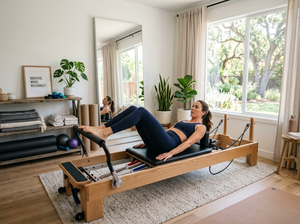

A Pilates reformer is a bigger decision than a mat, roller or balance board because it changes the room it lives in. Before comparing prices, buyers need to know whether they want a compact home machine for regular guided sessions or a higher-feature reformer that feels closer to a dedicated studio setup.
Factory Fast’s Pilates reformer machine range includes foldable options with different capacities, materials and feature sets. The right choice depends on space, user fit, resistance needs, storage, carriage comfort and how often the reformer will be used.
What makes a Pilates reformer different from mat Pilates
Mat Pilates relies mostly on bodyweight, floor contact and controlled movement. A reformer adds a moving carriage, springs, straps and a frame, which changes the way resistance and support are delivered. This can make the workout more varied, but it also means the equipment has to suit the user’s body, space and routine.
A home buyer should think of the reformer as a training station, not a small accessory. It needs enough clearance, a storage plan and a realistic idea of how the machine will fit into weekly exercise.
Home use vs studio-grade features
What home users usually need
For home use, the most important features are foldability, manageable dimensions, a comfortable carriage height, smooth movement and resistance options that match the user’s current level. A home reformer does not need every advanced feature to be useful. It needs to be easy enough to use often.
The confirmed live foldable Pilates reformer with aluminium rail is a compact example. It has steel/aluminium construction, integrated wheels, an aluminium sliding rail, a carriage positioned 45 cm from the floor, a listed 135 kg weight capacity and a user-height guidance of about 147-173 cm for basic exercises. It was priced at $311.97 at the time of checking.
What studio-style buyers look for
A more studio-style home reformer should offer broader adjustability, a larger working platform and accessories that expand exercise choice. The confirmed live folding aluminium Pilates reformer bed includes six springs, seven adjustable angles, a standing platform extender, padded jumpboard, handrails, foot strap, double-loop straps and a faux leather cover. It has a 100 x 60 cm slide platform, overall dimensions of 65 x 239 x 82 cm and a listed maximum user weight of 150 kg. Its checked price was $1,349.95.
This kind of feature set suits buyers who want more exercise variation and have the room to keep a larger machine usable.
Plan the space before choosing the model
Measure the footprint
The reformer’s listed size is only the starting point. You need space to approach it, move around it and use straps or accessories without hitting nearby furniture. A model measuring 65 x 239 x 82 cm needs a different room plan from a compact foldable option.
If the reformer will be used in a bedroom, shared living area or garage gym, mark the footprint on the floor first. This quickly shows whether the machine can stay set up or needs to be folded after each session.
Decide whether folding matters
Folding is valuable when the room has multiple jobs. A foldable design with wheels can make storage easier, but it still requires a place to stand or move the machine when not in use. If you have a dedicated home gym space, folding may matter less than carriage comfort, resistance range and accessory options.
Check resistance and adjustability
Resistance springs are a major buying factor because they shape how the machine progresses with the user. A six-spring setup with heavy, medium and light spring options gives more ways to tailor intensity than a simpler resistance format. Seven adjustable angles can also expand movement range for different exercises.
For beginners, the aim should be controlled progression. For experienced users, adjustability helps avoid outgrowing the machine too quickly. When comparing reformers, look for resistance variety, carriage stability, strap comfort and foot support.
Match the reformer to the user
User height and carriage height
User fit matters. A reformer with a listed user-height range should be checked before purchase, especially when the household has multiple users. The compact foldable model’s stated range converts to about 147-173 cm for basic exercises. Its 45 cm carriage height may also be useful for buyers who prefer not to work too close to the floor.
User weight capacity
Capacity should be checked against the intended user, with room for comfortable movement. Factory Fast’s confirmed reformer examples list 135 kg and 150 kg capacities depending on the model. That difference can be important when more than one person will use the machine.
Build the reformer setup around the actual routine
A reformer does not remove the need for simple supporting equipment. Many users still benefit from floor-based stretching, mat work and recovery accessories. Browse yoga and Pilates equipment if the reformer will be part of a broader home practice, and consider yoga and Pilates mats for floor preparation or accessory work.
If the goal is a fuller home routine, a reformer can sit alongside compact tools such as foam rollers and balance boards. The reformer becomes the main station, while smaller accessories handle warm-up, mobility and short add-on drills.
Common Pilates reformer buying mistakes
Buying for the dream routine instead of the real routine
A larger, more adjustable reformer is useful only if you have the space and intent to use those features. If your routine will be two short sessions a week in a shared room, compact storage may matter more than accessory count.
Ignoring delivery and placement
Reformers are not small parcels. Check where the product will be unpacked, how it will move through the home and whether help is needed to position it. This is especially important for heavier, larger equipment.
Comparing price without comparing specs
A lower price can make sense for a simple home setup. A higher price may be justified when it adds resistance range, platform size, user capacity and more exercise variety. Compare what the specs actually change in day-to-day use.
Which Pilates reformer should you buy?
Choose a compact foldable reformer if you want a practical entry point for home use, need easier storage and have a narrower user-fit requirement. Choose a higher-feature folding aluminium reformer if you want more resistance options, accessory variety, a larger carriage platform and a more complete home training station.
Before buying, open the Pilates reformer machine collection and compare capacity, dimensions and resistance details side by side. The best reformer is the one that can stay accessible enough to become a habit, because a machine folded behind three other objects will never feel as valuable as the one ready for your next session.
Frequently Asked Questions
-
 Tags:
Pilates Reformer Machine
Tags:
Pilates Reformer Machine