1300 760 441
 cs@factoryfast.com.au
Kitchen Sinks Buyer Guide: Single Bowl vs Double Bowl vs Workstation Sinks

A kitchen sink looks simple until you start comparing bowl layout, cabinet space, mounting style, tap reach and cleaning habits. The right choice is not just the one that fits the benchtop. It is the one that makes washing, rinsing, food prep and everyday cleanup easier in the space you actually have.
Factory Fast’s range of kitchen sinks includes stainless steel, black, undermount, topmount and workstation options, so the useful starting point is not colour. It is workflow. Do you need one generous bowl, separated washing zones, or a ledged workstation that turns the sink into extra prep space?
The Kitchen Sink Decision Tree
Start with four choices: bowl format, mounting style, material finish and accessory support.
A single bowl suits buyers who want one open space for trays, pots and larger washing jobs. A double bowl suits households that separate soaking from rinsing or food prep from cleanup. A workstation sink suits cooks who want accessories such as a cutting board, colander or drying rack to sit across the sink rather than taking up benchtop space.
Next, match the sink to the cabinet. A wider sink needs enough base cabinet clearance, and deep bowls need comfortable reach below the benchtop. Then check tap position, splashback clearance and whether the tap spout can reach the practical centre of the bowl.
Single Bowl Kitchen Sinks: Best for Open Washing Space
A single bowl kitchen sink is usually the easiest format to live with in compact kitchens, apartments and laundry-kitchen hybrid spaces. Without a divider, the bowl can handle larger pots, oven trays and chopping boards more comfortably.
The 700 x 500mm stainless steel sink is a practical example of this logic. It is listed with a 700 x 500 x 250mm sink size, 650 x 400 x 250mm bowl, 1.5mm stainless steel construction, 65L capacity, tap hole, waste and five sound pads. It can be installed as either undermount or topmount, which gives renovators more flexibility when matching existing benchtops.
Choose this style when you want straightforward washing capacity and a clean, flexible layout. It is especially useful where bench space is limited and a divided bowl would make each side too small.
Double Bowl Kitchen Sinks: Best for Separated Tasks
A double bowl kitchen sink makes sense when you often do two tasks at once. One side can hold soaking dishes while the other remains free for rinsing vegetables, draining pasta or washing hands during food prep.
The tradeoff is bowl size. In the same overall benchtop width, two bowls usually mean each bowl is smaller than a single-bowl alternative. That can become frustrating if your household regularly cleans large cookware. Before choosing double bowl, check the internal bowl dimensions rather than relying on the overall sink width.
Double bowl sinks suit busy kitchens where separation matters more than one large uninterrupted basin. They are less ideal when your main frustration is fitting large items into the sink.
Workstation Sinks: Best for Bench-Saving Prep
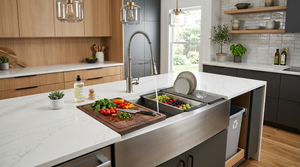
A workstation sink is built around ledges that support accessories across the bowl. This changes how the sink behaves. Instead of moving between bench, chopping board, colander and drying rack, you can keep more of the task over the sink.
The 812 x 482mm workstation kitchen sink shows why this format is useful. It has an 812 x 482mm exterior, 775 x 406 x 254mm interior, 16 gauge T-304 stainless steel, a nano-coated black brushed finish, a 90mm drain opening, a 430 x 300mm hardwood cutting board, stainless steel colander, foldable dish drying rack, strainer, cutout template and mounting clips. It also lists a minimum 914mm base cabinet size and 889mm minimum cabinet length.
That cabinet requirement is the key buying detail. Workstation sinks can be excellent in larger kitchens, but they need the right base width. If the cabinet is too tight, the smarter choice may be a simpler stainless steel sink with a separate chopping board or drainer.
Undermount vs Topmount: The Installation Choice
Undermount kitchen sinks sit below the benchtop for a cleaner edge and easier wipe-down from bench to bowl. They suit stone-style benchtops and modern kitchens where the sink should visually recede.
Topmount sinks are installed from above and have a visible rim. They are often more forgiving in replacement projects because the rim can cover the cut-out edge. If you are upgrading an existing kitchen, topmount compatibility may save more planning trouble than chasing a cleaner look.
Some Factory Fast sinks support both undermount and topmount installation, which is valuable when the final benchtop decision is still being made.
Match the Sink to the Tap Before You Buy
A sink and tap should be chosen together. Deep bowls pair well with taller mixers, but too much height or reach can create splash if the water lands near the front wall of the bowl. A pull-out mixer can help with rinsing deep corners, especially in large single bowl and workstation designs.
When comparing kitchen taps, check mixer height, spout reach, finish and whether the sink has the right tap-hole arrangement. A black sink can look cohesive with a black tap, while stainless steel often pairs naturally with chrome or brushed finishes.
Material and Finish Tradeoffs
Stainless steel is the practical all-rounder because it suits frequent washing, food prep and mixed kitchen styles. Brushed finishes can soften marks from everyday use, while black finishes create a stronger design statement and can coordinate well with dark tapware or appliances.
The important decision is not only appearance. Look at steel thickness, bowl depth, sound padding, accessories and drain opening details. A thicker, deeper sink can feel more substantial during daily use, but it also needs enough cabinet and under-bench space.
Planning the Sink Zone as a Whole
The sink should sit within a working zone that includes tapware, lighting, wall protection and landing space beside the bowl. If you are refreshing more than the sink, review kitchen fixtures and fittings together rather than choosing each item in isolation.
A new sink can also change what happens behind it. If the wall is marked, hard to clean or visually dated, pairing the sink upgrade with kitchen splashbacks can make the entire wet zone easier to maintain.
Common Kitchen Sink Buying Mistakes
The first mistake is choosing the largest sink that fits the benchtop while forgetting the cabinet underneath. The second is choosing a double bowl when each side becomes too small for the cookware you actually use. The third is buying a tap separately and discovering the spout reach does not suit the bowl.
The more useful approach is to sketch the sequence: rinse, chop, wash, drain, wipe down. If the sink format supports that sequence without forcing extra movement across the kitchen, it is probably the right format.
Final Buying Thought
Before adding a sink to cart, place a chopping board, a large pot and your everyday dish rack on the bench where the sink zone will sit. That quick physical check will tell you whether you need one open bowl, two separated bowls or a workstation ledge system more honestly than a product photo can.
Frequently Asked Questions
Related Articles
-
 Tags:
Kitchen Sinks
Tags:
Kitchen Sinks