1300 760 441
 cs@factoryfast.com.au
Balance and Wobble Boards Buyer Guide: How to Choose the Right Board for Core, Coordination and Home Training
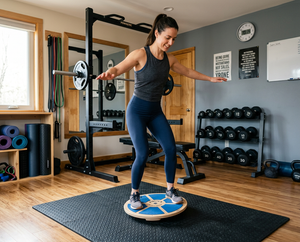

Balance boards are not all trying to do the same job. Some are compact fitness tools for short standing drills; others are larger curved boards that can move between exercise, stretching and active play. That difference matters because the wrong board can feel either too limited or too demanding for the way it will actually be used.
Factory Fast’s balance and wobble boards are best compared by movement style, material, size, storage and user fit. Once those details are clear, the buying decision becomes much easier.
What balance and wobble boards are designed to do
A balance board introduces controlled instability. As the platform moves, the user adjusts through the feet, legs and core to stay steady. This can make simple standing drills, bodyweight movements and Pilates-style exercises feel more engaging without adding large equipment.
The key is choosing the right level of challenge. A round wobble board tilts in multiple directions and suits compact fitness sessions. A curved wooden board creates a larger rocking surface and can support balance play, stretching and broader movement variety. Both can be useful, but they suit different buyers.
Compact wobble board vs wooden balance board
Compact wobble board for Pilates and short fitness sessions
A compact wobble board suits buyers who want a quick balance challenge without dedicating much floor space. The confirmed live Pilates fitness wobble balance board is a plastic round board designed for Pilates, home fitness, gym sessions and sports training. It measures approximately 41 cm across and 8-10 cm high, with a package weight of 1.1 kg and a checked price of $11.21.
This style is best for short drills, standing balance work and adding variety to a mat-based routine. It is easy to bring out, use for a few minutes and store away.
Wooden curved board for family and multi-use movement
A curved wooden balance board suits buyers who want a broader platform with more use cases. The confirmed live wooden wobble balance board measures 92 x 29.5 x 1.5 cm, has a 100 kg maximum weight capacity, a smooth finish and is listed for children aged 3 and up. At the time of checking, it was priced at $58.46.
This board can work as a balance tool, stretching aid and active-play piece. Its larger footprint means it needs more storage room, but it offers more variety than a small circular platform.
Match the board to the user
For Pilates users
Pilates users usually benefit from controlled, repeatable challenge. A compact wobble board can sit beside a mat and be used for selected standing or core-focused exercises. It works best when the user wants to move between floor work and balance drills without resetting the whole space.
For home gym users
A home gym buyer should think about where the board sits in the wider setup. If the space already includes strength equipment, the board can add coordination work between heavier sessions. Browse sports and fitness equipment if the board is part of a broader home gym plan rather than a standalone Pilates accessory.
For families
A wooden balance board can suit households where the product may be used by different ages for movement and play. Capacity, finish and size matter here. A smooth wooden surface and larger curved format can make the board more versatile, but adult use should still stay within the listed weight capacity.
The decision tree before you buy
Start with the main user. If the board is for one adult doing compact fitness sessions, choose a small wobble board. If the product needs to serve children, stretching and creative movement as well, consider a curved wooden board.
Next, consider the available floor area. A 41 cm round board is easier to store in a small apartment or shared living area. A 92 cm curved board needs more room to use comfortably and a better storage plan.
Then look at material. Plastic is practical and light for repeated fitness use. Wood gives a different feel, a larger surface and a more furniture-like presence, but it is not as compact.
Finally, check the user limit and intended age range where listed. A board used by adults should have capacity information clearly available, while children’s use should match the product’s listed age guidance.
How to build a useful balance setup
A balance board works best with a stable floor area and enough clear space around the user. It should not be squeezed between furniture or used where the user cannot step off cleanly. Pair it with yoga and Pilates equipment if you want a setup that supports stretching, mat work and balance drills in the same session.
If floor comfort is part of the problem, add a suitable mat from the yoga and Pilates mats range. The mat supports floor exercises around the board, while the board adds a specific instability challenge.
Common mistakes with balance boards
Choosing the most difficult option first
More movement is not automatically better. Beginners often get more use from a manageable board they can repeat confidently than from a tool that feels too unstable.
Ignoring storage
A board that is easy to store is more likely to be used. Compact boards can slide into smaller spaces, while curved wooden boards need a more deliberate home.
Buying without checking capacity
Capacity matters whenever adults will use the board. The wooden model has a listed maximum weight capacity of 100 kg, which should be checked against the intended user before purchase.
Which board should you choose?
Choose a compact wobble board if your priority is Pilates variety, core engagement, light storage and short home sessions. Choose a curved wooden balance board if you want a larger multi-use platform for active movement, stretching and family use.
The most useful purchase is the board that will be used consistently. If your current routine already includes floor work, start with the product that can sit closest to that routine rather than buying the option with the longest possible use list.
 Tags:
Tags: