1300 760 441
 cs@factoryfast.com.au
How to Choose a Kitchen Tap for Sink Size, Finish and Daily Use
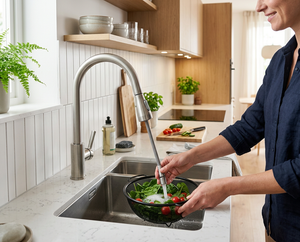

A kitchen tap needs to do more than match the sink. It controls how comfortably you rinse cookware, fill tall vessels, wash vegetables and clean the corners of the bowl. A tap that looks right but has the wrong height, reach or spray function can make a new sink feel less practical than the one it replaced.
Factory Fast’s kitchen taps include mixer styles in finishes such as black and chrome, including pull-out designs for added reach. The best choice starts with the sink below it, then moves to clearance, finish and daily tasks.
The Kitchen Tap Decision Tree
Work through five decisions before choosing a kitchen tap: mixer type, spout height, spout reach, finish and water efficiency.
A standard mixer suits simple daily washing and gives one-handle temperature control. A pull-out kitchen tap suits deeper sinks, larger bowls and households that want flexible rinsing. A taller mixer gives more clearance under the spout, but only if the sink depth and surrounding splash zone can handle the water path.
Finish comes next. Chrome is versatile and easy to coordinate with stainless steel sinks. Black tapware creates stronger contrast and works well when repeated through cabinet handles, sink finish or other fixtures.
Start with Sink Compatibility
The tap should match the sink’s hole layout and bowl position. If you are choosing from kitchen sinks, check whether the sink includes a tap hole and where that hole sits. A centre-positioned tap may suit a single bowl, while a wider sink may need a spout that reaches comfortably across the practical washing area.
For replacement projects, measure the existing tap hole and surrounding clearance before buying. Also check the space behind the sink. A mixer handle that hits a wall, window ledge or splashback becomes annoying quickly.
Mixer Height: Why Clearance Matters
Mixer height affects what you can place under the tap. A taller kitchen mixer makes it easier to fill stock pots, rinse large bowls and move items around the sink. It also needs enough surrounding space so water does not splash beyond the bowl.
Factory Fast’s pull-out mixer examples list a 663mm mixer height, 196mm reach from body to spout and 165mm spout height from base. Those measurements matter because they tell you how the tap will sit above the sink, not just how it looks in isolation.
If your sink is shallow, a tall mixer may feel excessive. If your sink is deep or wide, a compact tap may make rinsing awkward.
Pull-Out Kitchen Taps: When They Are Worth It
A pull-out kitchen tap is useful when the sink is deep, the bowl is wide or the household washes large cookware often. The flexible head lets you direct water into corners and over awkward items without dragging them around the bowl.
The black pull-out kitchen mixer includes a handheld pull-out head, spray button, solid brass body, zinc handle, ceramic cartridge, two 700mm stainless steel water inlet hoses, pull-out hose, mounting bolt, O-ring washer and horseshoe washer. Its listed nominal flow rate is 5.5L/min with a 5-star water efficiency rating.
Choose pull-out if you value control and flexibility. Choose a simpler mixer if your sink is compact and your main need is straightforward hand washing and dish rinsing.
Black vs Chrome Kitchen Taps
A black kitchen tap can sharpen a modern kitchen, especially when paired with black sinks, dark cabinet hardware or a strong splashback contrast. It is a design-led choice, so it works best when the finish appears elsewhere in the room.
A chrome tap is more neutral. The chrome pull-out kitchen mixer offers the same core pull-out format in a finish that coordinates easily with stainless steel sinks and many cabinet styles. Chrome can be the safer option when you are updating one fixture rather than renovating the whole kitchen.
If you are also replacing wall protection, compare finishes beside kitchen splashbacks. A glossy black splashback and black tap can feel intentional, while a white splashback can make chrome or black stand out in different ways.
Ceramic Cartridges and Everyday Control
A ceramic cartridge helps the mixer handle operate smoothly when adjusting temperature and flow. This detail matters because the kitchen tap is used repeatedly throughout the day. A comfortable handle and predictable movement reduce the little frustrations that show up after installation.
Also check the included fittings. Product pages may list water inlet hose length, washers and mounting hardware. These inclusions help you understand what arrives in the box, although installation should still be planned around your actual plumbing setup.
Water Efficiency Without Losing Practicality
Water efficiency matters, but the tap still needs enough practical flow for rinsing dishes and filling vessels. The pull-out mixer examples listed by Factory Fast show a 5-star water efficiency rating and 5.5L/min nominal flow rate. For a buyer, that means the tap is designed to balance controlled use with everyday kitchen function.
Do not choose on rating alone. Pair that information with spout reach, spray mode and sink size so the tap works in the real kitchen, not just on the label.
Planning Tapware Within a Kitchen Refresh
If you are replacing more than one item, browse kitchen fixtures and fittings as a whole. A tap, sink, splashback, cabinet handle and lighting choice all sit in the same sightline, so clashing finishes can make a good product look accidental.
For an efficient upgrade, decide the anchor finish first. That might be stainless steel, black, white or chrome. Then use the tap to repeat or contrast that finish with purpose.
Common Kitchen Tap Buying Mistakes
The most common mistake is choosing a tap by finish before checking height and reach. The second is assuming every tap suits every sink. The third is forgetting rear clearance behind the mixer handle.
Before buying, mark the spout position over the bowl and imagine rinsing a tray, filling a tall pot and cleaning the sink corners. If any of those tasks feel awkward on paper, they will likely feel worse after installation.
Final Buying Thought
Take one measurement from the back of the sink hole to the wall or splashback, then compare it with the mixer handle movement shown on the product page or installation details. That small clearance check can prevent the most irritating kind of tap mistake: a beautiful mixer that cannot move comfortably in the space.
Frequently Asked Questions
-
 Tags:
Kitchen Taps
Tags:
Kitchen Taps