1300 760 441
 cs@factoryfast.com.au
Dip Bars and Stations Buyer Guide: Parallel Bars, Parallettes or Power Towers?
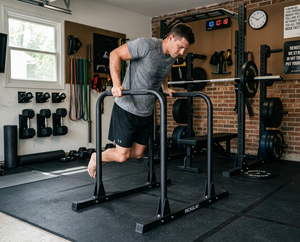

Dip bars reward buyers who think about movement before equipment. A compact parallette pair, a mid-height parallel bar and a full power tower can all support dips, but they suit different bodies, rooms and training goals. Factory Fast’s dip bars and stations range is useful because it lets shoppers compare simple portable bars against larger stations without jumping straight to the biggest option.
Use This Decision Framework First
Choose Parallel Dip Bars for Classic Dips
Parallel dip bars are the most direct choice if your goal is chest, shoulder, triceps and core work using bodyweight resistance. The Chin Dip Parallel Bar Push Up Dipping Equipment is listed with an 80-90 cm height range, 37 cm base bars, 60 cm gripped bar length and 150 kg weight capacity. That mid-height format gives you more depth than low parallettes while staying easier to move than a full tower.
Choose Parallettes for Floor-Based Control
Parallettes sit lower and suit push-ups, L-sits, tuck work, balance drills and controlled dip variations. They are often better for compact spaces because each bar can be moved independently. The Steel Parallette Bars for Push-Ups, Dips and Calisthenics come as a pair with powder-coated heavy-duty steel, 56 x 30 x 30 cm handle dimensions and a 10 cm grip circumference.
For shoppers who want a larger low-profile option, the Heavy Duty Parallette Bars are listed at 98 x 82 x 36 cm with sturdy steel tubing, foam, rubberised feet, 9.5 kg product weight and a 150 kg capacity.
Choose a Power Tower for Multi-Movement Training
A power tower takes more vertical room, but it can combine dips, chin-ups, pull-ups and push-ups in one station. The Power Tower Chin Up Dip Pull Push Up Machine has a 150 kg weight rating and assembled dimensions of 117 x 71 x 208 cm. It suits shoppers who are building a broader gym stations zone rather than adding one small accessory.
Match the Height to the Exercise
Height changes the way dip equipment feels. Low parallettes are excellent for push-up depth, core holds and beginner-controlled positions, but they may not allow the same full-body drop as taller bars. Mid-height dip bars are better for classic dips because they give your legs more room. Power towers are best when you want vertical movements as well as dips.
For Australian homes with shared living areas, a lower or mobile setup may get used more often because it can be stored quickly. For garages and dedicated gym rooms, a larger station can make sense because it stays ready between sessions.
Check Capacity, Grip and Base Design
For dip bars and stations, load rating is only one part of the decision. You also want enough base width to reduce wobble, comfortable grips for repeated sets and a height that allows clean movement. Foam grips can make short home sessions more comfortable, while powder-coated steel gives a sturdy feel for regular bodyweight training.
Floor contact matters too. Rubberised feet are useful when training on garage floors, tiles or hard surfaces, especially if the equipment will be moved between sessions. If you are comparing dip equipment with push up bars and stations, look closely at grip height and footprint rather than assuming both categories do the same job.
Build a Bodyweight Setup That Can Grow
A dip station can be the centre of a compact upper-body setup. Pair mid-height dip bars with a doorway or wall-mounted option from pull up bars and stations and you cover pressing, pulling, holds and knee raise variations without needing a full weights area.
If your goal is progression, think about the sequence: start with assisted or shallow dips, build stable top holds, then increase depth and tempo. The equipment should support that path. A buyer who only wants triceps dips beside a bench does not need the same station as someone planning strict dips, leg raises and pull-up work.
Avoid These Common Dip Bar Mistakes
Do not buy the tallest station unless you have measured ceiling height and room around the base. Do not buy low parallettes expecting them to feel like full dip bars. Do not ignore grip width; bars that feel too wide or too narrow can make clean repetitions harder. Do not choose a lightweight-looking option unless the stated capacity, material and base design match the user.
Before buying, put two strips of tape on the floor where your hands would sit and step through the top and bottom position of a dip. If your knees, shoulders or furniture fight the movement before equipment is there, the issue is not motivation; it is the wrong format.
Frequently Asked Questions
-
 Tags:
Dip Bars and Stations
Tags:
Dip Bars and Stations