1300 760 441
 cs@factoryfast.com.au
Bedside Tables and Nightstands Buyer Guide: Size, Height, Storage and Style
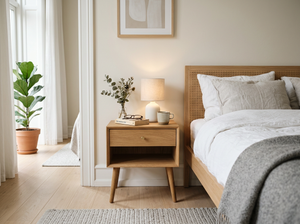

A bedside table earns its place through small actions repeated every day: reaching for a lamp, putting down a glass, charging a phone or storing something you would rather not leave on display. The wrong table makes those actions awkward. It may sit too low, crowd the bed, block a drawer or provide nowhere sensible for cables and personal items.
Choosing from Factory Fast’s range of bedside tables and nightstands becomes easier when you work through the decisions in the right order. Measure the available space and mattress height first, decide what must be stored, allow for lighting and cables, and only then compare materials and finishes.
Start With the Bed, Not the Bedside Table
The bed determines the useful height and position of a nightstand. A design that looks proportional beside a low platform frame may be inconvenient next to a tall mattress and upholstered base.
Measure to the top of the mattress
Measure vertically from the floor to the top surface of the mattress with the bed fully assembled. Do not measure only the frame, because the mattress adds the height that affects your reach.
As a practical guide, the tabletop should sit close to the mattress top. Factory Fast’s collection guidance places many standard Australian bed setups within a bedside-table height range of approximately 55 to 65 cm, but the actual mattress-top measurement is more reliable than choosing from a general range. Aim to keep the surface within about 5 cm of the mattress height where possible.
A slightly higher table can be useful when you want to see and reach items without leaning over the edge of the bed. A substantially lower design may suit a low-profile frame, but it can feel inconvenient beside a deeper mattress.
Check the complete bed-frame footprint
Measure the frame at its widest point, including an upholstered bedhead, projecting legs or side rails. A bedside cabinet aligned with the mattress may still collide with a wider frame component near the floor.
If the bed has underbed drawers, mark their full opening path. The nightstand should not prevent a drawer from extending or force you to move furniture whenever you need stored bedding. Gas-lift storage does not require side clearance for a drawer, but the position of the table should still leave comfortable access around the frame.
Measure usable floor space
Record the width from the edge of the bed to the nearest wall, wardrobe, doorway or other furniture. Then subtract the clearance needed to walk past and use nearby doors or drawers.
Depth matters as much as width. A deep bedside cabinet can project into a narrow walkway even when it technically fits between the bed and wall. Use the product’s complete width and depth rather than relying on labels such as compact or narrow.
Choose the Right Width and Depth for the Room
A bedside table should provide enough surface and storage without making the bed area feel squeezed. The best dimensions depend on room circulation, bed size and what must remain on the tabletop.
Compact tables for restricted spaces
A small bedside table is usually the better choice beside a single bed, in a guest room or where a wardrobe leaves limited clearance. Narrow designs also work when the table is primarily needed for a phone, glasses and a compact lamp.
For example, Factory Fast’s white bedside table with a drawer and open shelves measures 36 × 30 × 45 cm. Its footprint is modest, while one drawer and two shelves divide personal items, books and chargers into separate storage areas. The 45 cm height makes it most appropriate for a lower bed setup, so compare that measurement with the mattress before buying.
A narrow top requires more deliberate planning. Measure the base of the intended lamp and leave usable space for anything placed beside it. A table may fit the floor perfectly but still be too small for the items expected to sit on it.
Wider options beside larger beds
Queen and king beds can visually carry wider nightstands, particularly in a main bedroom with generous space on both sides. Additional width can accommodate a larger lamp, reading material and everyday essentials without creating a crowded surface.
Proportion is useful, but it should not override circulation. A wide cabinet that looks balanced with the bed is still the wrong choice if it narrows the walking path or prevents a wardrobe door from opening. Function should set the maximum size; visual balance can guide the final choice within that limit.
Depth and reach
A deep tabletop adds capacity, but items placed at the back may be difficult to reach while lying down. It may also encourage clutter to accumulate behind a lamp.
Consider where you naturally reach from your normal sleeping position. Place frequently used objects towards the bed side of the surface, and reserve the rear area for a lamp or decorative item that does not need constant handling. This simple layout test can reveal whether a shallower nightstand would be more practical.
Match the Storage Layout to Your Bedtime Routine
Storage should reflect what you genuinely keep beside the bed. Buying the maximum number of drawers is not automatically the best answer; it can add bulk without improving how the space works.
Open shelves for visible, frequent-use items
Open shelving suits books, an alarm clock, a charging station or a small basket. It makes frequently used belongings easy to see and reach, which is helpful in a guest room where visitors should not need to search through drawers.
The trade-off is visibility. Cables, loose items and stacked books remain part of the room’s appearance. If you prefer a calm, uncluttered bedroom, use an open shelf for one defined purpose rather than treating it as general storage.
Drawers for smaller personal belongings
A bedside table with drawers keeps glasses, chargers, medication and other personal effects contained. One drawer is often enough when the table also has an open shelf. Multiple drawers are more useful when the bedroom lacks nearby wardrobe or dresser storage.
Check how the drawers open. Pull handles need room for your hand, while recessed or air-gap handles keep the front profile simple. Also make sure an open door, bed frame or wall corner will not obstruct the drawer path.
Mixed storage for everyday flexibility
A combination of enclosed and open storage gives each type of item a natural home. Keep the objects you use every night in the accessible section and reserve the drawer for smaller pieces that would otherwise make the tabletop untidy.
This layout is particularly practical in compact Australian bedrooms because it provides organisation without requiring a broad cabinet. The important question is not how many compartments the table offers, but whether each compartment has a planned job.
Minimal tables for low-storage rooms
A simple bedroom side table may be enough when storage already exists within reach. An open design can make a tight room feel less crowded because more of the wall and floor remain visible.
Minimal designs demand better surface discipline. If chargers, books and personal items routinely gather beside the bed, choosing a table without a drawer may simply transfer the clutter to the tabletop.
Compare Materials, Construction and Finishes
Materials affect weight, appearance, maintenance and how easily a table can be repositioned. Product descriptions should be checked carefully because a timber-look finish does not necessarily mean the entire unit is solid timber.
Bamboo and mixed-material construction
Bamboo introduces natural grain and warmth without requiring a visually heavy design. It can coordinate with timber bedheads, neutral bedding and metal frames, making it flexible in contemporary bedrooms.
The dark wood bamboo bedside table combines bamboo and MDF, measures 25 × 30 × 40 cm and weighs 1.75 kg. Its narrow width is useful where floor space is the main constraint, while the drawer and open shelf separate smaller belongings from a book or other regularly used item.
At 40 cm high, this example is intended for a low sleep surface rather than a tall ensemble. Its narrow top also calls for a small lamp or a wall-mounted lighting solution.
Engineered board furniture
Particle board and MDF can provide practical shapes, smooth finishes and compact storage at an accessible price. Look beyond the material label to the board thickness, surface finish, edge treatment and drawer hardware.
The linked white option uses 12 mm particle board with a paper finish and coated metal drawer slides. Those details help explain how the table is constructed and maintained. No surface load rating is stated on the reviewed page, so buyers should not assume it can support unusually heavy equipment.
Wood and timber-look finishes
Wooden tones can soften the appearance of a metal bed frame and coordinate with other natural textures. White, dark wood and neutral finishes are adaptable choices, but an exact furniture match is not essential.
Instead of trying to make every piece identical, repeat one or two visual cues. A bedside table might share the bed frame’s clean lines, echo the wardrobe’s timber tone or connect with the colour of a lamp base. This creates cohesion without turning the bedroom into a rigid matching set.
Plan the Tabletop Around Lighting and Cables
A bedside table is often bought before the lamp, yet the lamp can occupy most of its useful surface. Plan the two items together.
Measure the lamp base
Record the lamp base width and depth, then compare those dimensions with the tabletop. Leave enough room for a phone, glasses or water without placing them against the edge.
A tall, narrow lamp can preserve more usable surface than one with a wide base. Where the table must be exceptionally slim, the broader bedroom lighting range may provide alternatives such as compact, cordless or wall-positioned options.
Locate the power point
Check whether a power point sits behind the proposed table, beside it or on the other side of the bed. The furniture should not crush plugs or force charging cables across a walkway.
If the table has an open back, cables may pass through easily. A fully enclosed cabinet may require them to run around the side. Map the route before ordering and include the plug depth when calculating how close the table can sit to the wall.
Define a safe surface zone
Keep water separate from charging devices and powered lighting. A coaster or tray can give drinks a defined position, while cables can be routed along the rear edge.
Also check whether the chosen surface is straightforward to wipe. Bedside spills are easier to manage when the finish and daily care requirements suit the way the table will be used.
Decide Whether You Need One Table or a Pair
A pair creates symmetry and gives both sleepers their own storage and lighting. It is usually the practical choice for a shared queen or king bed when the room has sufficient width.
Matching tables are not compulsory. Different storage needs may justify different configurations on each side, provided the heights and overall visual weight remain compatible. One sleeper might need a drawer and reading lamp, while the other only requires a narrow surface for a phone and glasses.
A single nightstand can be the right answer when one side of the bed sits near a wall, the room has an offset doorway or only one person needs bedside storage. Do not force a pair into a layout that compromises access. The empty side can remain clear or use a lighting solution that does not occupy floor space.
When furnishing the room more broadly, compare the finish and scale with the available bedroom furniture. The aim is a coordinated arrangement in which drawers open properly and each piece retains a clear purpose.
Check Assembly and Placement Before Ordering
Bedside furniture is smaller than a bed frame or wardrobe, but assembly and positioning still deserve attention.
Confirm the assembled dimensions
Use assembled product measurements for the floor plan. Packaging dimensions do not show how much space the finished item occupies, while listing images can make a table appear larger or smaller than it is.
Mark the width and depth on the floor with removable tape. Open nearby wardrobe doors, walk through the space and sit on the bed. This quick test shows whether the proposed footprint interferes with the room in normal use.
Review the assembly requirements
Check whether assembly is required and whether the necessary fittings and instructions are included. Assemble the unit on a clean surface with enough room to identify panels and hardware before moving it beside the bed.
After assembly, make sure the unit sits level and the drawers move without catching. Follow the product instructions for placement and any included stability provisions. Do not substitute unsupported fixing methods or assume that the requirements are identical between different models.
Consider future changes
A nightstand chosen for one bed may be used beside another later. If flexibility matters, prioritise a manageable footprint, a broadly compatible finish and storage that works in more than one room.
Compact designs can also serve as side tables or study storage, but that versatility should be treated as an extra benefit. The first test remains whether the height, reach and capacity work beside the current mattress.
Avoid These Common Bedside Table Buying Mistakes
Choosing by appearance alone is the most common route to disappointment. A good-looking table can still be too low, too deep or poorly configured for the intended routine.
Do not estimate the available gap by eye. Measure at floor and mattress level because bed frames, skirting boards and wall fittings can change the usable width. Check both sides separately when buying a pair; bedrooms are not always symmetrical.
Avoid assuming that more drawers always mean better storage. Deep cabinets can overwhelm a compact room, while several small drawers may not fit books or larger items. List what needs to be stored and assign each item to a drawer, shelf or tabletop before selecting the layout.
Finally, do not forget the lamp and cable route. A tabletop that looks generous when empty can become impractical once lighting occupies it. Measure the lamp base, identify the power point and decide where charging devices will sit before committing to the furniture.
For the final check, place a temporary box with the proposed table dimensions beside the bed for one evening. Reaching for a phone, lamp and glass from your normal sleeping position will reveal height or depth problems that a floor plan cannot show.
 Tags:
Tags: