1300 760 441
 cs@factoryfast.com.au
Bed Frame Sizing Guide: Australian Mattress Sizes and Room Fit Explained
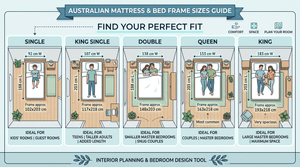

A bed described as “queen” or “king single” tells you which mattress category it accepts. It does not tell you how much floor space the assembled frame will occupy. Headboards, side rails, upholstered edges, posts and storage mechanisms can all make the finished footprint larger than the mattress itself.
That difference is responsible for many expensive sizing mistakes. A mattress may match the label on the frame while the complete bed blocks a wardrobe, crowds the bedside tables or leaves too little space to walk comfortably through the room.
Before choosing from Factory Fast’s range of bed frames, work through three measurements: the mattress dimensions, the assembled frame dimensions and the usable space in the bedroom. This guide explains how those measurements relate across the main Australian bed sizes.
Understand the Difference Between Mattress Size and Frame Footprint
Mattress dimensions describe the sleeping surface. Frame dimensions describe the entire assembled structure supporting it.
A simple metal platform may extend only slightly beyond the mattress. An upholstered design can add several centimetres around each side, while a substantial bedhead may increase the overall length. Four-poster designs add height, and storage beds may need extra operating space beside or above the base.
This means the correct buying sequence is:
- Confirm the exact width, length and depth of the mattress you own or intend to buy.
- Check that the selected frame explicitly accepts those mattress dimensions.
- Find the frame’s complete assembled width, length and height.
- Add the operating space required for drawers, hinged storage or access around the bed.
- Test that total footprint against doors, wardrobes, windows, power points and walking routes.
- Confirm the packaged components can reach the intended room.
Do not rely on the size name alone. Dimensions can vary slightly between products, particularly when comparing an existing mattress with a newly listed frame.
Australian Mattress and Bed Frame Sizes Explained
The measurements below are common Australian mattress dimensions. Treat them as a starting point rather than a substitute for the specifications of the mattress and frame being paired.
Single: Approximately 92 x 188 cm
A single mattress is generally about 92 cm wide and 188 cm long. It suits children’s rooms, compact guest bedrooms and solo sleepers who need to preserve floor space.
A single is the easiest mainstream size to fit beside a desk, chest of drawers or play area. Its limitation is length. Taller teenagers and adults may find a king single more comfortable because it adds both width and length without moving to a double.
When measuring single bed frames, check whether the stated dimensions refer to the mattress area or the complete structure. A headboard, footboard or wide side rails can make a visually compact model longer or wider than expected.
King Single: Approximately 107 x 203 cm
A king single mattress is commonly about 107 cm wide and 203 cm long. Compared with a single, it provides another 15 cm of width and 15 cm of length. That makes it useful for growing teenagers, taller solo adults and guest rooms intended for regular use.
It is not simply a wider single. Its added length means a room that comfortably accepts a standard single may still need to be remeasured before upgrading.
The verified king single metal bed frame measures 107 x 203 x 30 cm. Its powder-coated steel structure is designed for a mattress of the same width and length, showing how a streamlined base can keep the footprint close to the sleeping surface.
Browse king single bed frames when one person needs more room but a double would consume too much usable floor area.
Double: Approximately 138 x 188 cm
A double mattress is generally about 138 cm wide and 188 cm long. It adds substantial width over a king single but retains the shorter length associated with a standard single.
This size can work well for a solo adult who likes more sleeping room, a teenager’s long-term setup or a compact guest room. It can accommodate two people, although each sleeper receives less personal width than on a queen.
The key comparison is not simply double versus queen. Consider whether width or length matters more. A double is about 15 cm narrower and 15 cm shorter than a typical queen mattress. That saving may preserve access to a wardrobe or allow properly positioned bedside furniture.
Queen: Approximately 153 x 203 cm
A queen mattress is commonly about 153 cm wide and 203 cm long. It is a practical option for two sleepers because it provides the longer 203 cm sleeping surface without requiring the width of a king.
The dimensions of individual products still require attention. The verified queen metal bed frame with a raised platform has assembled dimensions of 201 x 151 x 45.7 cm and specifies compatibility with a 200 x 150 cm mattress. Its nine support legs and elevated structure create usable storage space underneath.
That example demonstrates why buyers should compare numbers rather than assume every queen product uses identical measurements. If you already own a 153 x 203 cm mattress, verify the frame’s stated mattress compatibility before ordering. Explore the broader range of queen bed frames only after recording the dimensions of the mattress being retained.
King: Approximately 183 x 203 cm
A king mattress is commonly about 183 cm wide and 203 cm long. It offers the same typical length as a queen while adding around 30 cm of width.
That extra sleeping room can be valuable for couples who prefer more personal space. It also has a significant effect on the bedroom layout. Once side rails and a bedhead are included, the full bed can occupy close to 2 m in both directions.
A king works best when the room can accept the bed, two practical access paths and the other furniture required for daily use. Choosing it solely because the mattress fits between two walls can result in a bedroom that feels difficult to use.
Measure the Bedroom as a Usable Space
Wall-to-wall measurements are only the beginning. A bed needs to coexist with the moving parts and daily functions of the room.
Record Fixed Obstacles
Measure the available floor area at the height where the frame will sit. Include skirting boards, heater projections, columns and other features that reduce the true footprint.
Mark the swing of the bedroom door and any hinged wardrobe doors. Sliding wardrobes need less opening space, but drawers inside them may still require clearance. Also note low windows or power points that could be hidden by a bedhead.
Plan Practical Movement Around the Bed
Aim for about 60 cm of clear passage along frequently used sides where the room permits. More room can make bedding changes and access to drawers easier. A bed placed against one wall may be workable for a solo sleeper, but it is less convenient when two people need separate access.
Do not distribute the remaining clearance evenly without considering how the room is used. A wider path on the wardrobe side may be more valuable than equal gaps on both sides.
Include Other Bedroom Furniture
Measure bedside tables, tallboys, desks, chairs and freestanding wardrobes rather than estimating their sizes. Check drawer and door movement as well as the furniture body.
A larger bed can sometimes remove the space needed for two bedside units. In that situation, compare the practical value of more mattress width with the loss of accessible storage and surfaces.
Match the Frame Style to the Available Footprint
Two frames accepting the same mattress can require noticeably different amounts of space.
Streamlined Metal and Platform Frames
Metal and simple platform bases often keep their external dimensions close to the mattress area. They suit compact bedrooms, rentals and guest spaces where ease of assembly or underbed access matters.
Frame height also affects how the room works. A raised platform can create storage underneath, while a lower design may produce a less visually dominant profile. Check the usable clearance beneath the slats rather than relying only on the total frame height.
Upholstered Frames
Padding and fabric can add width around the mattress and depth at the head of the bed. This extra structure may be worthwhile when a soft bedhead is important, but it must be included in the floor plan.
Also compare mattress depth with the height of the side rails and bedhead. A particularly deep mattress can cover more of the upholstered headboard than expected or create a higher finished sleeping surface.
Storage Frames
Drawer bases need clear lateral space for the drawers to open. Positioning one side against a wall can make part of the storage unusable. Bedside tables may also obstruct drawers located near the head of the frame.
Lift-up storage avoids side drawer clearance but needs unobstructed room above the mattress platform. The frame specifications should clarify how the mechanism operates and where access is provided.
Four-Poster and Statement Frames
A four-poster bed introduces vertical dimensions as well as floor measurements. Check ceiling height, overhead fittings and the location of wall-mounted fixtures.
The posts can also define the outer corners more strongly than a low-profile base, making tight passages feel narrower even when the measured clearance is technically unchanged.
Check Mattress and Frame Compatibility Beyond the Size Label
Width and length are the first compatibility checks, but they are not the only ones.
Compare the Exact Sleeping Area
A mattress that is too wide or long can bow, overhang or fail to sit correctly inside the rails. One that is too small may move within the frame or leave an unwanted gap.
Measure the actual mattress rather than relying on an old invoice or label. Soft-sided mattresses can be difficult to measure accurately, so take dimensions across the widest points without compressing the edges.
Check the Support Configuration
Review whether the frame uses metal slats, timber slats, a platform or an ensemble-style base. Then check the support requirements provided for the mattress.
Do not assume an existing mattress will work with every frame of the same nominal size. The mattress and base should be assessed as a system, particularly when changing from an ensemble to a slatted platform.
Factory Fast’s mattress collection includes different constructions and depths, so compatibility should be checked against the individual mattress specifications.
Calculate the Finished Bed Height
Add the mattress depth to the height of the surface on which it will sit. Do not add the mattress depth to the frame’s total height if that measurement already includes a tall headboard.
Finished height affects how easily a person can get in and out of bed, how much of the bedhead remains visible and whether nearby windows or wall fixtures are obstructed. It also determines whether underbed containers can pass beneath the side rails.
Measure the Route Into the Bedroom
A frame that fits the room still needs to reach it. Record doorway widths, stair turns, hallway corners and low overhead points between the entrance and the bedroom.
Flat-packed construction can make larger frames easier to move through restricted areas. Even so, check the carton or component dimensions where they are supplied. A long side rail may be harder to manoeuvre than several shorter sections.
Plan to assemble the bed in its intended position when moving the completed structure would be difficult. Leave enough temporary floor area to lay out components and identify fixings before tightening the frame.
For apartments and upper-level rooms, examine the full delivery route rather than measuring only the final doorway. The narrowest turn often determines whether a long component can pass through.
Avoid Common Bed Frame Sizing Mistakes
Buying the Frame Before Measuring the Mattress
This is particularly risky when reusing an older mattress. Measure it first and compare the result with the product’s stated compatibility.
Treating Mattress Dimensions as Assembled Dimensions
The complete frame may be wider or longer because of upholstery, posts, rails or a bedhead. Use the assembled product dimensions for the bedroom plan.
Ignoring Wardrobe and Drawer Operation
A bed can fit within the room but prevent storage from opening properly. Mark the full movement of doors and drawers before choosing a size.
Measuring Only at Floor Level
Skirting boards, window ledges and wall-mounted features can interfere with side rails or bedheads. Measure where each part of the bed will actually sit.
Assuming International Size Names Are Interchangeable
A size label used elsewhere may refer to different mattress dimensions. Check every measurement in centimetres and confirm that the product is intended for the mattress you own.
Forgetting the Bedhead Depth
A thick bedhead pushes the mattress further into the room. This can affect the walkway at the foot of the bed even when its width is acceptable.
Choosing Storage That Cannot Be Accessed
Underbed drawers have little value if a wall or bedside table blocks them. Plan access to the storage mechanism as part of the total footprint.
Choose the Size Around the Sleeper and the Room
For a child’s room, a single preserves the most floor space. A king single can offer a longer-term option for a growing teenager if the extra 15 cm in width and length does not compromise study or storage areas.
In a guest room, choose according to the visitors the room is expected to accommodate and how often it is used. A double gives one person more room and can occasionally accommodate two, while a queen is generally more practical for couples when the bedroom footprint allows.
For a main bedroom, compare the queen and king layouts with all furniture in place. A king provides additional shared width, but a queen may create a more functional room when wardrobe access, bedside storage or movement is tight.
Where underbed storage is a priority, frame height and storage access can matter as much as mattress size. A slightly smaller raised frame may serve the household better than a larger low base that requires another cabinet elsewhere in the room.
Complete a Final Measurement Check Before Ordering
Write down the following dimensions before opening a product page:
- Actual mattress width, length and depth
- Maximum available frame width and length
- Preferred access space on each side
- Door and wardrobe opening areas
- Bedside furniture dimensions
- Required underbed storage height
- Maximum acceptable finished bed height
- Narrowest point on the delivery route
Compare those figures with the individual product specifications, including assembled dimensions, mattress compatibility, frame height and storage operation. Where a measurement is missing or appears inconsistent, confirm it before checkout rather than estimating.
As a final test, mark the complete external frame footprint on the floor with removable tape and leave it in place while using the room. Open the wardrobe, walk the usual route and pull out every nearby drawer. That short trial often reveals whether the proposed bed size will work in daily life before a large frame occupies the space.
Frequently Asked Questions
-
 Tags:
Mattress
Tags:
Mattress