1300 760 441
 cs@factoryfast.com.au
Kids Basketball Hoops Buyer Guide: Match Height, Hoop Type and Setup to Your Child
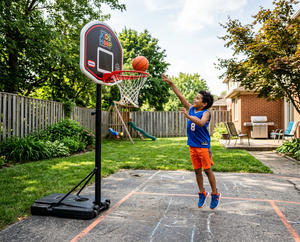

A basketball hoop that is too high can make every shot feel impossible. One that is too small or lightweight may stop being interesting once a child develops better control. The right choice creates an achievable target now while leaving enough room for skills, confidence and playing habits to grow.
That makes choosing between kids basketball hoops more than a question of age. You also need to consider where the hoop will be used, whether it must move or store easily, how high it can be adjusted and what type of play your child actually enjoys.
This guide follows those real use cases, helping Australian families compare arcade, mini, portable and wall-mounted options without buying more equipment than their space or child needs.
Start With the Way Your Child Will Play
The best basketball hoop for kids is the one that suits the activity they will return to regularly. A young child taking short-range shots in a playroom has different needs from an older child practising from marked positions on a driveway.
Casual indoor play
For short games inside, look for a compact hoop that works with a lightweight ball. The smaller target and shorter shooting distance suit bedrooms, playrooms and games areas where a regular basketball would be too large.
A door-mounted design preserves floor space and can often be moved between rooms. An arcade frame occupies more room, but its ball-return area helps children take repeated shots without chasing the ball after every attempt.
Check the ceiling height, door movement and nearby furniture before choosing either style. A product may fit against the wall yet still need clear space in front for the player, the ball and rebounds.
Backyard or driveway practice
Children who want to practise different shots will generally get more value from a freestanding or fixed outdoor setup. A freestanding base gives families flexibility when the playing area is shared with cars, outdoor furniture or other activities. A fixed ring provides a more permanent target without placing a base in the court area.
The ground matters as much as the hoop. A relatively level paved area supports more predictable bouncing and more stable placement. Grass may be useful for casual shooting but is less suitable when a child wants to practise dribbling, changes of direction or consistent footwork.
Shared use between siblings
An adjustable kids basketball hoop is usually the strongest fit when children of different heights or abilities will share the equipment. The adjustment mechanism should cover the heights they can use now, not merely a future maximum.
Also consider how quickly the height changes. If an adult must partly dismantle the pole each time, the hoop may remain at one compromise setting. A straightforward telescoping system makes it more practical to lower the ring for a younger child and raise it for an older player.
Choose a Hoop Type That Fits the Space
Kids basketball hoops fall into four useful groups: arcade games, compact mounted hoops, portable freestanding systems and fixed wall-mounted rings. Each solves a different space problem.
Arcade basketball games
An arcade basketball game suits younger children who enjoy rapid, repeated shooting and turn-taking. The frame defines the playing position, while a mesh collection area keeps the balls near the shooter. This creates a simple activity without requiring dribbling space or a large outdoor surface.
The basketball arcade game for children aged 5 to 10 measures 95 × 49 × 138 cm and includes two approximately 15 cm balls, a pump and a mesh basket. Its 21 cm hoop and child-sized proportions make it an indoor game rather than a pathway to full-size court equipment.
This format is well suited to playrooms and friendly shooting competitions. It is less appropriate for a child who wants to practise movement, longer shots or regular-size ball control.
Door-mounted and indoor mini hoops
An indoor mini basketball hoop works where permanent floor space is unavailable. The backboard sits over a suitable door or attaches to a suitable wall, allowing the room to return to normal when play finishes.
The indoor mini basketball hoop set has a 45 × 4 × 30 cm polycarbonate backboard and a 21.5 cm spring-action steel rim. It includes a mini ball and pump, making it a compact option for short shooting games.
Before buying, check the door thickness, clearance above the door, bracket fit and whether the door can remain closed during use. Foam-padded brackets help protect the contact area, but families should still inspect the door finish and hardware regularly.
Portable freestanding systems
A portable basketball hoop for children provides more room for skill development. It can support close shots initially and greater shooting distance as confidence improves. A fillable base allows the unit to be repositioned when the play area is needed for something else.
The tradeoff is footprint. You need room for the base as well as the player, and the unit must be moved according to its product instructions. Measure gates, paths and storage openings if the hoop will be rolled or carried between locations.
Wall-mounted rings
A wall-mounted basketball ring removes the freestanding base from the playing area. It can suit garages, courtyards and backyards where floor space is limited but an appropriate mounting surface is available.
The installation position determines the playing experience, so it requires more planning than a portable system. Check the wall material, the intended ring height, the available run-up space and any doors or windows nearby. Installation should follow the supplied product directions and suit the mounting surface.
Match the Height to Ability, Not Just Age
Age ranges provide a starting point, but they should not become the only selection rule. Children of the same age can differ significantly in height, coordination and previous playing experience.
Factory Fast’s collection guidance suggests approximately 120–150 cm for children aged 3–5, 180–210 cm for ages 6–8 and 240–260 cm for ages 9–11. Treat these as broad reference points. The useful setting is one that lets the child develop a repeatable shooting motion without throwing the ball from the shoulder or chest simply to reach the ring.
Begin where good technique is possible
A suitable starting height allows the player to face the target, bend through the legs and guide the ball upwards with control. If every attempt falls short despite reasonable effort, lower the target or reduce the shooting distance.
An easy first setting is not wasted. Regular successful shots help children connect their body position with the result. You can then raise the hoop gradually as their strength and accuracy improve.
Check the complete adjustment range
Do not assume that “adjustable” means a hoop will suit every stage of childhood. Compare the stated minimum and maximum heights with the intended users.
The height-adjustable portable basketball set measures 74 × 56 cm at its base and adjusts from 160 to 215 cm high. Its 43.5 cm ring, steel tubing, polyethylene backboard and weather-resistant nylon net suit children progressing beyond mini indoor play, but the upper limit should still be checked against the buyer’s future expectations.
Increase difficulty one variable at a time
When the current setting becomes easy, either raise the ring or increase the shooting distance. Changing both at once can make progress difficult to judge.
For siblings, consider marking preferred pole positions once the adjustment range has been tested. This reduces guesswork and gives each child a repeatable practice setup.
Compare Portability, Mounting and Storage
A hoop may stay in place for months or need to disappear after every session. That distinction should guide the buying decision before backboard appearance or colour.
When portable is the practical choice
Choose a portable base when the household needs to reclaim the driveway, move play into shade or store the hoop during periods of non-use. A movable system also gives renters more flexibility because it does not depend on permanent wall installation.
Portability does not mean effortless movement in every condition. A base designed for stability becomes much heavier once filled. Plan where it will be emptied, refilled and stored, and ensure an adult can manage the intended routine.
When fixed mounting makes sense
A fixed hoop suits a dedicated playing position with a suitable mounting surface. The 45 cm wall-mounted basketball ring and net uses powder-coated metal and includes mounting screws, a net and a ball pump.
Because the product is a ring rather than a complete freestanding system, the wall and installation height become part of the setup. Buyers should confirm that the supplied components are appropriate for the intended surface and arrange suitable installation where needed.
Plan storage before assembly
Arcade frames, mini hoops and portable systems solve different storage problems. A 3.3 kg child-sized arcade unit may be easier for an adult to relocate than a filled outdoor base, but its 95 cm length still needs a clear storage area. A door-mounted set uses little floor space yet requires a suitable place for the ball and pump.
If storage is limited, measure the available cupboard, garage or wall area rather than relying on descriptions such as compact or portable.
Assess the Backboard, Ring, Base and Included Equipment
A product specification becomes useful when you connect it to the way the hoop will be used. Focus on the components that influence rebound behaviour, stability, weather exposure and setup effort.
Backboard size and material
A larger backboard gives children a broader target for bank shots. Compact polycarbonate or polyethylene boards are practical for mini and youth systems because they are relatively light and suited to their intended formats.
Do not compare backboard dimensions without considering shooting distance. A 45 cm-wide indoor board can work well across a bedroom, while the same target may feel small from farther down a driveway.
Ring and ball compatibility
Mini hoops require smaller, lighter balls. A full-size ring gives older children a more familiar target, but it also needs an appropriate ball and enough room for missed shots.
Check what the set includes. A pump and matched ball can make an indoor product ready for play sooner, while a ring-only outdoor installation may require additional equipment. Matching the ball to the hoop also reduces the frustration caused by a ball that barely passes through the ring or rebounds too strongly indoors.
Base design
Freestanding systems commonly use a fillable base to add stability. Follow the individual product directions for filling, moving and maintaining it. Before setup, inspect the cap position and ensure the filled base will not obstruct walking paths or vehicle access.
Place the unit on the intended surface before filling where practical. Moving an empty base to its final position is usually simpler than trying to correct the location later.
Frame and net materials
Steel tubing and metal rings provide a firm structure for outdoor youth systems, while polyethylene components help keep backboards and bases manageable. Nets intended for outdoor use should still be checked for wear after prolonged exposure.
For indoor hoops, inspect the mounting pads, brackets and spring mechanism periodically. Children often use indoor equipment in short, energetic bursts, so loose fittings can develop even when the overall product remains in good condition.
Measure the Entire Playing Zone
Product dimensions describe the equipment, not the total space required to enjoy it. The playing zone must also accommodate the shooter, missed balls, other household movement and anything that opens into the area.
Indoor measurement
Measure the hoop or frame footprint first. Then add standing room in front and space behind the child for a comfortable shooting motion. Check ceiling fans, light fittings, shelves, screens and breakable objects.
For door-mounted play, open adjacent cupboards and doors during the test. A hoop may fit perfectly while making a commonly used doorway inconvenient.
The wider games and toys collection can help families compare basketball setups with other indoor activities when only one larger play item will fit.
Outdoor measurement
Mark the base footprint or wall position, then step back to the likely shooting points. Look at the path of both successful and missed shots. Boundary fences, garden beds and parked vehicles can turn every miss into an interruption.
Australian outdoor areas also change through the day. Check glare, shade and the surface temperature at the times children are most likely to play. A technically available space may be rarely used if it becomes uncomfortable during the household’s normal play hours.
Allow for access and delivery
Large components may need to pass through gates, side paths, garages or internal doors before assembly. Check packaged dimensions on the selected listing where available and consider whether assembly should occur close to the final position.
This is particularly important for courtyards and rear yards with narrow access. A suitable finished footprint does not guarantee that every component can reach the setup area easily.
Avoid the Most Common Buying Mistakes
The first mistake is buying mainly for future growth. A hoop with an impressive maximum height offers little immediate value if its lowest setting is still too difficult. Choose a useful starting point and treat future adjustment as an added benefit.
The second is treating portability as a substitute for planning. A movable hoop still needs an appropriate surface, a storage route and an adult-managed process for changing its location.
The third is overlooking the ball. Indoor play needs a ball that suits the smaller ring and surrounding space. Outdoor practice requires enough clearance for livelier rebounds and missed shots.
The fourth is choosing by age label alone. Review the product’s physical dimensions, adjustment range, ball size and intended environment. Age guidance is most helpful when combined with the child’s height, experience and preferred activity.
The fifth is assuming every mounted hoop fits every door or wall. Check the contact points and mounting requirements before ordering. Where the site does not provide enough detail for your intended surface, confirm that detail before installation rather than improvising.
Build a Setup Children Will Keep Using
A beginner benefits from short, achievable challenges. Start close to the ring and create simple shooting positions rather than immediately copying a full court. Move one marker farther away after the child can score comfortably from the previous point.
For an adjustable hoop, make small height changes and leave enough time for the player to adapt. Frequent large adjustments can make the target feel inconsistent and hide genuine improvement.
Shared setups work better when each child has a defined turn or preferred setting. Arcade games naturally encourage alternating shots, while an outdoor hoop can support numbered positions, timed rounds or left-side and right-side practice.
Maintenance should be equally straightforward. Check fasteners, nets, adjustment mechanisms, mounting points and base condition as directed for the product. Store included balls and pumps together so the hoop does not go unused simply because a small accessory has disappeared.
Before ordering, mark the proposed backboard, ring height and equipment footprint with removable tape or chalk. Leave the outline in place through one normal day and check whether it conflicts with doors, cars, furniture or household traffic. That simple rehearsal can reveal more about the right kids basketball hoop than comparing another page of features.
Frequently Asked Questions
Can a toddler use a kids basketball hoop?
A toddler can use a low, age-appropriate hoop with a lightweight ball and close adult supervision. Prioritise an achievable ring height, a stable setup and enough clear space for movement. Mini or simplified arcade-style equipment may be more manageable than a large portable system. Always check the product’s stated age guidance, dimensions and included ball before deciding that it suits a particular child.
Is sand or water better for filling a portable basketball base?
Use only the filling method permitted in the selected product’s instructions. Water is convenient to add and remove, while sand may be harder to empty when the hoop must be relocated or stored. The key buying question is how often the system will move after filling. Check the base capacity, cap design and maintenance directions on the exact listing rather than applying one approach to every model.
Can an indoor basketball hoop damage a door?
A door-mounted hoop can mark a door if its brackets move, the padding wears or the fit is unsuitable. Measure the door and check bracket clearance before installation, then inspect the contact areas during use. Foam-padded brackets can reduce direct contact, but they do not replace correct fitting. Wall mounting may be preferable when the door is lightweight, frequently opened or unsuitable for an over-door bracket.
How much does a kids basketball hoop cost?
The price depends on whether you choose a simple ring, a mini indoor kit, an arcade frame or a complete adjustable outdoor system. Backboard size, frame construction, height adjustment and included balls or pumps also affect the comparison. Review the live product price together with the supplied components; a lower-priced ring may still require a suitable mounting location, ball and other setup items.
How long does a kids basketball hoop take to assemble?
Assembly time varies considerably by design. A compact arcade model with close-fitting tubes may take around 10 minutes, while a portable pole, backboard and base generally involves more components and positioning. Check whether tools are required and identify the final location before starting. Sorting the fasteners and reading the complete instructions first can prevent avoidable dismantling when parts have been fitted in the wrong order.
What should I do with an outdoor hoop during strong weather?
Follow the care, movement and storage instructions supplied with the exact hoop. Do not assume a filled base makes every portable system suitable to leave in exposed conditions. Inspect the forecast, clear loose balls and accessories, and move or store the equipment when the product directions call for it. After severe weather, check the base, fasteners, pole, backboard and net before children resume play.
-
 Tags:
Kids Basketball Hoops
Tags:
Kids Basketball Hoops