1300 760 441
 cs@factoryfast.com.au
Laundry Sinks Buyer Guide: How to Choose the Right Sink for Washing, Soaking and Utility Work
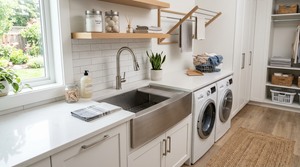

A laundry sink has to do more than look neat beside a washing machine. It may handle soaking, rinsing muddy items, cleaning buckets, washing delicates, filling containers and dealing with jobs that do not belong in the kitchen sink. That is why size, depth and installation type matter so much.
Factory Fast’s laundry sink range includes stainless steel options in compact, deep and wider formats, including models suitable for either undermount or topmount installation. The best choice comes from planning the laundry as a working zone first, then choosing the sink that fits the job.
Step 1: Decide What The Laundry Sink Must Handle
A laundry used mainly for handwashing and rinsing does not need the same sink as a utility space used for buckets, pet gear, gardening tools or soaking larger items. Write down the biggest task the sink needs to handle. That one job usually determines the bowl size and depth.
For heavier utility use, depth is often more useful than width. A 250mm deep bowl gives more room for soaking and rinsing without splashing over the counter. For compact laundries, a smaller square sink can still add useful function without taking over the whole bench.
Step 2: Choose The Right Size
Compact laundry sinks
A compact sink suits apartment laundries, narrow benches and secondary utility zones. The 440 x 440 x 205mm compact stainless steel sink is a practical reference for smaller spaces. It has a 1.2mm stainless steel construction, a 90mm drain opening and a 390 x 390 x 200mm bowl.
That kind of size is best when the sink is needed for quick rinsing, not large soaking jobs.
Mid-size utility sinks
A 700mm sink gives more working room without needing an oversized laundry bench. The 700 x 450 x 250mm stainless steel sink includes a 650 x 400 x 250mm bowl, 1.5mm thickness, 90mm drain opening and 65L capacity.
This is a useful middle ground for households that need genuine soaking depth but still want to preserve bench space.
Wider sinks with drain trays
A sink with a side drain tray can help when the laundry bench also works as a sorting, rinsing or drying zone. The 950 x 450 x 250mm stainless steel model includes a 350 x 400mm side drain tray and 55L capacity, which suits buyers who want landing space beside the bowl rather than maximum bowl width alone.
Step 3: Compare Installation Types
Many Factory Fast stainless steel sinks are designed for either undermount or topmount installation. This flexibility matters because the same sink can suit different benchtop styles and renovation budgets.
Topmount installation is often chosen for straightforward replacement projects because the rim sits on top of the bench. Undermount installation can create a cleaner benchtop line, but it needs more careful planning around the cut-out, support and edge finish.
If you are comparing laundry and kitchen sinks, the same logic applies: topmount can be practical and direct, while undermount gives a more integrated look when the surrounding bench material suits it.
Step 4: Pick Stainless Steel Thickness And Finish
Stainless steel is a strong choice for laundry sinks because it suits wet utility work and coordinates easily with tapware, white cabinetry, timber-look benches or darker finishes. Factory Fast’s larger handmade sink options include 1.5mm stainless steel, while compact models may use 1.2mm stainless steel.
The finish also matters. A brushed stainless finish gives a classic utility look, while black with a sand finish can make a laundry feel more designed, especially when paired with black handles, tapware or darker benchtops.
The 810 x 450 x 250mm black sink has a 760 x 400 x 250mm bowl and 76L capacity, making it a strong option when both appearance and deep-bowl function matter.
Step 5: Plan The Tap, Waste And Working Area
A laundry sink should not be chosen separately from tapware. A pull-out mixer can be useful for rinsing the bowl, filling buckets and washing awkward items. A fixed low spout may be less practical if the sink is deep or used for utility work.
Check whether the sink includes a waste, then plan compatible fixtures through bathroom fixtures and fittings. Also leave enough bench room for detergents, soaking products and temporary landing space. A large bowl with no nearby bench can feel less useful than a slightly smaller sink with better working clearance.
Buyer Decision Path
Choose a compact sink if space is tight and the laundry only needs light rinsing.
Choose a deep mid-size stainless steel sink if soaking, bucket filling and household utility jobs are regular tasks.
Choose a wider sink with a drain tray if you need a place to rest wet items beside the bowl.
Choose a black finish when the laundry is part of a visible mudroom, bathroom-laundry or styled utility area.
Before ordering, measure the cabinet below the sink as carefully as the benchtop above it. A laundry sink that fits the bench still needs room underneath for bowl depth, waste connection and any storage you plan to keep in the cabinet.
Frequently Asked Questions
-
 Tags:
Laundry Sink
Tags:
Laundry Sink