1300 760 441
 cs@factoryfast.com.au
Yoga and Pilates Equipment Buyer Guide: How to Choose the Right Home Setup
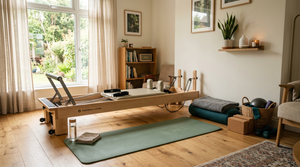

The best home yoga or Pilates setup is not always the biggest one. It is the setup that matches how you actually move: floor stretching, controlled strength work, balance practice, mat Pilates, reformer sessions, or a mix of short daily routines.
Factory Fast’s yoga and Pilates equipment range covers mats, reformer machines, foam rollers, balance boards and storage accessories, so the smarter buying question is not “what can I buy?” but “what should I add first?”
Start With the Type of Practice You Want to Build
For stretching, yoga and floor Pilates
A mat is the foundation. It defines your workout space, cushions wrists and knees, and helps reduce slipping during standing or floor-based movement. If your routine includes yoga, stretching, bodyweight work and mat Pilates, begin with the yoga and Pilates mats category before adding larger equipment.
For strength, control and guided resistance
A reformer suits buyers who want a more structured Pilates setup with sliding resistance, controlled movement and a dedicated machine footprint. The Pilates reformer machine range is better suited to a permanent or semi-permanent home workout zone than a mat-only setup.
For compact core training
If you want a smaller piece of equipment for focused core, back, leg and stability work, a compact trainer can bridge the gap between a mat and a reformer. The Pilates reformer abdominal board set uses a 1060 x 410 x 70 mm PP frame, EVA elbow pads, foam handles, a kneeling pad and a 9 kg elastic cord for controlled rebound resistance.
Match Equipment to Your Available Space
Small rooms and shared living spaces
Choose gear that can be rolled, stacked or wall-mounted. A mat, foam roller and compact core trainer are easier to store than a reformer, especially if your workout area also functions as a bedroom, office or lounge room.
Dedicated workout areas
A larger setup can justify a reformer, balance board and storage rack. If you are building a more permanent home studio, plan clearance around the equipment, not just the product footprint. You need room to lie down, extend arms, move legs and step around the gear between exercises.
Storage matters more than most buyers expect
Loose mats and rollers quickly make a small room feel crowded. A wall-mounted option such as the yoga mat gym storage rack has an 80 cm pole width, 24 cm hooks and capacity for 10 yoga mats, which makes it useful for households with multiple mats, rollers or bands.
Choose Your Mat Before Your Accessories
Thickness and cushioning
A thicker mat can feel better for kneeling, seated stretches and floor Pilates. The 8 mm TPE yoga mat measures 183 x 61 x 0.8 cm and weighs 1.5 kg, giving it enough cushioning for general home practice while still being portable.
Grip and moisture resistance
Grip matters during standing poses, plank variations and transitions. Moisture-resistant surfaces are also easier to maintain after sweaty sessions, which is especially useful in Australian homes where warm-weather workouts can turn a mat into the hardest-working item in the room.
Alignment support
Some mats include alignment lines, which help beginners check hand and foot placement without needing extra equipment. This is useful when the goal is better consistency, not just a softer surface.
When a Pilates Reformer Makes Sense
You want controlled full-body resistance
A reformer adds guided movement through a sliding platform, rails and adjustable resistance. It suits people who want to train strength, flexibility and core control with more structure than a mat session can provide.
You will use it often enough to justify the footprint
A reformer is a commitment to space as well as budget. Before buying, measure the planned area, leave access around the machine, and check whether you need foldable storage or a fixed setup.
You prefer equipment-led progression
Reformers can make it easier to repeat movements consistently because the carriage and resistance system guide the exercise path. That helps buyers who like a more organised routine rather than free-form stretching.
Build the Setup in Stages
Stage one: mat and recovery basics
Start with a mat that suits your cushioning and grip needs. Add a foam roller if recovery, mobility or post-session stretching is part of your routine.
Stage two: strength and balance
Add a compact core trainer, balance board or similar accessory when you want more variety without moving to a large machine.
Stage three: dedicated Pilates equipment
Move to a reformer when your routine, space and budget all point in the same direction. This is the point where setup planning matters most, because the equipment becomes a fixed part of the room rather than something you pack away after every session.
Common Buying Mistakes to Avoid
Buying by product type instead of use case
A reformer is impressive, but it is not automatically the best first purchase. If you mainly stretch or do floor-based Pilates, a quality mat may deliver more daily value.
Ignoring storage
Storage is not an afterthought. If your mat, roller and accessories are awkward to put away, you are less likely to maintain the routine.
Choosing the cheapest surface without checking feel
A mat that is too thin, slippery or hard to clean can make every workout less comfortable. For home practice, comfort and maintenance are part of the buying decision.
How to Choose the Right Combination
For a flexible beginner setup, start with a cushioned mat, then add a roller or compact core tool. For a home Pilates corner, combine a mat with a reformer and keep smaller accessories organised nearby. For a shared household, prioritise storage from the beginning so the workout space stays easy to reset.
Before adding anything to cart, stand in the actual space where you plan to train and mark out where your hands, feet and equipment will land. That quick check often reveals whether you need a foldable setup, wall storage, or a smaller starting kit.
 Tags:
Tags: