1300 760 441
 cs@factoryfast.com.au
Frameless Shower Screens Buyer Guide: How to Choose the Best Style, Size and Hardware
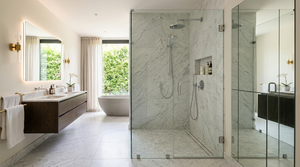

Frameless shower screens appeal to buyers who want the bathroom to feel cleaner, lighter and more architectural. Without a heavy metal surround, the glass becomes the main visual element, which can make the whole room feel less crowded. That is particularly useful in bathrooms where you want the tilework, wall finish or overall sense of space to stay visible rather than being chopped up by frame lines.
The useful part of the category is not just the look. Factory Fast’s frameless shower screens collection also shows how many decisions sit inside the term frameless: wall-to-wall doors, single fixed panels, corner layouts, different bracket styles, multiple handle options and a wide finish range. If you want the right frameless screen, you need to decide which format suits the room before you get attached to a particular finish.
What makes a shower screen genuinely frameless
A frameless shower screen relies on the glass and hardware rather than a perimeter frame to create the enclosure. On Factory Fast, the collection highlights the common frameless material mix: toughened glass paired with corrosion-resistant hardware, often using stainless steel, brass or similar hardwearing components depending on the model. The effect is more open than semi-frameless options, while framed shower screens and fully framed models use aluminium channels around the full perimeter for structural support and stronger sealing, making framed screens a more robust and affordable alternative to frameless designs.
That visual simplicity is also why frameless products tend to feel more premium. The glass generally does more of the structural work, so a frameless design uses minimal hardware, no continuous perimeter frame, and typically 10 mm thick glass for a clean, modern look that suits contemporary bathroom renovation projects in modern homes. It is a strong choice when the bathroom design already has clear finishes and you want the screen to support that look rather than dominate it.
Choose the frameless layout that matches the room
The word frameless does not describe one shape. It describes a style that can be used across several configurations.
A common example is the wall-to-wall recess, where the screen spans between three walls and the opening sits on the fourth side. In this setup, accurate measuring matters because the width, entry position, and out-of-square walls all affect the fit, and in small bathrooms under 5 square metres, your bathroom layout also matters because clear glass helps preserve visual flow in small spaces.
Other common configurations include corner entries, fixed panels paired with a door, and walk-in styles. The right option depends on how much clearance you have, where water will fall, and how you want the room to feel once everything is installed.
Wall-to-wall frameless screens
Wall-to-wall designs suit recessed shower spaces where two walls already define the opening. The 120 x 200cm wall-to-wall frameless model is a good example because the product page gives a clear split between the fixed panel and the door panel. In that model, the fixed panel is 440 mm and the door panel is 650 mm, which helps buyers picture the entry opening rather than just the overall width.
For wall-to-wall layouts, measure the shower recess width, depth, and height carefully before choosing the right shower screen, especially in a compact bathroom or where the shower space has unusual angles.
This style works well when you want a full enclosure and a very clean front elevation. It is often the most direct frameless answer for a typical alcove shower.
Single-panel and walk-in frameless screens
Some buyers do not need a door at all. A fixed panel can deliver the frameless look in a simpler form, particularly as a walk in shower screen. The 90 x 200cm nickel-finish screen shows what that product type offers: one 90 x 200 cm single sheet of glass without a door, 10 mm thick glass panels, wall and floor clips, and a sleek, minimalist footprint that suits streamlined bathroom designs.
This style is best when the room can handle a more open wet zone and you want fewer moving parts to clean or maintain. Because the layout is open, it also needs careful drainage planning so water stays off the bathroom floor.
Corner frameless screens
Corner frameless screens make sense when the shower sits into a corner and you want that zone to feel open rather than boxed in. The 110 x 70cm corner frameless model shows how broad the options can be even within one product family. Factory Fast lists multiple sizes from 90 x 70 cm up to 120 x 120 cm, multiple finishes including chrome, black, gold, white, nickel and gunmetal, plus U-bracket or F-bracket choices and different handle styles.
In compact bathrooms, sliding doors that operate on a track can be a better alternative when there is not enough more room for a swinging door or pivot setup.
For shoppers, that means the decision is not just about whether to choose corner or wall-to-wall. It is also about whether you want a softer hardware presence, a more graphic finish, or a particular handle look that better matches the rest of the bathroom.
Understand the materials, finishes and hardware
Frameless products live or die on the quality of the visible components. Because there is less frame, each hardware choice stands out more.
Glass thickness and feel
On Factory Fast, frameless products commonly point buyers toward 10 mm toughened safety glass, a safety requirement for Australian bathrooms that must be Grade A and comply with strict Australian standards (AS/NZS 1288/2208). The wall-to-wall model and the 90 x 200 cm single panel both use thicker glass, which gives a more solid and premium feel than lighter categories. That extra substance is part of the frameless appeal. It helps the screen feel deliberate rather than flimsy.
Finish options
The frameless collection also points to a broader range of finish and glass choices than many buyers expect. Depending on the model, the range includes polished chrome, matte black, brushed nickel and brushed brass hardware in contemporary finishes, as well as low iron, crystal clear, frosted glass for added privacy and tinted glass options. This matters because frameless screens are often chosen for design reasons first. If the finish is wrong, the whole room can feel off balance.
Brackets, hinges and handles
Hardware is not an afterthought in a frameless bathroom. Hinges, clamps, wall channels, brackets and handles all shape the final look. The shower screen accessories collection is useful here because it shows the supporting parts buyers often forget to think about until late in the process, including wall channels, floor channels, hinges and U-brackets across several finishes. Pivot doors use a pivot point rather than standard side hinges and usually suit larger bathrooms with enough clearance.
Know what to check before you buy
Frameless shower screens look simple when they are installed, but choosing them well requires attention to a few specifics.
Match the screen to the opening, not just the style
A beautiful frameless screen is still the wrong product if the panel widths and door swing do not suit the room. Professional installation matters as much as measurement, because the right installation supports proper performance and ensures compliance with AS1288. Certified installers handle glass type, thickness and sealing correctly, so proper installation helps prevent leaks, supports long-term durability and delivers a perfect fit through precise installation. Always compare the opening width, shower base dimensions, wall position and the space in front of the screen with the exact product details. For example, the 120 x 200cm wall-to-wall unit gives a very different entry experience from a 90 x 200cm fixed panel, even though both belong to the frameless category.
Think about how much enclosure you need
Some buyers love the openness of a fixed panel and only later realise they wanted more splash control. Others default to a door-based enclosure when a cleaner walk-in panel would have been enough, even though the best shower screen choice also depends on daily use, like multiple users, family routines or how often the area needs splash control. The right amount of enclosure depends on how the shower is used, where the shower head sits and whether the bathroom is compact or spacious, with layout planning also considering nearby fixtures like the toilet when assessing water containment.
Consider maintenance honestly
Frameless screens are easy to appreciate and not always as easy to ignore once they are wet. Clear glass keeps the room bright and open, but it also makes soap scum and soap residue more visible. A hydrophobic glass coating can reduce visible water marking and make cleaning easier. If you want the cleanest daily appearance, choose finishes and glass treatments with upkeep in mind and be realistic about how often the screen will be wiped down. Sliding systems also need track cleaning, so maintenance requirements vary by screen type.
When frameless shower screens are the right buy
Frameless is a strong fit when you want the bathroom to feel less crowded, when the room already has good finishes worth showing off, and when you are comfortable paying attention to the details that make a glass-led design work. It is especially effective in modern ensuites, wall-to-wall recesses and bathrooms where visual openness matters as much as the enclosure itself.
If your priority is simply finding the easiest screen to fit into a slightly irregular opening, semi frameless shower screens may be more forgiving, as many semi frameless options use 6–8 mm glass and work as a practical all-rounder that combines the structural stability of framed screens with the visual lightness of frameless designs. But if your goal is a cleaner silhouette, heavier glass presence and more refined finish story, frameless remains the category to start with.
Choose the frameless product with the clearest real-world fit
The strongest frameless purchase decision usually comes down to one question: which product matches the room with the least compromise? Frameless shower screens typically cost between $900 and $2,800, with size and customisation doing most of the work on price. Framed shower screens are generally the most affordable option, usually using 4–6 mm glass supported by a full perimeter frame for added stability, and many homeowners weigh that against the look of the best shower screen for their space. Some bathrooms need the simplicity of a single panel. Some need a wall-to-wall door set with defined entry width. Others need a corner format that preserves movement through the room while still keeping the wet zone contained.
Factory Fast gives you enough variation inside the frameless category to make that decision properly. Use the collection page to compare finishes and glass styles, then use the individual product pages for the details that matter most: width, height, panel split, hardware type and the overall configuration you will actually live with once the bathroom is finished.
 Tags:
Tags: