1300 760 441
 cs@factoryfast.com.au
Dual Shower Head Rainfall Combo: What To Know


Introduction: Why Choose a Dual Rainfall Combo?
A dual shower head rainfall combo brings together a large overhead rain shower head with a separate handheld shower head, both operating from the same water outlet. If you’re planning a bathroom renovation or upgrade in 2026, understanding how these systems work and whether they suit your household is a practical first step.
Some dual shower head rainfall combos also offer luxury options, such as larger shower heads, built-in benches, or extra spacious designs for a more indulgent experience.
This guide covers the essentials for Australian homeowners: how dual shower heads deliver both relaxation and functionality, what types are available, and how to match a system to your space, budget, and family needs.
What you will learn:
-
How a dual shower head system works and its core components
-
The practical benefits for families, cleaning, and everyday use
-
Different types of dual rainfall combos and which suits your layout
-
Key considerations including water pressure, sizing, and accessibility
-
Realistic budgeting and installation guidance for Australian homes
-
A step-by-step approach to choosing the right system
For a complete bathroom upgrade, explore the Shower Heads Collection featuring modern designs that combine strong water pressure with sleek finishes.
What Is a Dual Shower Head Rainfall Combo?
A dual shower head rainfall combo is exactly what it sounds like: a double shower head system that pairs a fixed overhead shower with a separate handheld component, both drawing water from the same outlet. The rainfall shower head is typically a wide plate between 200 and 300 mm in diameter, designed to deliver a broad, gentle cascade that mimics natural rain. The hand shower, usually 100 to 150 mm in size, connects via a flexible hose and provides directed, adjustable spray settings for precision rinsing. Dual shower head systems often provide different spray options, such as rain, massage, or mist, to suit various preferences.
Both heads are controlled by a diverter mechanism, allowing you to switch between rainfall only, handheld only, or in some configurations, simultaneous use. This differs from having two shower heads on completely separate walls with independent mixers, which requires dual plumbing feeds and a more complex installation.
Most dual rainfall combos in Australian homes are wall-mounted, though ceiling-mounted rain heads are increasingly popular in larger bathrooms with higher ceilings.
Core components of a typical dual system:
-
A rainfall head (200–300 mm) mounted on a shower arm
-
A handheld shower (100–150 mm) with multiple spray options
-
A 1500–2000 mm flexible, kink-resistant hose
-
A wall bracket or sliding rail for the handheld
-
A diverter (often integrated into the wall elbow or arm)
The best dual shower heads typically combine a rain showerhead for immersive coverage and a handheld showerhead for targeted rinsing.
If you’re after a premium rainfall experience, the WELS 10" Rain Shower Head Set Square Dual Heads High Pressure with Handheld in Black delivers both overhead and handheld functionality for maximum comfort.
How Dual Rainfall Systems Work
The operation is straightforward. Water from your existing plumbing feeds into a mixer tap that blends hot and cold supplies. From there, the flow enters your dual shower head system, where a diverter directs it to either the rainfall head, the handheld one, or both. Certain dual shower heads come with diverter systems that enable simultaneous use of both heads. Using both shower heads at the same time can result in more water being used, depending on the system and flow restrictors.
Key components explained:
-
Rainfall head: Delivers wide, even coverage through multiple fine nozzles spread across its plate
-
Handheld shower: Offers focused spray with adjustable settings, from fine mist to pulsating massage
-
Hose: Typically 1500–2000 mm long, allowing reach to all corners of the shower
-
Diverter: The switching mechanism, usually a knob or lever on the wall elbow
-
Rail or bracket: Holds the handheld when not in use
Common diverter setups:
-
Two-way diverter: Directs water to rain OR handheld (not both), preserving pressure in each head
-
Three-way diverter: Allows rain OR handheld OR both together, though running two heads simultaneously can reduce individual intensity
Most Australian homes with standard plumbing can support a dual combo without major modifications. However, older properties or upper-storey bathrooms with long pipe runs may notice reduced pressure during simultaneous use. Water pressure is a critical consideration for dual shower heads, as adequate pressure is needed for optimal performance.
For a more classic rounded style, the WELS 8" Rain Shower Head Set Rounded Dual Heads Faucet High Pressure Hand Held provides a versatile and practical solution for everyday use.
Dual Combo vs. Separate Shower Installations
An integrated dual rainfall combo uses a single mixing point and coordinated pipework, while separate shower installations involve independent mixers on different walls with their own plumbing feeds.
How they compare:
-
Appearance: Integrated combos offer matching finishes and a cohesive look; separate systems can appear mismatched
-
Plumbing complexity: Dual combos use one outlet; separate installations require dual feeds and additional labour
-
User experience: Integrated systems offer balanced flow and easier diverter control
-
Retrofitting: Combos are simpler to add to existing showers than redesigning for two independent showering areas
A basic handheld add-on clipped to an existing outlet is another option, but lacks the neater pipe concealment and coordinated design of a purpose-built dual system.
If you prefer a minimalist modern look, the 200mm Shower Head Square 304SS Electroplated Matte Black Finish adds a bold, contemporary touch to your shower setup.
Main Benefits of a Dual Shower Head Rainfall Combo
Rather than pure luxury, think of dual shower heads as a balance of everyday practicality and comfort. The rain shower delivers that spa like shower experience—full body coverage from a wide, gentle flow—while the handheld provides the flexibility to rinse specific areas or clean the shower itself.
The benefits that matter most in real homes:
-
Flexibility between soft, immersive rain and targeted, adjustable spray
-
Better usability for multiple family members of different ages and heights
-
Easier shower cleaning and maintenance
-
Time savings during busy mornings
-
Future-proofing for ageing-in-place needs
Rainfall Comfort + Targeted Control
The sensation of standing under a 250 mm rain head is distinctly different from a standard setup. Water falls across your shoulders, back, and head in a soft, even drench—ideal for unwinding at the end of a long day. Many shower heads offer this gentle cascade, but rain shower heads are purpose-built for full coverage relaxation.
The handheld adds precision. Need to rinse conditioner from thick hair? Use the handheld’s focused jet. Sore calves after a run? Switch to a pulsating setting and direct the spray exactly where it helps. One person in the household might prefer standing under the overhead shower for a gentle soak, while another wants higher pressure for a quick, firm rinse. A dual shower delivers both without swapping fixtures.
For a softer, more traditional finish, the 300mm Shower Head Round 304SS Chrome Showerhead offers wide water coverage and a timeless chrome design.
Family-Friendly and Multi-Generational Use
Dual combos shine in homes where multiple users share the same bathroom. For washing kids—especially toddlers or younger children—the handheld lets you rinse gently without forcing them directly under the fixed head. Meanwhile, the rainfall keeps them warm and comfortable.
Teenagers often prefer the handheld mounted at chest height on a rail for efficient hair washing. Older adults, particularly those using a built-in bench or fold-down seat, benefit from the extended hose reach without straining.
An adjustable rail is particularly useful when household heights range from under 150 cm to over 185 cm. Rails adjustable from around 950 mm floor clearance up to 1800 mm accommodate children reaching for the handheld and adults using it at shoulder level.
Cleaning and Maintenance Advantages
Here’s where the handheld proves its worth beyond showering. You can use the handheld to direct high-pressure spray into grout lines, behind glass screens, and along floor-wall junctions—areas a fixed shower head simply cannot reach.
Cleaning tasks made easier:
-
Rinsing soap scum and mineral deposits from tiles
-
Blasting grime from chrome edges and silicone seals
-
Sweeping residue toward the drain after each shower
-
Reaching corners up to 1500 mm away from the fixed head
A simple routine—quick rinse-down of shower walls and floor after the last shower of the day—helps prevent mould and soap build-up without scrubbing.
Everyday Convenience and Time Savings
Running both heads together, where your diverter allows, can halve wetting time in a typical 1200 x 900 mm shower. Water coming from above and from the handheld saturates hair and body simultaneously.
On busy weekday mornings, this makes a big difference. Double showers—where two people take turns quickly—move faster when the first person can fully rinse while the next prepares. The handheld also allows you to step out of the main spray to rinse feet or legs while staying warm under residual flow from the rain head.
Complete your setup with coordinating fittings from the Bath and Shower Mixers Collection to ensure both style and functionality across your bathroom.
Types of Dual Rainfall Shower Head Combos
Not all dual systems look or install the same. The main differences relate to how the handheld is supported, rain head size and mounting position, and whether the combo is surface-mounted or built-in.
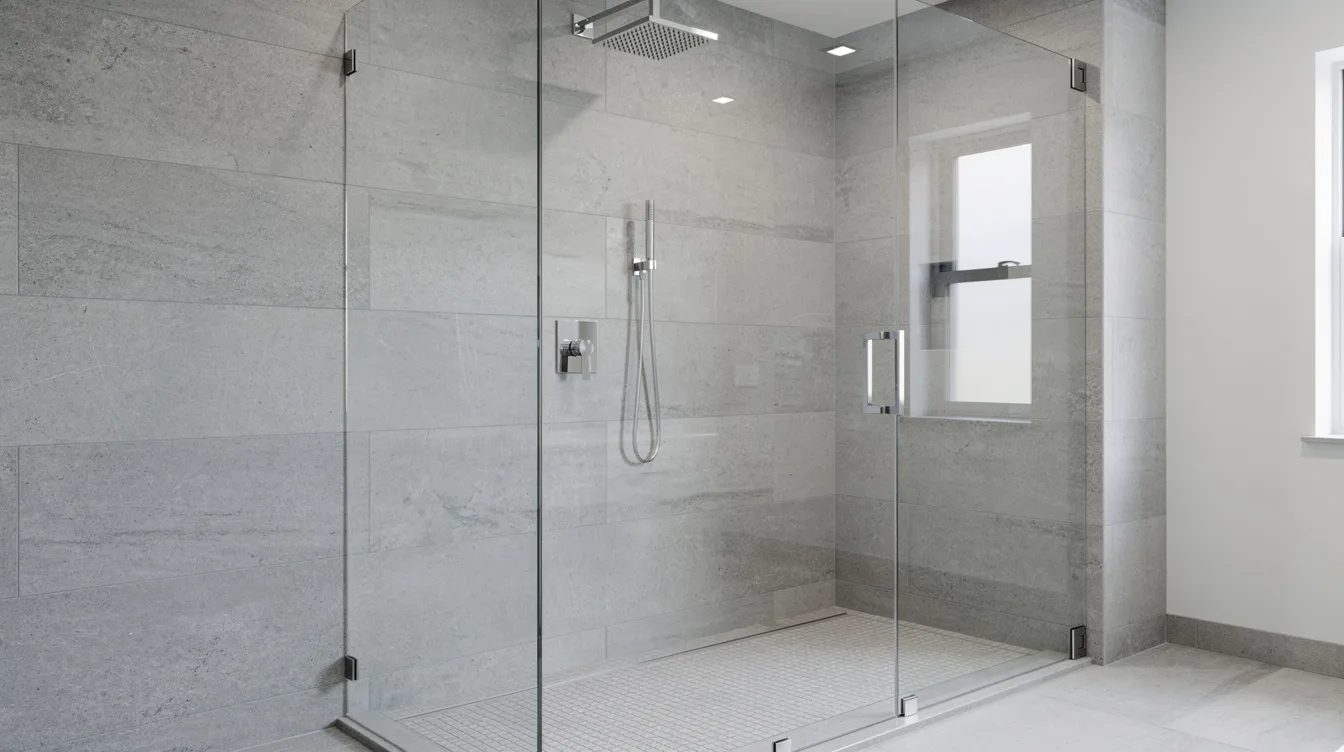
Wall-Mounted Rainfall + Fixed Bracket Handheld
This is the most common and cost-effective configuration. A 200–250 mm rainfall shower head mounts on an adjustable arm (typically 300–400 mm long), while the handheld sits in a fixed bracket at a set height—usually around 1200–1400 mm from the floor.
It’s ideal for compact 1000 x 1000 mm enclosures where users are similar heights. However, the bracket position is fixed at installation, so consider future needs. Will children still be using this bathroom in five years? Will an older family member need seated access?
Rainfall Combo with Sliding Rail Handheld
A sliding rail adds adjustability. The handheld clips to a vertical track—typically 600–900 mm tall—allowing height repositioning without tools.
This suits households with significant height differences, from children to adults. People prefer this style when they want the handheld at shoulder height for hair rinsing or lower for leg targeting. The contemporary look, with rails finished to match tapware in chrome, brushed nickel, or matte black finish, fits well in modern Australian bathrooms.
Ceiling-Mounted Rainfall with Wall-Mounted Handheld
Higher-end layouts feature a large rain head (250–300 mm) dropping from the ceiling via a 200–300 mm riser, with a separate handheld mounted on the wall.
This configuration suits larger showers with ceiling heights of 2200–2400 mm, common in newer Australian builds and major renovations. Ceiling-mounted systems require in-ceiling plumbing and careful waterproofing planning—best suited to new builds or full bathroom overhauls, not quick swaps.
Surface-Mounted vs Built-In Dual Systems
Surface-mounted systems attach brackets and rails directly to tiled walls using existing outlets. They suit quick retrofits with minimal disruption.
Built-in systems conceal pipes behind plasterboard with flush wall plates, requiring tile removal but yielding seamless integration. These are best considered during full renovations when walls are already being stripped.
For a simple 2026 update on existing plumbing, surface-mounted combos are the realistic path. For a complete bathroom transformation, built-in systems offer a cleaner aesthetic.
Dual Shower Head System Components
A dual shower head system is more than just two shower heads—it’s a carefully designed setup that brings together several essential components to deliver a truly versatile and enjoyable shower experience. Understanding how each part works helps you choose the right system for your bathroom and ensures you get the most out of your investment.
Fixed Shower Head (Rainfall Head):At the heart of most dual shower head systems is the fixed shower head, often a rainfall shower head mounted on the ceiling or a shower arm. This wide, flat head is designed to provide full body coverage, creating a spa like shower experience with a gentle, even cascade of water. The rainfall shower head is perfect for those who love the feeling of water pouring down from above, offering a relaxing and immersive rainfall shower that’s hard to match with a standard setup.
Handheld Shower Head:The handheld shower head is the flexible workhorse of the dual system. Attached to a long, kink-resistant hose, it allows you to direct water exactly where you need it—ideal for rinsing hair, washing kids, cleaning the shower walls, or even bathing pets. Many handheld shower heads come with multiple spray settings, so you can switch from a soft mist to a more powerful jet depending on your needs. This versatility is especially valuable in households with multiple users, as everyone can enjoy their preferred shower experience.
Shower Arm:The shower arm is the mounting point for the fixed shower head, and its length and angle can make a big difference in how the water flows. Adjustable shower arms let you position the rainfall head for optimal coverage, whether you’re installing it on the wall or the ceiling. A well-placed shower arm ensures that the rainfall shower head delivers water exactly where you want it, enhancing both comfort and practicality.
Diverter Valve:A key feature of any dual shower head system is the diverter valve. This clever mechanism lets you control whether water flows to the rainfall head, the handheld, or—in some systems—both at once. The diverter is usually a simple lever or knob, making it easy to switch between heads for different tasks or simultaneous use. Choosing a system with a high-quality diverter ensures smooth operation and helps maintain good water pressure, even when both heads are in use.
Hose and Connections:The hose connecting the handheld shower head to the diverter needs to be both flexible and durable, allowing for easy movement without leaks or tangles. Quality connections are essential for a leak-free, long-lasting installation, especially if you plan to use the handheld frequently for rinsing or cleaning.
When selecting a dual shower head system, pay attention to the quality of these components. Look for sturdy materials like stainless steel or brass, and consider finishes such as brushed nickel or matte black for a stylish, easy-to-clean look that complements your bathroom. A well-designed dual shower head system not only looks great but also stands up to daily use, providing a great shower for years to come.
Installation is another important consideration. While some dual shower systems are designed for easy retrofit onto existing plumbing, it’s always wise to have a licensed plumber handle the installation. This ensures all components are securely fastened, the flow is properly balanced, and your new shower is safe and leak-free.
Whether you’re upgrading a small bathroom or creating a luxury retreat, a dual shower head system offers practical benefits and a touch of everyday indulgence. With two heads, multiple spray options, and the flexibility to suit different users, it’s a smart way to elevate your daily shower routine—saving water, time, and effort while delivering a truly spa-like experience.
Key Things to Consider Before You Buy
Before choosing a dual rainfall combo, work through these practical factors. Spending time here prevents disappointment with water pressure, reach, or layout once installation is complete.
Water Pressure and Flow Experience
When you split water between two heads, each can feel softer if overall pressure is on the lower side. This is just what happens with physics—the same flow divided produces less intensity per head.
Test your current setup: how strong does your existing shower head feel, especially during peak-use times (early morning, evening)? If it already feels gentle, running dual shower heads may feel underwhelming.
Older homes with galvanized pipes, second-storey bathrooms, or long pipe runs often have lower pressure. A two-way diverter that restricts flow to one head at a time preserves good pressure in each. Three-way diverters allowing simultaneous use suit homes with higher pressure systems.
Discuss your situation with a licensed plumber before purchasing.
Shower Size and Layout
Typical dimensions for comfortable dual use:
-
Minimum around 1000 x 1000 mm for a single-user dual system
-
Starting from about 1600 x 900 mm for couples or two-person use
-
Larger walk-ins (1600 x 1000 mm or more) allow centred rainfall and separate handheld areas
Position the rain head so water falls where you naturally stand—typically centred about 500 mm from the back wall. The handheld rail should be offset about 300 mm to avoid hose tangles.
Measure your existing space and mark proposed head positions on the wall before committing. Check for obstructions: niches, windows, doors, or existing fixtures.
Height, Reach and Accessibility
A typical rain head height sits around 2100–2300 mm from the finished floor, adjusted for the tallest regular user. For someone 1700 mm tall, a head at 2200 mm provides comfortable clearance without feeling distant.
The bottom of the handheld rail is often set around 950–1100 mm from the floor, so shorter users and children can reach it comfortably. The rail extends upward to 1600–1800 mm for adults.
Plan for potential future mobility needs. If a shower bench or stool might be added later (typically 450 mm high), ensure the handheld can be reached from a seated position—within about 400 mm horizontal reach.
Finishes and Style Coordination
Choose finishes that match existing tapware and fixtures in the room. Common options include:
-
Chrome: Classic, reflective, widely available
-
Brushed nickel: Resists fingerprints better than high-polish chrome
-
Matte black finish: Contemporary, bold, suits darker colour schemes
-
Brushed brass: Warm, trending in 2026 renovations
-
Stainless steel: Durable, understated industrial aesthetic
A large rainfall head acts as a focal point in a walk-in shower. Consider whether a square head suits an angular, contemporary design or a round profile blends better with traditional schemes. Match the shape to your basin mixer and towel rail style.
Budgeting for a Dual Rainfall Combo
Realistic cost ranges for 2026 (hardware only):
-
Entry-level: Surface-mounted sets with basic 200 mm rain head and 125 mm handheld with 1500 mm hose—starting from the low hundreds
-
Mid-range: Rail-inclusive models with enhanced adjustability and designer finishes—moving into the mid-hundreds
-
Premium: Ceiling-mounted or fully built-in systems with large rain heads—upper hundreds and beyond
Installation costs vary significantly. A straight swap on existing plumbing might cost a couple of hundred dollars for a plumber’s time. Full strip-out, retiling, and plumbing reroutes involving 1–2 square metres of tiling can add considerably more.
Allow extra budget for the separate shower mixer (if not included), a quality hose, and any minor tiling touch-ups around old penetrations.
Installation and Retrofit Considerations
Final installation should always be done by a licensed tradesperson. This section provides a homeowner-level overview to help you plan conversations with your plumber and tiler.
The difference between a simple replacement and a full renovation comes down to whether plumbing positions need to move. Planning upfront avoids issues like misaligned heads, hoses that are too short, or mixers positioned awkwardly for daily use.
Retrofitting Into an Existing Shower
A dual rainfall combo can often replace an existing single head using the same wall outlet, with minimal disturbance to tiles. This is the most cost-effective path for a new shower upgrade.
Before buying, check:
-
Current outlet height (ideally around 2200 mm)
-
Available wall width for a 600 mm rail
-
Whether your existing mixer suits the new system’s flow needs
-
Whether old fixture penetrations will be covered by new backing plates
In some cases, tiling patchwork may be needed if old fixtures leave visible marks. A 200 x 200 mm backing plate can often cover minor holes.
Planning for New Builds and Full Renovations
If you’re renovating from scratch or building new, select the dual rainfall combo early. This allows rough-in plumbing heights and positions to be set correctly before walls are closed.
Coordinate locations for:
-
Mixer tap (typically around 1100 mm height)
-
Diverter elbow (around 2300 mm for ceiling-effect rainfall)
-
Handheld rail (spanning 950–1750 mm)
-
Built-in niches (commonly 1200 mm height)
-
Shower benches (if planned)
Provide exact model dimensions and install requirements to your builder or plumber. Larger showers (1500 x 900 mm or more) allow generous placement without compromises.
How to Choose the Right System for Your Bathroom
Follow this step-by-step decision guide after reviewing the information above:
Step 1: Measure your shower space Record internal dimensions in millimetres (width, depth) and ceiling height. Note any obstructions like niches, windows, or doors.
Step 2: Test current water pressure Run your existing shower head at peak times. Does it feel strong, moderate, or weak? This determines whether simultaneous dual use is realistic.
Step 3: List who uses the shower Note heights (from children to adults), ages, and any current or anticipated mobility needs. This shapes rail height and handheld reach requirements.
Step 4: Decide on layout Wall-mounted rain head or ceiling-mounted? Fixed bracket or sliding rail for the handheld? Match your choice to shower size and user needs.
Step 5: Choose finish and style Coordinate with existing basin mixers, towel rails, and other fixtures. Consider maintenance—brushed finishes hide water marks better than high polish.
Step 6: Set a realistic budget Include hardware, shower mixer (if separate), quality hose, and licensed installation. Allow for potential tiling work on retrofits.
Bring your measurements, notes, and requirements to your selected bathroom supplier or plumber to confirm compatibility before purchasing.
Conclusion: Planning Your Dual Rainfall Upgrade
A dual shower head rainfall combo offers a compelling combination: the immersive comfort of a rainfall shower paired with the practical flexibility of a handheld. For multiple family members across different ages and heights, this balance makes daily showering more comfortable for everyone.
The key to a successful upgrade is thoughtful planning. Assess your water pressure honestly, measure your space carefully, and choose heights and finishes that suit both current users and future needs. Whether you’re retrofitting on existing plumbing or planning a full renovation, getting these details right ensures the new shower feels like a genuine improvement—not just a luxury option that disappoints in practice.
Choosing a dual shower head system with water-efficient features can help save water and reduce utility bills. Many modern dual shower head systems are WELS certified with 3-star ratings, providing a flow rate around 9 litres per minute or less. WELS ratings indicate water efficiency, with a common 3-star rating providing a flow rate of about 6 to 9 L/min. Higher WELS ratings signify better water conservation, which can positively impact both utility bills and environmental considerations.
If you’re renovating in 2026, consider the years ahead: children growing up, visiting guests, and potential mobility changes. A well-chosen dual rainfall combo, properly installed, is a long-term investment in everyday comfort that your household will appreciate for years to come.
Frequently Asked Questions
-
 Tags:
Shower Heads
Tags:
Shower Heads