1300 760 441
 cs@factoryfast.com.au
Locker Size Guide for Workplaces, Schools and Gyms

Introduction
Welcome to the ultimate locker size guide for workplaces, schools, and gyms. This comprehensive resource is designed specifically for facility managers, school administrators, and gym owners who are responsible for creating secure, efficient, and user-friendly storage solutions. Choosing the right locker size is a critical decision that impacts security, user comfort, space optimization, and overall satisfaction in your facility. Whether you manage a busy office, a bustling school, or a high-traffic fitness center, this guide will help you navigate the options and make informed choices.
Lockers are commonly used in various settings such as schools, gyms, and workplaces to provide secure storage for personal belongings. Selecting the correct locker size involves assessing user needs and the physical environment, ensuring that the intended use of lockers determines their size and style to meet user requirements. This guide will walk you through the most common locker sizes, how to select the right dimensions for your environment, and provide real-world examples to help you make confident decisions.
Key Takeaways
-
This locker size guide for workplaces, schools, and gyms covers the most common locker sizes, selection criteria, and practical examples—from typical 1800mm high staff lockers to compact 300mm cube lockers for primary students.
-
Locker sizes directly affect security, user comfort, traffic flow, and how many units you can fit in your available space.
-
Different environments require different approaches: a busy office needs different locker heights, widths, and depths compared to a secondary school or 24/7 fitness centre.
-
Standard configurations range from full-height single-tier units (around 1800mm) for hanging clothes to multi-tier cube lockers for compact storage of personal items.
-
ADA and accessibility compliance requires that at least 5% of lockers meet specific reach ranges and clear floor space requirements.
-
This guide includes a quick sizing checklist and practical layout examples so facility managers can make confident decisions without second-guessing.
Summary: Choosing the right locker size is crucial for optimizing space and meeting user needs. This guide will help you assess user storage needs and the physical environment to select the correct size for your facility.
For a wide range of durable and versatile lockers to suit your workplace, school, or gym needs, visit the Factory Fast lockers collection for quality storage solutions.
Why Locker Size Matters in Modern Facilities
In 2025, offices, schools, and gyms face a perfect storm of challenges: shrinking floor area, higher security expectations, and stricter accessibility rules. This makes sizing decisions far more critical than simply choosing between “tall or small lockers.” Getting it wrong affects everything from daily operations to long-term costs.
-
Locker dimensions influence corridor width, emergency egress compliance, and cleaning access in busy facilities—a locker room layout that looks fine on paper can become a bottleneck during peak times.
-
Incorrect sizing leads to wasted space when lockers are too large for the user group (oversized lockers in a primary school) or constant complaints when they’re too small (staff cramming winter coats into shallow compartments).
-
The choice between compact lockers and full-height units affects how many people you can serve in a given room—vertical planning can boost storage capacity by up to 40% compared to traditional single-tier layouts.
-
Sizing decisions impact costs over the 10-15 year lifespan of a locker bank, because changing layouts later means ripping out fixtures, patching walls, and disrupting operations.
Transition: Understanding why locker size matters sets the stage for exploring the standard dimensions and configurations available.
Standard Locker Dimensions and Configurations
There’s no single global standard for locker sizes, but most suppliers in Australia, the US, and UK use broadly similar dimensions for metal lockers and plastic lockers. Understanding these common configurations helps you communicate clearly with suppliers and compare quotes.
Main Locker Types and Their Relationships:
-
Single-tier lockers: Provide maximum vertical space, typically measuring 1800mm (H) x 300-380mm (W) x 450mm (D). Ideal for hanging clothes and storing larger personal items.
-
Two-tier lockers: Measure approximately 900mm (H) x 300-380mm (W) x 450mm (D) per compartment. These double your capacity per linear metre of wall space and are suitable for bags, shoes, and folded clothes.
-
Three or four-tier lockers: Have compartment dimensions of around 450mm (H) x 300-380mm (W) x 450mm (D). These are a popular choice for schools and gyms, offering a balance between capacity and individual storage.
-
Box-style lockers: Can have 6 to 12 doors and are designed for compact storage of small personal items such as laptops, mobile phones, and valuables.
Other Common Configurations:
-
Full-height/single-tier lockers: Typically measure approximately 1800mm high x 300-380mm wide x 450mm deep (or 72” x 12-15” x 18” in imperial). These suit staff and senior students who need space for hanging coats, storing gym bags, and keeping personal belongings organised with coat hooks and top shelves.
-
Half-height/two-tier lockers: Provide around 900mm high per compartment, making them ideal for gyms and schools where users mainly store bags, shoes, and folded clothes.
-
Multi-tier/cube lockers: Come in 3-6 door configurations with each cube around 300-400mm in each dimension. These smaller compartments work well for offices and primary schools where users store laptops, small bags, mobile phones, and valuables rather than bulky clothing.
-
Triple-tier lockers: Offer a popular middle ground, particularly in schools. A common specification is 15” wide x 15” deep x 24” high per compartment, constructed from heavy-duty 14-gauge steel doors and 20-gauge steel bottoms—enough space for books, street clothes, and backpacks.
-
Oversize/equipment lockers: Measuring 1900-2000mm high and 450-600mm wide accommodate sports gear, musical instruments, and PPE in industrial workplaces. These storage solutions serve users with larger equipment that won’t fit standard compartments.
Transition: Now that you know the standard sizes, let's look at how to choose the right locker size for your specific space.
How to Choose the Right Locker Size for Your Space
Understanding the specific storage needs of users is essential for selecting the right locker size. The right lockers for your facility depend on measuring accurately, planning for traffic flow, and thinking ahead.
Measuring Your Space
-
Document your floor space: Measure ceiling height, skirting boards, and note obstructions like fire hose reels, light switches, and ventilation grilles.
-
Allow for walkways: Ensure 900-1200mm wide walkways in front of locker runs so users can fully open doors and move freely.
-
Consider door swing: Remember that depth (typically 450mm) plus door swing affects circulation space—a fully opened door can extend another 300-400mm into the room.
Planning Locker Banks Strategically
-
Position lockers: Place them along the longest walls and work around structural columns.
-
Mix tiers for maximum capacity: Combining full-height and half-height units in one bank lets you maximise storage without compromising comfort.
-
Plan for growth: Install 10-20% additional capacity above current headcount to avoid expensive refits within 3-5 years. Modular locker systems allow for future expansion and adaptability, making them ideal for businesses anticipating change.
Material Considerations
-
Material thickness: While materials like metal, HDPE plastic, and laminate lockers don’t dramatically change internal dimensions, the thickness of doors and carcasses can slightly reduce usable depth. A steel locker with thicker walls might offer 20-30mm less internal space than its nominal dimensions suggest.
Assessing User Storage Needs
The starting point isn’t the room—it’s what people will actually store inside. Laptops, helmets, backpacks, uniforms, textbooks, sports gear, and toiletries all have different space requirements.
-
Office staff: Typically bring laptops, handbags, winter coats, and sometimes cycling gear. Full-height or half-height lockers with hanging rails and adjustable shelves provide better organisation than open compartments.
-
Primary students: Need shallow, easy-reach lockers for book bags, lunch boxes, and light jackets. Lockers positioned at 1200-1400mm high with 300-380mm depth usually provide enough space without overwhelming small children.
-
Secondary students: Require more space for backpacks, multiple textbooks, PE kits, and devices. Standard full-height or 2-tier lockers with around 450mm depth handle these needs well—a 40cm deep locker fits a standard 40L school backpack laid flat or on its side.
-
Gym and sports users: Typically need space for a medium duffel bag, outdoor shoes, and toiletries. Compact multi-tier units often work if depth is adequate, since most members aren’t storing suits or bulky uniforms.
-
Special users: Including e-bikers, motorcyclists, and laboratory staff may require extra-tall or ventilated lockers for helmets, PPE, or lab coats. Healthcare workers often need secure compartments for medical supplies alongside space for uniforms.
Balancing Capacity, Comfort, and Accessibility
-
Height accessibility: Keep top shelves no higher than about 1750mm for most adults, and 1200-1400mm for lockers allocated to younger students or wheelchair users.
-
Inclusive design requirements: Accessibility guidelines (ADA, DDA) mandate that at least 5% of lockers feature clear floor space of at least 30x48 inches for wheelchair approach, with operable parts like latches, hooks, and shelves between 9-48 inches from the floor.
-
Bench integration: Ensure bench seats or integrated seating don’t push lockers so close together that users cannot fully open doors or stand back with a backpack. Benches work best at 17-19 inches high, with 36-inch spacing for movement.
-
Plan accessibility from the start: These considerations should be built into the locker room design from the layout stage, not added as an afterthought.
Transition: With these principles in mind, let’s explore locker size recommendations tailored to different environments.
Locker Size Recommendations by Environment
Different settings have distinct traffic patterns and storage habits, so a one-size-fits-all approach rarely works. This section provides environment-specific recommendations that account for typical user behaviours and space constraints. The goal is practical guidance you can apply to real rooms.
Each recommendation includes common sizes and situations where you might deviate from the standard—because executive offices, boarding schools, and 24/7 fitness centers all have unique requirements.
Workplace Locker Sizes (Offices, Warehouses, Healthcare)
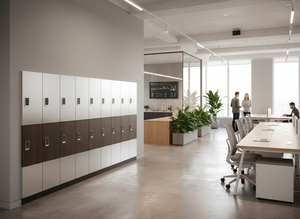
Offices and corporate headquarters often choose slimmer, full-height lockers (around 1800mm x 300mm x 450mm) for staff, while warehouses and hospitals may need wider units for uniforms and PPE. The type of workplace lockers you need depends heavily on what employees bring to work.
-
Office environments: Full-height or 2-tier lockers work well for staff who bring coats, laptop bags, and personal items. Include hanging rails and top shelves for better organisation. Downtown offices where users arrive in professional attire benefit from 42-inch hanging space.
-
Warehouse and distribution centres: Taller, deeper lockers (up to 500mm deep) fit hi-vis jackets, boots, hard hats, and lockable inner compartments for valuables. Manufacturing plants and industrial sites need durable materials that withstand rough handling.
-
Healthcare settings: Staff need enough depth for uniforms and enhanced security compartments for small valuables. Smooth internal surfaces simplify cleaning and infection control in these environments.
-
Shift-based workplaces: Multi-shift sites may need more lockers than headcount, or use shared lockers with electronic locks or RFID locks to improve turnover. A busy office with hot-desking might allocate lockers dynamically rather than permanently.
To explore this great workplace locker option, check out this Four Door Office Gym Shed Storage Locker
School Locker Sizes (Primary, Secondary, TAFE/College)
Student age and curriculum heavily influence locker size requirements. Sports-heavy schools need more space for equipment; laptop programs need secure compartments for devices.
-
Primary schools: Generally smaller and lower lockers work best—around 1200-1400mm high with shallow depth (300-380mm). These suit book bags, lunch boxes, and light jackets, with lower positioning so young children can reach without assistance.
-
Secondary schools: Standard full-height or 2-tier lockers with around 450mm depth hold backpacks, multiple textbooks, and PE kits. A shelf for laptops adds functionality. The recommended configuration for many schools is a 15-inch wide by 15-inch deep by 24-inch high triple-tier setup.
-
TAFE and college students: Larger or specialised lockers may be necessary for art portfolios, musical instruments, toolkits, or nursing uniforms. Extra-wide or ventilated doors suit these varied needs across educational institutions.
-
Corridor planning: Consider corridor width and noise when positioning lockers. Tall, narrow banks against long corridors work differently than clusters around year-level hubs. Always ensure sufficient clearance when doors are open during peak changeover times.
Gym and Sports Locker Sizes
Gyms and fitness centers face high turnover and peak-time congestion, making compact yet deep lockers popular. The goal is maximising user capacity without creating a cramped locker room where members jostle for space.
-
Standard gym lockers: 2-tier or 3-tier configurations (each compartment roughly 900mm or 600mm high) suit typical users with a gym bag, outdoor shoes, and small valuables. Width of 15 inches provides 25% more space than 12-inch models for better sports gear storage.
-
Equipment storage: A smaller number of full-height, extra-deep lockers serve users with bulky equipment—sports clubs, swimmers with multiple bags, cyclists, and visiting teams on match days.
-
Wet areas and changing rooms: Aquatic centres, pools, and spa facilities need moisture resistant plastic or laminate lockers with similar dimensions but featuring sloping tops and ventilated doors to reduce condensation and odours. Open-access lockers with netted sides provide maximum airflow to dry gear.
-
Bench and circulation planning: Row orientation should allow users to open doors fully and sit to tie shoes without blocking others. Health clubs experience significant congestion during evening peaks, so 36-48 inch clearances between facing lockers prevent bottlenecks.
For smaller lockers with a stylish look, no need to look further than the 12-Door Locker available at Factory Fast, perfect for offices, gyms, sheds, schools, or home storage, featuring a sleek design and secure 4-digit combination locks.
Transition: After considering environment-specific recommendations, it’s time to focus on how to design your locker room for maximum efficiency and user satisfaction.
Locker Room Design
A well-designed locker room is the foundation of a positive user experience, whether in a gym, school, or busy office. The locker room layout should maximize floor space while ensuring there is enough room for users to move comfortably, even during peak times. Choosing the right combination of plastic lockers and metal lockers can make all the difference in durability, security, and ease of maintenance.
Mapping Out Your Locker Room
-
User needs: Consider the specific needs of your users. For example, fitness centers and aquatic facilities often benefit from compact lockers with ventilated doors to keep sports gear fresh and dry, while offices may require larger lockers with adjustable shelves to accommodate a variety of personal items.
-
Placement: The placement of lockers, benches, and walkways should be carefully mapped out to avoid congestion and make the most of the available space.
-
Personal belongings: A well-designed locker room also takes into account the type of personal belongings typically stored inside, ensuring that each user has a secure spot for their items without wasting valuable floor space.
Layout and Circulation
-
Maximize floor space: Focus on thoughtful room layout and selecting lockers that match your users’ needs to create a locker room that is both functional and inviting.
-
Avoid congestion: Ensure there is enough room for users to move comfortably, even during peak times.
Transition: With your locker room layout planned, let’s examine how material choices and durability relate to locker size and long-term performance.
Material, Durability and How They Relate to Size
While materials don’t radically change nominal dimensions, they affect wall thickness, usable internal volume, and what sizes are practical in harsh or wet environments. Your locker material choice influences long-term performance.
Material Options
-
Metal lockers: Strong and precise, steel lockers suit narrow, tall units in dry offices and schools. They’re highly durable in low maintenance environments but can be noisy and prone to rust near pools or factories with corrosive fumes. The structural integrity of thick steel allows full mini-louvers for ventilation while maintaining security.
-
Plastic lockers: Lightweight and handle outdoor or wet-area use well. HDPE allows for large, deep compartments without corrosion concerns, making them ideal for aquatic centres and industrial sites with wash-down areas. They’re the perfect solution for shared spaces with high humidity.
-
Laminate lockers: Offer a premium look for corporate or member-only gyms, often with similar dimensions to metal units but thicker doors that slightly reduce internal depth. Wood-finish options suit upmarket facilities.
Durability and Maintenance
-
Maintenance and longevity: Thicker, more durable doors and hinges help maintain fit and alignment over a decade of use, meaning doors still open fully within the designed footprint.
-
Easy cleaning: Clean lockers with smooth surfaces require just a quick wipe down between users.
Transition: Once you’ve selected the right materials, consider how customization and configuration options can further optimize your locker solution.
Customization and Configuration Options
Modern locker solutions offer a wide range of customization and configuration options to suit any environment.
-
Material choices: Facilities can choose from steel lockers for maximum durability, compact lockers for tight spaces, or laminate lockers for a premium look and feel.
-
Tailored sizes: Locker sizes can be tailored to fit the available space and the specific storage needs of users, from smaller lockers with coat hooks and shelves for students, to larger units with enhanced security features for valuable equipment in manufacturing plants.
-
Internal configuration: Consider adjustable shelves, smaller compartments, or integrated charging points.
-
Enhanced security: Add reinforced doors or advanced locking systems to protect personal belongings in shared spaces.
-
Mix and match: By mixing and matching types of lockers and features, facilities can optimize space, improve user satisfaction, and boost overall workplace efficiency.
Transition: With your lockers configured for your unique needs, it’s important to plan the overall layout for accessibility and efficiency.
Planning Locker Room Layouts: Rows, Benches and Clearance
A well-designed locker room can still perform poorly if rows are too close together, benches are misplaced, or corners become pinch points. Locker solutions only work when the surrounding layout supports proper circulation and access.
Clearance and Accessibility
-
Clearance requirements: Aim for at least 900mm (36 inches) in front of locker doors, more where benches are installed. This allows safe circulation, wheelchair access, and prevents users from colliding in a high traffic area.
-
Single-sided versus back-to-back runs: Back-to-back configurations maximise locker count but require more floor space in the centre of the room. A 3m wall with 300mm wide lockers fits around 10 units per row; a 6m wall doubles that capacity.
-
Working with architectural constraints: Lower rows or shorter lockers under windowsills and along low walls maximise capacity without blocking natural light or ventilation grilles. Use vertical space efficiently—stack lockers serve more users than spreading them horizontally.
Bench Positioning and Lighting
-
Bench positioning: Benches typically span 36-72 inches long by 12-18 inches wide. Free-standing benches offer flexibility; built-in options save floor area but limit future reconfiguration.
-
Lighting: Proper lighting around bench areas improves user satisfaction and safety.
Transition: As you finalize your layout, consider sustainable and inclusive solutions to future-proof your locker room.
Sustainable Locker Solutions
Sustainability is an increasingly important consideration in locker room design.
-
Eco-friendly materials: Locker solutions made from recycled or sustainable materials, such as eco-friendly plastic or responsibly sourced metal, help reduce environmental impact while maintaining durability and performance.
-
Energy-efficient features: Many modern lockers also incorporate energy-efficient features, such as LED lighting or RFID locks, which contribute to a more sustainable and cost-effective facility.
-
Moisture resistance: Moisture resistant materials are especially valuable in health clubs, aquatic centers, and gyms, where humidity can lead to mold and mildew. By choosing lockers with proper ventilation and moisture-resistant finishes, facilities can create a cleaner, healthier environment for users.
Sustainable locker solutions not only help reduce your carbon footprint, but also enhance your brand image and demonstrate a commitment to environmental responsibility.
Transition: Next, let’s ensure your locker room is accessible and inclusive for all users.
Accessible and Inclusive Locker Rooms
Creating accessible and inclusive locker rooms is essential for ensuring that all users feel welcome and supported.
-
Space for users with disabilities: Facilities should provide enough space for users with disabilities, including wide aisles, accessible benches, and lockers designed for easy reach and operation.
-
Accessible features: Features such as wheelchair-accessible lockers, grab bars, and lowered shelves make it easier for everyone to store their belongings and use the locker room independently.
-
Inclusive design: Inclusive design benefits all users, not just those with mobility challenges. Parents with young children, older adults, and people carrying large gym bags all appreciate a locker room with thoughtful layout and accessible features.
By prioritizing accessibility and inclusivity, facilities can create a positive experience for every user and ensure that everyone has the space they need to store their belongings comfortably and securely.
Transition: As locker room technology evolves, let’s look at the latest trends and how they can benefit your facility.
Locker Room Technology and Trends
Locker room technology is evolving rapidly, with new trends focused on enhanced security, convenience, and user experience.
-
Advanced locking systems: Electronic locks and RFID locks provide users with secure, keyless access to their lockers, reducing the risk of lost keys and improving overall security.
-
Integration with management systems: Many modern lockers can be integrated with facility management systems, allowing for easy assignment and monitoring of locker usage.
-
Smart technology: Features like mobile app integration, digital signage, and real-time notifications are becoming more common. For example, fitness centers can offer lockers that users can open with their smartphones, receive alerts when their locker is accessed, or even check locker availability before arriving.
By adopting the latest locker room technology, facilities can offer enhanced security, streamline operations, and deliver a seamless, modern experience that meets the expectations of today’s users.
Transition: Before you place your order, review these common mistakes to avoid costly errors.
Common Mistakes to Avoid When Selecting Locker Sizes
Before placing a large order, check your plans against these common pitfalls. Making mistakes at the ordering stage is expensive to fix later.
-
Underestimating bag size: Choosing shallow lockers that don’t fit modern backpacks, laptop sleeves, and winter coats leads to damaged doors, jammed hinges, or users leaving items outside. A locker that can’t store items properly defeats its purpose.
-
Overfilling the room: Maximising space with tall lockers while forgetting space for benches, cleaning equipment, and wheelchair turning circles creates compliance issues and user frustration. Facility management systems should account for circulation, not just locker count.
-
One-size-fits-all thinking: Using only one locker size for mixed user groups ignores that different people have different needs. Mix cube, half-height, and full-height units to offer multiple sizes that reflect actual usage patterns in public spaces.
-
Ignoring technology upgrades: Many facilities later want to retrofit key locks to electronic locks or smart locker systems for enhanced security. Ensure door and frame sizes can accommodate these security features—modern digital locks need specific clearances.
-
Wrong materials for the environment: Specifying metal lockers for pool-side or outdoor use, even if the size is perfect, leads to rust and deterioration. Different colours and finishes won’t help if the base material lockers aren’t suited to moisture or corrosive environments.
-
Forgetting sustainable materials: Modern facilities increasingly specify sustainable materials and low maintenance options. Factor these requirements into your initial selection rather than retrofitting later.
Transition: To wrap up, here are answers to some frequently asked questions about locker sizing.
Frequently Asked Questions (FAQs)
What is a good all-round locker size if I have a mixed office workforce?
A commonly used full-height size of around 1800mm x 300mm x 450mm works well for most office environments. This provides enough space for hanging coats, storing laptop bags, and securing valuable equipment. For overall workplace efficiency, include a small proportion of wider units (380-450mm) for cyclists or staff with bulky gear. Some facilities offer installation services that help configure the right mix for your specific workforce.
How deep should school lockers be to fit today’s backpacks and laptops?
Depths of around 400-450mm are usually sufficient for secondary students carrying modern backpacks and devices. Primary schools can often work with slightly shallower units (300-380mm) since younger children carry less. The key is ensuring there’s more space than seems necessary—students will always find ways to fill every available inch, and a secure place for laptops is essential in today’s educational institutions.
Do I need full-height lockers for a fitness centre?
Most gyms use 2-3 tier lockers for day-use, which provides a perfect balance between capacity and functionality. Reserve a limited number of full-height lockers for long-term members or special-equipment storage. This approach typically provides easy access for the majority while accommodating users with larger equipment. Open-access designs with netted sides work well for drying sports gear between uses.
Can I change locker doors later if I misjudge the size or want to upgrade to electronic locks?
Many locker systems allow door retrofits, making this the go-to choice for facilities planning future upgrades. However, it’s significantly easier if the original frames and clearances were chosen with upgrades in mind. Standard door widths and heights give you more flexibility than custom dimensions. Check with your supplier about compatibility before committing—some offer installation services for upgrades.
How many lockers can I fit in a small staff room?
For a worked example: a 4m wall with 300mm wide lockers can fit around 13 units in a single row, subject to leaving space at each end for door swing and access routes. Back-to-back configurations double this but require a minimum 2m room width after accounting for clearance. Always verify your room layout allows doors to open fully without hitting benches or walls. A previous post on your facility plans should inform final numbers.
-
 Tags:
Gym Lockers
lockers
Office Lockers
Tags:
Gym Lockers
lockers
Office Lockers