1300 760 441
 cs@factoryfast.com.au
Do Office Chairs Ruin Floors?
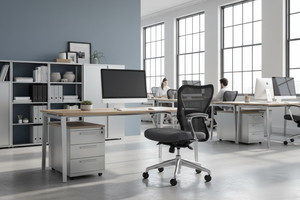

If you have ever pulled back your desk chair and noticed fine scratches trailing across your timber boards, or spotted a worn circle forming in the carpet beneath your workspace, you are not alone. Many Australians working from home have discovered that their office chair has been quietly damaging their floors for months or years.
This guide is for anyone working from home or in an office who wants to protect their floors from chair damage. Understanding how office chairs affect your floors can help you avoid costly repairs and maintain your workspace.
The short answer is yes, rolling office chairs can ruin floors. But understanding why this happens and what you can do about it will save you from costly repairs down the track.
To create a productive workspace at home or in the office, start by browsing our range of office chairs designed for comfort and long-lasting support.
Quick answer: can office chairs really ruin your floors?
Yes, many standard office chairs can scratch timber floors and wear out carpet over time. The main culprit is usually cheap plastic casters, not the chair frame itself. Those small dual wheels that come fitted to most budget chairs are typically made from hard nylon, and they concentrate your body weight into narrow contact points that dig into flooring surfaces.
On hardwood floors, you will often see fine scratches, dull tracks, and scuff marks where the chair rolls repeatedly throughout the day. On carpeted surfaces, the damage shows up differently: flattened pile, shiny worn patches, and eventually visible tracks that follow your usual rolling path between desk and printer.
The good news is that floor damage from rolling chairs is largely preventable, and even existing wear can often be repaired or disguised. The rest of this article will walk you through how damage happens, what you can do to stop it, and how to deal with floors that are already marked.
For everyday work or gaming sessions, the black mesh office chair with foam seat delivers breathable comfort and ergonomic support.
How office chair wheels damage different floor types
Different floor materials react differently to rolling chairs. A timber board responds to pressure and friction in ways that carpet simply does not, and the type of caster fitted to your chair determines how much stress gets transferred to the surface beneath.
Hard nylon wheels create concentrated pressure points as they roll. Unlike soft rubber wheels that flex and spread the load, rigid casters focus your weight onto a narrow strip of material. Add friction from starting and stopping movements, and you have a recipe for surface damage that accumulates with every working day.
Repeated rolling in the same area is what usually causes visible tracks, rather than one-off use. A chair that travels the same path dozens of times per day, five days a week, will mark even durable floors over time. The issue is cumulative, which is why many people only notice the problem once significant wear has already occurred.
If you’re focused on posture and wellbeing, the ergonomic kneeling posture chair with adjustable backrest helps reduce strain and promotes healthy seating habits.
Timber, laminate and other hard floors
On timber and laminate flooring, common damage includes hairline scratches, dull tracks in the finish, small dents along board joins, and chipped edges where older coatings have become brittle. Even a well-maintained timber floor can show wear after a few years of daily chair use.
Grit and dust under wheels act like sandpaper when the chair moves. Every time you roll across the room, particles trapped beneath the casters grind against the floor coating. This is worse in homes where shoes are worn indoors or where the workspace sits near an entrance.
Typical coating types found in Australian homes include oil-based finishes and water-based polyurethane. Older or thinner coatings are easier to mark, and floors that have not been recoated in many years are particularly vulnerable. A home office in Sydney with polished blackbutt boards, for example, might show wear much faster than a recently refinished floor with multiple coats of protection.
Laminate and hybrid floors present their own challenges. The photographic layer that gives laminate its wood appearance sits beneath a protective wear layer, and once that top layer is scratched through, the damage becomes highly visible. You cannot simply sand and refinish laminate the way you can with solid timber.
Even tiles and polished concrete can develop scuffing from hard casters, especially when the chair rolls in one concentrated work zone day after day. Parquet flooring, with its many small pieces and joins, is particularly prone to edge chipping.
Carpeted floors
On a carpeted floor, office chairs can crush carpet pile, create shiny paths, and eventually wear through the backing in busy home offices. The damage tends to be gradual, so you might not notice until a circular worn patch has formed under your desk.
Plush bedroom-style carpet suffers differently than tighter commercial-style carpet found in many Australian apartments and office suites. Thick, soft carpet pile compresses permanently under concentrated wheel pressure, while low-profile carpet shows wear through fibre loss and shiny tracks.
Consider a carpeted study where a chair has been used daily for several years. The area directly beneath the chair develops a visible depression, and a ring of flattened, matted fibres marks the territory where the wheels have repeatedly travelled. This is difficult to reverse once the carpet backing has been stressed.
Thick underlay can actually make the problem worse. A plush underlay causes the chair to sink, making rolling more difficult. This encourages dragging and twisting movements that further harm both the carpet and the office carpet underlay beneath it.
It’s usually the casters, not the chair
Most damage comes from the type of wheel fitted to the chair, not the chair itself. Casters are the small wheels attached to the base of office chairs. Standard chair casters are made of hard nylon material that can damage hardwood floors. A high-quality ergonomic office chair can still ruin your floor if it rolls on hard plastic casters, while a basic chair fitted with soft wheels might leave no marks at all.
This is good news because upgrading wheels is often cheaper and easier than replacing your entire current office chair. A set of replacement casters typically costs a fraction of a new chair, and fitting them takes just a few minutes.
Standard hard casters are made from rigid nylon or similar plastics. Manufacturers fit them because they are inexpensive and durable, not because they are kind to floors. Budget chairs, gaming chairs, and even some mid-range office chairs arrive with these problematic wheels as standard.
Softer, floor-friendly wheel materials offer a practical solution. Soft polyurethane treads, similar in principle to inline skate wheels, flex slightly under load and roll smoothly without biting into floor surfaces. Rubber casters and rubber wheels serve a similar purpose, though they may leave marks on some light-coloured floors if they contain carbon black.
Extend the life of your seating with the 5x heavy-duty office chair caster wheels set, safe for all floor types and easy to install.
Standard hard plastic casters
The typical dual-wheel hard nylon casters that arrive on many office and gaming chairs bought in Australia are designed for affordability, not floor protection. Each wheel is narrow and rigid, concentrating your body weight onto a small contact patch.
On timber and laminate, these casters dig into coatings and create scratches with every roll. The rigid rolling surface does not absorb imperfections or grit; instead, it grinds particles directly into the floor. On carpet, the hard edges cut into fibres rather than gliding over them.
When these wheels collect grit, they tend to slide instead of rolling smoothly. This dragging motion pulls sharp particles across the floor surface, leaving scratches that follow your movement patterns. A home office chair used daily on spotted gum boards, for example, can leave pale arc-shaped scuffs around the entire length of the desk area within months.
Softer, floor-friendly wheels
Soft-tread casters resemble inline-skate style wheels but are designed specifically for office chair use. They feature a resilient polyurethane layer that flexes slightly under load, spreading weight across a wider contact area and gripping the floor without scratching.
This type of caster is suitable for timber, laminate, bamboo, vinyl, and tiles, and is generally kinder to most carpets as well. The soft material does not collect and embed grit the way hard plastic does, reducing the sandpaper effect that causes gradual floor wear.
Many modern ergonomic chairs and aftermarket caster sets available in Australia now offer this style, often with 11 mm or 10 mm stems to fit common chair bases. Before ordering replacement casters, check the stem size on your existing chair by removing one wheel and measuring the metal peg that slots into the base.
How to stop your office chair from ruining your floors
Prevention is far easier and cheaper than repairing boards or replacing carpet. A few simple changes to your workspace can protect floors for many years of working from home.
Replacing standard hard plastic wheels with rollerblade style wheels or rubber casters can protect hardwood floors (Facts 3, 2, 6, fb55c8a, 5). Chair mats are practical, affordable, and durable solutions for protecting floors from office chairs (Facts 9, 8, 10, 11, 12). Using high-quality wheels on your office chair can reduce wear and tear on your flooring (Fact 13). Replacing the wheels on your office chair can prevent damage to your flooring (Fact 14).
You have several options available, from permanent fixes like changing wheels to simpler add-ons like area rugs or layout adjustments. In busy workspaces, combining more than one method often works best. Soft casters plus a slim rug, for example, provides excellent protection on vulnerable timber floors.
The right approach depends on your floor type, how much your chair moves during the day, and whether you rent or own your space. Renters might prefer reversible solutions that travel with them, while homeowners can invest in permanent fixes.
Whether you’re setting up a full workstation or updating your meeting areas, our office furniture collection has stylish and functional pieces to suit your needs.
Replace your office chair wheels
This is the best long-term fix for most situations, especially on timber and laminate floors. Upgrading to soft casters addresses the root cause of floor damage rather than just covering it up.
Removing push-in casters is straightforward: grip the wheel firmly and pull it straight out of the base. Most casters simply press-fit into the chair stem socket. Fitting new ones is equally simple; press the new caster stem into the socket until it clicks into place. No tools needed for most chairs.
Many Australian desk chairs use a standard stem size, but older or imported models like some ikea chairs might differ. Measure your existing stem diameter before buying to avoid a wasted purchase. The stem is the metal or plastic peg that slots into the chair base.
Upgrading office chair wheels can immediately reduce scratching, make the chair roll more smoothly, and feel noticeably quieter on hard floors. Test the new wheels in a small area first to confirm they roll cleanly and do not leave marks. Some very soft rubber wheels can transfer colour to light floors, so a quick test saves hassle later.
Use a low-pile rug or runner
A thin, tightly woven rug or flatweave runner under the chair offers an effective and attractive solution. Avoid plush shag styles that trap wheels and make rolling difficult; look for firm, flat weaves that allow smooth movement.
Size the rug so it covers the area under the desk and extends at least 80 to 100 centimetres behind the chair position. This allows full rolling movement without constantly catching the rug edge. A runner positioned to cover your main rolling path can work well in narrow rooms.
The rug absorbs the abrasion that would otherwise affect timber or laminate, and helps disguise any existing marks beneath it. Many people find that a good rug improves the overall style of their workspace while solving the floor protection problem.
Choose a rug with a non-slip backing or add a separate thin underlay to stop it bunching when the chair rolls. Nothing is more frustrating than a rug that constantly wrinkles under your feet. Avoid very thick rugs that make rolling difficult; a mat thickness of just a few millimetres is often enough.
Consider a stationary or limited-movement chair
In very small work areas, or on particularly delicate old timber boards, a chair without wheels can sometimes be a better choice. This is not ideal for all-day desk work, but suits shorter sessions or meeting spaces where constant repositioning is unnecessary.
Four-legged chairs spread weight differently and do not create concentrated rolling tracks. The pressure points stay in fixed positions rather than grinding back and forth across the same patch of floor.
Add soft felt or rubber pads to each leg to prevent sliding marks on hard floors. These felt pads need periodic replacement as they wear down and collect grit, but they are inexpensive and easy to fit.
Note the trade-off in mobility. A stationary chair works well for meeting rooms, occasional desks, or spaces where you only sit for an hour or two at a time. For a full-time workstation where you need to roll, push, and reposition throughout the day, casters remain the more practical option.
Rethink your home office layout
Look at where your chair travels every day and consider whether you can shorten or change that path. Small layout adjustments can reduce floor wear without any equipment changes.
For example, angling a desk so the chair rolls parallel to timber boards instead of across gaps reduces edge chipping. The wheels travel along the length of boards rather than bumping over joins repeatedly.
Pull the desk slightly away from the wall so the chair does not constantly bump skirting boards and gouge edges. A gap of 10 to 15 centimetres can make a noticeable difference over time.
Shift filing cabinets, printers, or storage so the chair does not have to roll across the entire room repeatedly. If your printer sits on the opposite side of the space from your desk, that daily journey creates a wear path. Moving the printer closer eliminates unnecessary traffic.
For added ergonomic comfort during long workdays, the under-desk footrest and leg support keeps your feet supported and improves circulation.
Do chair mats help or make things worse?
Chair mats can be helpful on carpet but can also create problems on some hard floors. The answer depends on your floor type and how carefully you maintain the mat.
Chair mats come in several forms: rigid plastic, flexible PVC, rubber composites, and even tempered glass. Each has different characteristics for grip, durability, and floor compatibility. A carpet mat designed for deep pile will not perform the same way on polished timber.
On hard floors, dirt trapped between a mat and the surface can slowly abrade the finish. Every time the mat shifts slightly during use, particles grind against the floor beneath. This creates a different type of damage than casters alone, often showing as fine circular scratches or a dull patch matching the mat outline.
On carpet, a well-chosen office chair mat often improves rolling and protects the fibres from direct caster pressure. The mat creates a firm, smooth surface that prevents the chair from sinking and reduces pile crushing.
Chair mats on carpet
A firm, flat mat that does not curl at the edges works best on carpeted floors. Size it to cover the full working area under and behind the desk so you never roll off the edge during normal use.
The mat reduces deep ruts in the underlay and prevents wheels from grinding the same fibres every day. Your carpet stays flatter and more uniform, with wear spread across the mat surface rather than concentrated in one spot.
The underside should grip the carpet without sharp spikes that could tear the backing when the mat moves. Some mats use textured patterns or gripper surfaces that hold position without aggressive teeth.
Lift the mat occasionally to vacuum underneath and check that the carpet is staying dry and clean. Moisture trapped beneath a mat can encourage mould or odours, especially in humid climates.
Chair mats on timber and other hard floors
Mats on hard floors can slide slightly during use, and when grit becomes trapped underneath, that movement scratches the finish. This is the opposite of what you want from floor protection.
If you choose to use a mat on timber, laminate, or pergo flooring, the underside should be completely smooth and the floor must be kept very clean. Any particle trapped between mat and floor acts as an abrasive every time the mat shifts.
Many people prefer to protect hardwood floors through better casters and rugs instead, keeping the attractive wood visible rather than covering it with plastic. This is partly aesthetic and partly practical, as rugs are easier to lift and clean beneath.
If you do use a mat on hard floors, inspect the area underneath every few weeks for fine circular scratches or dull patches. Catching damage early gives you the chance to change approach before serious wear accumulates.
What if your floor is already damaged?
Many home offices set up quickly during the shift to working from home now show visible wear. If your floor already has scratches, scuffs, or worn patches, do not panic. The priority is to stop further damage immediately, then address repair or cover options.
Changing how the chair contacts the floor is the first step. Even minor improvements now prevent the damage from getting worse while you plan a more permanent solution.
Stop the damage from getting worse
Remove or replace hard plastic casters straight away once you notice scratches or tracks forming. The easiest way to prevent additional wear is to eliminate the source.
Place a thin rug, runner, or mat under the chair temporarily until a permanent solution is in place. Even a folded blanket provides short-term protection while you order replacement wheels or a proper rug.
Give the affected area a quick clean to remove grit, so existing damage does not deepen every time the chair moves. Vacuum timber floors and wipe them with a damp cloth to pick up embedded particles.
Take close-up photos of the marks to monitor whether they are stabilising after changes. Comparing photos over a few weeks tells you whether your fix is working.
Light scratches and scuffs on timber and laminate
Many fine surface scratches on timber coatings can be reduced with careful cleaning and buffing using suitable floor products. Light scuffs often look worse than they actually are because they catch the light at certain angles.
Shallow scuffs on laminate may become less visible once the floor is cleaned and the light sheen is restored. Sometimes a simple clean reveals that what looked like deep damage is mostly surface dirt and residue.
Consult a local floor finisher or handyman if you are unsure how deep the damage goes. They can assess whether a full refinish is necessary or whether spot repairs might work.
Always test any restoration product in a hidden corner, like inside a wardrobe or behind a door, before applying it to visible areas. This prevents an unfortunate colour mismatch or chemical reaction in the middle of your room.
Heavier wear: sanding, refinishing or replacing
Some damage goes beyond surface scratches. When wear has cut through the coating into bare timber, or has swollen the edges on a floating laminate or hybrid floor, more significant repair is needed.
These situations may require sanding and refinishing a timber floor, or replacing damaged boards in a floating system. A visible pale ring under a desk where the chair sits all day, or chipped edges along a path from desk to printer, typically indicates damage that will not buff out.
These larger repairs are more disruptive, and planning them around other renovation work can make sense. If you are already considering repainting or updating the room, bundling floor refinishing into the project spreads the inconvenience and sometimes reduces cost.
For laminate and hybrid floors where you cannot sand, the repair option is usually to replace affected boards. This is easiest when the damaged section is near a wall; boards in the middle of a room require lifting everything between the damage and the nearest edge.
Dealing with worn carpet paths
Worn patches or flattened tracks in carpet can sometimes be disguised by rearranging furniture or placing a decorative rug over the area. This is often the most practical solution for renters or for carpet that is otherwise in good condition.
Small rooms with thin carpet may eventually need a new piece laid if the backing starts to show through. At this point, fluffing or cleaning will not restore the appearance, and covering only hides the problem.
Speak with a carpet layer about patching options if you still have leftover off-cuts from the original installation. A skilled installer can sometimes cut out a worn section and piece in matching carpet, though the repair may be visible depending on pile direction and age fading.
Protect any new or repaired carpet immediately with better wheels and, where suitable, a firm mat. Learning from past mistakes means your replacement carpet will not suffer the same fate.
Choosing the right setup for your home office
Office chairs do not have to ruin floors if the wheels, floor coverings, and layout are chosen thoughtfully. A few targeted changes can make a significant difference without major expense or disruption.
Consider a timber-floored study with soft polyurethane casters fitted to an ergonomic office chair, plus a slim flatweave rug under the desk. This combination provides excellent protection while maintaining smooth rolling and an attractive workspace appearance. Alternatively, a carpeted bedroom office might work well with a firm chair mat that creates a stable rolling surface and prevents pile crushing.
Think about how many hours a day you spend at the desk and how often the chair moves when picking solutions. Someone who rolls constantly between monitors, phone, and printer needs more robust protection than someone who mostly stays in one position. Physical strain from fighting a stuck chair on thick carpet is another consideration; smooth rolling supports better posture and reduces fatigue.
Small changes now can protect floors for many years of working from home. Check what type of casters are currently fitted to your chair, measure the stem size, and consider whether soft replacement wheels might solve your floor protection problem at minimal cost. Whether you upgrade wheels, add a rug, or both, your floors and your furniture will last longer, and you will avoid the hassle and expense of repair work down the track.
 Tags:
Tags: